Heath aster
Symphyotrichum ericoides. Family Asteraceae. Perennial.
Also called White heath aster, Heath-leaved aster, Aster ericoides.
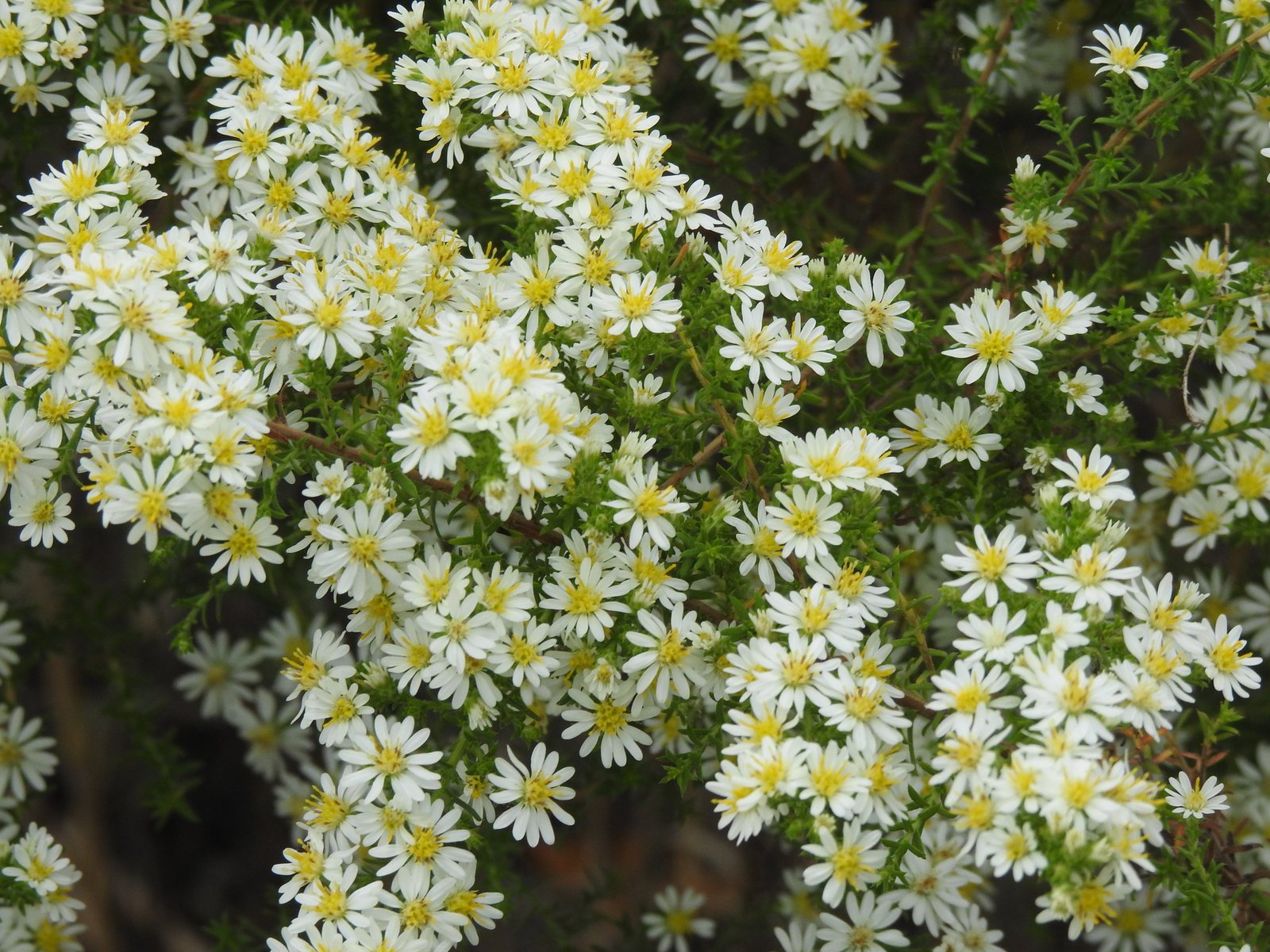
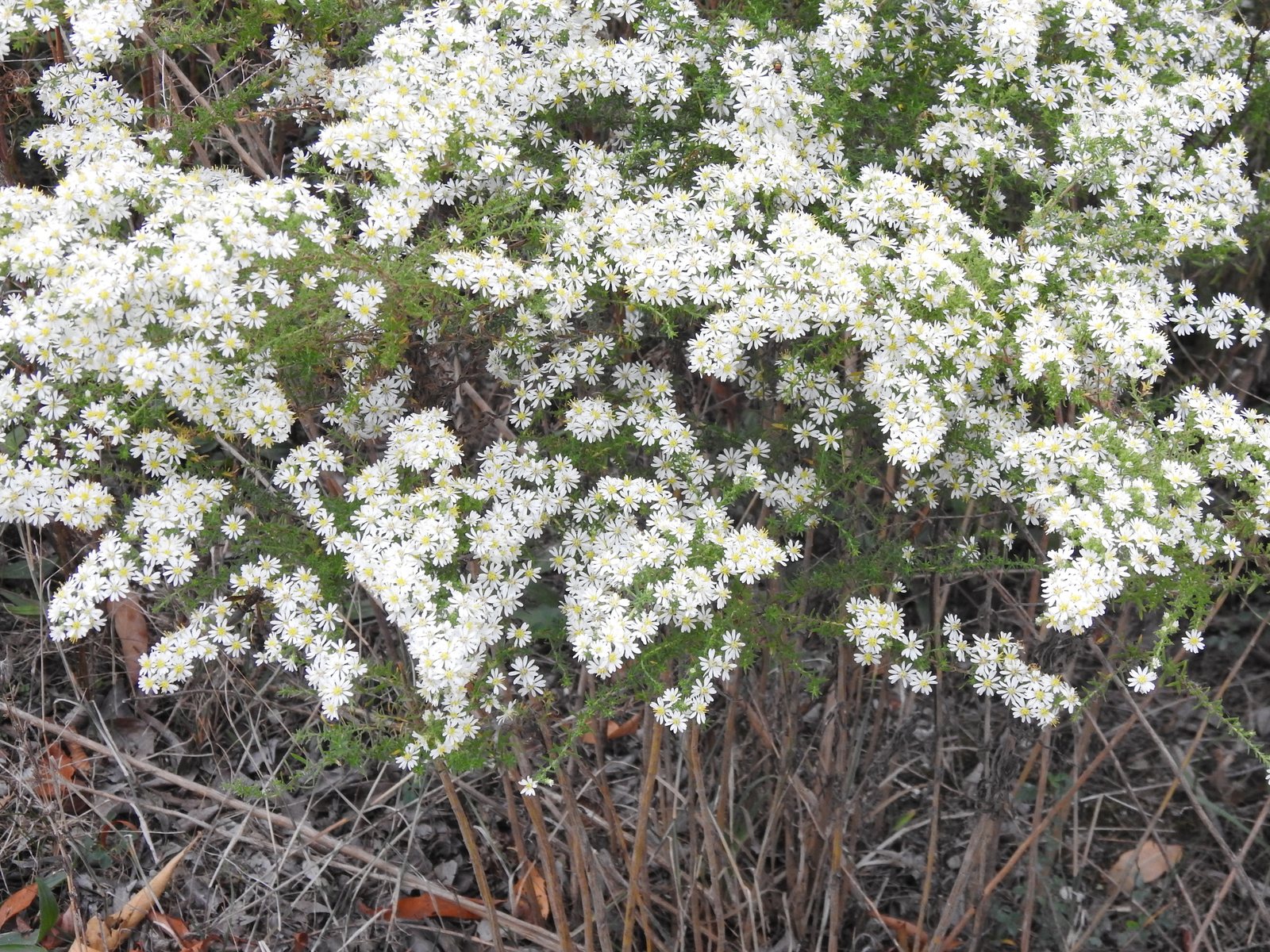
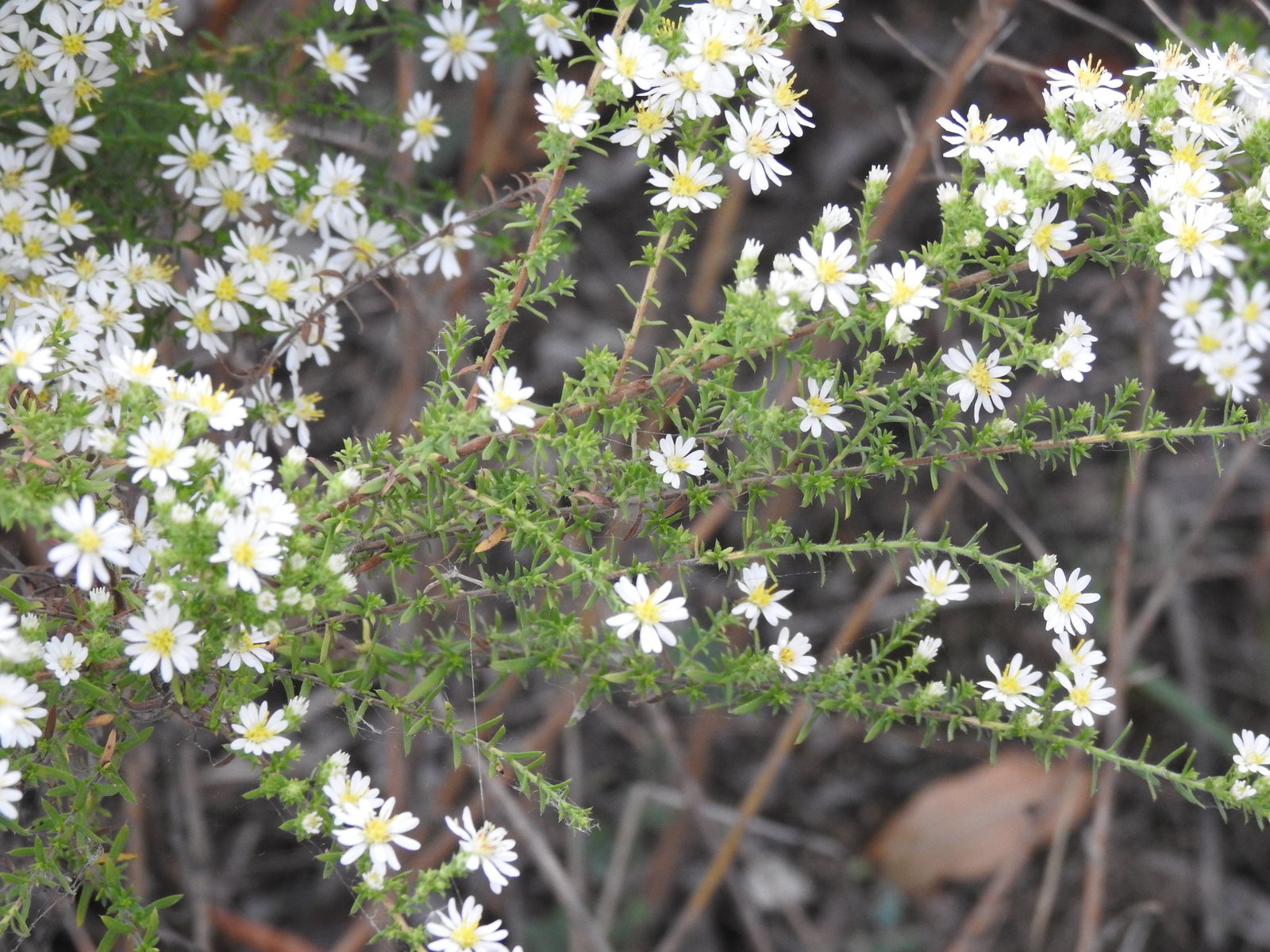
Heath aster is a North American perennial with fine, narrow leaves and branching sprays of small white daisies in late summer and autumn. Gardeners grow it for its airy texture, late-season pollinator value and tolerance of dry, relatively poor soil once established.
At a glance
- Sun
- Full sun gives the strongest stems and most flowers; tolerates light partial shade.
- Water
- Water regularly during establishment. Once established, water during prolonged drought rather than keeping the soil constantly moist.
- Soil
- Well-drained sandy, gravelly or loamy soil; tolerates clay if drainage is good. Grows in poor soil and tolerates alkaline conditions, but dislikes winter waterlogging.
- Height
- 1-3 ft (0.3-0.9 m)
- Spread
- 1-3 ft (0.3-0.9 m), widening over time through rhizomes
- Flowers
- Late summer through autumn; numerous small white daisies with yellow centres that may age reddish-brown.
- Foliage
- Small, narrow green leaves crowded along branching stems, giving a heath-like appearance; lower leaves often wither before flowering.
- Growth
- Moderate to fast once established
- Care needed
- Low
The year at a glance
- Pollinators
- Drought tolerant
- Cold hardy
- Disease resistant
- Wildlife
- Low allergen
| J | F | M | A | M | J | J | A | S | O | N | D | |
|---|---|---|---|---|---|---|---|---|---|---|---|---|
| Flowers | ||||||||||||
| Fruit | ||||||||||||
| Plant |
Northern hemisphere months. In Australia, shift them by six.
- Difficulty
- Easy
- Toughness
- Very tough
Will it suit your garden?
Pick your zone, country, light and whether you have pets.
Full sun is 6 or more hours of direct sun a day, part shade 3 to 6 hours, shade under 3.
How it grows
Planting day
1 ft (0.3 m)
After 1 year
1.4 ft (0.42 m)
After 2 years
1.8 ft (0.55 m)
After 3 years
2 ft (0.6 m)
full size
About 2 years to full size.
From a typical nursery size, at an average rate for this kind of plant. A rule of thumb, not a forecast.
Good to know
- Cats and dogs
- Safe
- Native to
- the US and Canada
- In the garden
- Spreads vigorously: plan to contain it.
- Growth rate
- Fast
Care
Jobs through the year
- WaterApr–May, Oct, every 21 days
- Water established plants only during prolonged dry spells; new plants need regular watering.
- WaterJun–Sep, every 14 days
- Water established plants deeply only during prolonged drought; let the surface dry between waterings.
- MulchApr
- Use only a light mulch and keep the crown clear, especially on heavy soil.
- PruneFeb–Mar
- Cut old stems to 5–10 cm; retain some cut stems in a sheltered corner for insects.
- PruneApr–May
- Dig out unwanted spreading shoots and their connecting rhizomes.
- PruneMay–Jun
- Optionally shorten shoots by one-third for a more compact plant.
- DivideMar–Apr
- Divide crowded clumps every three to four years.
- ProtectJun–Jul
- Support tall or exposed stems before flower buds open.
- DeadheadSep–Oct
- Remove spent heads before seed disperses only if seedlings are unwanted.
- Water deeply during the first growing season, allowing the surface soil to dry between waterings.
- Avoid rich feeding; excessive fertility encourages tall, floppy growth.
- Keep mulch light and away from the crown, especially on heavy soil.
- Support tall plants with twiggy stems or a discreet ring before flowering if the site is shaded or exposed.
- Divide crowded clumps in spring every three to four years, removing unwanted spreading shoots.
Pruning. Leave stems standing over winter for wildlife, then cut them to 2-4 in (5-10 cm) above ground in late winter or early spring before new growth develops. For shorter, bushier plants, shorten shoots by about one-third in late spring.
Through the year
- Late winter
- Cut down old stems before new shoots emerge; leave removed stems loosely stacked in a quiet corner for overwintering insects.
- Spring
- Plant or divide clumps, water thoroughly and remove shoots spreading beyond their allotted space.
- Late spring
- Shorten shoots by one-third if you want a more compact plant; this can delay flowering.
- Summer
- Water young plants during dry spells and support tall growth before flower buds open.
- Autumn
- Leave flowers for visiting insects; remove spent heads before seed disperses if seedlings would be unwelcome.
- Winter
- Retain standing stems where practical and check that water is not collecting around the crown.
In the garden
- Weave through prairie-style planting with little bluestem and switchgrass for a fine white haze among upright grasses.
- Plant in drifts through sunny mixed borders to carry flowering into autumn.
- Use in a white garden with pale-flowered perennials, allowing room for its spreading habit.
- Place in sunny wildlife borders or dry meadow edges where its late flowers provide food for insects.
Garden styles it suits: Native meadow, New perennial (prairie), Wildlife garden, Pollinator garden, Dry gravel garden and Autumn colour.
Plant it with: Little bluestem, Switchgrass, Butterfly weed, Purple coneflower, Rough goldenrod and Prairie dropseed.
Wildlife: The late flowers attract bees, butterflies, hoverflies and other beneficial insects. In its native North American range, the foliage also supports caterpillars of several moths and butterflies; retained seed heads and stems provide additional food and shelter.
Problems to watch for
- Powdery mildew: improve airflow, thin crowded growth and water the soil rather than wetting foliage; this species is generally less susceptible than many asters.
- Flopping stems: provide more sun, stop high-nitrogen feeding and shorten shoots in late spring.
- Crown or root rot in wet soil: improve drainage or move plants to a raised, free-draining position.
- Unwanted spread: lift surplus rhizomes in spring and remove spent flower heads before seeds disperse.
Safety
Not known to be toxic to cats, dogs, horses or people. No part is recognised as a significant poisoning hazard, but it is not a food plant and eating plant material may cause stomach upset.
Easily confused with
Calico aster (Symphyotrichum lateriflorum)
Usually has broader leaves and flowers arranged along one side of spreading branches, with conspicuously mixed pale and reddish-purple flower centres.
Aromatic aster (Symphyotrichum oblongifolium)
Has broader, aromatic leaves when crushed and larger violet-blue flowers, rather than the tiny, usually white flowers and fine leaves of heath aster.
The name
The epithet ericoides means heath-like, referring to the small, narrow leaves that resemble those of heaths in the genus Erica.
Propagation. Divide established clumps in spring, keeping roots and growing shoots on each piece. Sow species seed in autumn or give spring-sown seed a period of cold, moist stratification; seedlings may vary. Propagate named cultivars by division or basal cuttings to retain their characteristics.
Checked against open data
- Accepted botanical name
- Symphyotrichum ericoides
- In the US and Canada
- Native in Canada and the lower 48 states.
- Native range
- Alberta, Arizona, Arkansas, British Columbia, Colorado, Connecticut, Delaware, District of Columbia, Idaho, Illinois, Indiana and Iowa.
- Measured
- Average height 46 cm.
Sources: GBIF (CC BY 4.0), USDA PLANTS and Trefle (CC BY 4.0). The care and design notes are LandscapeGPT's own.
See it in your own yard.
Upload a photo of your yard and see it redesigned with plants that suit your climate, each checked against your zone.