Hebe Red Edge
Hebe 'Red Edge'. Family Plantaginaceae. Shrub.
Also called Hebe 'Red Edge', Veronica 'Red Edge'.
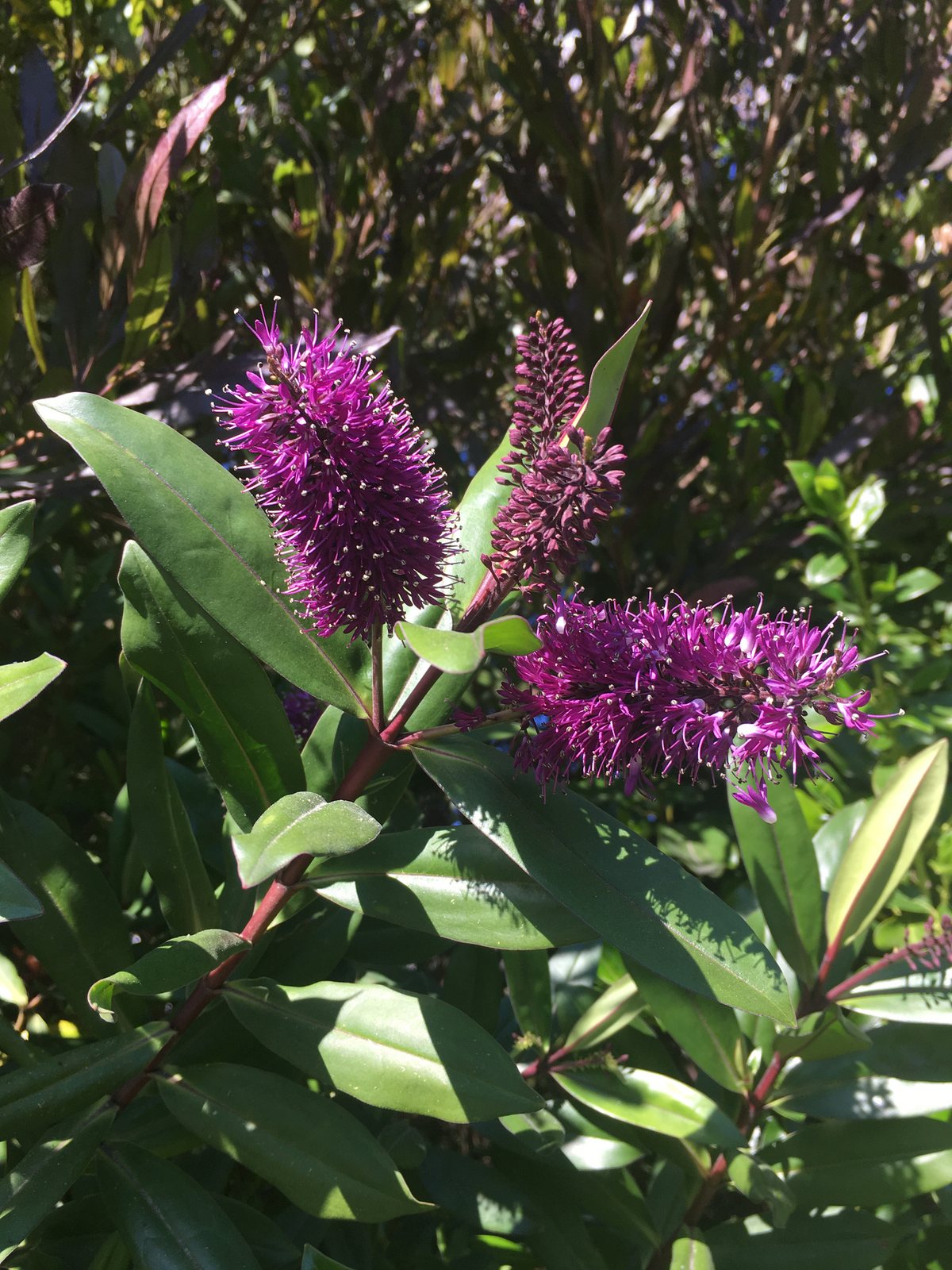
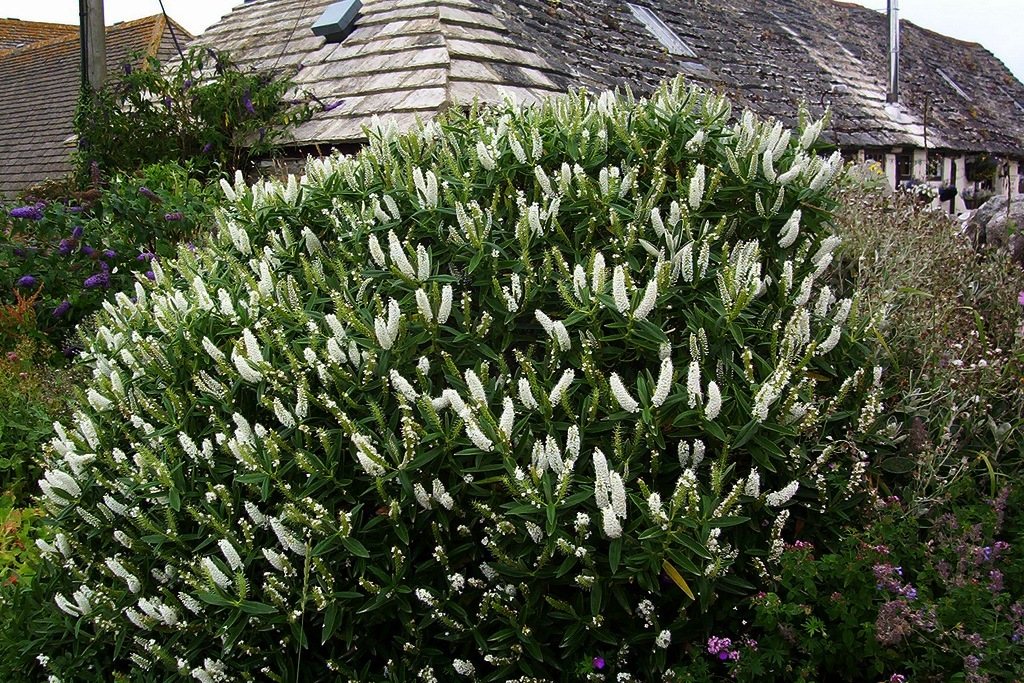
A compact evergreen shrub grown for its rounded shape and small grey-green leaves edged in red, with the colouring strongest in cool weather. Pale lilac flowers add summer interest, and its neat habit suits small borders, gravel gardens and containers in mild climates.
At a glance
- Sun
- Full sun to light partial shade; give some afternoon shade in hot climates.
- Water
- Moderate; water regularly while establishing, then during prolonged dry spells. Avoid persistently wet roots.
- Soil
- Well-drained soil, preferably moderately fertile; tolerates sandy, chalky and loamy soils but dislikes heavy, waterlogged ground.
- Height
- 1.5-2 ft (0.45-0.6 m)
- Spread
- 2-3 ft (0.6-0.9 m)
- Flowers
- Early to midsummer; short spikes of pale lilac flowers fading towards white.
- Foliage
- Evergreen. Small, oval, grey-green leaves in opposite pairs, with narrow red margins that become more noticeable in cool weather.
- Growth
- Slow to moderate
- Care needed
- Low
The year at a glance
- Pollinators
- Low allergen
| J | F | M | A | M | J | J | A | S | O | N | D | |
|---|---|---|---|---|---|---|---|---|---|---|---|---|
| Flowers | ||||||||||||
| Plant |
Northern hemisphere months. In Australia, shift them by six.
- Difficulty
- Moderate
- Toughness
- Needs looking after
Will it suit your garden?
Pick your zone, country, light and whether you have pets.
Full sun is 6 or more hours of direct sun a day, part shade 3 to 6 hours, shade under 3.
How it grows
Planting day
1.6 ft (0.5 m)
After 1 year
1.7 ft (0.5 m)
After 2 years
1.7 ft (0.51 m)
After 3 years
1.7 ft (0.51 m)
After 5 years
1.7 ft (0.52 m)
About 7 years to full size.
From a typical nursery size, at an average rate for this kind of plant. A rule of thumb, not a forecast.
Good to know
- Cats and dogs
- Safe
- Growth rate
- Slow
Care
Jobs through the year
- WaterApr–May, Sep–Oct, every 14 days
- Water established shrubs only during dry spells; first-year plants need more frequent watering.
- WaterJun–Aug, every 10 days
- Deep-water established shrubs during prolonged dry weather; let the surface dry between waterings.
- FeedApr
- Apply a light balanced fertilizer dressing only if growth is weak.
- MulchApr–May
- Apply a light mulch without covering stems or the crown.
- PruneApr–May
- Remove frost-damaged shoots once new growth reveals live wood.
- PruneJul–Aug
- Trim lightly after flowering, cutting only into leafy growth, never bare old wood.
- ProtectJan–Mar, Oct–Dec
- Not reliably hardy in zones 6–7; overwinter pots in bright, frost-free shelter rather than relying on outdoor fleece.
- Water deeply during the first growing season, allowing the soil surface to dry between waterings.
- Plant where winter rain drains away freely; use a pot with drainage holes for container growing.
- Apply a light dressing of balanced fertiliser in spring only if growth is weak; avoid heavy feeding.
- Keep mulch away from the stems and crown.
- Shelter from cold, drying winds; move pots to a sheltered position during severe freezes.
Pruning. Lightly trim after flowering to keep the shrub compact, cutting only into leafy growth. Remove frost-damaged shoots in spring once new growth shows which stems are alive; avoid hard cuts into bare old wood.
Through the year
- Spring
- Plant in freely draining soil after severe frost risk has passed.
- Mid-spring
- Remove winter-damaged shoots once new growth is visible; feed lightly if needed.
- Summer
- Water new plants and containers during dry weather without leaving the roots saturated.
- After flowering
- Trim lightly to maintain a rounded shape.
- Late summer
- Take semi-ripe cuttings from healthy, non-flowering shoots.
- Winter
- Check drainage and protect container plants from prolonged freezing and cold winds.
In the garden
- Repeat along the front of a sunny border for a low, rounded evergreen rhythm.
- Combine with lavender, grasses and sedums in a well-drained gravel garden.
- Use in a container beside steps or a doorway for year-round foliage.
- Plant in sheltered coastal borders with other low, wind-tolerant shrubs.
Garden styles it suits: Coastal, Dry gravel garden, Low-maintenance, Small-space, Contemporary minimal and Winter interest.
Plant it with: Lavender, Santolina, Blue fescue, Creeping thyme, Stonecrop and Rock rose.
Wildlife: The summer flowers provide nectar for bees and other visiting insects.
Problems to watch for
- Root rot in wet soil: improve drainage or grow in a raised bed or container; do not keep watering already wet soil.
- Frost scorch and shoot dieback: provide shelter and wait until spring growth starts before cutting back damaged stems.
- Aphids on soft shoots: wash off small colonies with water and encourage natural predators.
- Sparse, woody growth after hard pruning: trim lightly and regularly rather than cutting into leafless stems; replace plants that fail to regrow.
Safety
Not known to be toxic to people, cats, dogs or horses. No particular toxic part is recognised, but it is not an edible plant and cultivar-specific toxicity information is limited.
Easily confused with
Hebe 'Pagei' (Hebe pinguifolia 'Pagei')
Forms a lower, spreading mound with silvery-grey leaves and white flowers; it lacks the characteristic red leaf margins.
White hebe (Hebe albicans)
Also has small grey-green leaves, but normally lacks the consistent red edging and bears white rather than pale lilac flowers.
The name
Hebe is named after the Greek goddess of youth, while 'Red Edge' describes the red margins of its leaves.
Propagation. Take semi-ripe cuttings in late summer and root them in a free-draining medium under cover. Seed will not reliably produce plants identical to 'Red Edge'.
Checked against open data
- Accepted botanical name
- Veronica Hebe 'Red Edge' is an older name for Veronica.
Sources: GBIF (CC BY 4.0). The care and design notes are LandscapeGPT's own.
See it in your own yard.
Upload a photo of your yard and see it redesigned with plants that suit your climate, each checked against your zone.