Hidcote lavender
Lavandula angustifolia 'Hidcote'. Family Lamiaceae. Shrub.
Also called Hidcote English lavender, English lavender 'Hidcote'.
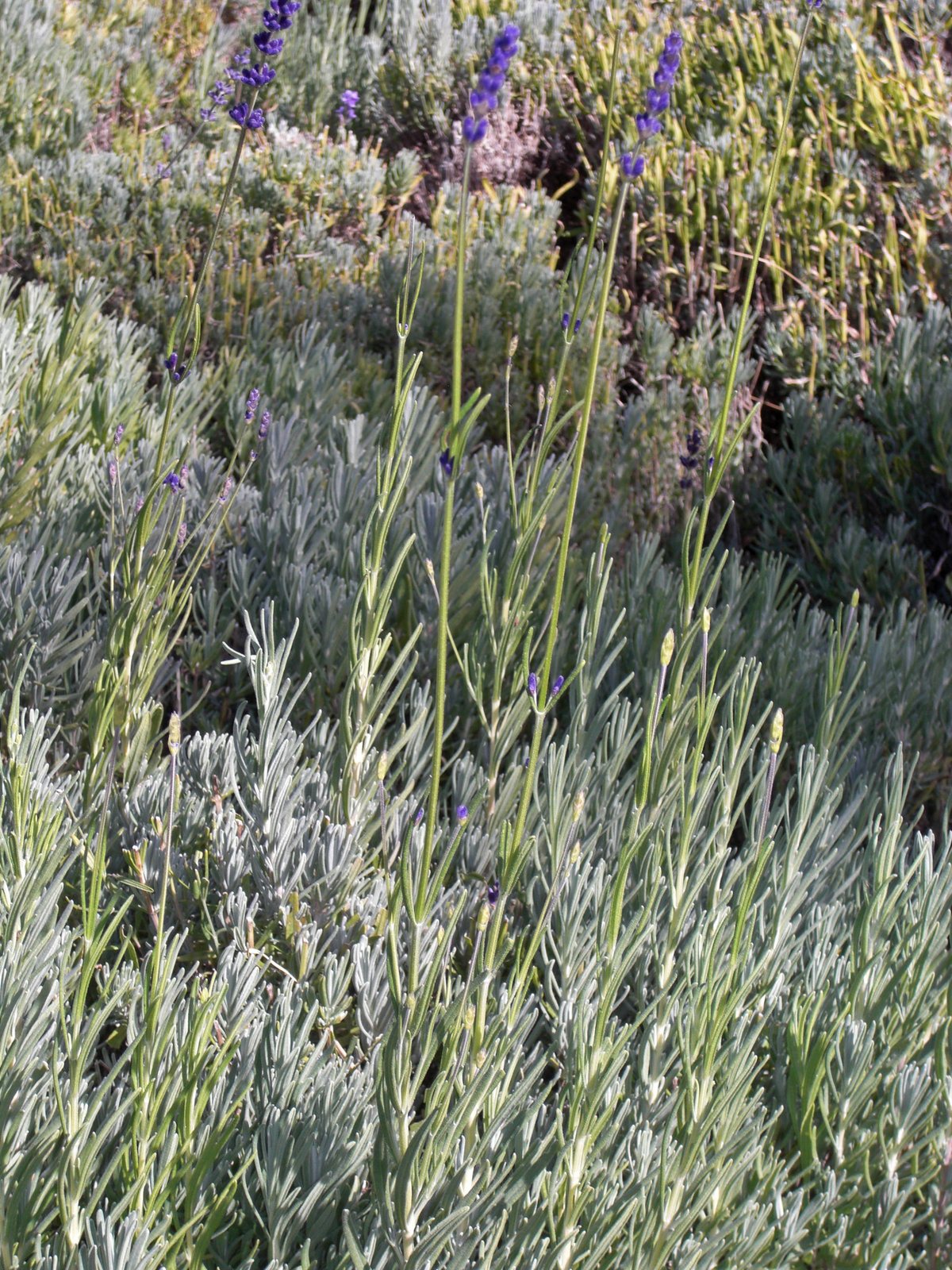
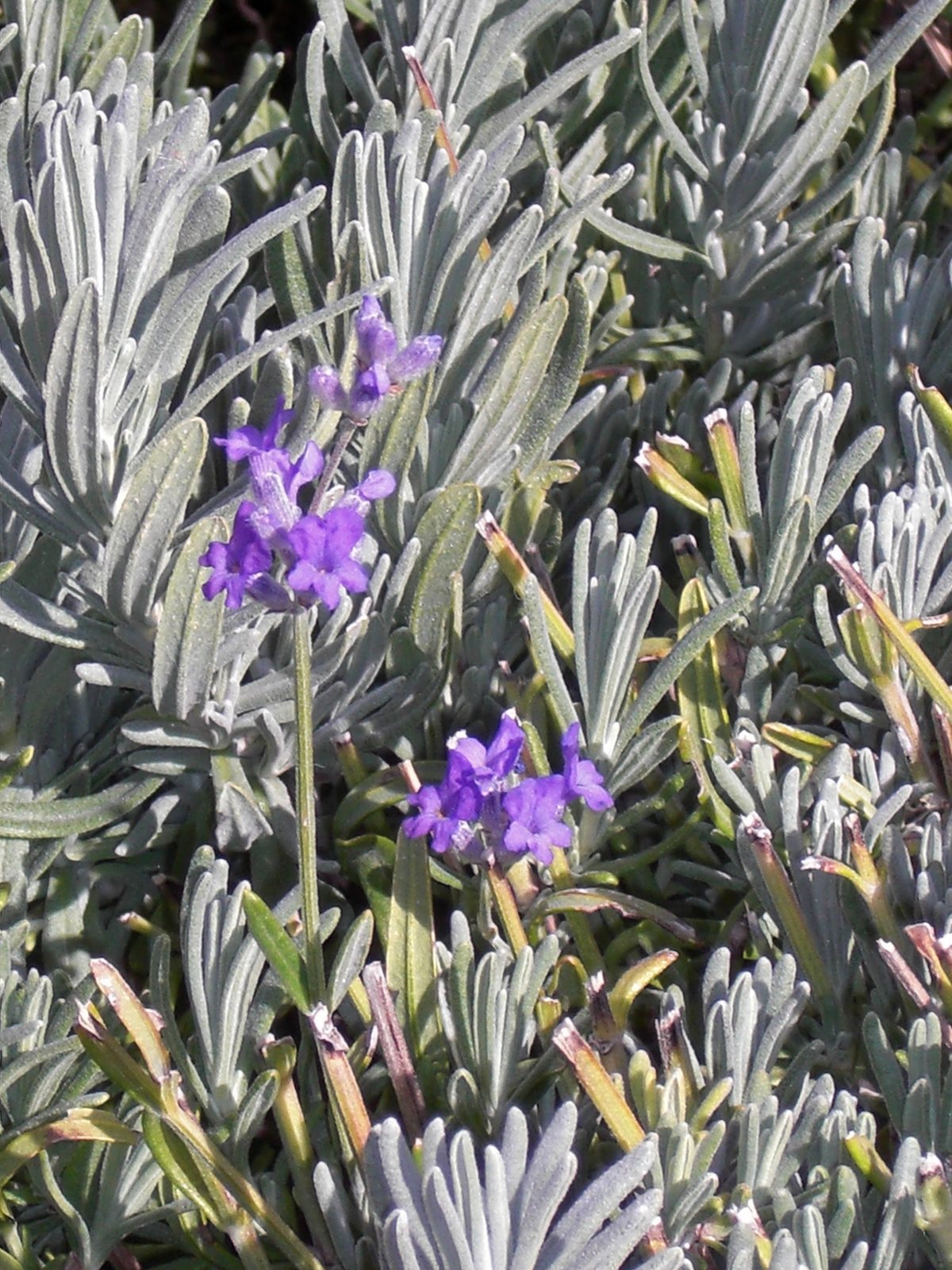
Hidcote lavender is a compact, woody shrub grown for its deep violet-purple flower spikes and aromatic, grey-green leaves. It makes a neat low edging or small hedge and attracts bees, provided you give it full sun and soil that drains freely.
At a glance
- Sun
- Full sun, ideally at least 6 hours of direct sunlight daily.
- Water
- Water regularly during establishment, allowing the soil to dry between waterings. Established plants need little extra water in the ground, but containers need watering during dry weather.
- Soil
- Lean, sharply drained sandy, gravelly or chalky soil, preferably neutral to alkaline. Avoid waterlogged ground; use a raised bed or container where drainage is poor.
- Height
- 1-2 ft (0.3-0.6 m), including flower stems
- Spread
- 1.5-2 ft (0.45-0.6 m)
- Flowers
- Deep violet-purple flowers in early to midsummer; a lighter repeat flush is possible after trimming in mild climates.
- Foliage
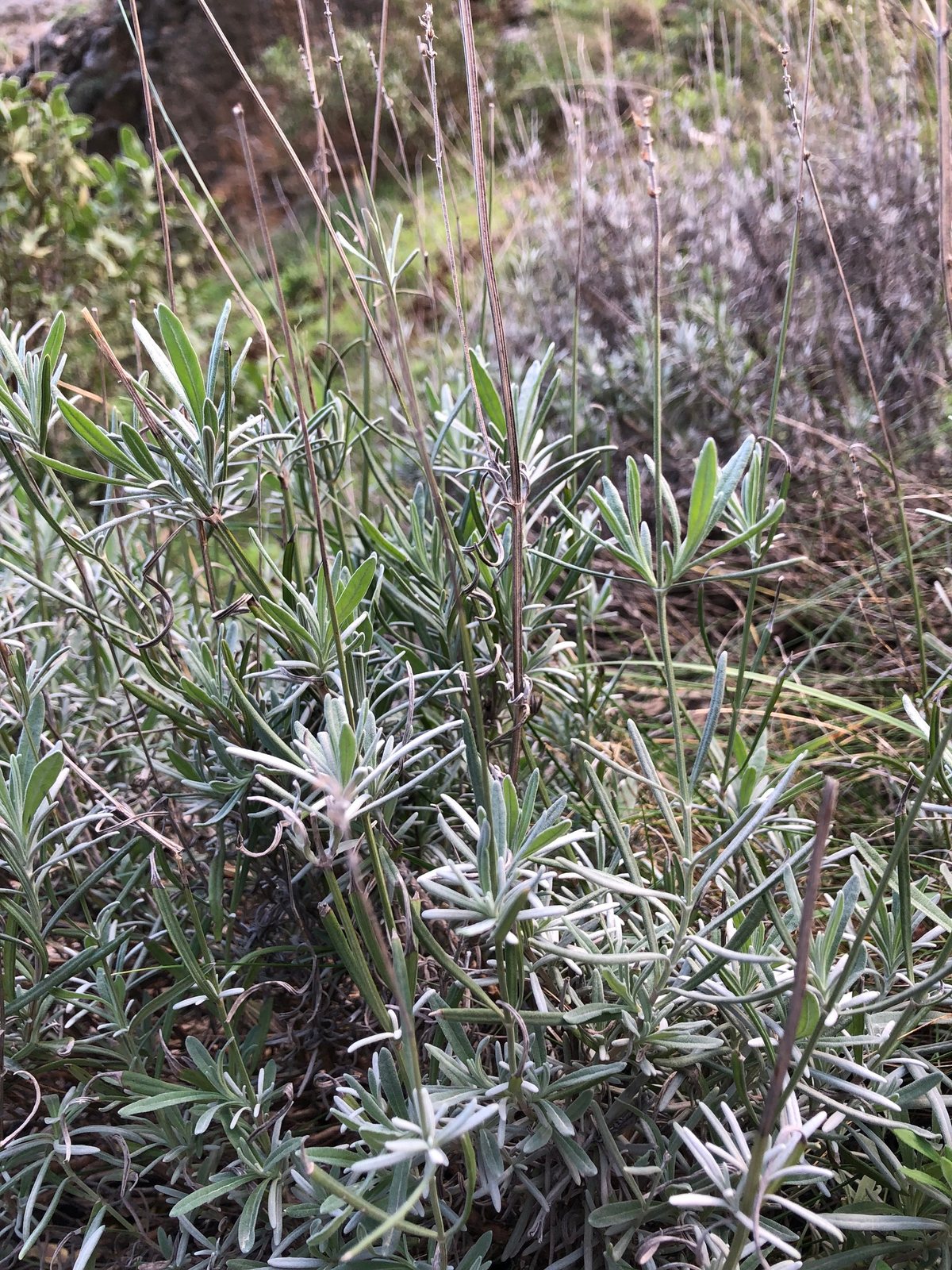
- Evergreen. Narrow, aromatic, grey-green leaves on a dense, rounded framework; foliage may thin or suffer damage in cold winters.
- Growth
- Slow to moderate
- Care needed
- Low
The year at a glance
- Pollinators
- Deer resistant
- Drought tolerant
- Heat tolerant
- Low allergen
- Fragrant
| J | F | M | A | M | J | J | A | S | O | N | D | |
|---|---|---|---|---|---|---|---|---|---|---|---|---|
| Flowers | ||||||||||||
| Plant |
Northern hemisphere months. In Australia, shift them by six.
- Difficulty
- Easy
- Toughness
- Very tough
Will it suit your garden?
Pick your zone, country, light and whether you have pets.
Full sun is 6 or more hours of direct sun a day, part shade 3 to 6 hours, shade under 3.
How it grows
Planting day
1.5 ft (0.45 m)
full size
About 7 years to full size.
From a typical nursery size, at an average rate for this kind of plant. A rule of thumb, not a forecast.
Good to know
- Cats and dogs
- Toxic
- Growth rate
- Slow
Care
Jobs through the year
- WaterApr–May, Sep, every 21 days
- Established ground plants need water only in prolonged drought; water new plants more often.
- WaterJun–Aug, every 14 days
- Water established ground plants only in extended dry weather, allowing soil to dry between soakings.
- PruneApr
- Once growth appears, remove winter damage and lightly shape without cutting into bare old wood.
- PruneJul–Aug
- After the main flowering flush, clip spent stems and lightly shape, leaving green leaves below every cut.
- MulchApr
- If needed, apply a thin gravel mulch, keeping the woody crown clear.
- ProtectJan–Feb, Nov–Dec
- Keep drainage clear and protect pots from persistent winter saturation.
- Plant with the crown at soil level and leave space between plants for air circulation.
- Water at soil level rather than repeatedly wetting the foliage.
- Avoid rich compost and routine feeding; excess fertility produces soft, floppy growth.
- Use a thin gravel mulch if needed, keeping it clear of the woody crown.
- Grow container plants in a pot with drainage holes and a gritty, free-draining potting mix.
Pruning. After the main flowering flush, remove spent flower stems and lightly shape the leafy growth, leaving green leaves below every cut. In cold climates, leave substantial shaping until spring; never cut into bare old wood, which often fails to regrow.
Through the year
- Spring
- Plant once the soil is workable and no longer waterlogged; water new plants through their first growing season.
- Mid-spring
- Check for winter damage once new growth appears, remove dead stems and lightly reshape within leafy growth.
- Early summer
- Harvest stems as the first flowers open if you want fragrant dried bunches.
- After summer flowering
- Clip off spent flower stems and lightly trim leafy shoots to maintain a compact mound.
- Late summer
- Take semi-ripe cuttings from healthy, non-flowering shoots.
- Winter
- Keep drainage outlets clear and avoid watering ground-grown plants unless conditions are unusually dry.
In the garden
- Plant as a low hedge along a sunny path, where the foliage releases scent when brushed.
- Repeat rounded clumps through a gravel garden with thyme and ornamental grasses for a restrained, drought-tolerant planting.
- Edge a rose border with a purple-flowered ribbon, keeping lavender outside the roses' heavily watered and mulched root zone.
- Use in sunny courtyard containers to bring scent, evergreen structure and flowers close to seating.
Garden styles it suits: English country, French country (Provençal), Herb parterre, Dry gravel garden, Sensory garden and Mediterranean.
Plant it with: Thyme, Santolina, Catmint, Yarrow, Bearded iris and Blue fescue.
Wildlife: Flowers provide nectar and pollen for bees and other visiting insects. Deer and rabbits usually leave the aromatic foliage alone, though no plant is completely browse-proof.
Problems to watch for
- Root and crown rot in wet soil: improve drainage or replant in a raised bed; replace badly rotted plants rather than watering them more.
- Woody, bare centres: trim lightly every year within leafy growth; replace old plants that no longer produce shoots near the base.
- Winter damage: choose a sunny, sheltered site with sharp drainage and wait until spring growth starts before removing dead shoots.
- Leaf spots and shoot dieback in humid conditions: increase spacing, avoid overhead watering and remove affected growth.
Safety
Leaves and flowers contain compounds that are toxic to cats, dogs and horses if eaten, generally causing digestive upset; concentrated lavender oil presents a greater risk. Lavender is not generally considered poisonous to people in small culinary quantities, but swallowing essential oil can be harmful and skin contact may cause irritation.
Easily confused with
Munstead lavender (Lavandula angustifolia 'Munstead')
Usually has paler, more lavender-blue flowers than the deep violet-purple of 'Hidcote'; young or non-flowering plants can be difficult to distinguish reliably.
Lavandin (Lavandula × intermedia)
Usually forms a larger mound with much longer, often branched flower stems and tends to flower later.
French or Spanish lavender (Lavandula stoechas)
Has short, dense flower heads topped by conspicuous upright, petal-like bracts; 'Hidcote' has slender spikes without these flags.
The name
The cultivar name refers to Hidcote Manor in Gloucestershire, England, while angustifolia means narrow-leaved.
Propagation. Take softwood cuttings in late spring or semi-ripe cuttings in late summer and root them in a free-draining medium. Cuttings preserve 'Hidcote'; seedlings may vary and should not be assumed to be the same cultivar.
Checked against open data
- Accepted botanical name
- Lavandula angustifolia
- In the US and Canada
- Introduced in the lower 48 states.
- Native range
- France, Italy and Spain.
- Measured
- Average height 100 cm.
Sources: GBIF (CC BY 4.0), USDA PLANTS and Trefle (CC BY 4.0). The care and design notes are LandscapeGPT's own.
See it in your own yard.
Upload a photo of your yard and see it redesigned with plants that suit your climate, each checked against your zone.