Himalayan fleeceflower
Persicaria affinis. Family Polygonaceae. Groundcover.
Also called Himalayan bistort, Dwarf fleeceflower, Bistorta affinis, Polygonum affine.
Himalayan fleeceflower is a low, spreading perennial grown for its dense carpet of leaves and slender pink flower spikes. The flowers deepen to rose-red as they age, while the foliage often turns bronze or reddish brown in autumn. It works well along paths and at the front of borders where the soil does not become very dry.
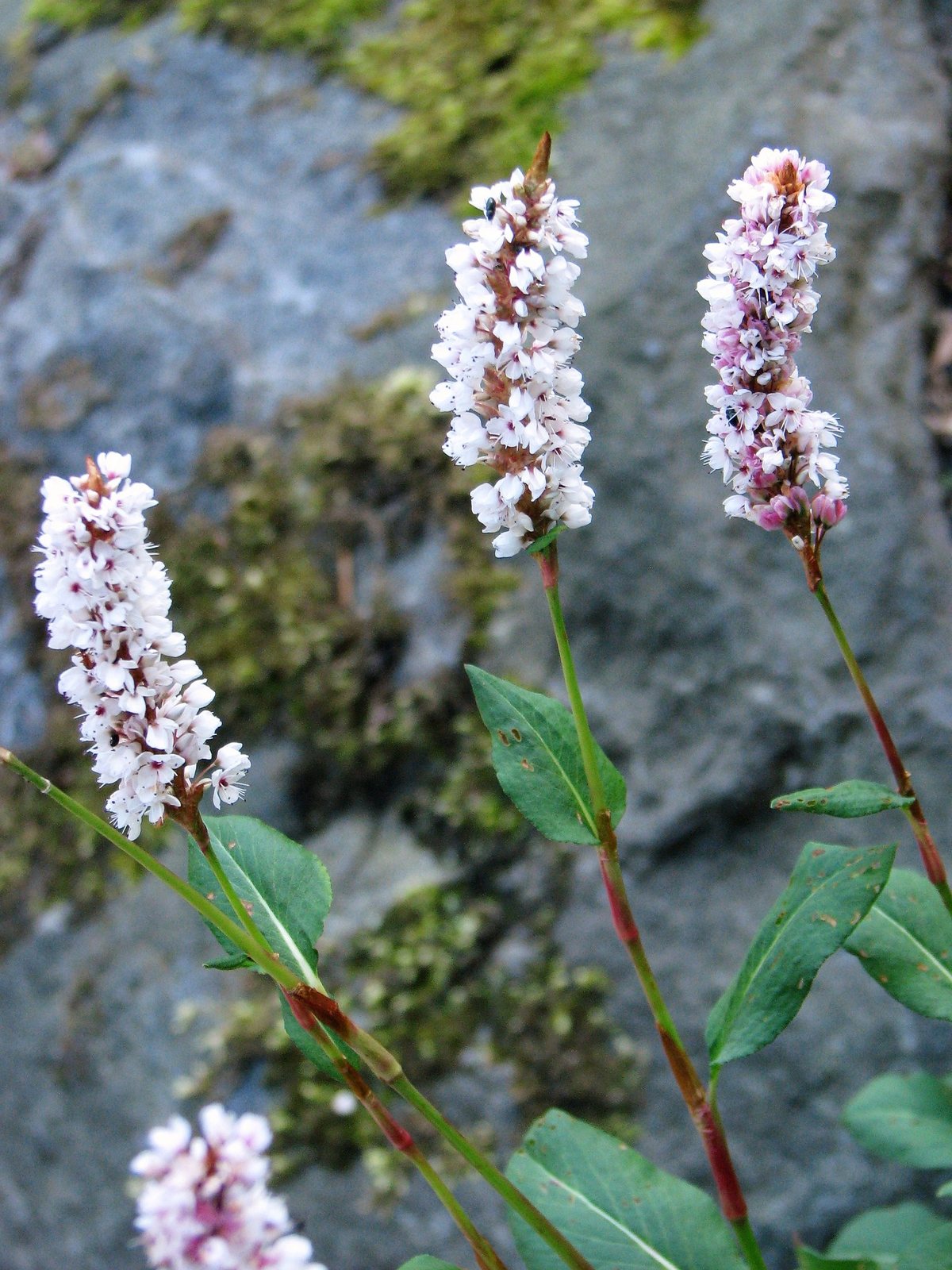
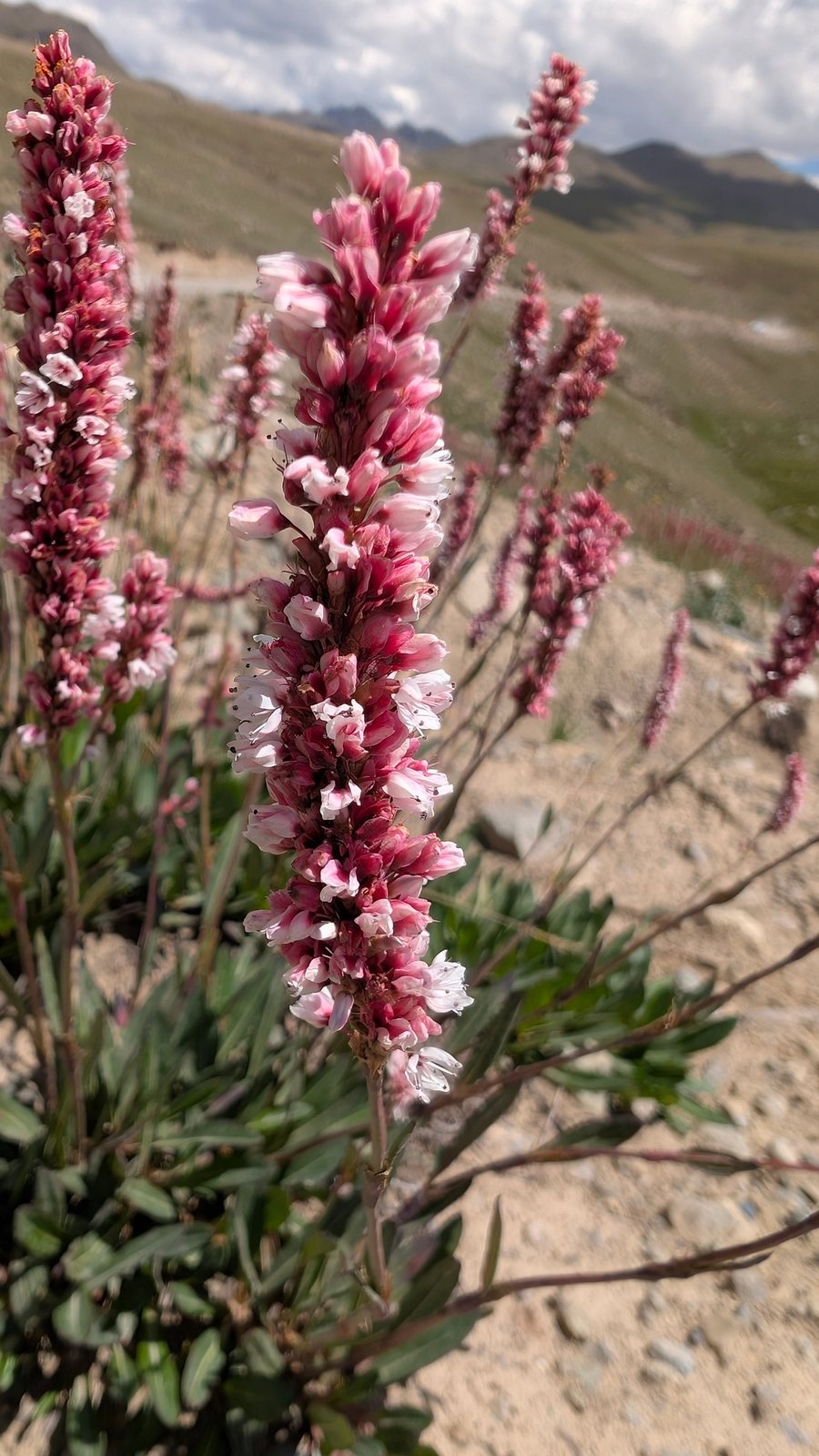
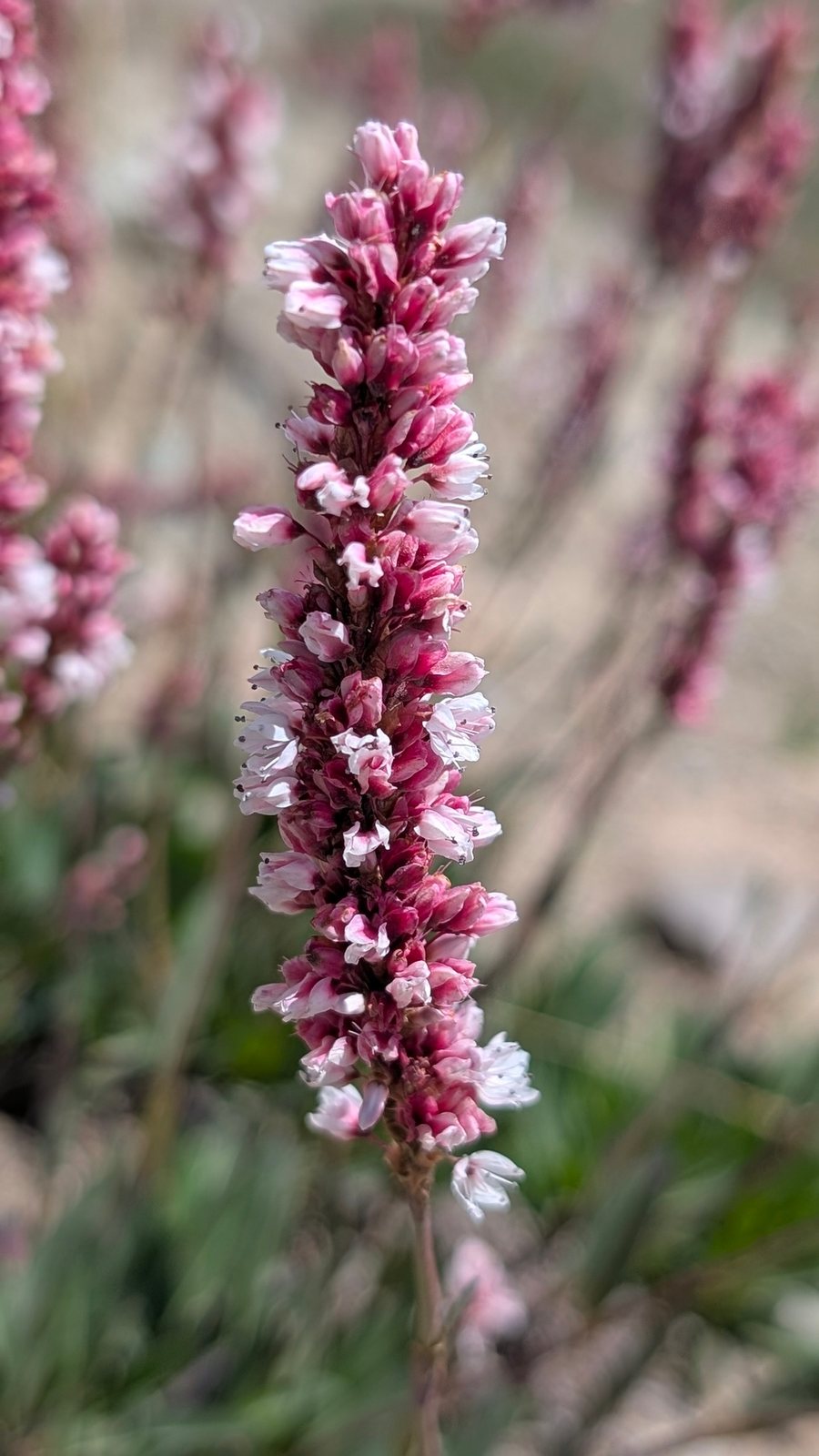
At a glance
- Sun
- Full sun to partial shade; give afternoon shade in hotter gardens.
- Water
- Moderate; keep evenly moist while establishing and water established plants during prolonged dry spells.
- Soil
- Moist but well-drained soil with some organic matter; tolerates clay if it does not remain waterlogged.
- Height
- 0.5-1 ft (0.15-0.3 m)
- Spread
- 1-2 ft (0.3-0.6 m), eventually wider where spreading stems can root
- Flowers
- Summer to early autumn; narrow spikes open pale pink and deepen to rose-red as they age.
- Foliage
- Dense mats of narrow, oval green leaves, often turning bronze or reddish brown in autumn. Semi-evergreen in mild climates and deciduous in colder winters.
- Growth
- Moderate to fast in moist, suitable soil
- Care needed
- Low
The year at a glance
- Pollinators
- Deer resistant
- Low allergen
| J | F | M | A | M | J | J | A | S | O | N | D | |
|---|---|---|---|---|---|---|---|---|---|---|---|---|
| Flowers | ||||||||||||
| Fruit | ||||||||||||
| Plant |
Northern hemisphere months. In Australia, shift them by six.
- Difficulty
- Easy
- Toughness
- Very tough
Will it suit your garden?
Pick your zone, country, light and whether you have pets.
Full sun is 6 or more hours of direct sun a day, part shade 3 to 6 hours, shade under 3.
How it grows
Planting day
0.2 ft (0.06 m)
After 1 year
0.5 ft (0.14 m)
After 2 years
0.7 ft (0.22 m)
full size
About 2 years to full size.
From a typical nursery size, at an average rate for this kind of plant. A rule of thumb, not a forecast.
Good to know
- Cats and dogs
- Safe
- In the garden
- Spreads vigorously: plan to contain it.
- Growth rate
- Fast
Care
Jobs through the year
- WaterApr–May, Sep–Oct, every 14 days
- Water established ground plants if soil is drying during rainless spells; keep new plants evenly moist.
- WaterJun–Aug, every 7 days
- Water established ground plants deeply during drought, especially in full sun; skip when soil is moist.
- MulchMar–Apr
- Apply a thin compost dressing around plants without covering crowns.
- PruneFeb–Mar
- Shear off winter-damaged leaves and old flower stems before fresh growth.
- PruneMay–Sep, every 30 days
- Trim and lift rooting stems that cross paths or crowd smaller plants.
- DivideMar–May
- Divide congested or patchy mats and replant healthy outer sections.
- DeadheadJul–Sep
- Remove faded spikes if desired, or leave attractive ageing heads for autumn interest.
- ProtectOct–Nov
- Clear smothering fallen leaves and ensure winter water drains away.
- Water regularly during the first growing season so the root zone does not dry out.
- Water during extended summer drought, especially in full sun.
- Apply a thin layer of compost around the plants in spring; routine heavy feeding is unnecessary.
- Trim back rooting stems that cross paths or crowd smaller plants.
- Divide congested or patchy mats in spring and replant healthy outer sections.
Pruning. In late winter or early spring, shear off weather-damaged leaves and old flower stems before fresh growth develops. Remove faded flower spikes during summer if you prefer a tidier appearance.
Through the year
- Early spring
- Trim off damaged foliage and old flower stems before new growth fills the mat.
- Spring
- Plant or divide clumps, water thoroughly and add a light dressing of compost.
- Early summer
- Check the edges and remove stems spreading into neighbouring plants or paths.
- Summer
- Water during prolonged dry weather; remove faded spikes if desired.
- Autumn
- Leave sound foliage and attractive ageing flower spikes in place; clear fallen leaves that smother the mat.
- Winter
- Check that water drains freely and avoid walking on frozen or saturated plants.
In the garden
- Edge paths and border fronts with a low carpet of foliage and upright pink flower spikes.
- Plant between larger perennials to cover bare soil, leaving room around less vigorous neighbours.
- Soften the edges of steps, low retaining walls and large stones where roots can reach moist soil.
- Repeat patches beside hardy geraniums and small ornamental grasses for a long-flowering, informal planting.
Garden styles it suits: Cottage garden, English country, New perennial (prairie), Low-maintenance, Pollinator garden and Mountain lodge.
Plant it with: Hardy geraniums, Lady's mantle, Siberian iris, Tufted hair grass, Japanese anemones and Astrantia.
Wildlife: The flowers provide nectar and pollen for bees and other visiting insects.
Problems to watch for
- Scorched or browning leaves in dry heat: water deeply during drought and provide afternoon shade in hot sites.
- Rotting crowns or thinning mats in wet winter soil: improve drainage or move plants out of depressions where water collects.
- Slugs and snails may damage young growth: remove hiding places, hand-pick pests and use wildlife-conscious controls if needed.
- Spreading stems can smother small neighbours: cut around the patch and lift unwanted rooted sections.
Safety
Not known to be toxic to people, cats, dogs or horses; no particular part is recognised as poisonous. It is an ornamental plant rather than a food plant, so discourage eating it.
Easily confused with
Red bistort (Persicaria amplexicaulis)
Forms much taller, upright clumps with larger, broad leaves that clasp the stems, rather than a low mat.
Common bistort (Bistorta officinalis)
Has broader basal leaves and thicker, bottlebrush-like pink spikes held well above the foliage, usually flowering earlier.
Pink-headed knotweed (Persicaria capitata)
Has rounded pink flower heads rather than slender spikes, and its leaves often carry a dark chevron marking.
The name
Himalayan refers to its native mountain region, while Persicaria refers to leaves resembling those of a peach tree and affinis means related or similar.
Propagation. Divide rooted mats in spring, keeping several healthy shoots and roots on each section. Rooted pieces from the edge of a clump can also be lifted and replanted; division preserves named cultivars.
Checked against open data
- Accepted botanical name
- Bistorta affinis Persicaria affinis is an older name for Bistorta affinis.
- Native range
- Afghanistan, East Himalaya, Nepal, Pakistan, Tibet and West Himalaya.
- Measured
- Average height 11 cm.
Sources: GBIF (CC BY 4.0) and Trefle (CC BY 4.0). The care and design notes are LandscapeGPT's own.
See it in your own yard.
Upload a photo of your yard and see it redesigned with plants that suit your climate, each checked against your zone.