Himalayan maidenhair fern
Adiantum venustum. Family Pteridaceae. Fern.
Also called Evergreen maidenhair fern.
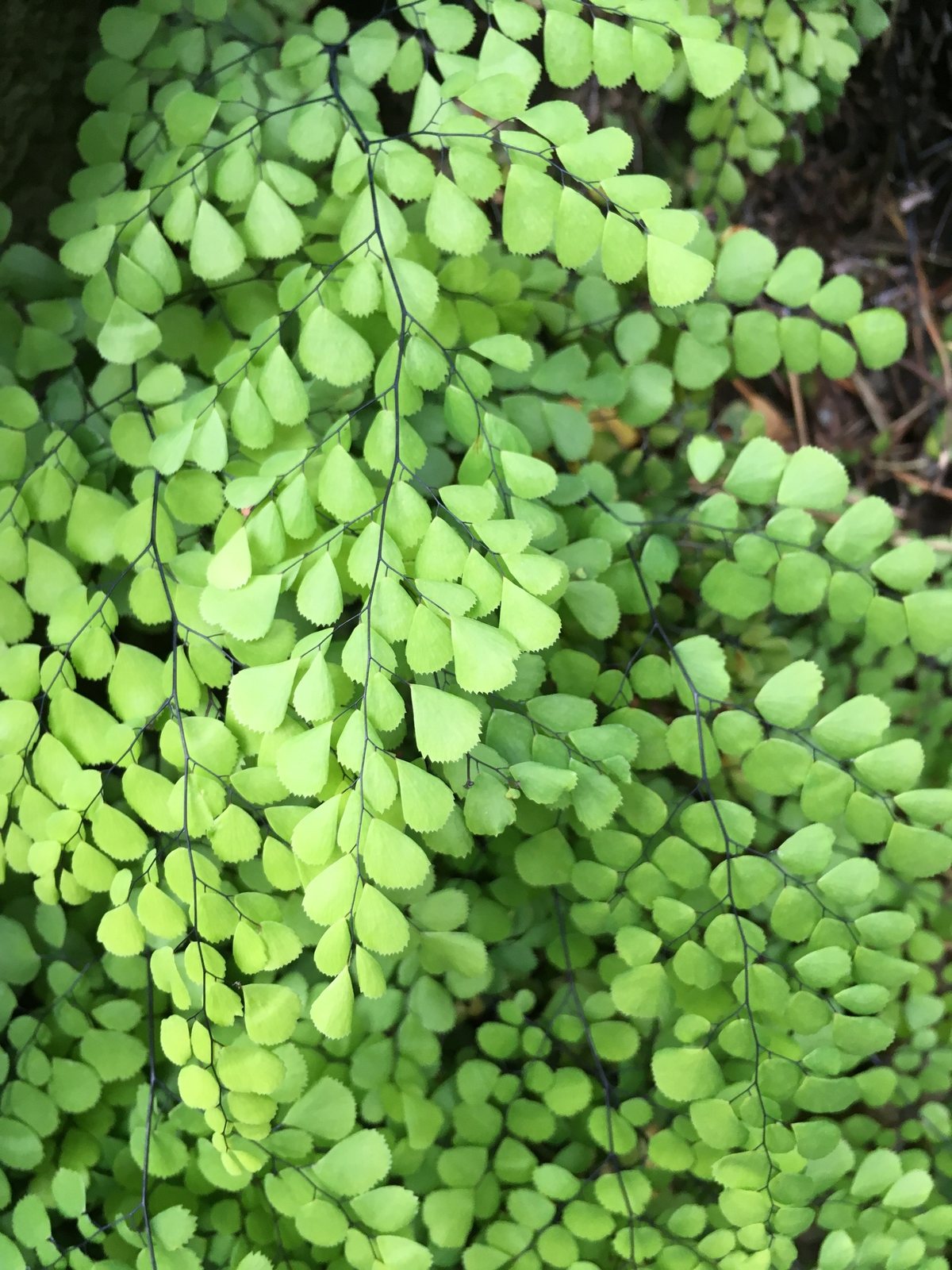
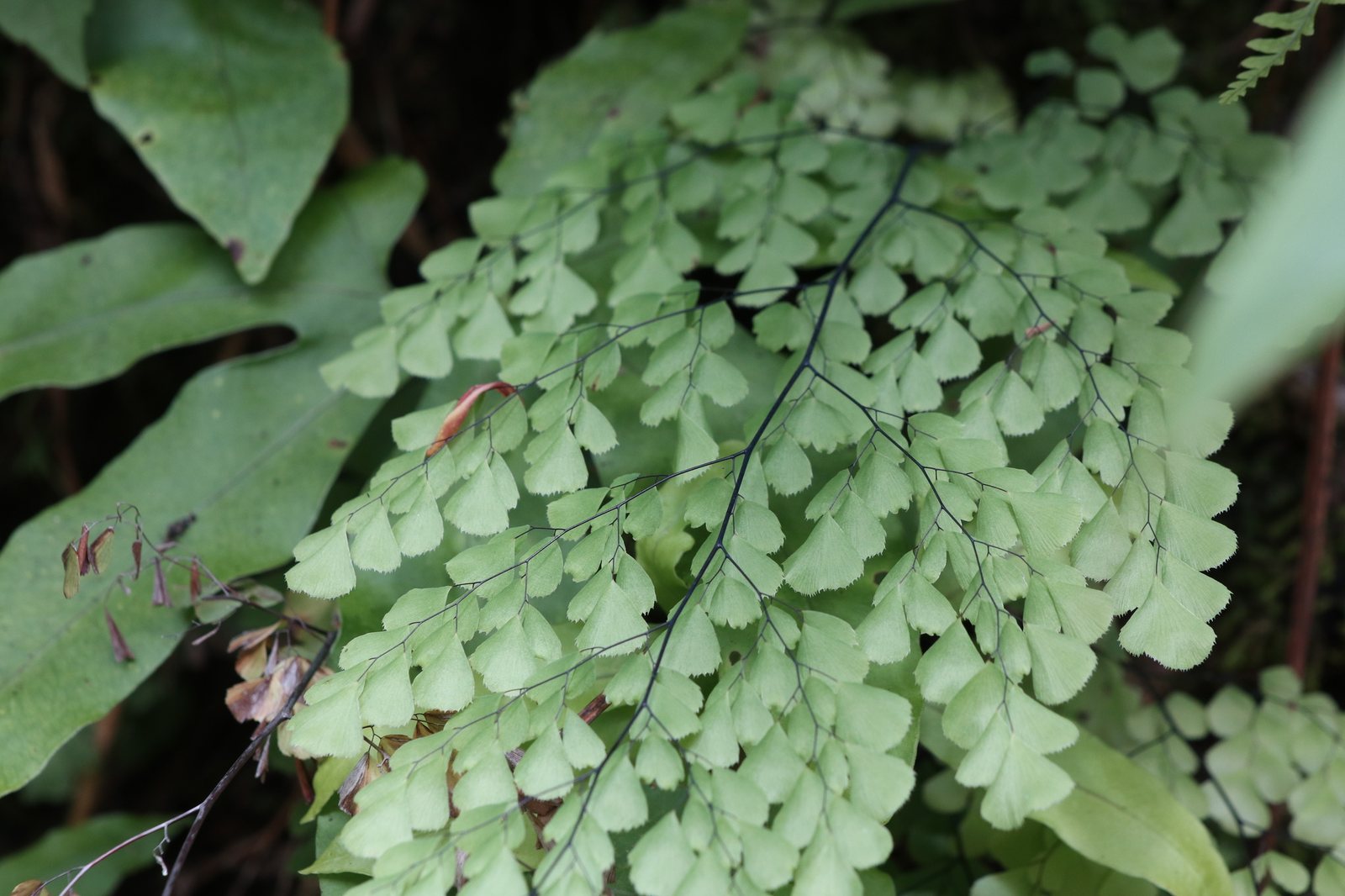
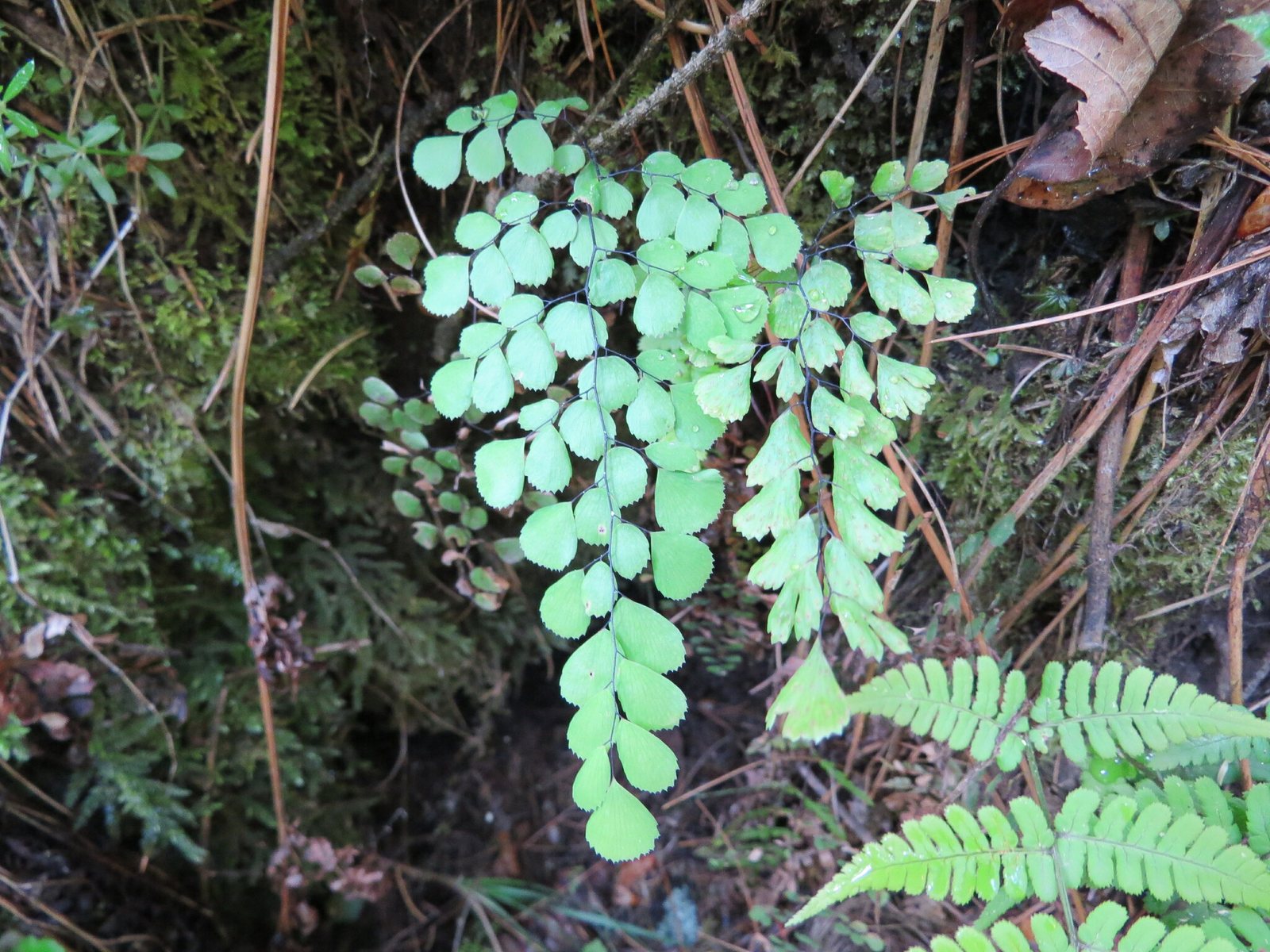
Himalayan maidenhair fern forms a low, spreading carpet of delicate fronds on slender, dark stems. Gardeners grow it for its fine texture and coppery-pink new growth in shaded borders and woodland gardens. It stays evergreen in mild winters but may lose its fronds in colder climates.
At a glance
- Sun
- Partial to full shade; gentle morning sun is suitable where the soil stays moist. Avoid hot afternoon sun and exposed, windy sites.
- Water
- Keep the soil evenly moist, especially during establishment and dry summers, but not waterlogged.
- Soil
- Humus-rich, well-drained soil, preferably neutral to slightly acidic. Improve dry or compacted ground with leaf mould or compost.
- Height
- 0.5-1 ft (0.15-0.3 m)
- Spread
- 1.5-3 ft (0.45-0.9 m), spreading farther over time in suitable soil
- Foliage
- Evergreen. Finely divided, triangular fronds with small, fan-shaped green leaflets on wiry, dark brown to black stems. New fronds often emerge coppery-pink; older foliage may bronze in cold weather.
- Growth
- Slow to moderate; establishes gradually, then spreads by creeping rhizomes.
- Care needed
- Low
The year at a glance
- Deer resistant
- Wildlife
- Low allergen
| J | F | M | A | M | J | J | A | S | O | N | D | |
|---|---|---|---|---|---|---|---|---|---|---|---|---|
| Plant |
Northern hemisphere months. In Australia, shift them by six.
- Difficulty
- Easy
- Toughness
- Fairly tough
Will it suit your garden?
Pick your zone, country, light and whether you have pets.
Full sun is 6 or more hours of direct sun a day, part shade 3 to 6 hours, shade under 3.
How it grows
Planting day
0.7 ft (0.22 m)
full size
About 4 years to full size.
From a typical nursery size, at an average rate for this kind of plant. A rule of thumb, not a forecast.
Good to know
- Cats and dogs
- Safe
- Growth rate
- Slow
Care
Jobs through the year
- WaterMar–May, Sep–Oct, every 7 days
- Water established patches when soil begins drying; newly planted ferns need closer monitoring.
- WaterJun–Aug, every 4 days
- Water during dry weather before shallow rhizomes dry out; keep moist, not waterlogged.
- MulchApr
- Top-dress with a thin layer of leaf mould or well-rotted compost, leaving emerging fronds uncovered.
- PruneFeb–Mar
- Remove dead or weather-damaged fronds before new growth; retain healthy evergreen foliage.
- DivideMar–Apr
- Divide established patches only to propagate or limit spread, then replant and water thoroughly.
- Water during dry spells before the soil around the shallow rhizomes dries out.
- Apply a thin layer of leaf mould or well-rotted compost each spring, keeping emerging fronds uncovered.
- Avoid routine heavy feeding; an annual organic mulch is usually sufficient.
- Shelter from drying winds and strong afternoon sun.
- Divide established patches in spring if you need more plants or want to limit their spread.
Pruning. In late winter or early spring, cut damaged or dead fronds close to the ground before new growth unfurls. Leave healthy evergreen fronds in place.
Through the year
- Late winter
- Remove dead or badly weathered fronds without damaging the emerging growth.
- Spring
- Plant or divide into moist, prepared soil and water thoroughly.
- Mid-spring
- Top-dress with leaf mould or well-rotted compost.
- Summer
- Check soil moisture during hot or rainless weather and water before fronds begin to crisp.
- Autumn
- Plant in mild regions while the soil is still warm; keep new plants watered.
- Winter
- Leave healthy foliage intact and check that water is not standing around the rhizomes.
In the garden
- Use as a fine-textured groundcover beneath deciduous shrubs where roots do not leave the soil too dry.
- Edge shaded paths with low drifts that soften paving without hiding the route.
- Plant among mossy rocks in a sheltered, moist woodland setting.
- Combine with broad-leaved hostas and hellebores for contrasting foliage shapes.
- Grow in shaded courtyard containers with reliable watering and good drainage.
Garden styles it suits: Woodland, Japanese, Moss and fern garden, Secret garden, Pacific Northwest woodland and Green on green.
Plant it with: Hostas, Hellebores, Siberian bugloss, Epimediums, Japanese painted fern and Solomon's seal.
Wildlife: Dense patches provide damp shelter for small garden invertebrates. As a fern, it has no flowers, nectar or pollen for pollinating insects.
Problems to watch for
- Brown, crisp fronds usually indicate dry soil, hot sun or drying wind; water deeply and provide more shade or shelter.
- Yellowing and collapse in persistently wet soil can indicate rhizome rot; improve drainage and avoid waterlogged planting sites.
- Slugs and snails may damage emerging fronds; inspect young growth and use hand-picking or wildlife-conscious controls where needed.
- Hard frost can brown or kill the fronds without killing the plant; leave the rhizomes undisturbed and remove dead foliage before spring growth.
Safety
Not known to be toxic to cats, dogs, horses or people. No part is recognised as poisonous, but it is not a food plant and should not be eaten.
Easily confused with
Northern maidenhair fern (Adiantum pedatum)
Its fronds branch into a distinctive, nearly circular hand-shaped arrangement, rather than the triangular outline of Himalayan maidenhair fern.
Southern maidenhair fern (Adiantum capillus-veneris)
Usually has larger, more conspicuously fan-shaped leaflets on a more open frond. It is less cold-hardy and often grows naturally on damp, lime-rich rock.
The name
Adiantum comes from Greek meaning 'unwetted', referring to the water-shedding foliage, while venustum means 'charming' or 'beautiful' and Himalayan refers to its native region.
Propagation. Divide established patches in spring, taking sections with healthy rhizomes, roots and growing points. Replant promptly and keep moist. Propagation from spores is possible but slow and requires consistently humid conditions.
Checked against open data
- Accepted botanical name
- Adiantum venustum
- Native range
- Afghanistan, Assam, China North-Central, China South-Central, East Himalaya, Myanmar, Nepal, Pakistan, Qinghai, Tibet and West Himalaya.
Sources: GBIF (CC BY 4.0) and Trefle (CC BY 4.0). The care and design notes are LandscapeGPT's own.
See it in your own yard.
Upload a photo of your yard and see it redesigned with plants that suit your climate, each checked against your zone.