Hollywood juniper
Juniperus chinensis 'Kaizuka'. Family Cupressaceae. Tree.
Also called Torulosa juniper, Kaizuka Chinese juniper, Twisted Chinese juniper.
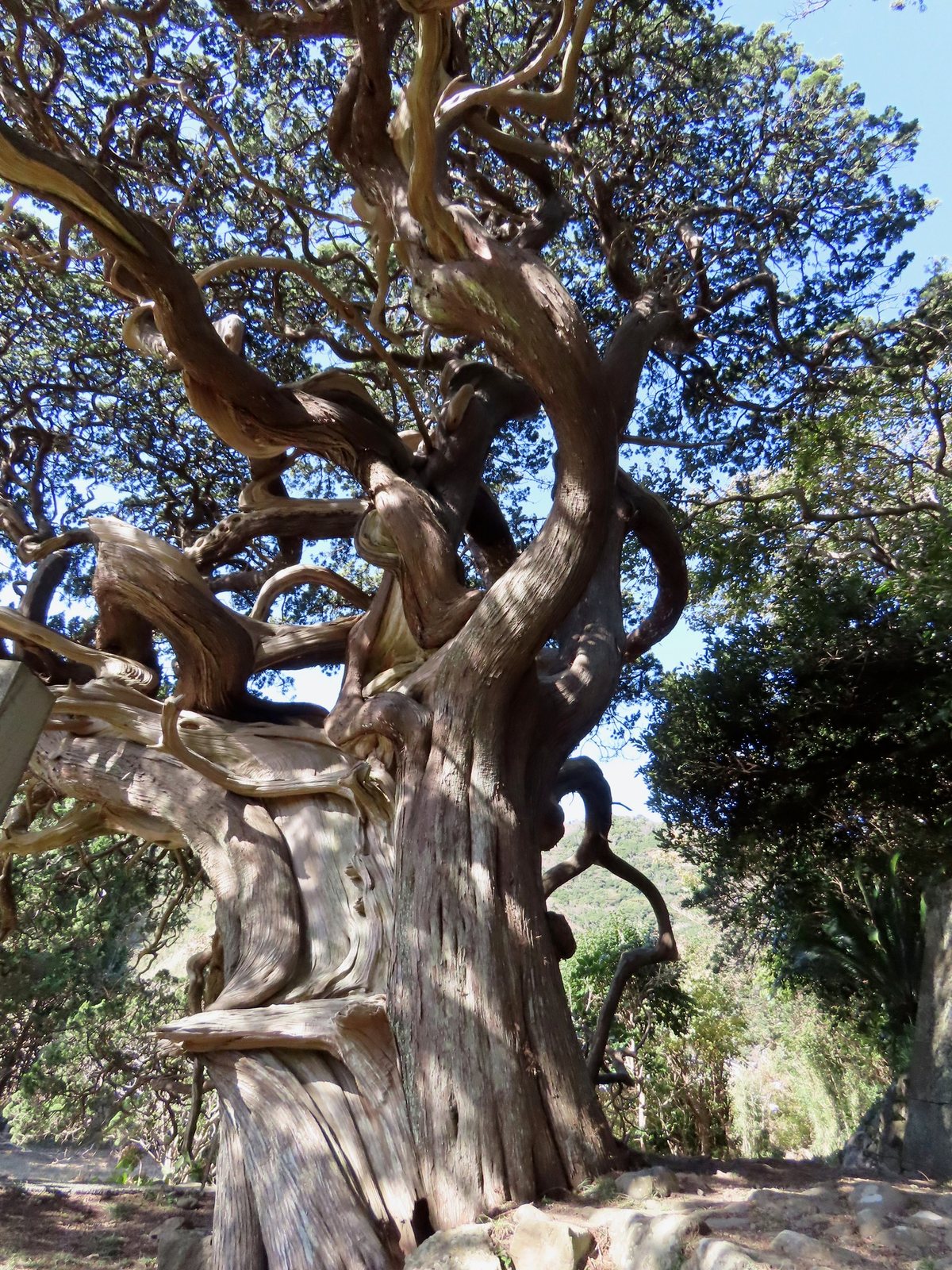
Hollywood juniper is an evergreen small tree or large shrub with twisting, upright branches and irregular masses of dark green foliage. Grow it for its sculptural outline, year-round screening or a strong focal point; allow enough room for its naturally uneven shape.
At a glance
- Sun
- Full sun; light shade is tolerated, but growth becomes looser.
- Water
- Water deeply during establishment, allowing the soil surface to dry between waterings. Once established, it tolerates drought but benefits from occasional deep watering during prolonged dry spells.
- Soil
- Well-drained sandy, loamy or gravelly soil; tolerates a broad pH range. Avoid waterlogged ground and heavily compacted clay.
- Height
- 15-25 ft (4.5-7.6 m)
- Spread
- 8-15 ft (2.4-4.6 m)
- Foliage
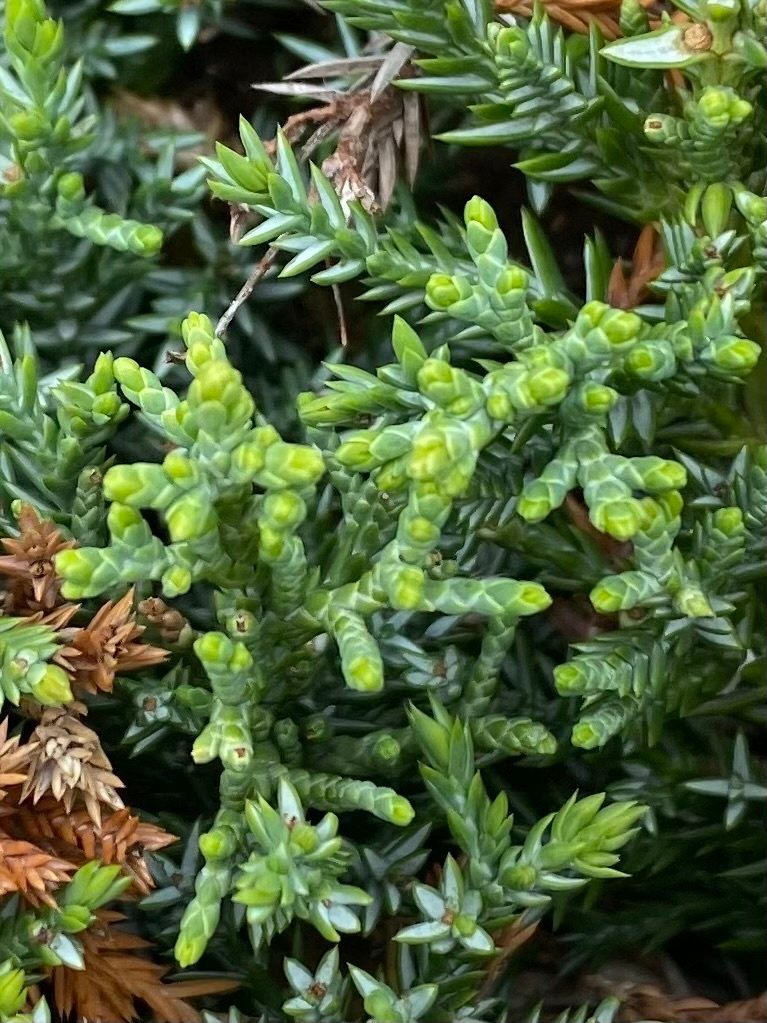
- Dark green, mostly scale-like evergreen foliage held in dense, irregular sprays; some sharp, needle-like juvenile foliage may occur.
- Growth
- Moderate; slower in dry, poor soil.
- Care needed
- Low
The year at a glance
- Deer resistant
- Drought tolerant
- Heat tolerant
- Wildlife
| J | F | M | A | M | J | J | A | S | O | N | D | |
|---|---|---|---|---|---|---|---|---|---|---|---|---|
| Fruit | ||||||||||||
| Plant |
Northern hemisphere months. In Australia, shift them by six.
- Difficulty
- Easy
- Toughness
- Very tough
Will it suit your garden?
Pick your zone, country, light and whether you have pets.
Full sun is 6 or more hours of direct sun a day, part shade 3 to 6 hours, shade under 3.
How it grows
Planting day
7 ft (2 m)
After 1 year
7 ft (2.2 m)
After 2 years
8 ft (2.3 m)
After 3 years
8 ft (2.5 m)
After 5 years
9 ft (2.8 m)
About 26 years to full size.
From a typical nursery size, at an average rate for this kind of plant. A rule of thumb, not a forecast.
Good to know
- Cats and dogs
- Mildly toxic: may upset a stomach
- Growth rate
- Slow
Care
Jobs through the year
- WaterApr–May, Sep–Nov, every 28 days
- Water established trees only in dry conditions; water more often during the first two growing seasons.
- WaterJun–Aug, every 21 days
- Deep-water established trees during prolonged drought, allowing soil to drain between soakings.
- PruneFeb–Mar
- Remove dead, damaged or crossing branches; make shaping cuts only into leafy growth.
- MulchMar
- Maintain 5-8 cm of organic mulch, keeping the trunk and root flare clear.
- FeedApr
- Feed modestly only if growth is poor and a soil test indicates a deficiency.
- Plant with the root flare at soil level, leaving room for the mature spread.
- Water deeply through the first two growing seasons whenever the root zone begins to dry.
- Apply 2-3 in (5-8 cm) of mulch, keeping it clear of the trunk.
- Avoid routine feeding; use a modest spring application of balanced fertiliser only if growth is poor and a soil test indicates a need.
- Stake only if the root ball moves in wind, and remove supports once roots hold it firmly.
Pruning. In late winter or early spring, remove dead, damaged or crossing branches and shorten selected shoots only into leafy growth. Avoid shearing or cutting into bare old wood, which usually does not regrow.
Through the year
- Spring
- Plant when the soil is workable and not waterlogged; water the root ball thoroughly.
- Spring
- Refresh mulch and check that it is not touching the trunk.
- Early summer
- Inspect shoot tips for browning and check foliage for mites or bagworms.
- Summer
- Deep-water young plants during dry weather; let the soil drain between waterings.
- Autumn
- Water before the ground freezes if autumn has been dry, especially for recently planted trees.
- Late winter
- Remove broken or dead branches and make any light shaping cuts before new growth.
In the garden
- Use as a single focal tree in gravel, with open space around it to show the twisting branches.
- Plant an informal screen where an irregular outline is more suitable than a clipped hedge.
- Pair with boulders and low groundcovers in Japanese-inspired gardens.
- Contrast its upright, dark foliage with rounded shrubs, silver-leaved plants or ornamental grasses.
Garden styles it suits: Architectural minimal, Japanese, Zen dry garden, Dry gravel garden, Low-maintenance and Winter interest.
Plant it with: Lavender, Catmint, Stonecrop, Blue fescue, Creeping thyme and Dwarf mugo pine.
Wildlife: Dense evergreen branches provide shelter and nesting cover for birds. Berry-like cones, when present, may be eaten by birds.
Problems to watch for
- Root rot in wet soil: improve drainage before planting and avoid frequent watering; replace badly affected plants rather than replanting into the same wet conditions.
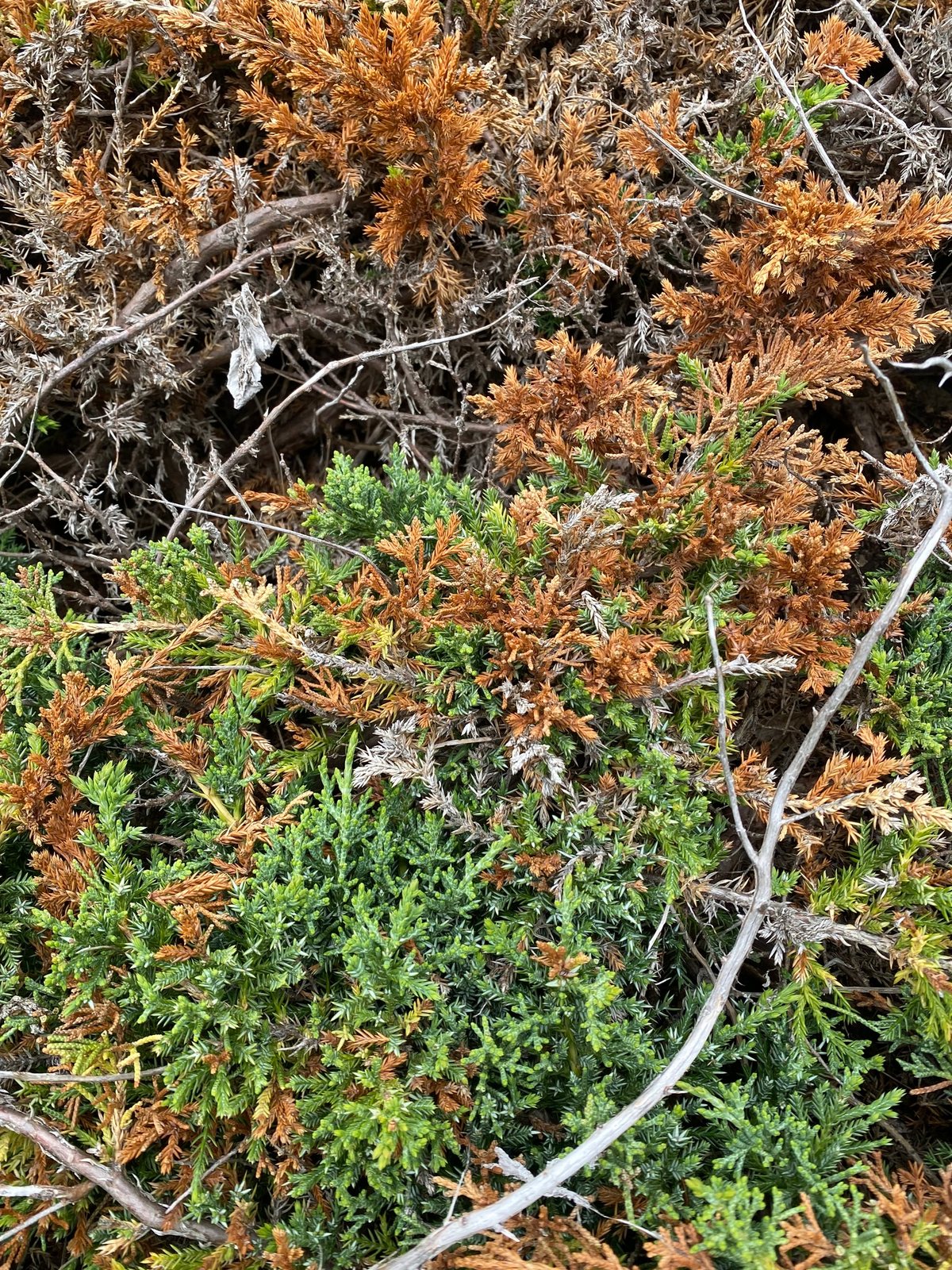
- Juniper tip blight: prune affected shoots in dry weather, disinfect tools between cuts and avoid overhead irrigation.
- Spider mites: look for fine stippling and webbing during hot, dry weather; rinse foliage thoroughly and use an appropriate labelled treatment only if damage continues.
- Bagworms, particularly in parts of North America: remove and dispose of bags before eggs hatch; treat small, actively feeding larvae if an infestation is extensive.
Safety
Do not eat the foliage or berry-like cones. Juniper ingestion can cause stomach upset in people, cats and dogs, particularly in quantity; sap and prickly foliage may also irritate skin. Specific toxicity information for horses is limited, so keep prunings out of grazing areas. This is not the culinary juniper used for flavouring.
Easily confused with
Spartan Chinese juniper (Juniperus chinensis 'Spartan')
Forms a dense, comparatively even, narrow pyramid rather than the twisting branches and irregular foliage masses of Hollywood juniper.
Blue Point Chinese juniper (Juniperus chinensis 'Blue Point')
Has blue-green foliage and a more regular conical outline; Hollywood juniper is darker green with conspicuously uneven branching.
Hinoki cypress (Chamaecyparis obtusa)
Has flattened, fan-shaped foliage sprays, often with pale markings beneath, and small woody cones rather than juniper's fleshy, berry-like cones.
The name
The species name chinensis means 'from China', while Hollywood juniper refers to its long-standing use in landscapes around Hollywood, California.
Propagation. Take semi-ripe cuttings with a small heel in late summer and root in a free-draining medium under humid conditions. Rooting can be slow; seed will not reliably reproduce the cultivar.
Checked against open data
- Accepted botanical name
- Juniperus chinensis
- Native range
- China North-Central, China South-Central, China Southeast, Inner Mongolia, Japan, Khabarovsk, Korea, Kuril Is., Manchuria, Myanmar, Primorye and Sakhalin.
- Measured
- Soil pH 4.5 to 7.5. Average height 2000 cm.
Sources: GBIF (CC BY 4.0) and Trefle (CC BY 4.0). The care and design notes are LandscapeGPT's own.
See it in your own yard.
Upload a photo of your yard and see it redesigned with plants that suit your climate, each checked against your zone.