Honesty (money plant)
Lunaria annua. Family Brassicaceae. Annual.
Also called Annual honesty, Silver dollar plant, Money plant.
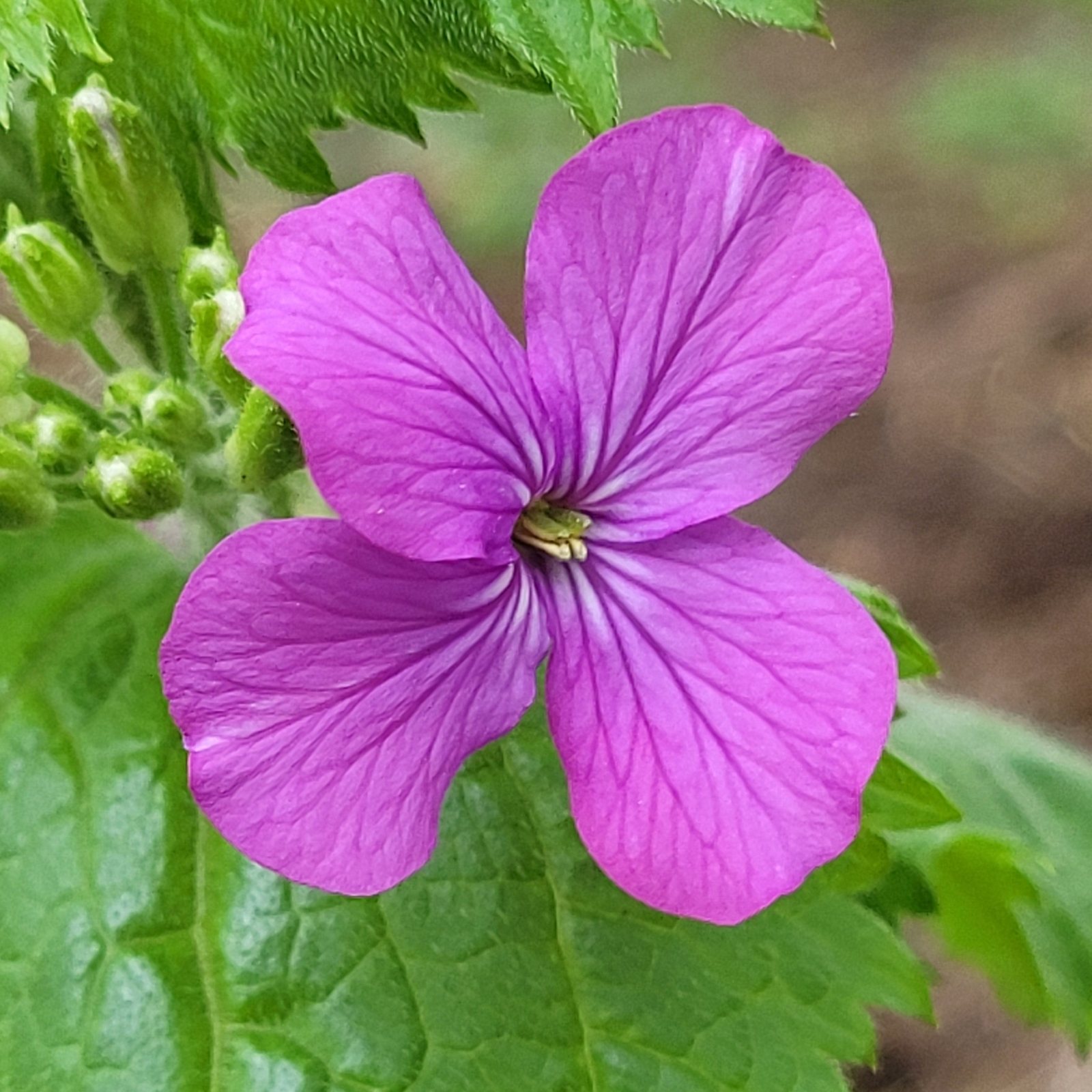
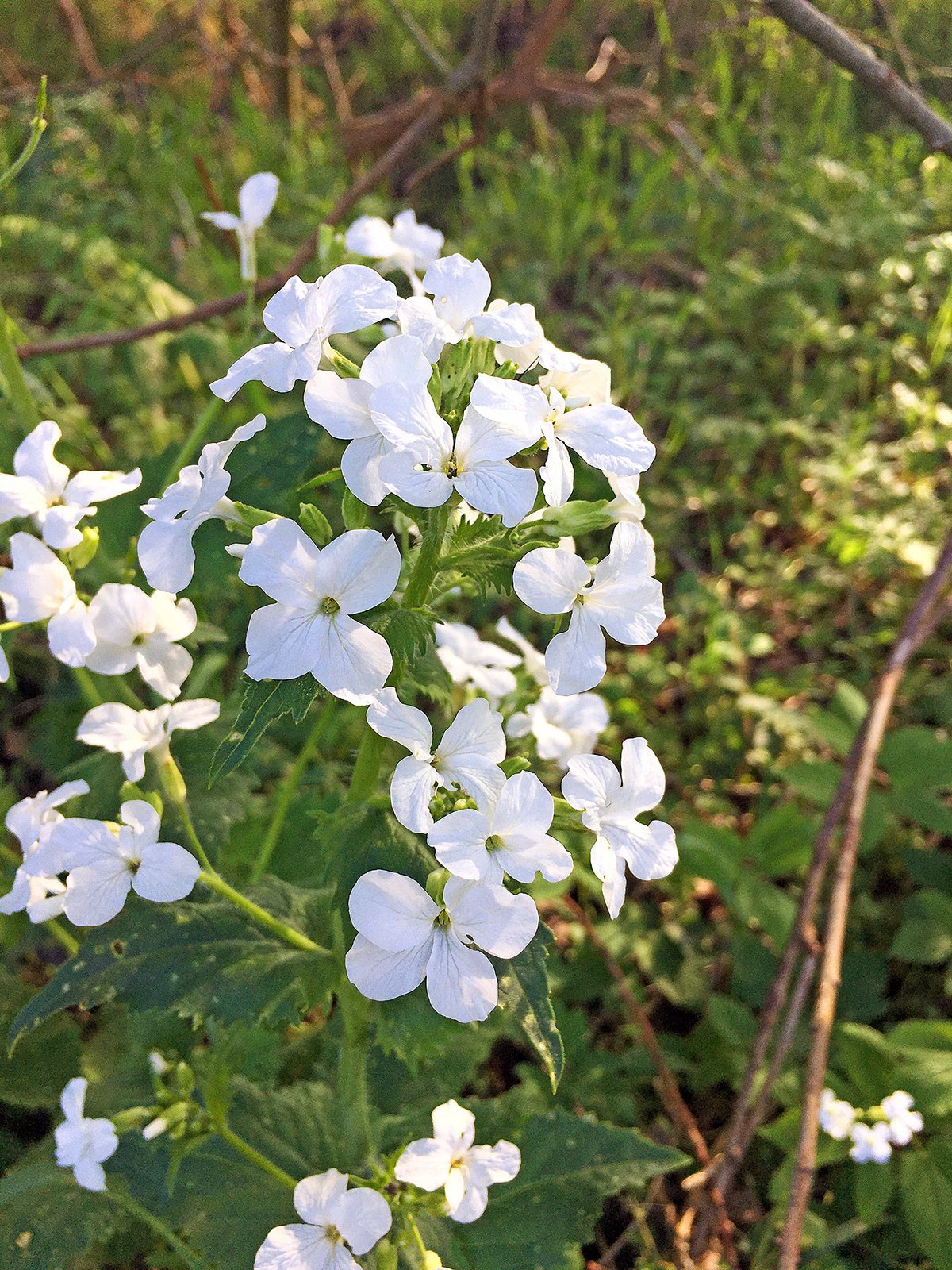
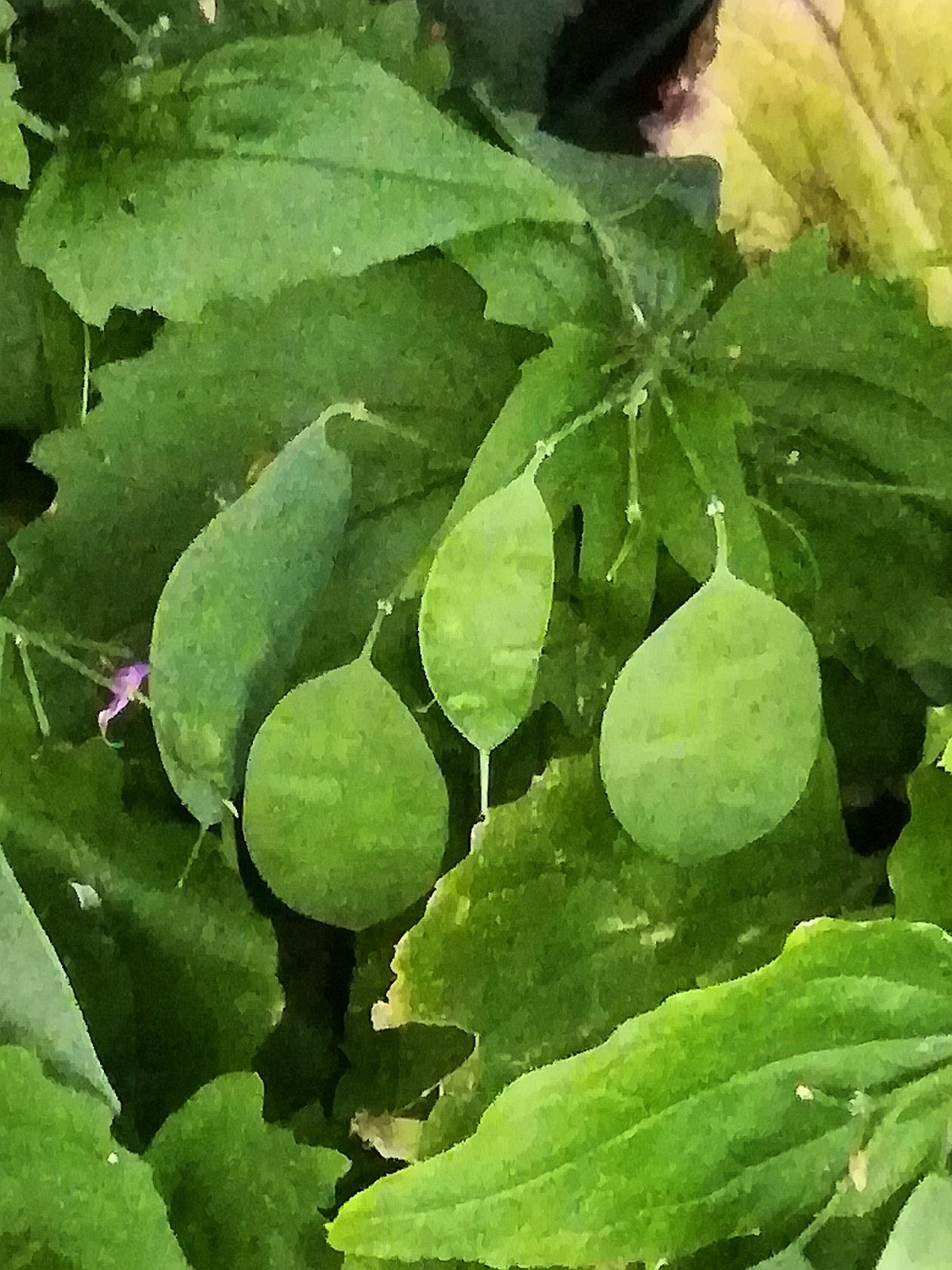
Honesty is normally grown as a biennial, making a leafy rosette in its first year, overwintering, then flowering and setting seed in its second. Gardeners grow it for purple or white spring flowers and the flat, silvery seed-pod membranes that last well in dried arrangements; some early-flowering strains can be grown as an annual.
At a glance
- Sun
- Full sun to partial shade; light afternoon shade is helpful in hot climates.
- Water
- Moderate; keep seedlings moist and water established plants during prolonged dry spells.
- Soil
- Well-drained soil with some organic matter; tolerates clay if it does not stay waterlogged.
- Height
- 2-3 ft (0.6-0.9 m)
- Spread
- 1-2 ft (0.3-0.6 m)
- Flowers
- Mid-spring to early summer; purple, violet or white flowers in loose clusters.
- Foliage
- Broad, toothed, heart-shaped green leaves, with larger leaves near the base; first-year rosettes may retain leaves through mild winters.
- Growth
- Fast once established; normally flowers in its second year.
- Care needed
- Low
The year at a glance
- Pollinators
- Wildlife
- Low allergen
| J | F | M | A | M | J | J | A | S | O | N | D | |
|---|---|---|---|---|---|---|---|---|---|---|---|---|
| Flowers | ||||||||||||
| Fruit | ||||||||||||
| Plant |
Northern hemisphere months. In Australia, shift them by six.
- Difficulty
- Easy
- Toughness
- Fairly tough
Will it suit your garden?
Pick your zone, country, light and whether you have pets.
Full sun is 6 or more hours of direct sun a day, part shade 3 to 6 hours, shade under 3.
How it grows
Planting day
0.5 ft (0.15 m)
After 1 year
2.5 ft (0.75 m)
full size
Full size in one season.
From a typical nursery size, at an average rate for this kind of plant. A rule of thumb, not a forecast.
Good to know
- Cats and dogs
- Safe
- Invasive in
- the US
- In the garden
- Spreads vigorously: plan to contain it.
- Growth rate
- Fast
Care
Jobs through the year
- WaterMar–May, Sep–Oct, every 14 days
- Water established plants during extended dry spells; keep seedlings moist until rooted.
- WaterJun–Aug, every 7 days
- Water established plants if dry; check summer-sown seedlings more frequently.
- MulchMar–Apr
- Apply a thin compost layer on poor soil; avoid rich feeding.
- ProtectMar–May
- Protect seedlings from slugs and support tall flowering stems in exposed positions.
- PruneJun–Jul
- Cut developing seed stems only where self-seeding is unwanted; retain others for decorative pods.
- PruneSep–Oct
- Clear dead flowering plants after seed falls, retaining selected young rosettes.
- Water seedlings regularly until rooted, then water during extended dry weather.
- Add a little compost before planting; avoid heavy nitrogen feeding, which encourages floppy growth.
- Thin or space plants 12-18 in (30-45 cm) apart for airflow.
- Support tall stems with twiggy stakes in exposed sites.
- Remove unwanted seedlings while small to keep colonies within bounds.
Pruning. After flowering, leave stems standing if you want decorative pods or seed. To prevent self-seeding, cut stems before the pods ripen; otherwise remove spent plants after seed has fallen.
Through the year
- Spring
- Thin self-sown seedlings and transplant small rosettes with as little root disturbance as possible.
- Late spring
- Support flowering stems if needed and water during dry spells.
- Early summer
- Remove developing seed stems where you do not want more plants.
- Summer
- Sow fresh seed outdoors for flowers the following spring.
- Late summer
- For dried displays, cut stems when pods are dry and brown; gently remove the outer valves and seeds to reveal the silvery membranes.
- Autumn
- Thin young rosettes and clear away dead flowering plants, leaving selected seedlings for next year.
In the garden
- Let small groups weave through cottage borders among spring bulbs and forget-me-nots.
- Plant along lightly shaded woodland edges for spring colour before summer foliage fills out.
- Use white-flowered plants with white tulips and green foliage in a restrained spring border.
- Grow in a cutting border for both fresh flowers and dried seed stems.
Garden styles it suits: Cottage garden, English country, Woodland, Romantic rose garden, Pollinator garden and White garden.
Plant it with: Forget-me-nots, Tulips, Daffodils, Foxgloves, Hardy geraniums and Ferns.
Wildlife: Flowers provide nectar and pollen for bees and other insects. As a cabbage-family plant, honesty can also support caterpillars of some butterflies, including the orange-tip in the UK.
Problems to watch for
- Slugs and snails can eat seedlings: check after dark, remove pests and keep damp hiding places away from young plants.
- Cabbage caterpillars may chew leaves: inspect leaf undersides and hand-pick caterpillars if damage becomes unacceptable.
- Clubroot can cause swollen roots, wilting and stunting: remove affected plants, improve drainage and avoid planting honesty or other cabbage-family plants in contaminated soil.
- Plants may fail to flower in their first year: this is normal for a biennial; retain healthy rosettes for the following spring.
Safety
Not known to be toxic to people, cats, dogs or horses. No part is recognised as a serious poisoning hazard, but it is an ornamental rather than a food plant, and eating plant material may cause digestive upset.
Where it spreads. Self-seeds freely and can spread aggressively in disturbed ground and woodland edges, particularly in the Pacific Northwest and northeastern United States. It is also naturalised in parts of southern Canada, the UK and southeastern Australia. Keep it out of nearby natural vegetation and remove pods before seed disperses where spread is a concern.
Easily confused with
Perennial honesty (Lunaria rediviva)
A true perennial with fragrant, usually pale lilac flowers and longer, pointed oval pods rather than the nearly round pods of annual honesty.
Dame's rocket (Hesperis matronalis)
Has similar four-petalled purple or white flowers, but narrower leaves and long, slender seed pods rather than flat, round discs.
The name
Lunaria comes from the Latin for moon, referring to the round, silvery pod membranes, while money plant refers to their coin-like appearance.
Propagation. Sow seed outdoors in late spring or summer for flowering the following year. Cover lightly, keep moist until germination and thin seedlings promptly; plants also self-seed readily.
Checked against open data
- Accepted botanical name
- Lunaria annua
- In the US and Canada
- Introduced in Canada and the lower 48 states.
- Native range
- Albania, Bulgaria, France, Greece, Italy, Kriti, Romania, Spain, Switzerland and Yugoslavia.
- Measured
- Soil pH 5.5 to 6.5. Average height 36 cm.
Sources: GBIF (CC BY 4.0), USDA PLANTS and Trefle (CC BY 4.0). The care and design notes are LandscapeGPT's own.
See it in your own yard.
Upload a photo of your yard and see it redesigned with plants that suit your climate, each checked against your zone.