Honey locust 'Sunburst'
Gleditsia triacanthos 'Sunburst'. Family Fabaceae. Tree.
Also called Sunburst honeylocust, Golden honey locust, Gleditsia triacanthos f. inermis 'Sunburst'.
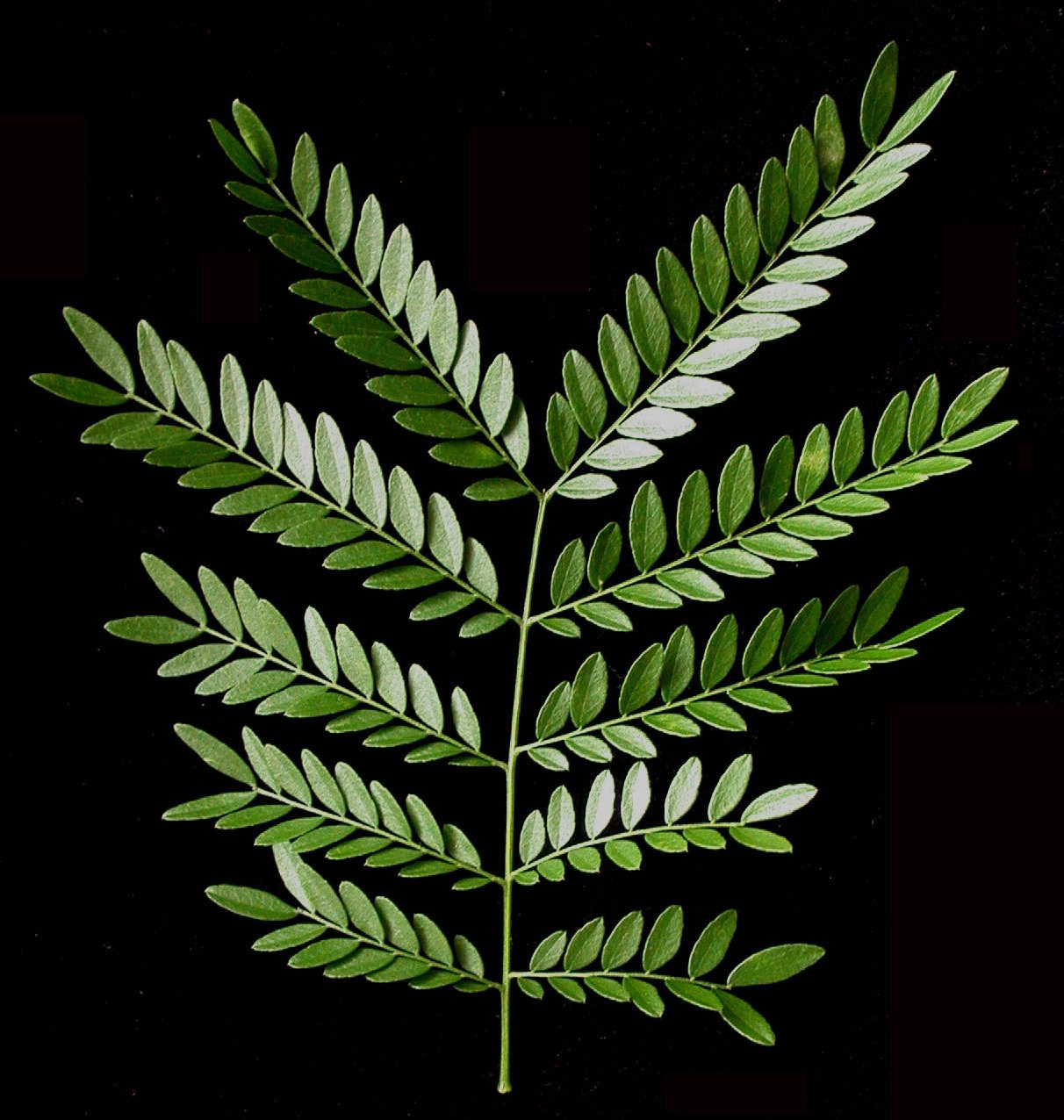
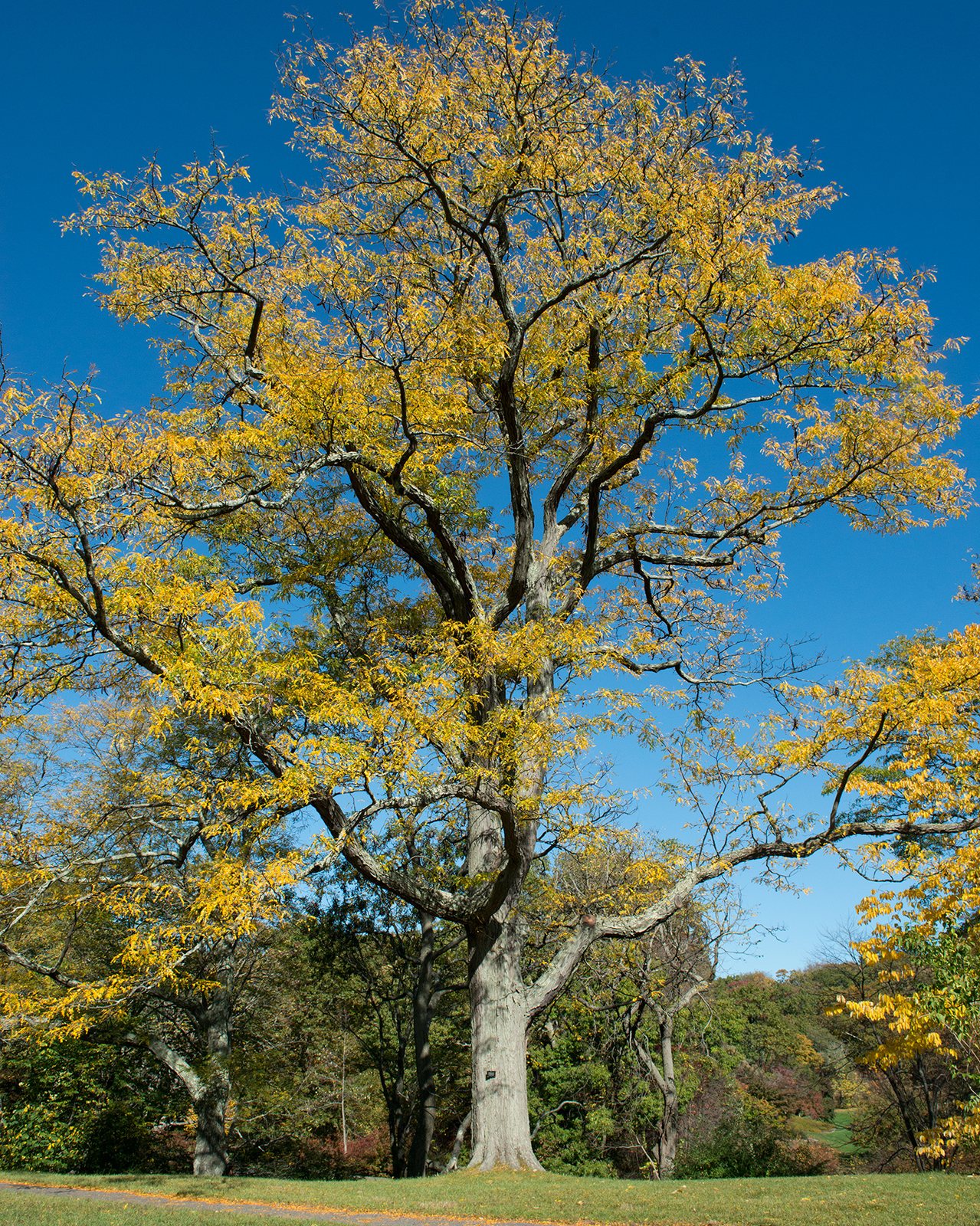
A deciduous shade tree grown for its bright yellow spring leaves, which mature to light green beneath an open, spreading crown. Its fine foliage casts light, filtered shade rather than the dense shade of many large trees. 'Sunburst' is normally thornless and produces few or no seedpods.
At a glance
- Sun
- Full sun gives the strongest yellow foliage; tolerates light partial shade.
- Water
- Water regularly while establishing. Once established, tolerates drought, but benefits from deep watering during prolonged dry spells.
- Soil
- Adaptable to clay, loam and sandy soils, including alkaline soils, provided drainage is reasonable. Avoid persistently waterlogged ground.
- Height
- 30-40 ft (9-12 m)
- Spread
- 25-35 ft (7.5-10.5 m)
- Foliage
- Fine, fern-like leaves divided into small leaflets. New growth is golden yellow, becoming yellow-green and then light green; autumn colour is usually yellow.
- Growth
- Fast when young, slowing with age.
- Care needed
- Medium
The year at a glance
- Drought tolerant
- Cold hardy
- Wildlife
| J | F | M | A | M | J | J | A | S | O | N | D | |
|---|---|---|---|---|---|---|---|---|---|---|---|---|
| Plant |
Northern hemisphere months. In Australia, shift them by six.
- Difficulty
- Moderate
- Toughness
- Very tough
Will it suit your garden?
Pick your zone, country, light and whether you have pets.
Full sun is 6 or more hours of direct sun a day, part shade 3 to 6 hours, shade under 3.
How it grows
Planting day
7 ft (2 m)
After 1 year
8 ft (2.4 m)
After 2 years
9 ft (2.8 m)
After 3 years
11 ft (3.3 m)
After 5 years
14 ft (4.1 m)
About 20 years to full size.
From a typical nursery size, at an average rate for this kind of plant. A rule of thumb, not a forecast.
Good to know
- Cats and dogs
- Safe
- Native to
- the US and Canada
- Invasive in
- Australia
- Growth rate
- Moderate
Care
Jobs through the year
- WaterApr–May, Sep–Oct, every 21 days
- Water established trees only during extended dry weather; young trees need more frequent watering.
- WaterJun–Aug, every 14 days
- Soak the established root zone during prolonged drought; water new trees whenever roots begin drying.
- MulchMar–Apr
- Maintain 5–8 cm of organic mulch, leaving the trunk and root flare clear.
- PruneFeb–Mar
- While dormant, retain one leader and remove weak or crossing branches; use an arborist for large cuts.
- PruneJun–Sep
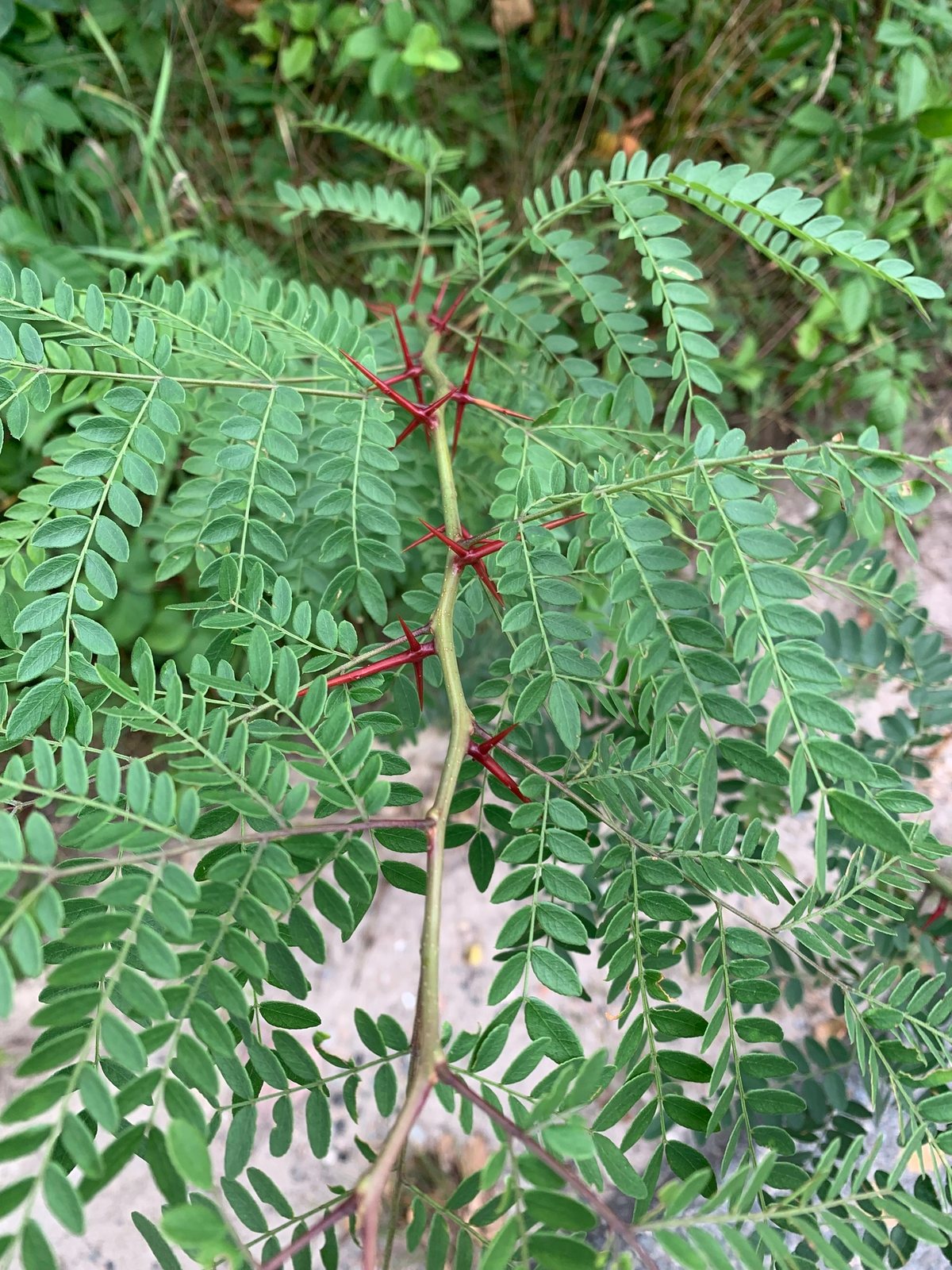
- Remove rootstock shoots below the graft, especially thorny growth.
- Water deeply through the first two growing seasons whenever the root zone begins to dry.
- Spread mulch 2-3 in (5-8 cm) deep over the root area, keeping it clear of the trunk.
- Avoid routine feeding; apply fertiliser only if poor growth or a soil test indicates a need.
- Stake only if the root ball moves in wind, and remove supports after establishment.
- Remove shoots arising below the graft, especially thorny growth from the rootstock.
- The species reaches USDA zone 3, but 'Sunburst' is commonly rated from zone 4; seek local advice before planting it in zone 3.
Pruning. Prune in late winter while dormant to establish one main leader and remove crossing, damaged or weakly attached branches. Keep cuts small, do not top the tree, and use a qualified arborist for large branches.
Through the year
- Late winter
- Check branch structure and prune out damaged, crossing or poorly attached young branches.
- Spring
- Plant while conditions are cool and the soil is workable; water thoroughly and mulch.
- Late spring
- Inspect unfolding leaves for honeylocust plant bug damage and leaf distortion.
- Summer
- Water newly planted trees deeply during dry weather and check ties for rubbing.
- Late summer
- Remove rootstock suckers and inspect the trunk for wounds or sunken bark.
- Autumn
- Collect fallen leaves where necessary and renew mulch without covering the root flare.
In the garden
- Use as a lawn specimen where the spreading crown has room to develop.
- Place near a terrace to provide filtered summer shade without a heavy canopy.
- Contrast its golden spring growth with dark evergreen shrubs.
- Underplant with grasses and shade-tolerant perennials for a light woodland effect.
Garden styles it suits: Modern, Architectural minimal, English country, Woodland, Family-friendly and Autumn colour.
Plant it with: Japanese forest grass, Hardy geranium, Epimedium, Hellebore, Oakleaf hydrangea and Daffodil.
Wildlife: The open crown provides bird perches and nesting cover. Small, inconspicuous flowers can attract insects, but this largely podless cultivar offers little seedpod food for wildlife.
Problems to watch for
- Honeylocust plant bugs can distort or brown new leaves, especially in North America. Check young growth in spring; established trees usually tolerate the damage without spraying.
- Spider mites may cause stippled, bronzed foliage in hot, dry weather. Keep young trees adequately watered and avoid broad-spectrum insecticides that kill predatory mites.
- Cankers can cause sunken bark and branch dieback. Avoid trunk injury and drought stress, remove affected small branches, and seek arborist advice for trunk lesions.
- Competing leaders and narrow branch unions can lead to storm breakage. Arrange formative pruning while the tree is young rather than removing large limbs later.
Safety
Honey locust is not known to be toxic to people, cats, dogs or horses. It is not the poisonous black locust, Robinia pseudoacacia. Do not treat ornamental foliage or raw seeds as food; thorny rootstock shoots can also cause puncture injuries.
Where it spreads. The species spreads aggressively and is regulated in parts of Australia, notably Queensland and New South Wales, and is invasive in South Africa. 'Sunburst' normally produces few or no pods, so its seed-spread risk is much lower, but fertile or thorny rootstock growth can occur. Check local restrictions before planting, as rules and cultivar exemptions vary.
Easily confused with
Golden black locust (Robinia pseudoacacia 'Frisia')
Has larger, oval leaflets, often paired prickles at the leaf bases, and potentially hanging white pea-flowers. Its foliage remains more consistently golden; black locust is poisonous.
Golden Japanese pagoda tree (Styphnolobium japonicum 'Princeton Upright')
This cultivar is not reliably golden; Japanese pagoda trees have larger, pointed leaflets and may produce creamy pea-flowers followed by bead-like pods.
Honey locust (Gleditsia triacanthos)
Typical trees have green spring foliage and may carry large branched thorns and long, flattened brown pods. 'Sunburst' has yellow new growth and is normally thornless and largely podless.
The name
Gleditsia honours botanist Johann Gottlieb Gleditsch, triacanthos means three-spined, and honey locust refers to the sweet pulp inside the species' pods.
Propagation. Usually propagated commercially by budding or grafting onto honey locust rootstock. Seedlings do not come true to 'Sunburst'; buy a correctly labelled grafted tree.
Checked against open data
- Accepted botanical name
- Gleditsia triacanthos
- In the US and Canada
- Native in Canada and the lower 48 states.
- Native range
- Alabama, Arkansas, Connecticut, Delaware, Florida, Georgia, Illinois, Indiana, Iowa, Kansas, Kentucky and Louisiana.
- Measured
- Soil pH 4.8 to 8. Average height 1675 cm.
Sources: GBIF (CC BY 4.0), USDA PLANTS and Trefle (CC BY 4.0). The care and design notes are LandscapeGPT's own.
See it in your own yard.
Upload a photo of your yard and see it redesigned with plants that suit your climate, each checked against your zone.