Honeysuckle 'Graham Thomas'
Lonicera periclymenum 'Graham Thomas'. Family Caprifoliaceae. Climber.
Also called Woodbine 'Graham Thomas', Common honeysuckle 'Graham Thomas', European honeysuckle 'Graham Thomas'.
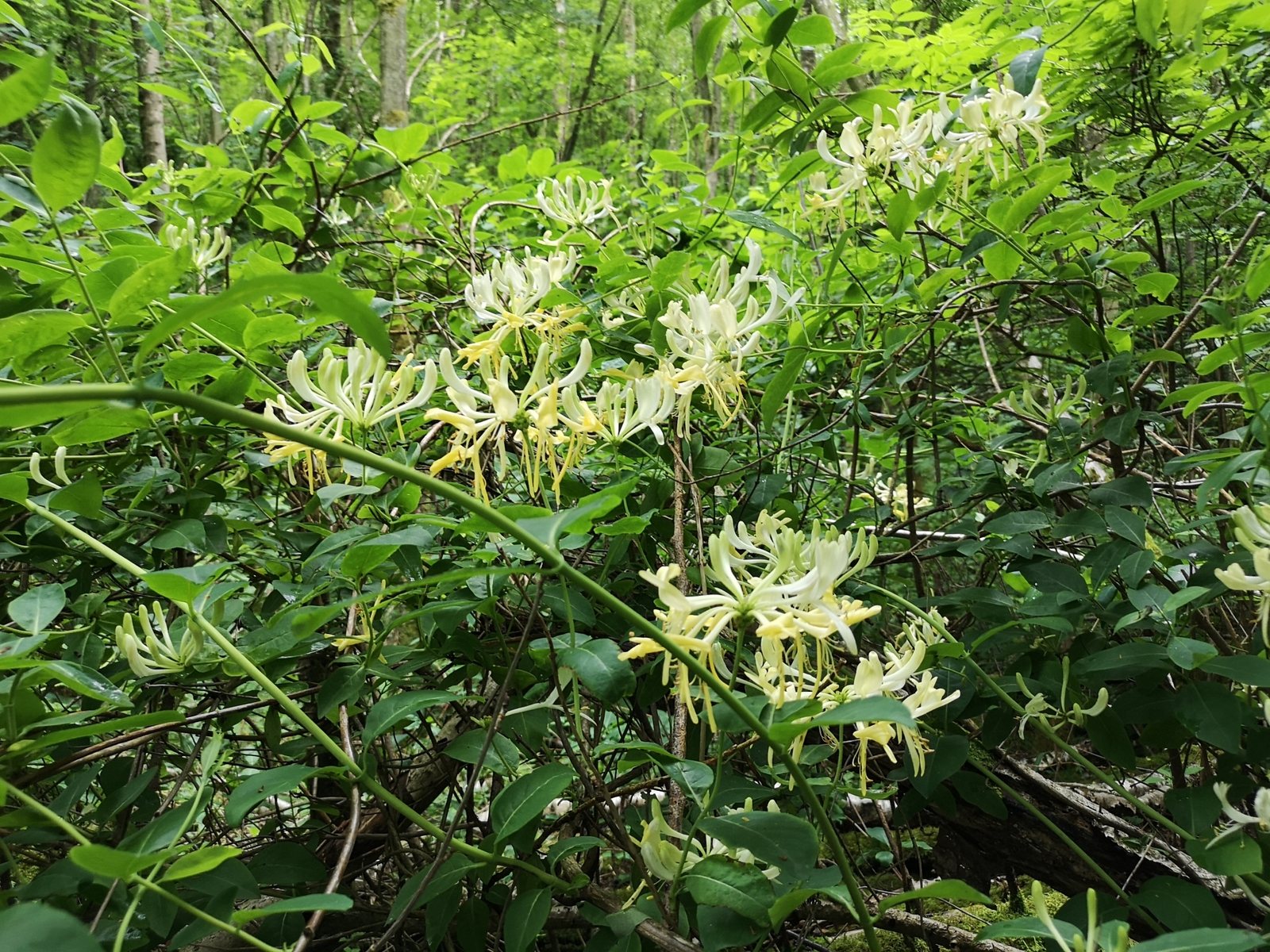
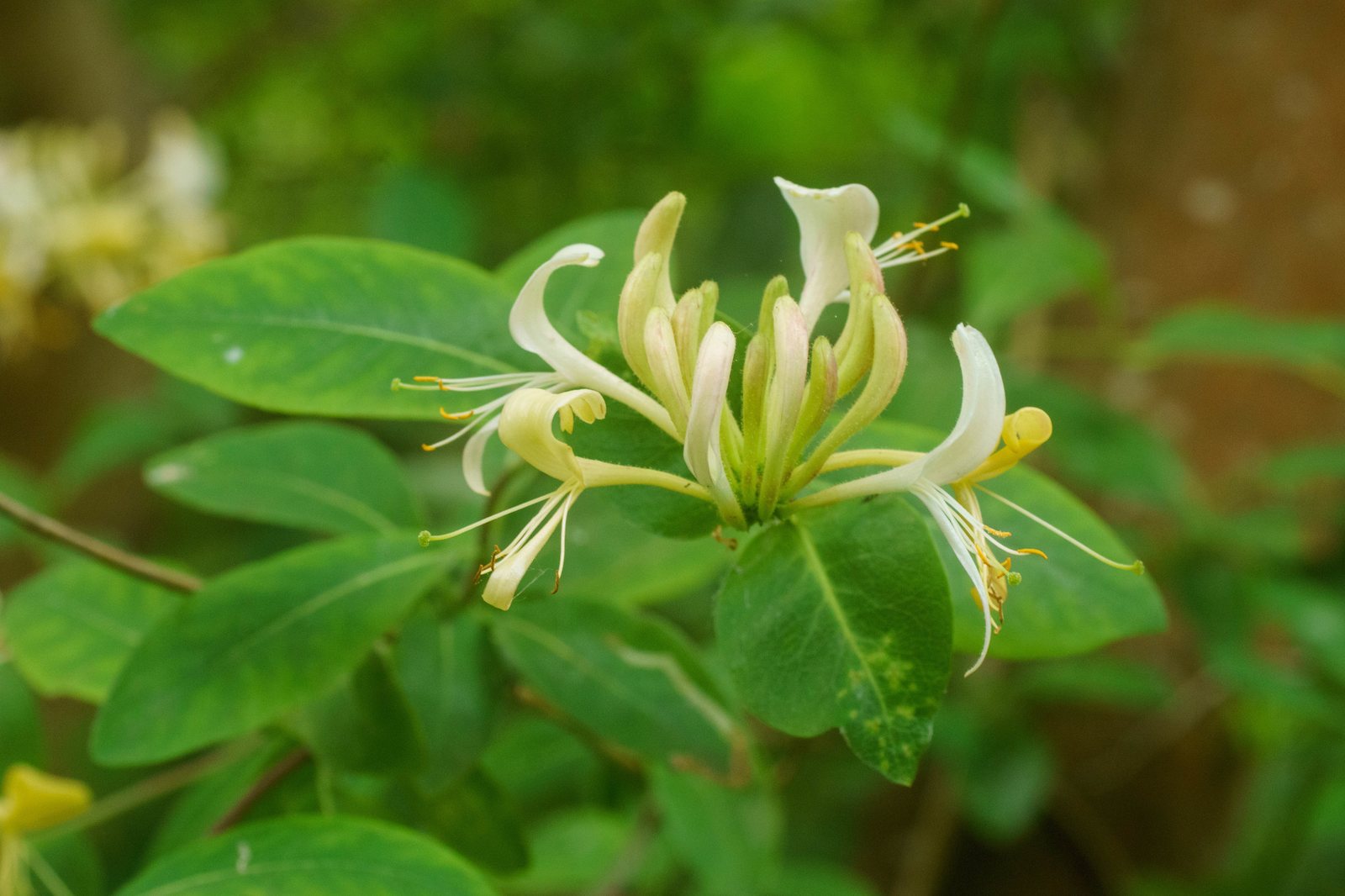
A vigorous, deciduous, twining climber grown for clusters of creamy-white flowers that deepen to yellow. Their strong fragrance is especially noticeable in the evening, making this a useful plant for an arch, fence or pergola near a seating area.
At a glance
- Sun
- Full sun to partial shade; flowers best with good light on its stems and cool, shaded roots.
- Water
- Keep evenly moist while establishing. Once established, water deeply during prolonged dry spells, particularly beside walls and fences.
- Soil
- Moist but well-drained soil enriched with organic matter; tolerates clay, loam and sandy soil if neither waterlogged nor persistently dry.
- Height
- 10-20 ft (3-6 m)
- Spread
- 3-6 ft (0.9-1.8 m)
- Flowers
- Summer into early autumn; fragrant tubular flowers open creamy white and mature to rich yellow.
- Foliage
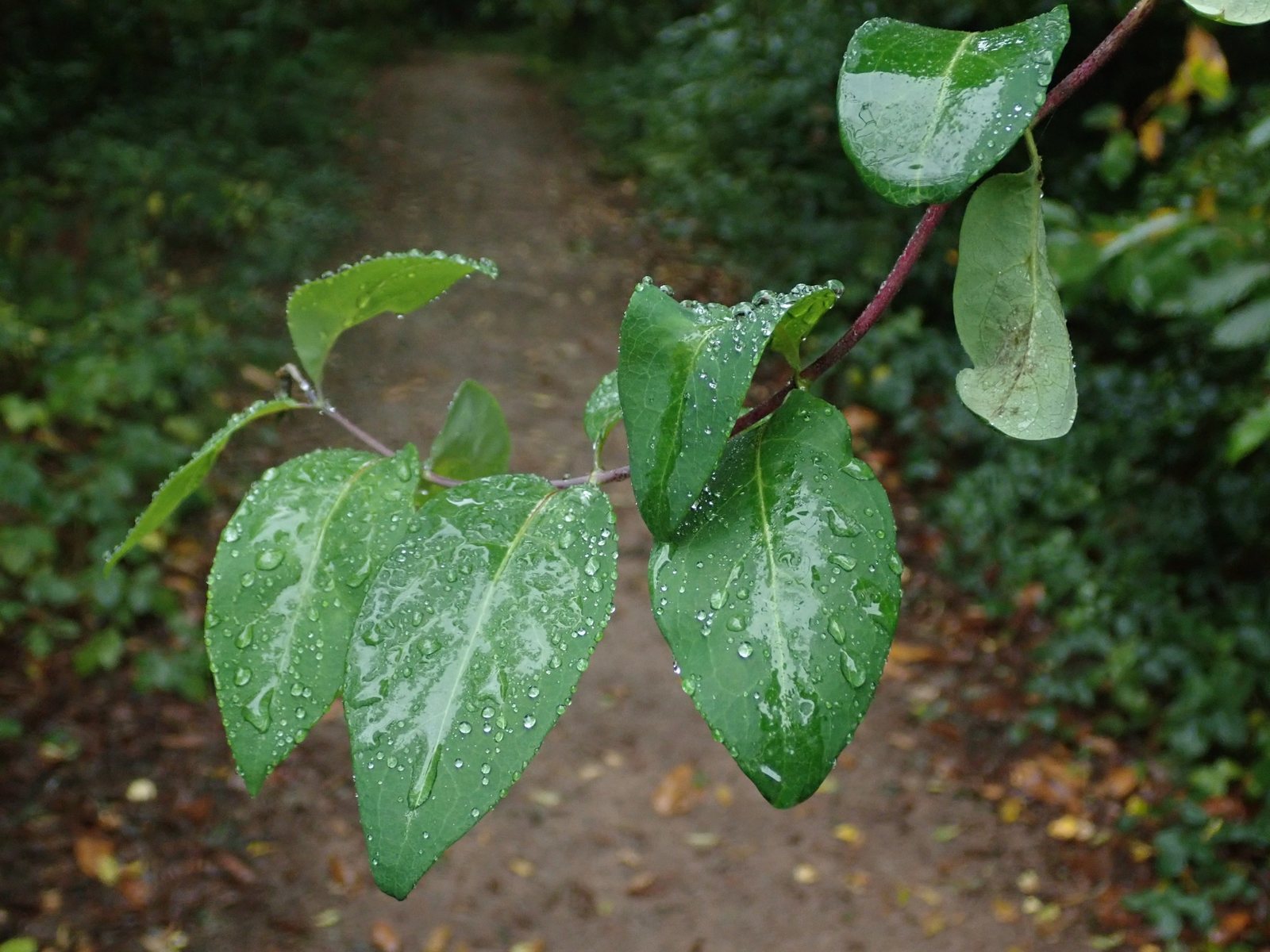
- Opposite pairs of oval, medium-green leaves; normally deciduous, though some leaves may persist in mild winters.
- Growth
- Fast once established.
- Care needed
- Medium
The year at a glance
- Pollinators
- Wildlife
- Low allergen
- Fragrant
| J | F | M | A | M | J | J | A | S | O | N | D | |
|---|---|---|---|---|---|---|---|---|---|---|---|---|
| Flowers | ||||||||||||
| Fruit | ||||||||||||
| Plant |
Northern hemisphere months. In Australia, shift them by six.
- Difficulty
- Moderate
- Toughness
- Fairly tough
Will it suit your garden?
Pick your zone, country, light and whether you have pets.
Full sun is 6 or more hours of direct sun a day, part shade 3 to 6 hours, shade under 3.
How it grows
Planting day
2 ft (0.6 m)
After 1 year
3 ft (1.1 m)
After 2 years
5 ft (1.5 m)
After 3 years
6 ft (1.8 m)
full size
About 3 years to full size.
From a typical nursery size, at an average rate for this kind of plant. A rule of thumb, not a forecast.
Good to know
- Cats and dogs
- Mildly toxic: may upset a stomach
- Native to
- the UK
- Invasive in
- the US
- Growth rate
- Fast
Care
Jobs through the year
- WaterApr–May, Sep–Oct, every 14 days
- Deeply water established plants if soil is dry; water young plants more often.
- WaterJun–Aug, every 7 days
- Soak established roots during dry spells, especially beside walls; skip when rain suffices.
- MulchMar–Apr
- Apply 5–8 cm of organic mulch, keeping it clear of stems.
- FeedMar–Apr
- Apply balanced fertiliser only on poor soil; avoid excessive nitrogen.
- PruneFeb–Mar
- Remove dead or damaged stems; renovate hard only if necessary, sacrificing some flowers.
- PruneAug–Sep
- After the main flush, shorten overlong shoots and thin congestion; leave berries for birds.
- Provide a sturdy trellis, wires or an arch; the stems twine but cannot cling to a bare wall.
- Tie young shoots loosely to their support and spread them out to cover it evenly.
- Water deeply during the first growing season and during later droughts.
- Apply a 2-3 in (5-8 cm) organic mulch in spring, keeping it clear of the main stems.
- On poor soil, apply a balanced fertiliser in spring; avoid heavy nitrogen feeding, which encourages leaves rather than flowers.
Pruning. After the main flowering flush in late summer or early autumn, shorten overlong flowered shoots and thin congested stems, leaving some fruiting growth for birds. Renovate a badly tangled plant by cutting it back hard in late winter, accepting reduced flowering that year.
Through the year
- Late winter
- Check supports and remove dead or damaged stems; carry out hard renovation only if needed.
- Spring
- Plant while the soil is workable, water thoroughly and apply mulch.
- Late spring
- Tie in new shoots and check their soft tips for aphids.
- Summer
- Water during dry spells and guide wandering stems back onto their support.
- Late summer
- After the main flush, shorten excessive growth and thin crowded stems.
- Autumn
- Leave some berries for birds and remove unwanted seedlings.
In the garden
- Train over an entrance arch to bring evening fragrance close to a frequently used path.
- Cover a fence or trellis behind a mixed border, with lower plants shading the root area.
- Grow over a sturdy pergola beside an evening seating area.
- Combine with a climbing rose on a broad support for overlapping flowers and a loose cottage-garden effect.
- Train along the edge of a wildlife garden, keeping it out of small trees and shrubs that it could overwhelm.
Garden styles it suits: English country, Cottage garden, Romantic rose garden, Wildlife garden, Sensory garden and Evening garden.
Plant it with: Climbing roses, Hardy geraniums, Lady's mantle, Foxgloves, Astrantia and Japanese anemones.
Wildlife: Fragrant flowers provide nectar for moths and bees. Birds eat the red berries, and mature tangled growth can provide shelter and nesting cover.
Problems to watch for
- Aphids can distort young shoots: wash off small colonies with water and encourage ladybirds and other predators.
- Powdery mildew is more likely with dry roots and crowded growth: water deeply, mulch and thin stems to improve airflow.
- Leaf scorch and premature leaf fall often follow drought, especially beside walls: soak the root zone rather than giving frequent shallow watering.
- A bare base or tangled mass of stems develops without training: spread out young shoots and periodically remove a few old stems near ground level.
Safety
Berries can cause stomach upset, vomiting and diarrhoea if eaten by people, cats or dogs; do not treat them as edible fruit. Keep foliage and stems out of pets' reach as well. Toxicity to horses is not well established, so keep this climber away from grazing areas.
Where it spreads. European honeysuckle can escape cultivation and spread by bird-sown seed in parts of the Pacific Northwest of the United States. It is not Japanese honeysuckle, but check local guidance before planting near natural woodland and remove unwanted seedlings.
Easily confused with
Japanese honeysuckle (Lonicera japonica)
Usually bears flowers in pairs along the stems and produces black berries; 'Graham Thomas' has clustered flowers near shoot tips and red berries. Japanese honeysuckle is invasive in many regions.
Italian honeysuckle (Lonicera caprifolium)
Its upper leaf pairs join around the stem to form a conspicuous disc beneath the flowers; the leaves of 'Graham Thomas' remain separate.
The name
Lonicera honours the botanist Adam Lonitzer, and the cultivar name honours British horticulturist Graham Stuart Thomas.
Propagation. Layer a low-growing stem in spring, or take semi-ripe cuttings in summer. Use vegetative propagation to retain the cultivar; seedlings will not reliably match 'Graham Thomas'.
Checked against open data
- Accepted botanical name
- Lonicera periclymenum
- In the US and Canada
- Introduced in Canada and the lower 48 states.
- Native range
- Albania, Austria, Belgium, Corse, Denmark, France, Germany, Great Britain, Greece, Ireland, Italy and Morocco.
- Measured
- Soil pH 5 to 5.5. Average height 350 cm.
Sources: GBIF (CC BY 4.0), USDA PLANTS and Trefle (CC BY 4.0). The care and design notes are LandscapeGPT's own.
See it in your own yard.
Upload a photo of your yard and see it redesigned with plants that suit your climate, each checked against your zone.