Hoop petticoat daffodil
Narcissus bulbocodium. Family Amaryllidaceae. Bulb.
Also called Petticoat daffodil.
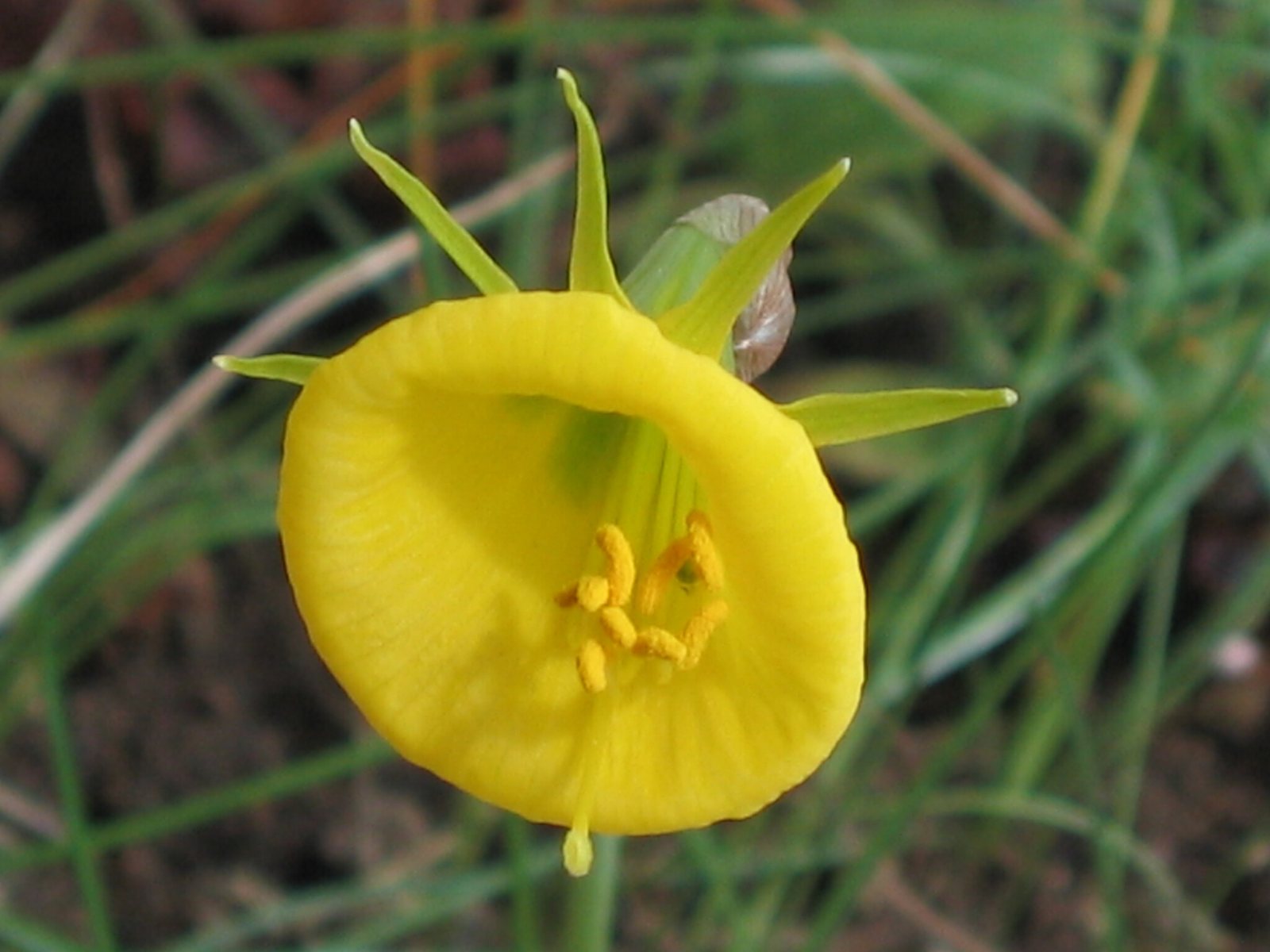
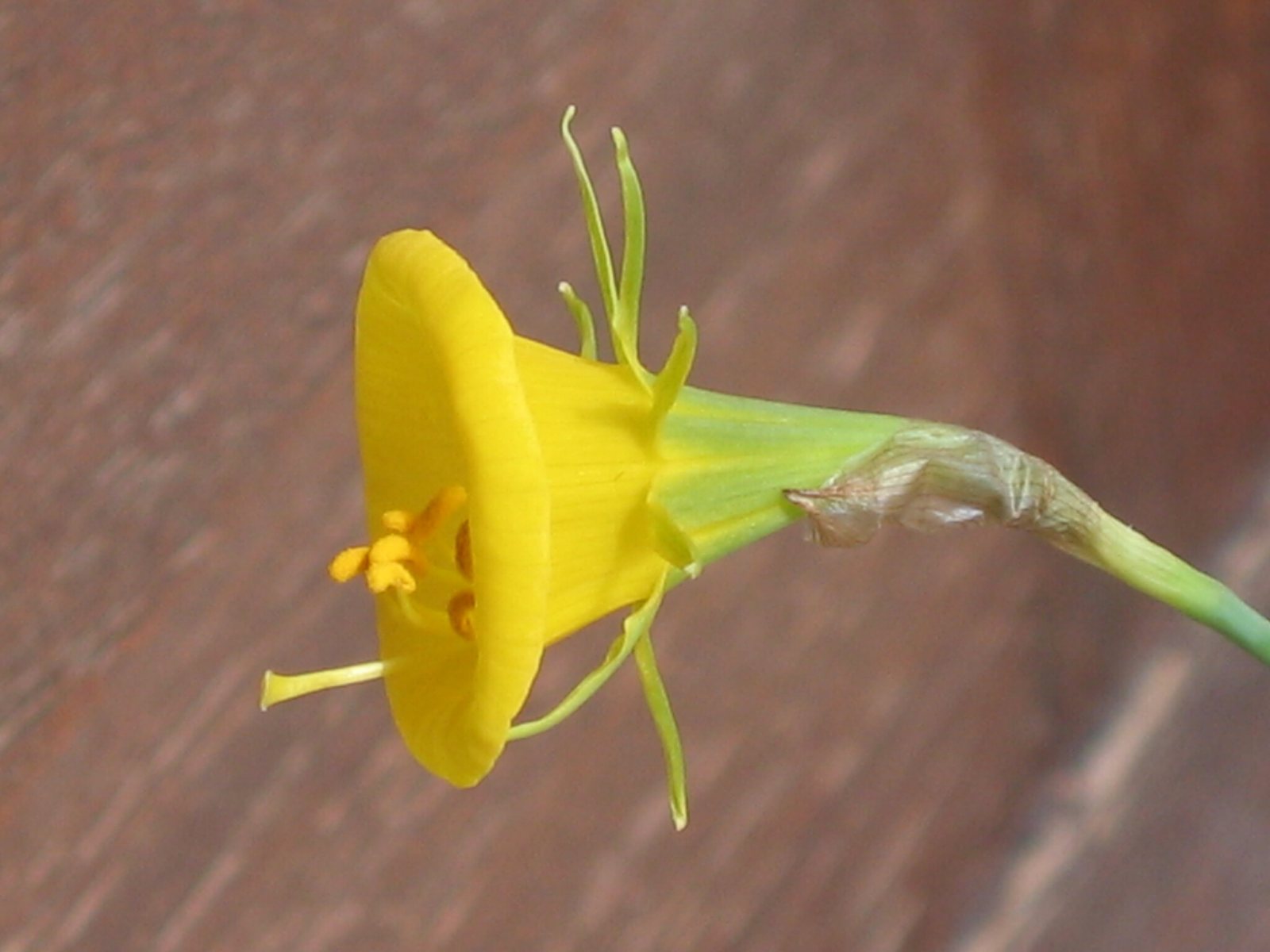
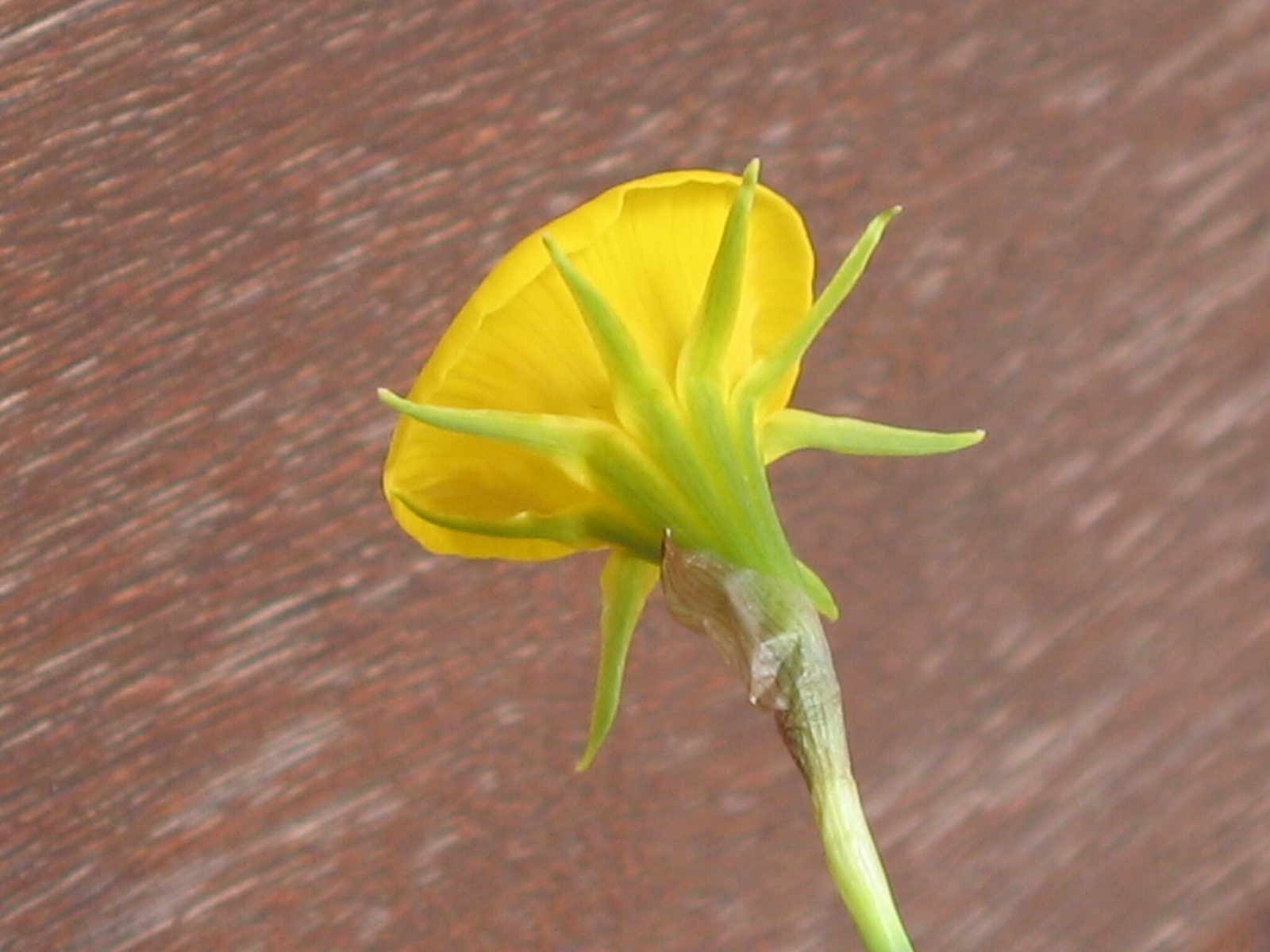
This small, spring-flowering daffodil has yellow, funnel-shaped trumpets surrounded by unusually narrow outer petals. Grow it close to paths, in rock gardens or in shallow containers where its flowers and fine, grasslike leaves are easy to see.
At a glance
- Sun
- Full sun to light partial shade; good light during winter and spring is important.
- Water
- Keep moderately moist while leaves are growing, then allow drier conditions during summer dormancy. Avoid waterlogged soil.
- Soil
- Well-drained sandy or gritty soil with some organic matter; slightly acidic to neutral soil is a good choice.
- Height
- 0.3-0.7 ft (0.1-0.2 m)
- Spread
- 0.25-0.5 ft (0.08-0.15 m) per established clump
- Flowers
- Late winter to spring, depending on climate; yellow flowers with broad, flared trumpets and very narrow outer petals.
- Foliage
- Fine, dark green, grasslike leaves emerge in the cool season and die back after flowering.
- Growth
- Moderate; gradually forms small clumps through bulb offsets.
- Care needed
- Low
The year at a glance
- Pollinators
- Deer resistant
- Low allergen
| J | F | M | A | M | J | J | A | S | O | N | D | |
|---|---|---|---|---|---|---|---|---|---|---|---|---|
| Flowers | ||||||||||||
| Plant |
Northern hemisphere months. In Australia, shift them by six.
- Difficulty
- Easy
- Toughness
- Fairly tough
Will it suit your garden?
Pick your zone, country, light and whether you have pets.
Full sun is 6 or more hours of direct sun a day, part shade 3 to 6 hours, shade under 3.
How it grows
Planting day
0.5 ft (0.15 m)
After 1 year
0.5 ft (0.15 m)
full size
About 1 years to full size.
From a typical nursery size, at an average rate for this kind of plant. A rule of thumb, not a forecast.
Good to know
- Cats and dogs
- Toxic
- Growth rate
- Moderate
Care
Jobs through the year
- WaterFeb–May, every 7 days
- Water established bulbs only if rainfall is insufficient while leaves are green; avoid waterlogging.
- WaterJan, Oct–Dec, every 14 days
- Check moisture and water only during dry spells when roots or leaves are growing.
- FeedFeb–Mar
- Apply a light bulb fertilizer as leaves emerge only if the soil is poor.
- DeadheadMar–Apr
- Remove faded flowers before seed pods develop unless seedlings are wanted.
- PruneMay–Jun
- Remove foliage only after it has yellowed naturally; never tie or braid green leaves.
- DivideMay–Jun
- Lift crowded clumps as foliage yellows and replant offsets promptly.
- ProtectJun–Aug
- Keep dormant bulbs relatively dry and exclude their bed from routine summer irrigation.
- Plant bulbs in autumn about 3-4 in (8-10 cm) deep and 2-3 in (5-8 cm) apart.
- Water during active growth if rainfall is scarce, but never leave pots standing in water.
- Apply a light bulb fertilizer as leaves emerge if the soil is poor.
- Keep dormant bulbs relatively dry in summer; avoid sites watered frequently for summer bedding.
- Lift and divide crowded clumps after the foliage has yellowed, then replant promptly.
Pruning. Remove spent flowers before seed pods develop unless you want seedlings. Leave all foliage until it has yellowed naturally; do not tie or braid the leaves.
Through the year
- Autumn
- Plant bulbs in a sunny, freely draining position and water them in.
- Winter
- Check that emerging foliage has moisture but that beds and containers drain freely.
- Late winter
- Feed lightly as growth develops if the soil is poor.
- Spring
- Enjoy the flowers, then remove fading blooms if seed is not wanted.
- Late spring
- Let leaves yellow naturally; divide crowded clumps as they enter dormancy.
- Summer
- Keep dormant bulbs relatively dry and avoid routine irrigation over their planting site.
In the garden
- Plant small groups beside paths or steps so the low flowers can be viewed closely.
- Tuck bulbs into sunny rock gardens among low, non-spreading alpine plants.
- Grow in shallow containers with excellent drainage for a close-up spring display.
- Scatter through short, open grass that can remain uncut until the leaves die back.
Garden styles it suits: Cottage garden, Dry gravel garden, Alpine rock garden, Mediterranean, Small-space and Traditional.
Plant it with: Species crocuses, Reticulated irises, Grape hyacinths, Spring snowflakes and Creeping thyme.
Wildlife: Flowers can offer pollen and nectar to early insects, although visits vary with weather and local pollinators. Deer and rabbits usually avoid the toxic foliage and bulbs.
Problems to watch for
- Bulb rot: prevent standing water, improve drainage and discard soft or rotting bulbs.
- Narcissus bulb fly: larvae hollow out bulbs; remove affected bulbs and buy firm, healthy planting stock.
- Slugs and snails: protect emerging shoots and flowers with hand-picking or a suitable iron phosphate bait used according to its label.
- Leaves but few flowers: improve light, avoid removing green foliage and divide overcrowded clumps after the leaves yellow.
Safety
Toxic to people, cats, dogs and horses. All parts are poisonous, especially the bulbs; eating them can cause vomiting, diarrhoea and abdominal pain, with severe poisoning possible after larger amounts. Sap can irritate skin. Never store bulbs with onions or other food, and seek medical or veterinary advice promptly after ingestion.
Easily confused with
White hoop petticoat daffodil (Narcissus cantabricus)
Has a similar flared trumpet and narrow outer petals, but its flowers are white rather than yellow.
Wild daffodil (Narcissus pseudonarcissus)
Has six broad, conspicuous outer petals around a narrower trumpet, rather than the tiny outer segments and wide hoop-shaped trumpet of hoop petticoat daffodil.
The name
The common name describes the flower's broad, flared trumpet, which resembles a hoop-supported petticoat.
Propagation. Separate bulb offsets when foliage has yellowed and replant promptly. Seed can be sown fresh in a deep, freely draining pot, but seedlings usually take several years to flower and may differ from the parent.
Checked against open data
- Accepted botanical name
- Narcissus bulbocodium
- In the US and Canada
- Introduced in the lower 48 states.
- Native range
- France, Portugal and Spain.
- Measured
- Soil pH 4.5 to 5. Average height 14 cm.
Sources: GBIF (CC BY 4.0), USDA PLANTS and Trefle (CC BY 4.0). The care and design notes are LandscapeGPT's own.
See it in your own yard.
Upload a photo of your yard and see it redesigned with plants that suit your climate, each checked against your zone.