Hop 'Cascade'
Humulus lupulus 'Cascade'. Family Cannabaceae. Climber.
Also called Common hop 'Cascade', Cascade hops.
'Cascade' is a vigorous, deciduous climbing perennial grown for its aromatic female cones, used in brewing for their floral and citrus character. Its rough, twining stems quickly cover tall supports each summer, then die back to a permanent underground crown in winter. Good cone production needs a sunny position, ample water and a temperate climate with long summer days.
At a glance
- Sun
- Full sun for good cone production; tolerates partial shade but crops less well.
- Water
- Keep the root zone consistently moist during active growth, especially while cones develop; avoid waterlogged soil.
- Soil
- Deep, fertile, well-drained loam enriched with compost; slightly acidic to neutral soil is ideal.
- Height
- 15-25 ft (4.5-7.5 m) in a growing season
- Spread
- 3-6 ft (0.9-1.8 m) above ground; underground rhizomes can spread farther
- Flowers
- Summer: small greenish female flowers develop into pale green, papery cones by late summer to early autumn.
- Foliage
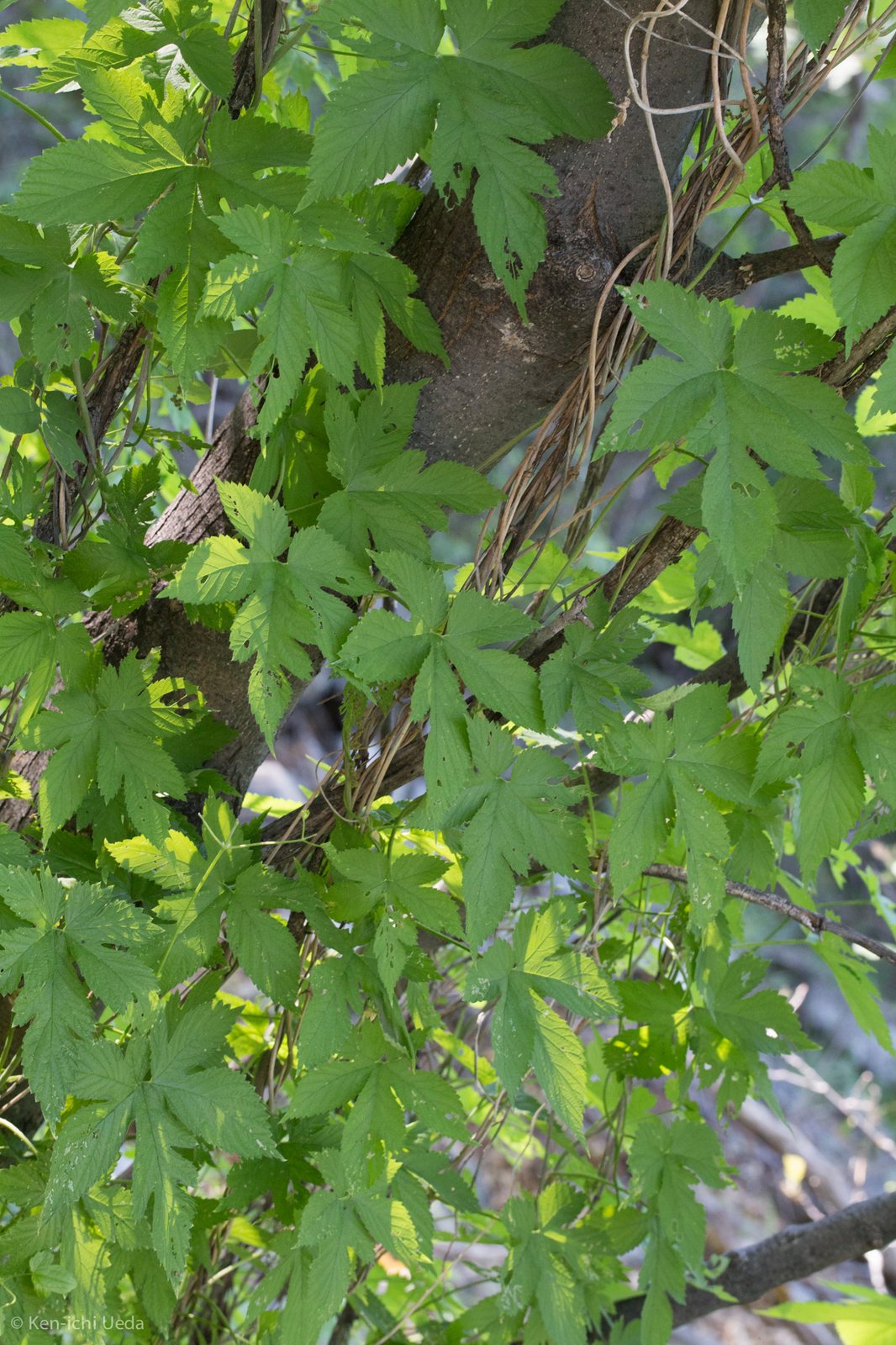
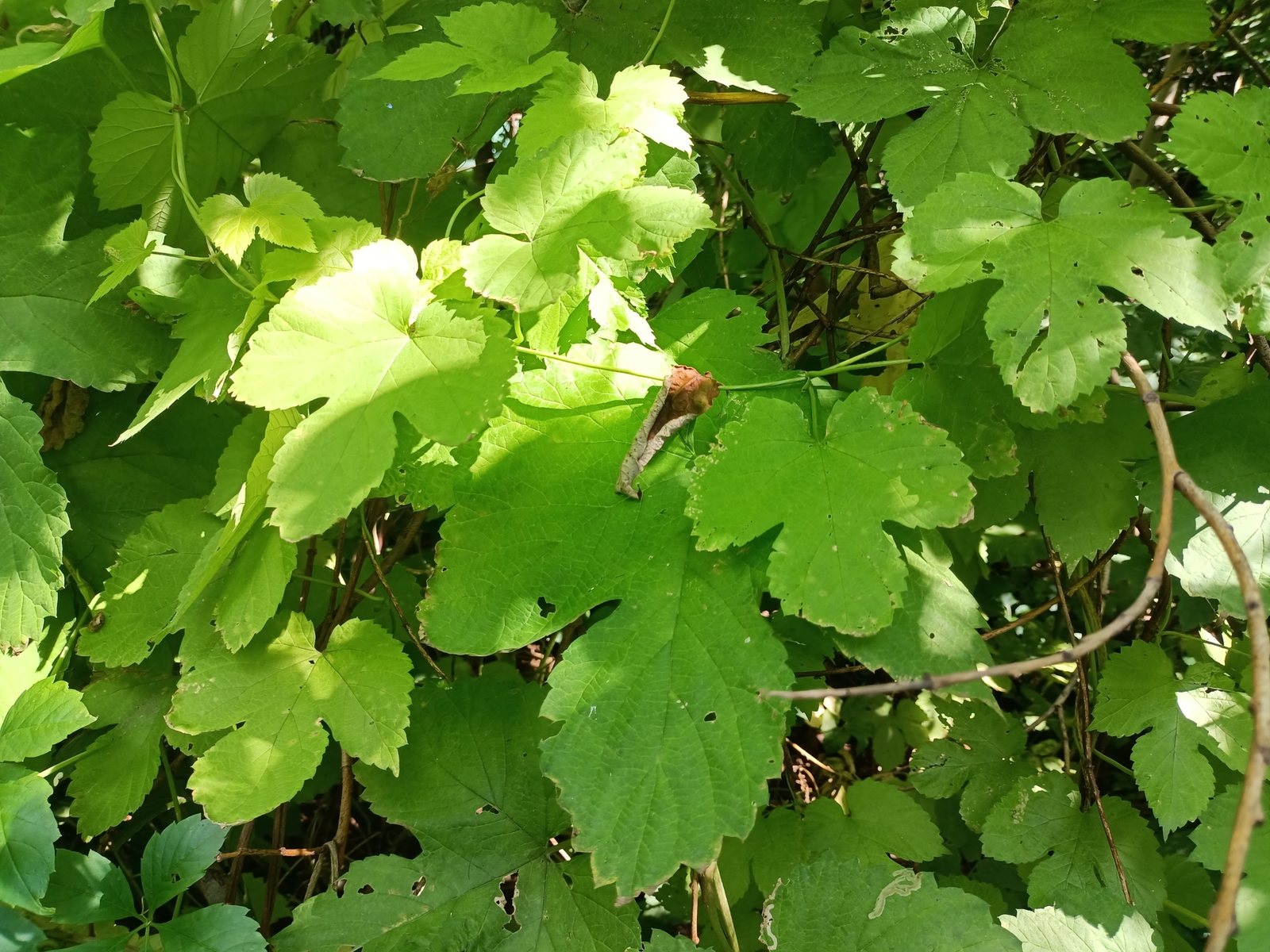
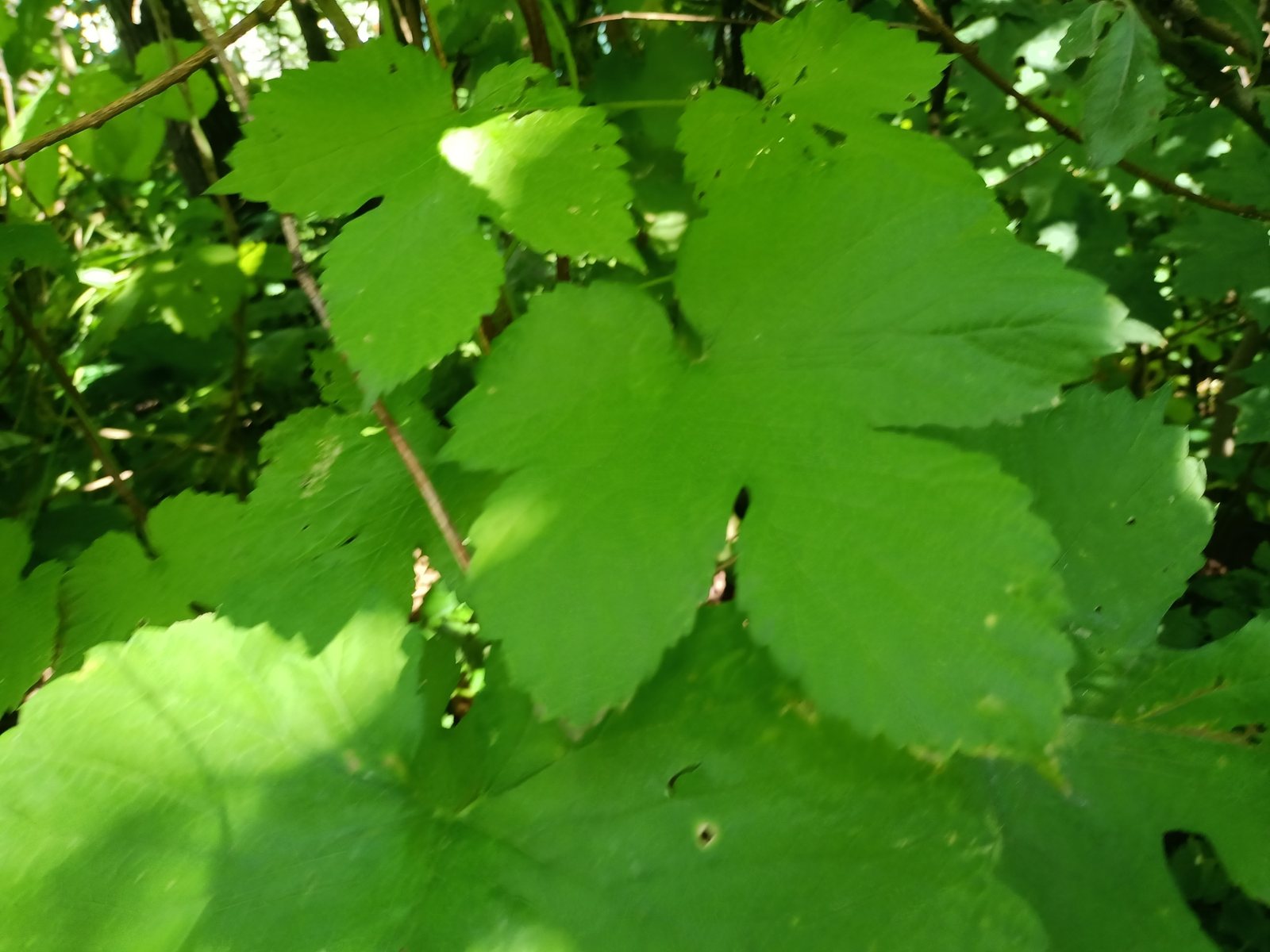
- Rough, mid-green, toothed leaves, usually with three to five lobes; stems and leaf stalks bear clinging hairs.
- Growth
- Fast
- Care needed
- Medium
The year at a glance
- Cold hardy
- Wildlife
- Low allergen
- Edible
| J | F | M | A | M | J | J | A | S | O | N | D | |
|---|---|---|---|---|---|---|---|---|---|---|---|---|
| Flowers | ||||||||||||
| Fruit | ||||||||||||
| Plant |
Northern hemisphere months. In Australia, shift them by six.
- Difficulty
- Moderate
- Toughness
- Very tough
Will it suit your garden?
Pick your zone, country, light and whether you have pets.
Full sun is 6 or more hours of direct sun a day, part shade 3 to 6 hours, shade under 3.
How it grows
Planting day
2 ft (0.6 m)
After 1 year
3 ft (1.1 m)
After 2 years
5 ft (1.5 m)
After 3 years
6 ft (1.8 m)
full size
About 3 years to full size.
From a typical nursery size, at an average rate for this kind of plant. A rule of thumb, not a forecast.
Good to know
- Cats and dogs
- Toxic
- Native to
- the US, Canada and the UK
- In the garden
- Spreads vigorously: plan to contain it.
- Growth rate
- Fast
Care
Jobs through the year
- WaterApr–May, Sep, every 7 days
- Water established crowns deeply when soil starts drying; new plantings need closer checks.
- WaterJun–Aug, every 4 days
- During dry weather, keep established roots moist, especially while cones develop.
- FeedMar–Apr
- Top-dress with compost and balanced fertiliser; avoid heavy late-summer nitrogen.
- MulchApr
- Mulch to conserve moisture without covering the crown.
- PruneApr–May
- Keep two or three strong shoots per string and guide them clockwise; remove surplus shoots.
- PruneJun–Aug, every 21 days
- Remove unwanted spreading shoots and rhizomes beyond the allotted space.
- PruneNov
- After dieback, cut stems just above ground and remove them from supports.
- HarvestAug–Sep
- Pick papery, springy, aromatic cones with golden lupulin; dry promptly.
- Provide strong, securely anchored wires or coarse twine before spring growth starts; allow safe access for harvesting.
- Select two or three strong shoots per string and guide them clockwise around it; remove surplus shoots at the crown.
- Water deeply during dry spells, wetting the soil rather than the foliage.
- Apply compost and a balanced fertiliser in spring; avoid heavy nitrogen feeding later in summer.
- Mulch to conserve moisture, keeping mulch clear of the crown, and remove rhizomes spreading beyond the allotted space.
Pruning. Once the foliage has died back in autumn or winter, cut the stems to just above ground level and remove them from the supports. In spring, thin crowded new shoots and train the strongest onto their strings.
Harvest
Pick the female cones in late summer to early autumn when they feel papery and springy, smell strongly aromatic and contain golden-yellow powder beneath the scales; soft, wet-feeling cones are not ready. Pick individually or lower and cut down mature stems, then dry the cones promptly for storage. A light harvest may develop in the first year, with a more substantial crop usually from the second or third year.
Through the year
- Late winter
- Check posts, wires and anchors before new growth makes repairs difficult.
- Early spring
- Plant dormant crowns or rhizomes in workable soil; top-dress established plants with compost and balanced fertiliser.
- Mid-spring
- Thin surplus shoots and train two or three vigorous shoots clockwise onto each string.
- Summer
- Water deeply in dry weather, check for aphids and mites, and remove unwanted spreading shoots.
- Late summer to early autumn
- Check cones regularly for papery texture and strong aroma; harvest and dry ripe cones.
- Late autumn
- After dieback, cut stems near ground level and clear debris from the crown.
In the garden
- Train over a sturdy pergola for summer shade, accepting that the structure will be bare in winter.
- Grow up tall poles and wires beside a kitchen garden as a productive vertical feature.
- Use on a freestanding trellis to screen a utility area during the growing season.
- Combine with lower-growing herbs and flowers at the sunny edge of an edible garden, leaving the crown accessible.
Garden styles it suits: Cottage garden, Potager (kitchen garden), Farmhouse, Edible landscape, Homestead and Modern rustic.
Plant it with: Chives, Calendula, Nasturtiums, Yarrow and Purple coneflower.
Wildlife: Leaves feed comma butterfly caterpillars and other butterfly and moth larvae where these insects occur. Aphids attract ladybirds and other predators; the wind-pollinated flowers offer little nectar value.
Problems to watch for
- Hop aphids cluster beneath leaves and can contaminate cones: inspect regularly, wash off early colonies and use an approved insecticidal soap if needed.
- Two-spotted spider mites cause stippled leaves and fine webbing in hot, dry weather: prevent drought stress and use a locally approved mite treatment if infestation persists.
- Downy mildew causes stunted, distorted spring shoots and dark growth beneath leaves: remove affected shoots, improve airflow and avoid overhead watering.
- Poor cone production can result from shade, drought, excessive nitrogen or unsuitable day length: provide full sun, steady moisture and moderate feeding; crops may remain unreliable in warm, low-latitude climates.
Safety
Fresh, dried and spent brewing hops can cause life-threatening poisoning in dogs, including a dangerously high body temperature; seek emergency veterinary care after ingestion. Toxicity in cats and horses is poorly documented, so keep cones and brewing waste out of their reach too. Hops have established culinary use in brewing and are not generally considered poisonous to people in customary food quantities, but the rough stems and leaves can irritate skin and cause contact dermatitis.
Where it spreads. Spreads aggressively by underground rhizomes in favourable garden conditions, including temperate parts of the United States, Canada, the United Kingdom and southern Australia. Remove wandering rhizomes annually or use a substantial root barrier; 'Cascade' is not a separate invasive species designation.
Easily confused with
Japanese hop (Humulus scandens)
Usually has more deeply divided leaves with five to seven lobes and conspicuously long leaf stalks. It is an annual rather than a crown-forming perennial and is invasive in parts of North America.
Grapevine (Vitis species)
Climbs using tendrils and retains woody stems through winter; hop stems twine around supports and die back to the ground.
The name
'Cascade' is named for the Cascade Range in western North America, while the species name lupulus means 'little wolf'.
Propagation. Divide established crowns or take rhizome sections with healthy buds in early spring. Use vegetative propagation to retain 'Cascade'; seedlings will not come true. Female plants produce brewing cones without a male plant.
Checked against open data
- Accepted botanical name
- Humulus lupulus
- In the US and Canada
- Native in Canada and the lower 48 states. Introduced in Canada and the lower 48 states.
- Native range
- Albania, Altay, Austria, Baltic States, Belarus, Belgium, Bulgaria, Buryatiya, Central European Rus, Chita, Corse and Czechoslovakia.
- Measured
- Soil pH 7 to 7.5. Average height 225 cm.
Sources: GBIF (CC BY 4.0), USDA PLANTS and Trefle (CC BY 4.0). The care and design notes are LandscapeGPT's own.
See it in your own yard.
Upload a photo of your yard and see it redesigned with plants that suit your climate, each checked against your zone.