Horned violet
Viola cornuta. Family Violaceae. Perennial.
Also called Horned pansy, Tufted pansy.
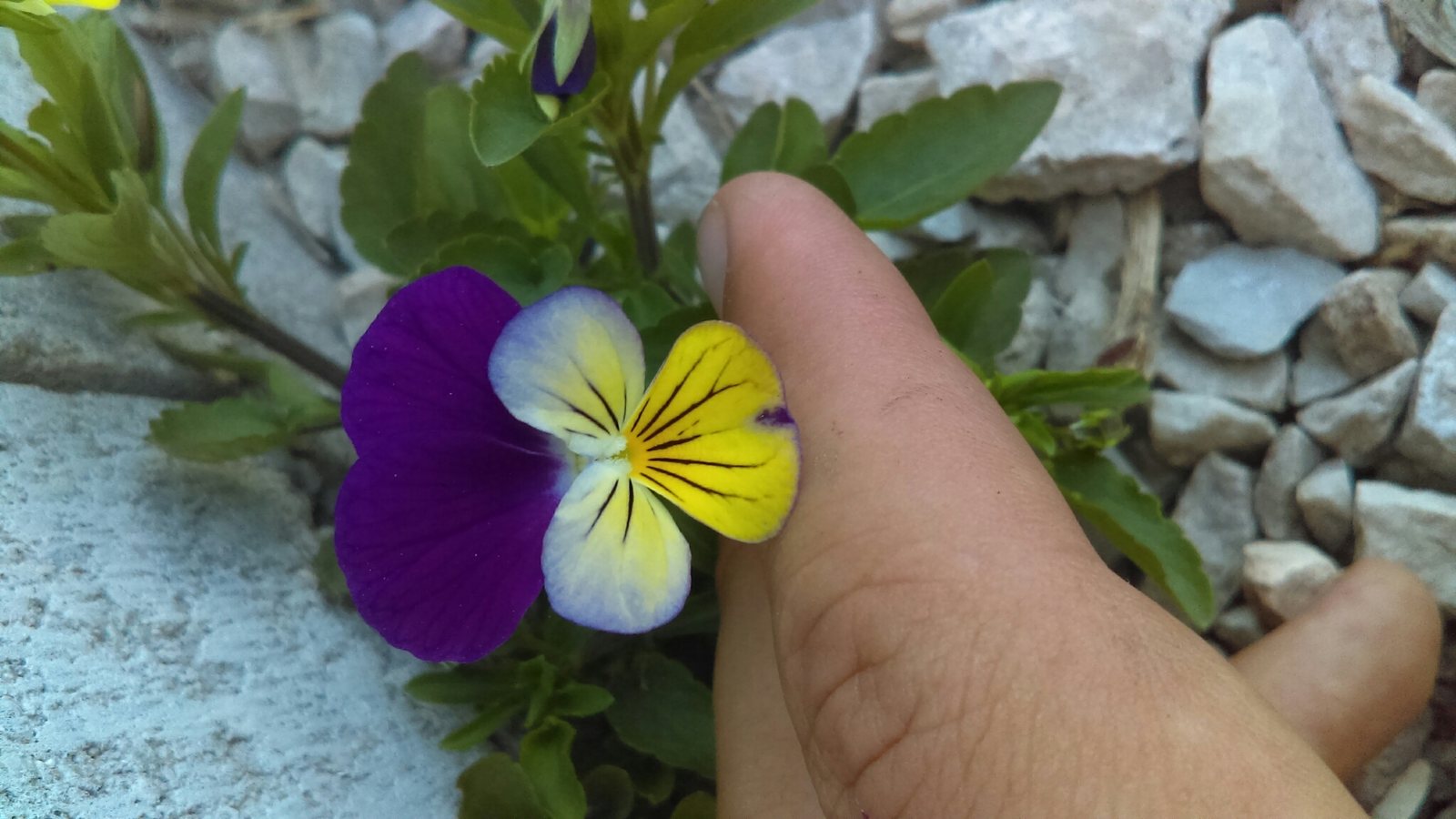
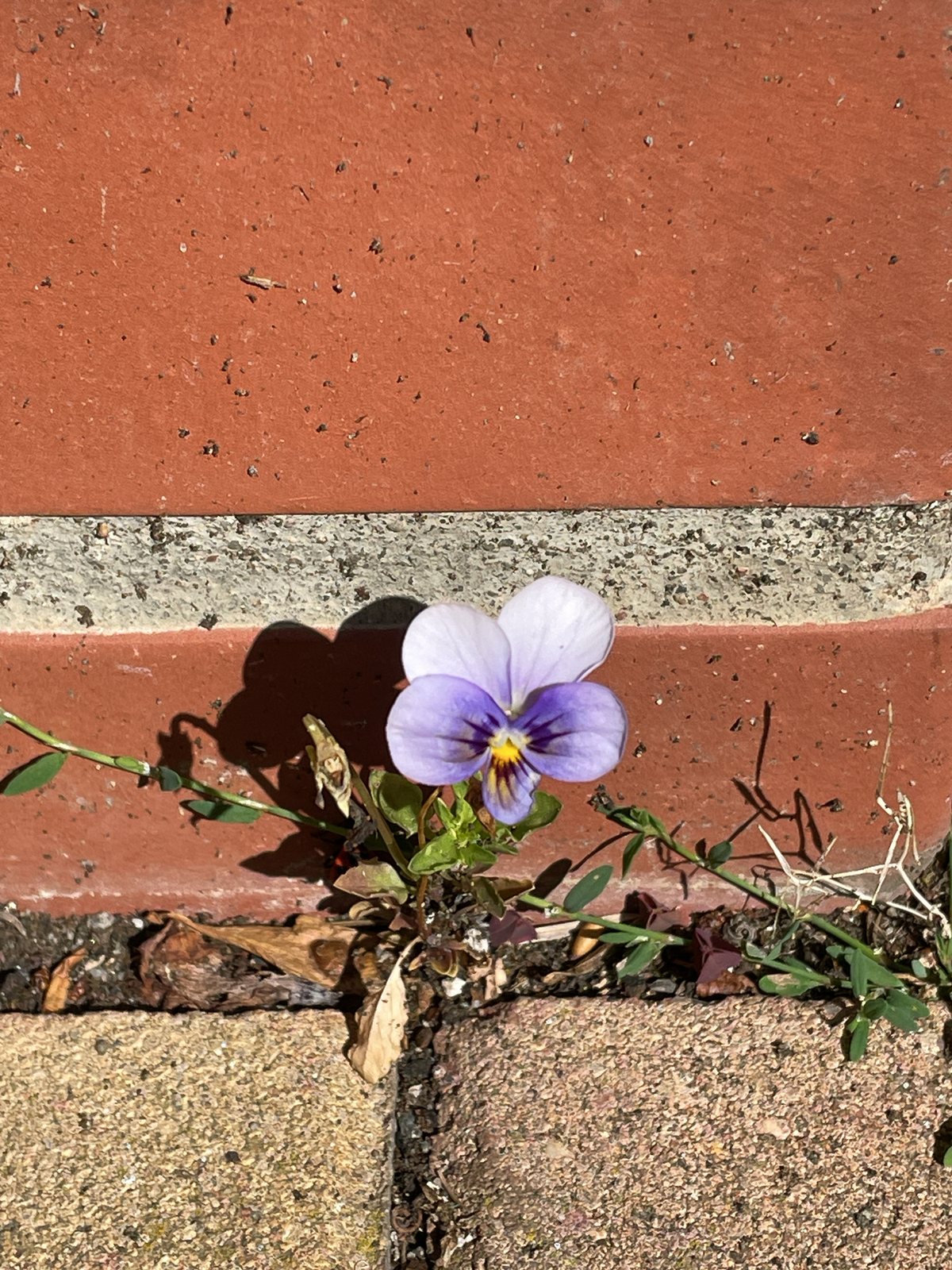
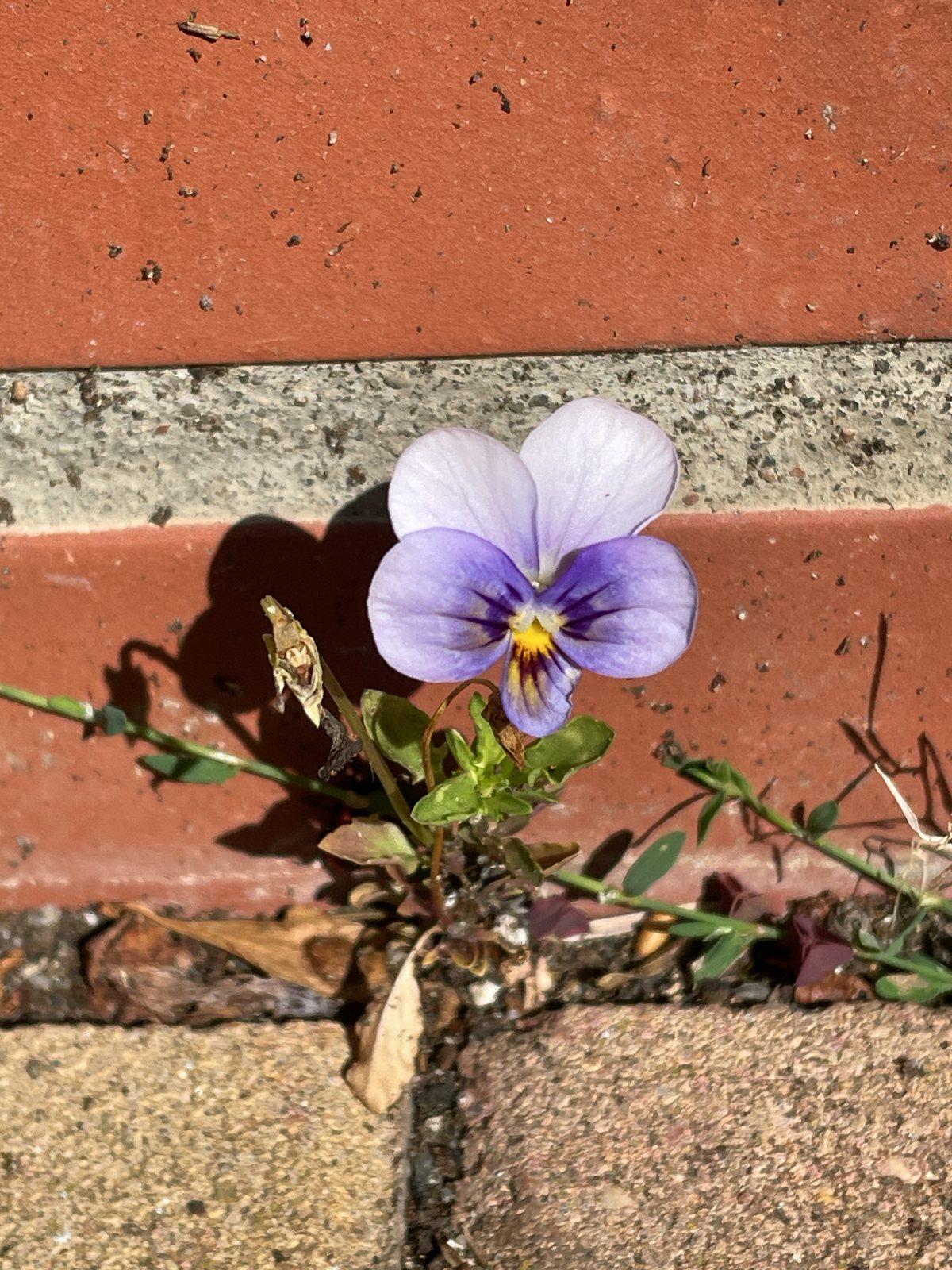
Horned violet (Viola cornuta) is a low, spreading perennial grown for its small, fragrant flowers and long flowering season in cool weather. It suits border edges, rock gardens and containers, but may be short-lived where summers are hot and humid. Many plants sold under this name are garden hybrids rather than the true species.
At a glance
- Sun
- Full sun in cool climates; partial shade, especially afternoon shade, where summers are hot.
- Water
- Keep the soil evenly moist but not waterlogged. Water during dry spells, particularly in containers.
- Soil
- Humus-rich, well-drained soil; tolerates mildly acidic to mildly alkaline conditions.
- Height
- 0.5-1 ft (0.15-0.3 m)
- Spread
- 0.5-1 ft (0.15-0.3 m)
- Flowers
- Spring through early autumn in cool conditions, often pausing in summer heat. The species has violet to lavender-blue flowers with a pale or yellowish eye; garden hybrids offer many other colours.
- Foliage
- Small, green, oval to narrowly oval leaves with rounded teeth; evergreen in mild winters but may die back in colder weather.
- Growth
- Moderate; forms small spreading clumps and may self-seed.
- Care needed
- Low
The year at a glance
- Pollinators
- Wildlife
- Low allergen
| J | F | M | A | M | J | J | A | S | O | N | D | |
|---|---|---|---|---|---|---|---|---|---|---|---|---|
| Flowers | ||||||||||||
| Plant |
Northern hemisphere months. In Australia, shift them by six.
- Difficulty
- Easy
- Toughness
- Fairly tough
Will it suit your garden?
Pick your zone, country, light and whether you have pets.
Full sun is 6 or more hours of direct sun a day, part shade 3 to 6 hours, shade under 3.
How it grows
Planting day
0.7 ft (0.22 m)
full size
About 3 years to full size.
From a typical nursery size, at an average rate for this kind of plant. A rule of thumb, not a forecast.
Good to know
- Cats and dogs
- Safe
- Native to
- Canada
- Growth rate
- Moderate
Care
Jobs through the year
- WaterMar–May, Sep–Oct, every 7 days
- Water established plants if the surface is drying; check young plants and containers more often.
- WaterJun–Aug, every 4 days
- Keep ground-grown plants evenly moist during dry weather without waterlogging.
- FeedMar–Apr
- Top-dress ground-grown clumps lightly with compost.
- FeedApr–Sep, every 14 days
- For container plants only, apply balanced liquid feed during flowering at the label rate.
- MulchApr
- Apply a thin moisture-conserving mulch, keeping it clear of crowns.
- DeadheadMar–Sep, every 7 days
- Remove faded flowers to prolong flowering and limit self-seeding.
- PruneMar
- Remove winter-damaged foliage as fresh growth starts.
- PruneJun–Jul
- After the main flush, lightly shear straggly stems to leafy growth and water.
- DivideMar–Apr, Sep
- Divide healthy clumps every two to three years if flowering declines; choose spring or early autumn.
- Water at soil level when the surface begins to dry; do not let container compost dry out completely.
- Work compost into the soil before planting and add a light top-dressing each spring.
- Feed container plants with a balanced liquid fertiliser at the label rate during active flowering.
- Apply a thin layer of mulch to conserve moisture, keeping it clear of the crowns.
- Divide healthy clumps every two or three years if flowering declines.
Pruning. Remove faded flowers regularly to prolong flowering and limit seedlings. After the main flush, lightly shear straggly stems back to leafy growth, then water to encourage a compact new flush.
Through the year
- Early spring
- Remove winter-damaged foliage and top-dress established clumps with compost.
- Spring
- Plant young plants in moist, well-drained soil; divide established clumps as growth begins.
- Late spring
- Deadhead regularly and check tender growth for aphids.
- Summer
- Water during dry weather and trim straggly growth after flowering; provide afternoon shade in hot districts.
- Early autumn
- Plant or divide in mild climates, leaving time for roots to establish before winter.
- Winter
- Check that pots and planting sites drain freely; avoid leaving containers standing in water.
In the garden
- Edge paths and small borders with low clumps that soften hard surfaces without hiding plants behind them.
- Plant among spring bulbs to cover bare soil and continue flowering after the bulbs fade.
- Combine with primroses and forget-me-nots for a loose, cool-season cottage planting.
- Use in shallow containers or rock gardens where its small flowers can be seen closely and drainage is good.
Garden styles it suits: Cottage garden, English country, Alpine rock garden, Romantic rose garden, Small-space and Blues and silvers.
Plant it with: Primroses, Forget-me-nots, Dwarf daffodils, Grape hyacinths, Creeping phlox and Alpine pinks.
Wildlife: Flowers attract bees and other small pollinating insects. Foliage may feed violet-feeding butterfly caterpillars where suitable local species occur.
Problems to watch for
- Slugs and snails chew leaves and flowers: remove hiding places, hand-pick after dark and use an approved bait if needed.
- Aphids cluster on new growth: wash them off with water or treat persistent colonies with insecticidal soap according to the label.
- Powdery mildew marks leaves in crowded or stressed plants: improve airflow, water the roots consistently and remove badly affected foliage.
- Crown or root rot causes collapse in wet soil: improve drainage, keep mulch away from crowns and discard rotting plants.
Safety
Not known to be toxic to people, cats, dogs or horses. Flowers and young leaves of correctly identified Viola cornuta are edible, but do not eat plants treated with pesticides unsuitable for food crops. Eating large quantities of plant material may cause stomach upset in pets.
Easily confused with
Wild pansy or heartsease (Viola tricolor)
Usually an annual or short-lived plant with mixed purple, yellow and white flowers; its flower spur is much shorter than the conspicuous, slender horn of Viola cornuta.
Garden pansy (Viola × wittrockiana)
Usually has much larger, broader, overlapping petals, often with a dark central blotch, and a less spreading habit.
Sweet violet (Viola odorata)
Has rounded, heart-shaped leaves in low rosettes and flowers mainly in late winter and spring; its flowers lack the long, slender horn of Viola cornuta.
The name
The Latin epithet cornuta means 'horned', referring to the long nectar spur projecting behind the flower.
Propagation. Sow seed in a cool, sheltered place, following the seed supplier's temperature guidance; germination can be uneven. Divide clumps in spring or early autumn, or take short, non-flowering basal cuttings. Use division or cuttings to preserve a named cultivar, as seedlings may differ from the parent.
Checked against open data
- Accepted botanical name
- Viola cornuta
- Native range
- France, Spain, Alabama, Alberta, Connecticut, Delaware, District of Columbia, Georgia, Illinois, Indiana, Iowa and Kentucky.
- Measured
- Average height 9 cm.
Sources: GBIF (CC BY 4.0) and Trefle (CC BY 4.0). The care and design notes are LandscapeGPT's own.
See it in your own yard.
Upload a photo of your yard and see it redesigned with plants that suit your climate, each checked against your zone.