Hot Lips sage
Salvia microphylla 'Hot Lips'. Family Lamiaceae. Shrub.
Also called Hot Lips baby sage, Hot Lips little-leaf sage.
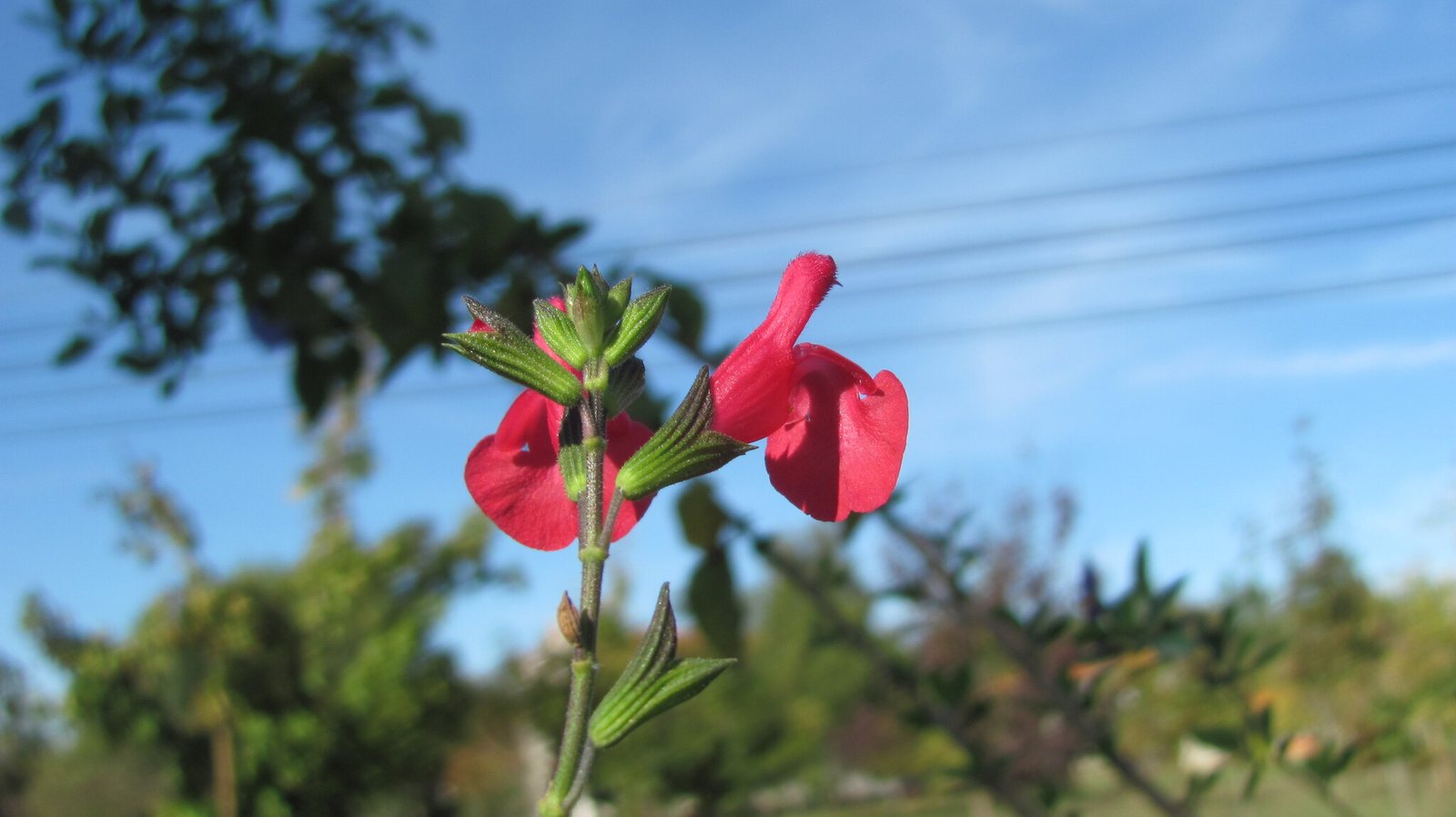
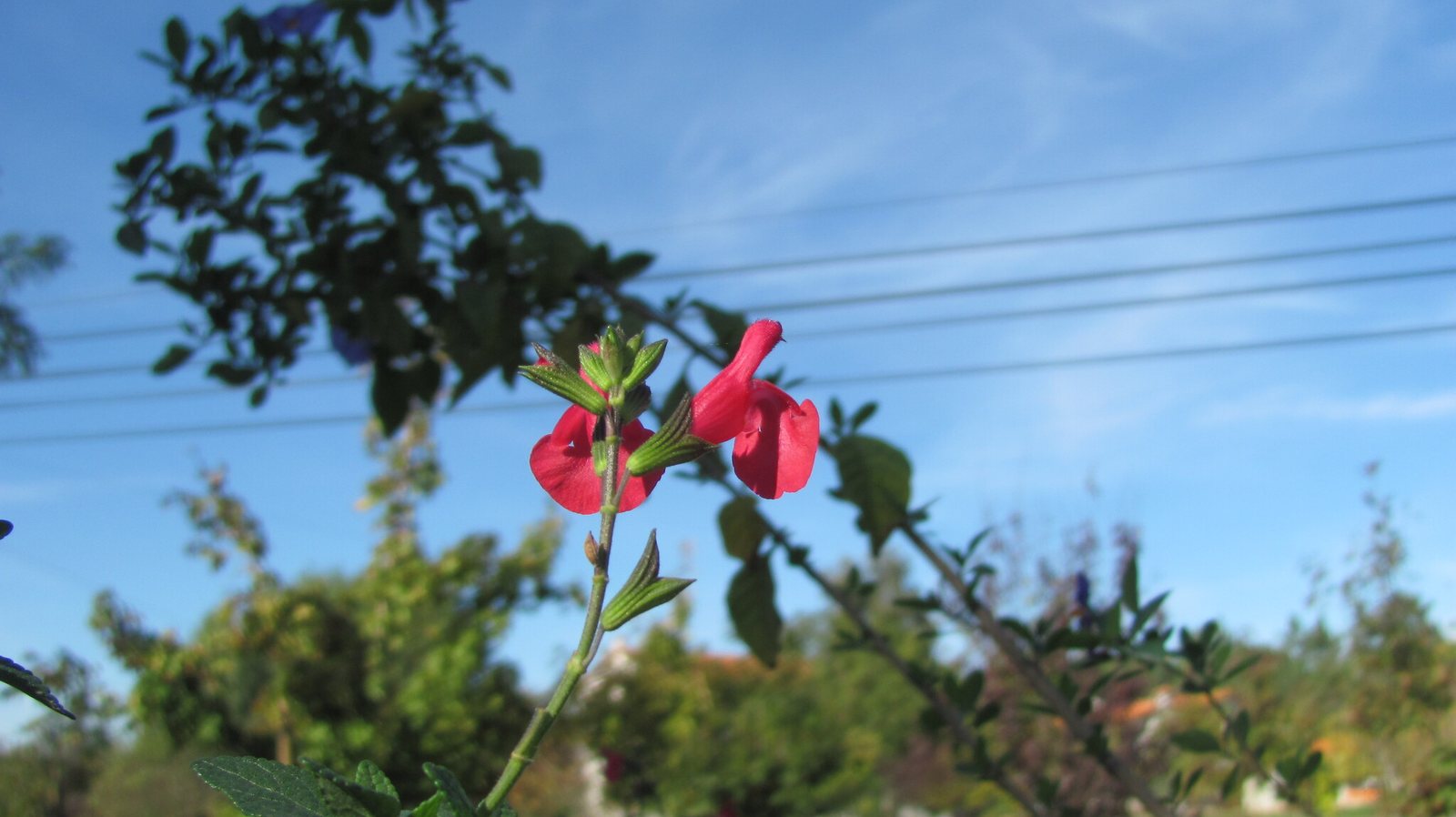
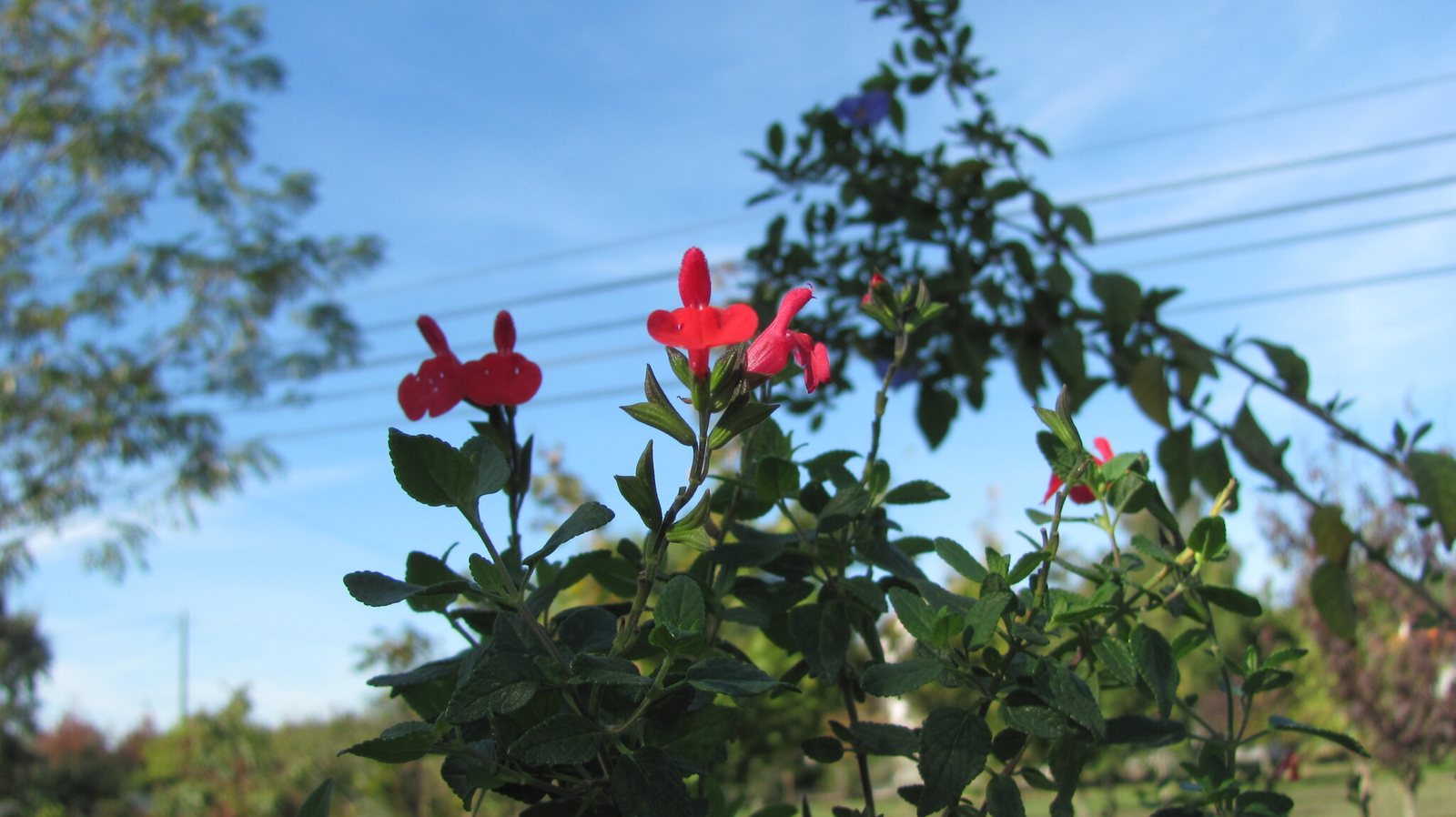
A small, bushy, woody sage grown for its long season of red-and-white flowers and aromatic leaves. The flowers may turn entirely red or white as temperatures change, sometimes with all three colour patterns on one plant. It keeps its leaves in mild climates but may lose them in cold winters; in colder regions, grow it as a seasonal plant or overwinter it under cover.
At a glance
- Sun
- Full sun gives the most flowers; light afternoon shade helps in very hot climates.
- Water
- Water regularly during establishment, then deeply during prolonged dry spells. Let the soil surface dry between waterings; containers need more frequent checks.
- Soil
- Well-drained soil, including sandy, chalky or gravelly ground. Avoid heavy soil that stays wet in winter.
- Height
- 2-3 ft (0.6-0.9 m)
- Spread
- 2-3 ft (0.6-0.9 m)
- Flowers
- Late spring or early summer until autumn frosts; small, two-lipped red-and-white flowers, sometimes wholly red or white.
- Foliage
- Small, paired, oval green leaves with lightly toothed edges and a fruity, sage-like scent when rubbed. Evergreen to semi-evergreen in mild climates, often deciduous near its cold limit.
- Growth
- Moderate to fast in warm weather.
- Care needed
- Low
The year at a glance
- Pollinators
- Deer resistant
- Drought tolerant
- Heat tolerant
- Low allergen
- Fragrant
| J | F | M | A | M | J | J | A | S | O | N | D | |
|---|---|---|---|---|---|---|---|---|---|---|---|---|
| Flowers | ||||||||||||
| Plant |
Northern hemisphere months. In Australia, shift them by six.
- Difficulty
- Moderate
- Toughness
- Fairly tough
Will it suit your garden?
Pick your zone, country, light and whether you have pets.
Full sun is 6 or more hours of direct sun a day, part shade 3 to 6 hours, shade under 3.
How it grows
Planting day
1.6 ft (0.5 m)
After 1 year
1.8 ft (0.56 m)
After 2 years
2.1 ft (0.63 m)
After 3 years
2.3 ft (0.69 m)
After 5 years
2.5 ft (0.75 m)
full size
About 4 years to full size.
From a typical nursery size, at an average rate for this kind of plant. A rule of thumb, not a forecast.
Good to know
- Cats and dogs
- Safe
- Growth rate
- Fast
Care
Jobs through the year
- WaterApr–May, Sep–Oct, every 21 days
- Water established ground plants only if soil is dry; young plants and pots need more frequent checks.
- WaterJun–Aug, every 14 days
- Water deeply during prolonged dry spells, allowing the surface to dry between waterings.
- WaterJan–Mar, Nov–Dec, every 28 days
- Check overwintered pots and water sparingly only when the compost is nearly dry.
- PruneApr–May
- After hard frosts, remove dead stems and shorten living shoots by one-third to one-half above live buds.
- DeadheadJun–Sep, every 21 days
- Lightly trim spent flower stems if flowering slows; avoid cutting into bare old wood.
- MulchMay
- Apply a thin mulch, keeping the woody crown clear and drainage unobstructed.
- ProtectOct–Nov
- Not reliably hardy locally; move pots to bright, cool, frost-free shelter before frost.
- ProtectMay
- Gradually acclimatise overwintered plants outdoors after frost risk has passed.
- Plant after hard frosts have passed, leaving room for a broad, branching shrub.
- Water through the first growing season; reduce watering once roots are established.
- Feed sparingly; rich soil and heavy feeding encourage leafy growth at the expense of flowers.
- Keep mulch away from the woody crown and improve drainage before planting in heavy soil.
- In cold regions, move container plants to a bright, cool, frost-free place for winter.
Pruning. In spring, once hard frosts are unlikely and new buds are visible, remove dead stems and shorten living shoots by about one-third to one-half, cutting above healthy growth. Lightly trim spent flower stems in summer, but avoid hard autumn pruning or cutting into bare old wood without live buds.
Through the year
- Spring
- Check for new growth before pruning out winter damage and shortening the remaining stems.
- Late spring
- Plant out after hard frosts, or return overwintered pots outdoors gradually.
- Early summer
- Take softwood cuttings from healthy, non-flowering shoots.
- Summer
- Water during extended dry weather and lightly trim spent flowering stems if blooming slows.
- Early autumn
- Take backup cuttings if winter survival is uncertain.
- Late autumn
- Move pots under cover before hard frost; leave outdoor stems standing for winter.
In the garden
- Repeat along a sunny border edge to carry red-and-white colour through summer and autumn.
- Mix with lavender, catmint and ornamental grasses in a free-draining gravel garden.
- Grow in a large, well-drained patio container where the flowers and scented leaves are easy to enjoy.
- Use as a loose, low edging beside a sunny path, allowing space for stems to spread.
Garden styles it suits: Cottage garden, Mediterranean, Dry gravel garden, Pollinator garden, Sensory garden and Low-maintenance.
Plant it with: Lavender, Catmint, Yarrow, Gaura, Santolina and Blue fescue.
Wildlife: Flowers attract bees and, where present in the Americas, hummingbirds. The long flowering season provides nectar well into autumn.
Problems to watch for
- Winter root rot or crown loss in wet soil: improve drainage, keep mulch clear of the crown and avoid winter watering unless the soil is genuinely dry.
- Frost-damaged stems: leave them until spring, then cut back to living buds; shelter pots before severe frost.
- Aphids on soft shoots: wash them off with water and encourage ladybirds and other predators.
- Leggy growth with few flowers: provide more sun, reduce feeding and shorten shoots in spring.
Safety
Not known to be toxic to people, cats, dogs or horses. No particular part is established as poisonous, but safety information specific to this cultivar is limited; do not treat it as a substitute for culinary sage or encourage pets to eat it.
Easily confused with
Autumn sage (Salvia greggii)
Usually has narrower leaves with smooth margins, whereas Hot Lips has broader, lightly toothed leaves. Flower colour alone is unreliable, and hybrids can blur the distinction.
Amistad sage (Salvia 'Amistad')
Makes a taller plant with much larger leaves and deep purple flowers held in dark calyces, rather than the small red-and-white flowers of Hot Lips.
The name
Salvia comes from the Latin salvare, meaning to heal, microphylla means small-leaved, and 'Hot Lips' refers to the red lower lip of its bicoloured flowers.
Propagation. Take softwood cuttings in late spring or early summer, or semi-ripe cuttings in late summer, and root in a free-draining medium. Cuttings preserve the cultivar; seedlings may not retain its flower pattern.
Checked against open data
- Accepted botanical name
- Salvia microphylla
- In the US and Canada
- Introduced in the lower 48 states.
- Native range
- Arizona, Guatemala, Mexico Central, Mexico Gulf, Mexico Northeast, Mexico Northwest, Mexico Southeast and Mexico Southwest.
Sources: GBIF (CC BY 4.0), USDA PLANTS and Trefle (CC BY 4.0). The care and design notes are LandscapeGPT's own.
See it in your own yard.
Upload a photo of your yard and see it redesigned with plants that suit your climate, each checked against your zone.