Husker Red penstemon
Penstemon digitalis 'Husker Red'. Family Plantaginaceae. Perennial.
Also called Husker Red beardtongue, Husker Red foxglove beardtongue.
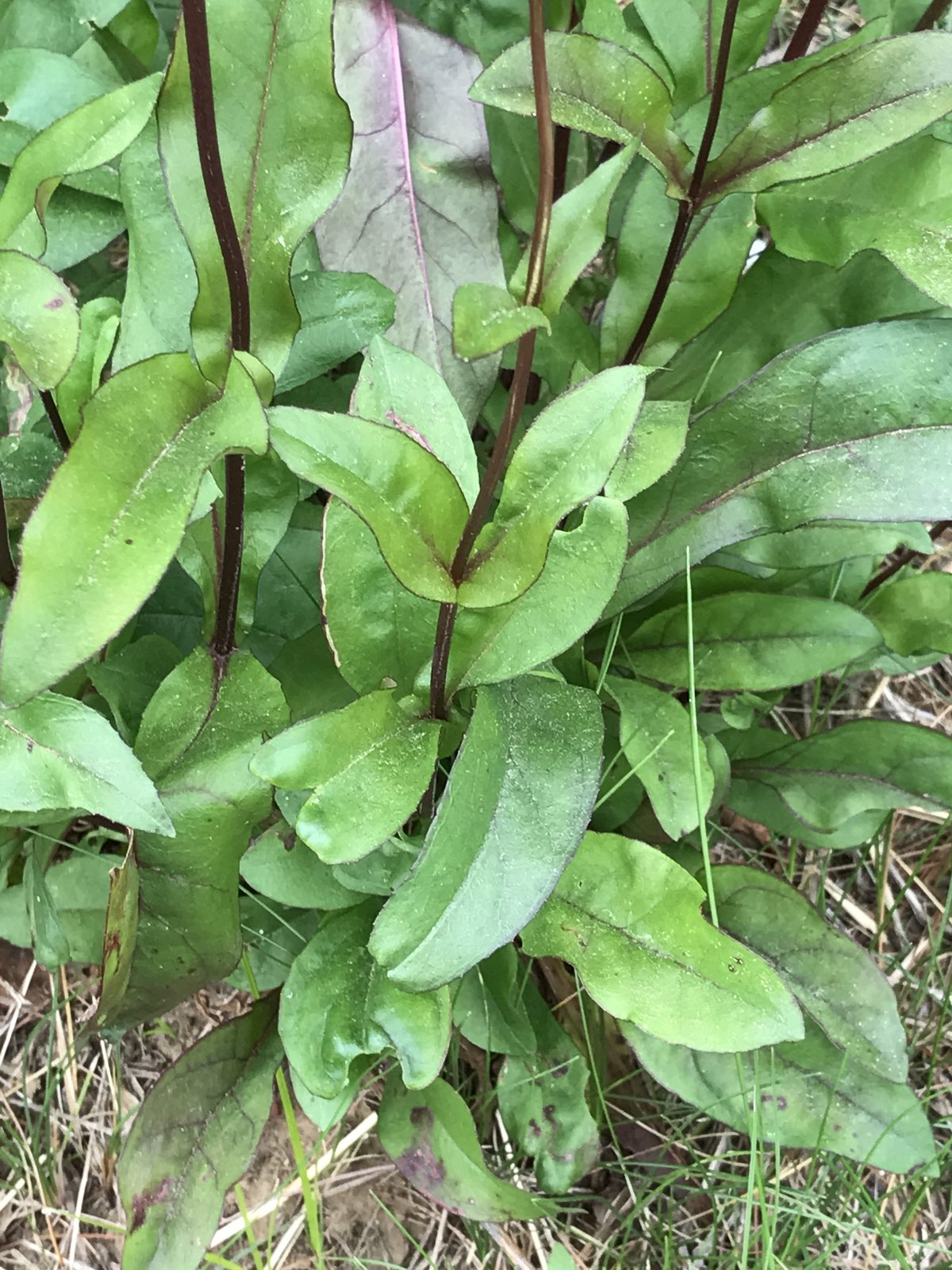
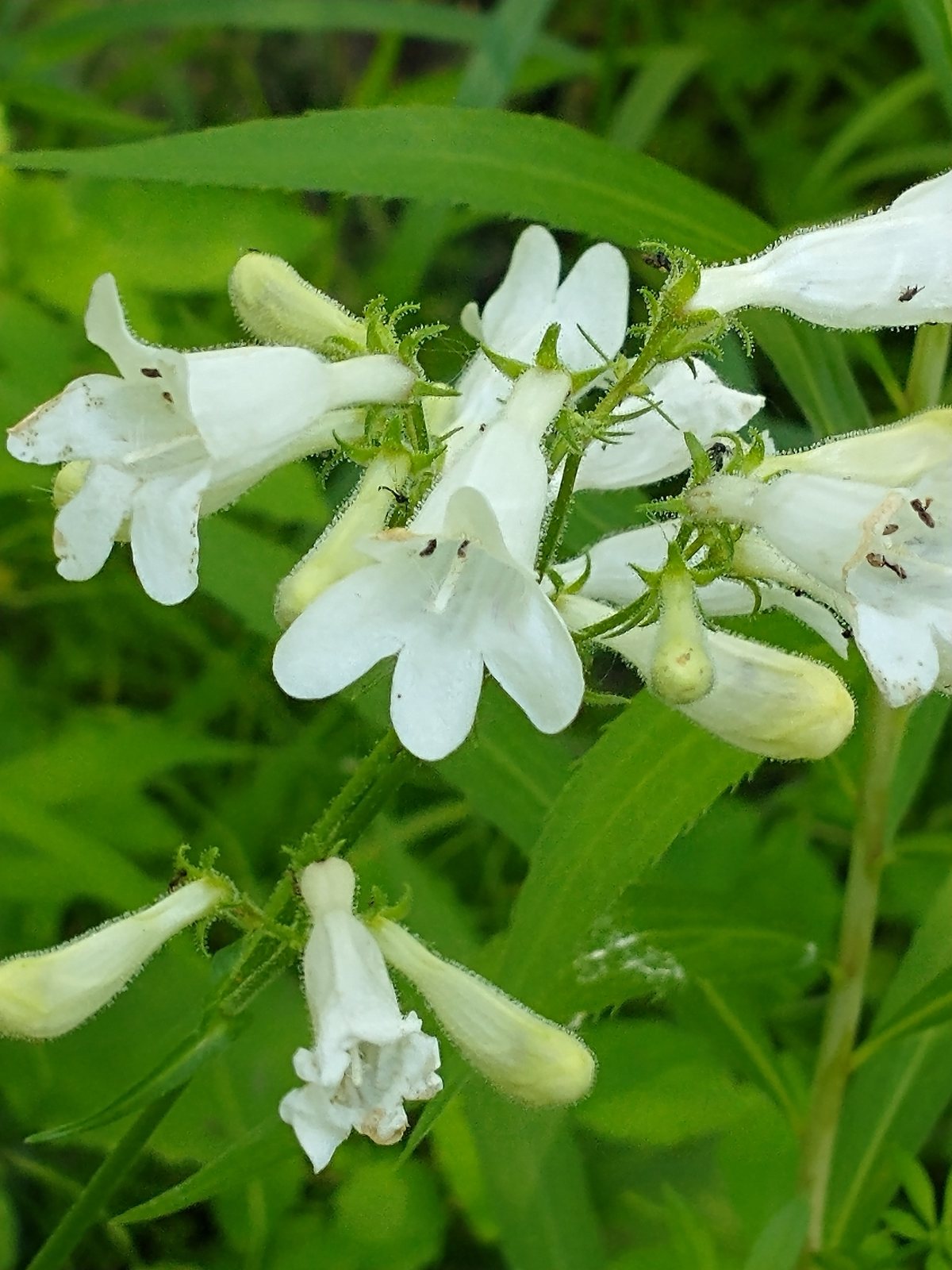
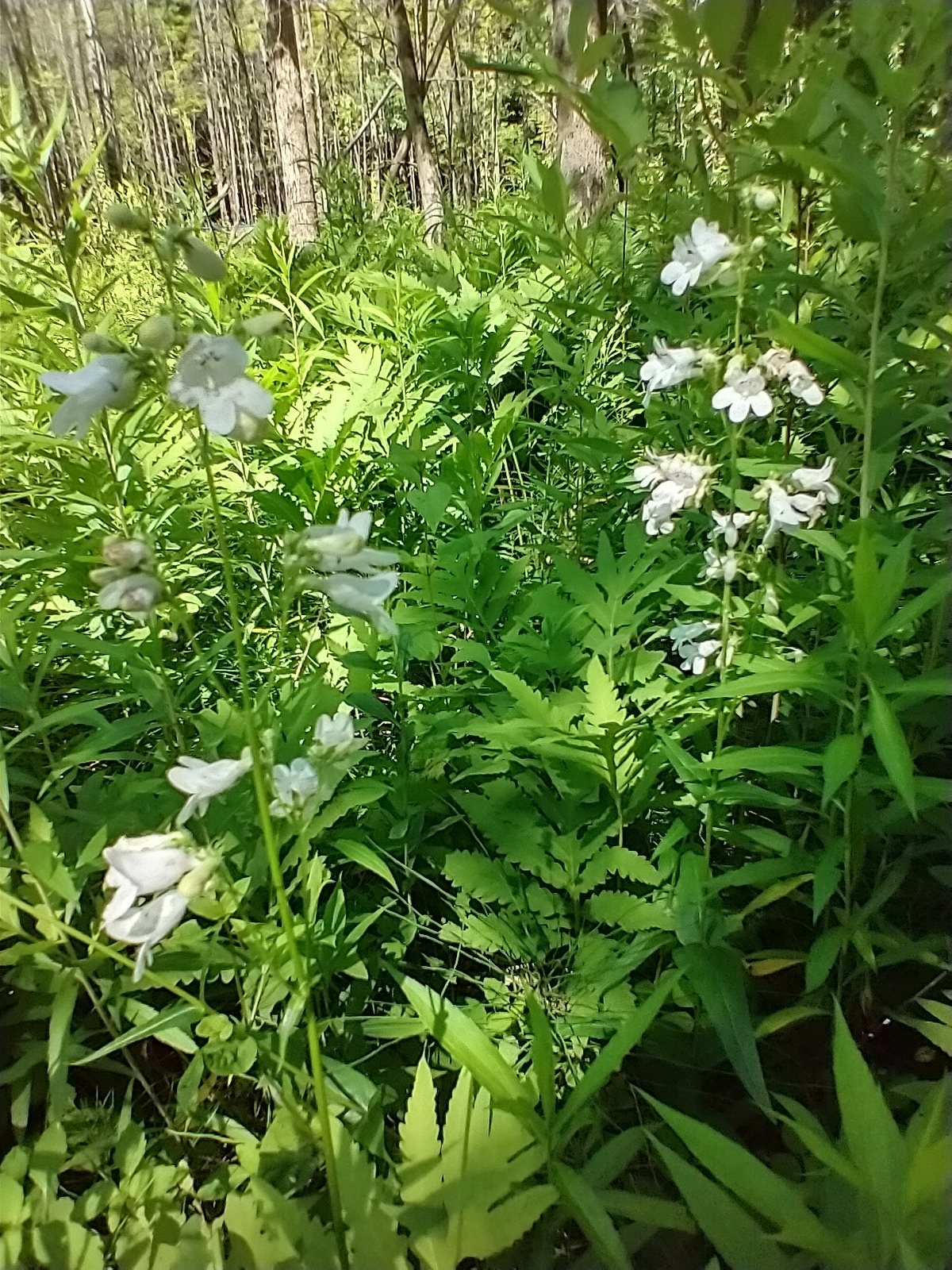
Husker Red is a clump-forming perennial grown for its burgundy foliage and upright stems of white, sometimes pink-flushed flowers. A selection of a species native to central and eastern North America, it brings early-summer flowers and dark foliage to mixed borders and meadow-style planting.
At a glance
- Sun
- Full sun to light partial shade; foliage colour and flowering are strongest in sun.
- Water
- Water regularly while establishing. Once established, water during prolonged dry spells; avoid soil that stays wet.
- Soil
- Well-drained sandy, loamy or clay soil; tolerates a broad pH range. Improve drainage in heavy, wet ground.
- Height
- 2-3 ft (0.6-0.9 m)
- Spread
- 1-2 ft (0.3-0.6 m)
- Flowers
- Late spring to early summer; tubular white flowers, often flushed pale pink, on burgundy stems.
- Foliage
- Pointed, lance-shaped leaves form a basal clump and clothe the flowering stems. New foliage is burgundy-red, often becoming greener during summer; basal leaves may persist through mild winters.
- Growth
- Moderate
- Care needed
- Low
The year at a glance
- Pollinators
- Deer resistant
- Drought tolerant
- Cold hardy
- Wildlife
- Low allergen
| J | F | M | A | M | J | J | A | S | O | N | D | |
|---|---|---|---|---|---|---|---|---|---|---|---|---|
| Flowers | ||||||||||||
| Fruit | ||||||||||||
| Plant |
Northern hemisphere months. In Australia, shift them by six.
- Difficulty
- Easy
- Toughness
- Very tough
Will it suit your garden?
Pick your zone, country, light and whether you have pets.
Full sun is 6 or more hours of direct sun a day, part shade 3 to 6 hours, shade under 3.
How it grows
Planting day
1 ft (0.3 m)
After 1 year
1.5 ft (0.45 m)
After 2 years
2 ft (0.6 m)
After 3 years
2.5 ft (0.75 m)
full size
About 3 years to full size.
From a typical nursery size, at an average rate for this kind of plant. A rule of thumb, not a forecast.
Good to know
- Cats and dogs
- Safe
- Growth rate
- Moderate
Care
Jobs through the year
- WaterApr–May, Sep–Oct, every 14 days
- Water established plants only during dry spells; water young plants more often as the soil surface dries.
- WaterJun–Aug, every 10 days
- Water deeply during prolonged drought, allowing the surface to dry and avoiding wet crowns.
- FeedMar–Apr
- Apply a thin compost top-dressing; avoid heavy nitrogen feeding.
- PruneFeb–Mar
- Cut dead stems to the base without damaging basal foliage or new shoots.
- DivideMar–Apr
- Divide crowded clumps when growth or flowering declines.
- DeadheadJun–Jul, every 14 days
- Remove faded flowering stems to limit seedlings, or retain some for seedheads and insect shelter.
- ProtectMar–May
- Check young shoots for slugs and hand-pick if necessary.
- PruneSep–Oct
- Remove unwanted seedlings and diseased foliage while leaving healthy basal leaves intact.
- Water deeply during the first growing season, letting the soil surface dry between waterings.
- Apply a thin layer of compost in spring; avoid heavy feeding, which encourages floppy growth.
- Keep mulch away from the crown and prevent water collecting around it in winter.
- Support stems early if they lean in exposed sites; plants in full sun usually need no staking.
- Divide crowded clumps in spring when growth or flowering declines.
Pruning. Remove spent flower stems after flowering to tidy the plant and limit self-seeding; a smaller repeat flush may follow. Leave basal foliage intact, and cut remaining dead stems to the base in late winter or early spring.
Through the year
- Early spring
- Remove dead stems without damaging new basal growth, and add a thin layer of compost.
- Spring
- Plant or divide clumps, water them in thoroughly, and check young growth for slugs.
- Late spring
- Add discreet supports if stems begin leaning, especially in partial shade.
- Early summer
- Remove faded flowering stems unless you want seedheads.
- Summer
- Water during extended drought and check foliage for mildew or leaf spots.
- Autumn
- Remove unwanted seedlings and clear fallen debris from around the crown.
In the garden
- Plant in groups through a sunny mixed border, where burgundy leaves contrast with green foliage.
- Combine with ornamental grasses and coneflowers in prairie-inspired or new-perennial planting.
- Use beside pale pink, blue or white flowers to create a soft colour scheme anchored by dark foliage.
- Place near paths or seating so the tubular flowers and visiting bees can be seen closely.
Garden styles it suits: Cottage garden, New perennial (prairie), Native meadow, Pollinator garden, White garden and Low-maintenance.
Plant it with: Purple coneflower, Little bluestem, Catmint, Meadow sage, Threadleaf coreopsis and Prairie dropseed.
Wildlife: Flowers attract bees, including bumblebees; hummingbirds may visit where they occur. Hollow or pithy old stems can provide shelter for insects if left standing through winter.
Problems to watch for
- Crown or root rot in wet soil: improve drainage or move the plant to higher ground; keep mulch off the crown.
- Powdery mildew: allow more space for airflow and avoid letting plants become severely drought-stressed.
- Leaf spots: remove badly affected leaves and fallen debris, and water the soil rather than the foliage.
- Slugs and snails on young shoots: inspect emerging growth and use hand-picking or labelled wildlife-conscious controls where needed.
Safety
Not known to be toxic to people, cats, dogs or horses. It is an ornamental rather than a food plant; avoid eating it, and seek veterinary or medical advice if ingestion causes symptoms.
Easily confused with
Common foxglove (Digitalis purpurea)
Common foxglove has broad, softly hairy basal leaves and much larger, often spotted bells arranged along a tall spike. Husker Red has narrower leaves and smaller flowers in branching clusters;
Hairy beardtongue (Penstemon hirsutus)
Hairy beardtongue usually has visibly hairy stems and pale violet flowers with whitish mouths, rather than the smooth burgundy stems and mostly white flowers of Husker Red.
The name
Penstemon refers to the flower's five stamens, including one sterile stamen, while digitalis refers to its resemblance to foxglove.
Propagation. Divide established clumps in spring or take basal cuttings from healthy new growth to preserve the cultivar. It may self-seed, but seedlings can have greener foliage and will not reliably match 'Husker Red'.
Checked against open data
- Accepted botanical name
- Penstemon digitalis
- Native range
- Alabama, Arkansas, Illinois, Indiana, Iowa, Kansas, Kentucky, Louisiana, Michigan, Minnesota, Mississippi and Missouri.
- Measured
- Soil pH 5.5 to 7. Average height 68 cm.
Sources: GBIF (CC BY 4.0) and Trefle (CC BY 4.0). The care and design notes are LandscapeGPT's own.
See it in your own yard.
Upload a photo of your yard and see it redesigned with plants that suit your climate, each checked against your zone.