Hyssop
Hyssopus officinalis. Family Lamiaceae. Perennial.
Also called Common hyssop, True hyssop.
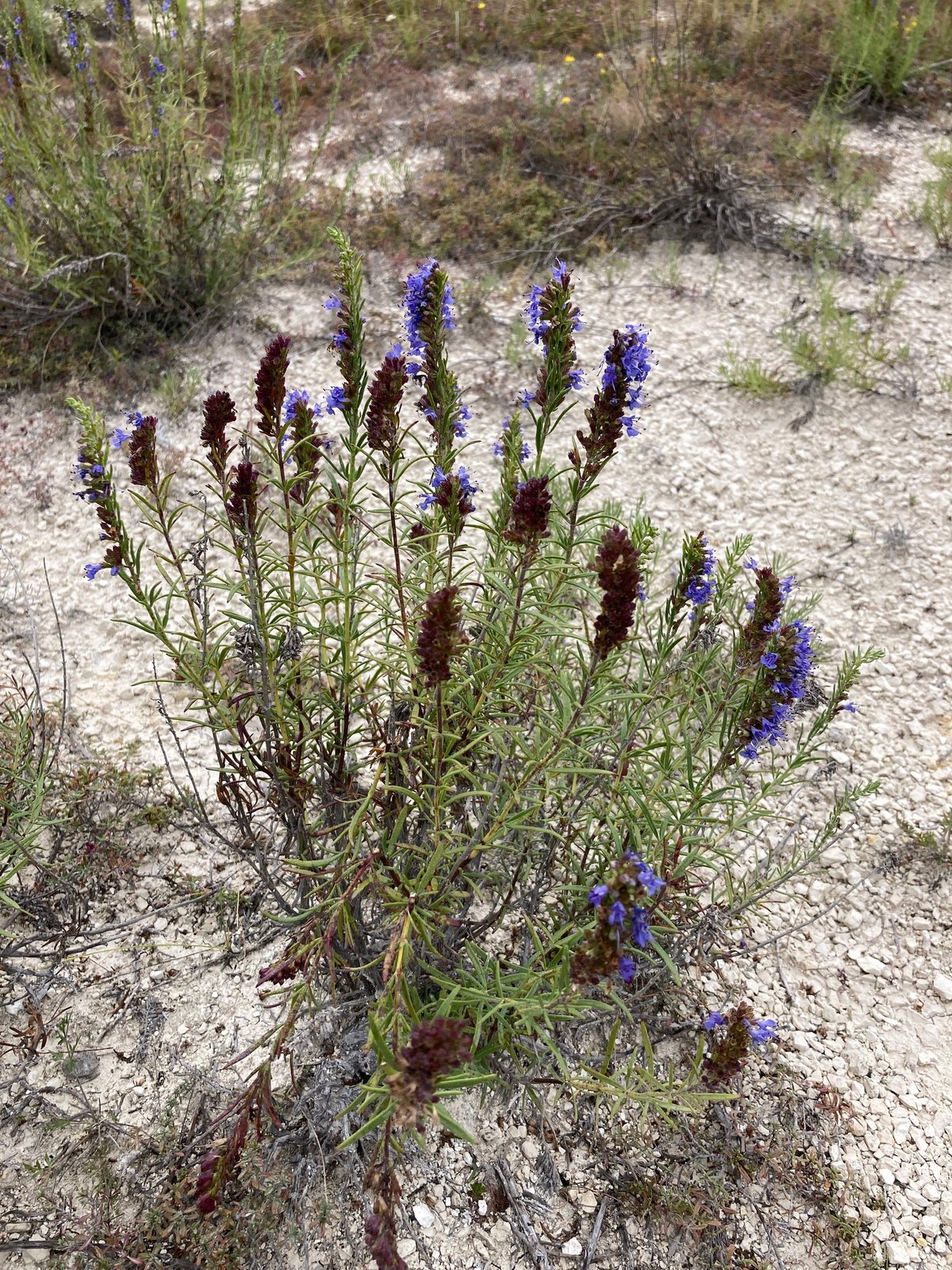
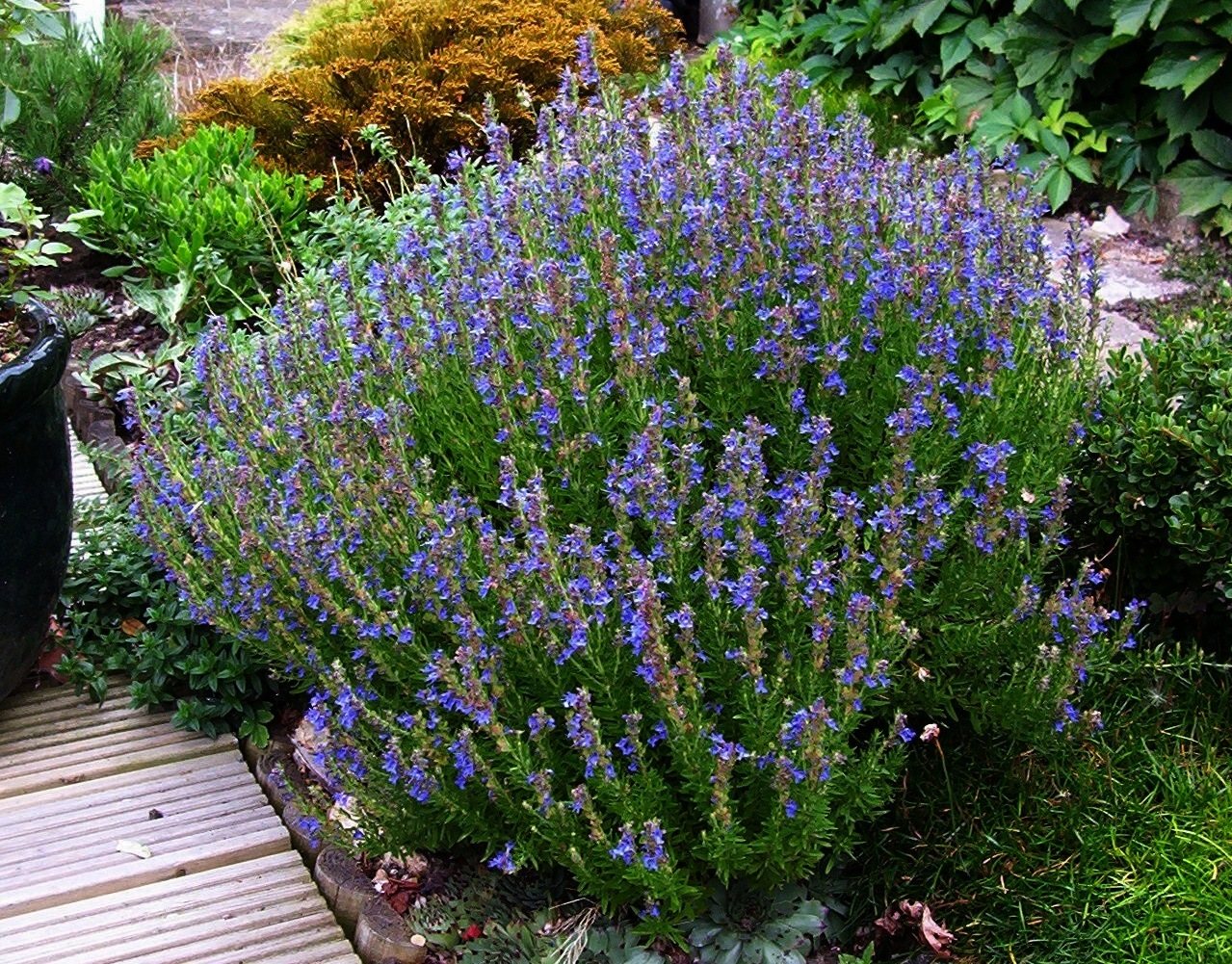
Hyssop is a small, woody-based perennial herb with aromatic leaves and spikes of blue-purple flowers. Grow it for bees, low edging and small amounts of strongly flavoured culinary foliage; it does best in sunny, freely drained ground.
At a glance
- Sun
- Full sun; tolerates light shade but flowers less and grows more loosely.
- Water
- Water regularly while establishing, allowing the soil surface to dry between waterings. Established plants tolerate drought and need watering mainly during prolonged dry spells.
- Soil
- Well-drained, lean to moderately fertile soil, preferably neutral to alkaline. Avoid heavy, persistently wet soil, especially in winter.
- Height
- 1.5-2 ft (0.45-0.6 m)
- Spread
- 1-2 ft (0.3-0.6 m)
- Flowers
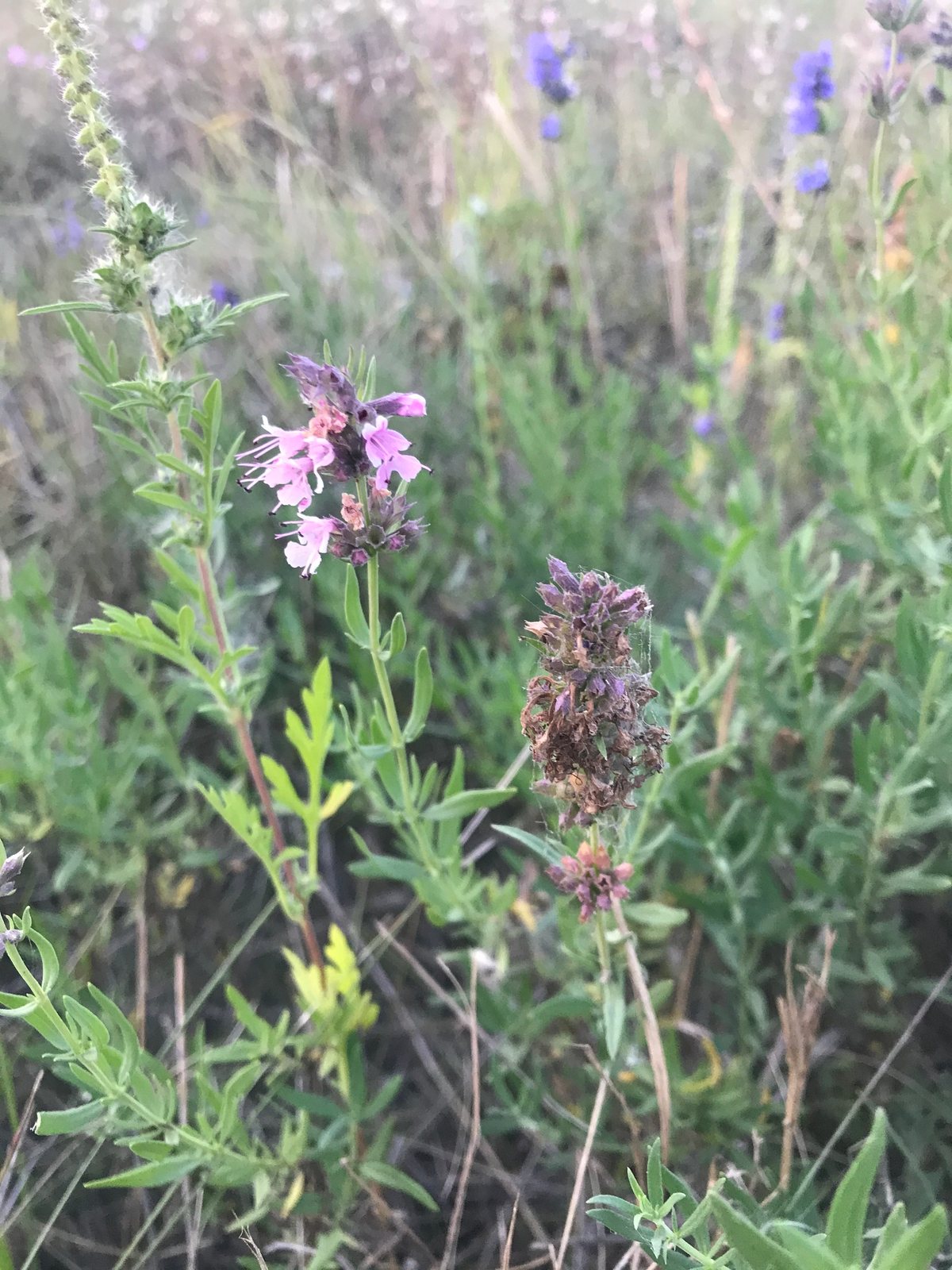
- Summer to early autumn; usually blue-purple, with pink- and white-flowered forms also available.
- Foliage
- Small, narrow, opposite, dark green leaves with a strong herbal scent. Evergreen or semi-evergreen in mild winters, but often loses its leaves in colder climates.
- Growth
- Moderate
- Care needed
- Low
The year at a glance
- Pollinators
- Deer resistant
- Drought tolerant
- Cold hardy
- Heat tolerant
- Low allergen
- Fragrant
- Edible
| J | F | M | A | M | J | J | A | S | O | N | D | |
|---|---|---|---|---|---|---|---|---|---|---|---|---|
| Flowers | ||||||||||||
| Fruit | ||||||||||||
| Plant |
Northern hemisphere months. In Australia, shift them by six.
- Difficulty
- Easy
- Toughness
- Very tough
Will it suit your garden?
Pick your zone, country, light and whether you have pets.
Full sun is 6 or more hours of direct sun a day, part shade 3 to 6 hours, shade under 3.
How it grows
Planting day
1 ft (0.3 m)
After 1 year
1.2 ft (0.37 m)
After 2 years
1.5 ft (0.45 m)
After 3 years
1.7 ft (0.53 m)
full size
About 3 years to full size.
From a typical nursery size, at an average rate for this kind of plant. A rule of thumb, not a forecast.
Good to know
- Cats and dogs
- Safe
- Growth rate
- Moderate
Care
Jobs through the year
- WaterApr–May, Sep, every 21 days
- Water established plants only during prolonged dryness; water young plants more often.
- WaterJun–Aug, every 14 days
- Water deeply only in prolonged drought, allowing soil to dry between soakings.
- PruneApr
- Trim once fresh growth appears, leaving leafy growth below every cut.
- DeadheadAug–Sep
- Lightly trim faded spikes to limit seedlings; leave some flowers for bees.
- MulchApr
- Use a light gravel mulch if helpful for drainage; keep the woody crown clear.
- HarvestApr–Sep, every 14 days
- Snip modest amounts of leafy tips as needed, preferably before flowering.
- Plant in a sunny position with sharp drainage; use a raised bed if your soil stays wet.
- Water new plants through their first growing season, letting the surface dry between soakings.
- Avoid rich feeding; excess nitrogen encourages soft, floppy growth.
- Keep mulch clear of the woody crown; gravel is useful where winter damp is a problem.
- Take cuttings to replace old plants that become woody and sparse.
Pruning. In spring, once new growth is visible, shorten stems to make a compact plant, leaving leafy growth below each cut. Lightly trim spent flower spikes after flowering, but avoid cutting hard into bare old wood or pruning heavily before winter.
Harvest
Snip young leaves and tender shoot tips from spring through summer, preferably before flowering for culinary use. Pick healthy, fully opened leaves and use sparingly because the flavour is strong and bitter; harvest flowering sprigs as the first flowers open if you want to dry them.
Through the year
- Early spring
- Sow seed under cover in a free-draining seed mix.
- Spring
- Trim established plants once fresh growth shows, removing winter-damaged stems.
- Late spring
- Plant out hardened-off young plants after severe frosts, spacing them about 1-1.5 ft (0.3-0.45 m) apart.
- Summer
- Harvest leafy tips sparingly and leave plenty of flower spikes for bees.
- Late summer
- Take non-flowering, semi-ripe cuttings and lightly trim faded flowers.
- Autumn
- Remove unwanted seedlings and check that water drains away from the crown.
In the garden
- Clip into a low edging around herb beds or a potager.
- Repeat small groups through a sunny border with lavender and yarrow for blue-purple summer colour.
- Plant beside paths where brushing the foliage releases its scent.
- Use in gravel gardens with thyme and sage for a compact, drought-tolerant planting.
- Grow in a well-drained container near the kitchen for occasional harvesting.
Garden styles it suits: Herb parterre, Potager (kitchen garden), Cottage garden, Mediterranean, Dry gravel garden and Pollinator garden.
Plant it with: Lavender, Common thyme, Common sage, Oregano, Yarrow and Catmint.
Wildlife: The nectar-rich flowers attract honeybees, bumblebees and other pollinating insects, including butterflies. Leave some flower spikes uncut throughout summer.
Problems to watch for
- Root and crown rot in wet soil: improve drainage, keep the crown clear of mulch and replace badly affected plants.
- Woody, open growth with age: trim lightly each spring and replace declining plants with rooted cuttings.
- Weak flowering or floppy stems: provide more sun and stop high-nitrogen feeding.
- Unwanted self-sown seedlings: remove faded spikes before seed ripens or pull seedlings while small.
Safety
Leaves and flowers are used in small culinary quantities by people and are not known to be toxic at those amounts. Concentrated hyssop essential oil can cause serious poisoning, including seizures, and should not be swallowed; avoid medicinal use during pregnancy or with a seizure disorder. Reliable safety information for cats, dogs and horses is limited, so do not assume the plant is safe for deliberate feeding, and keep essential oil away from animals.
Easily confused with
Anise hyssop (Agastache foeniculum)
Anise hyssop has broad, toothed, often heart-based leaves with an anise scent and usually grows taller. True hyssop has small, narrow leaves and woody lower stems.
English lavender (Lavandula angustifolia)
Lavender has grey-green foliage and flower spikes held on long, mostly leafless stalks. Hyssop has greener leaves and flowers clustered along the upper portions of leafy stems.
The name
Hyssopus comes from the ancient Greek hyssopos, a name used for an aromatic herb, while officinalis indicates a plant traditionally kept for medicinal use.
Propagation. Sow seed in spring, covering it lightly, or take softwood cuttings in late spring and semi-ripe cuttings in late summer. Cuttings preserve the flower colour and growth habit of the parent plant; seedlings may vary.
Checked against open data
- Accepted botanical name
- Hyssopus officinalis
- In the US and Canada
- Introduced in Canada and the lower 48 states.
Sources: GBIF (CC BY 4.0) and USDA PLANTS. The care and design notes are LandscapeGPT's own.
See it in your own yard.
Upload a photo of your yard and see it redesigned with plants that suit your climate, each checked against your zone.