Interrupted fern
Claytosmunda claytoniana. Family Osmundaceae. Fern.
Also called Osmunda claytoniana.
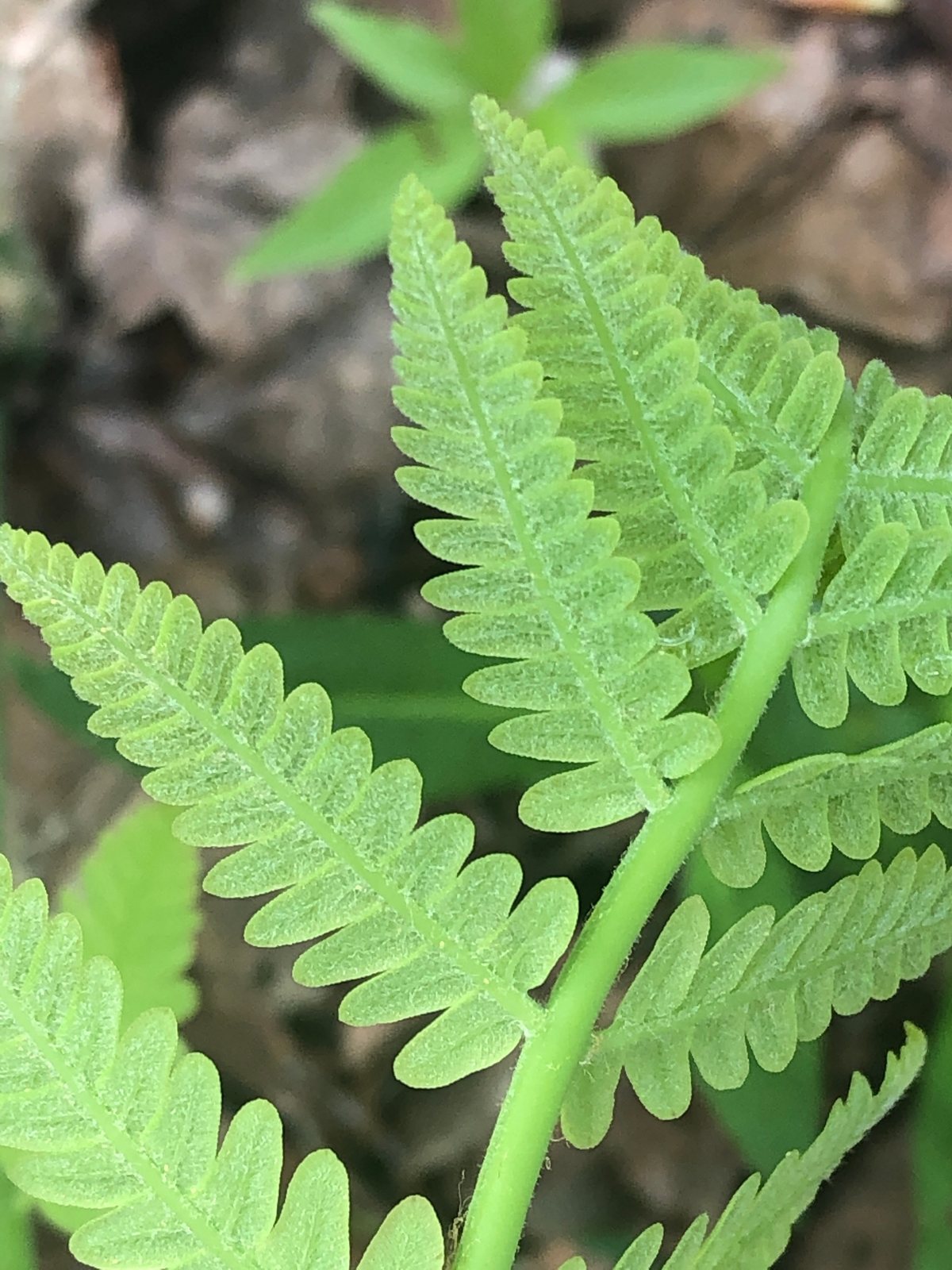
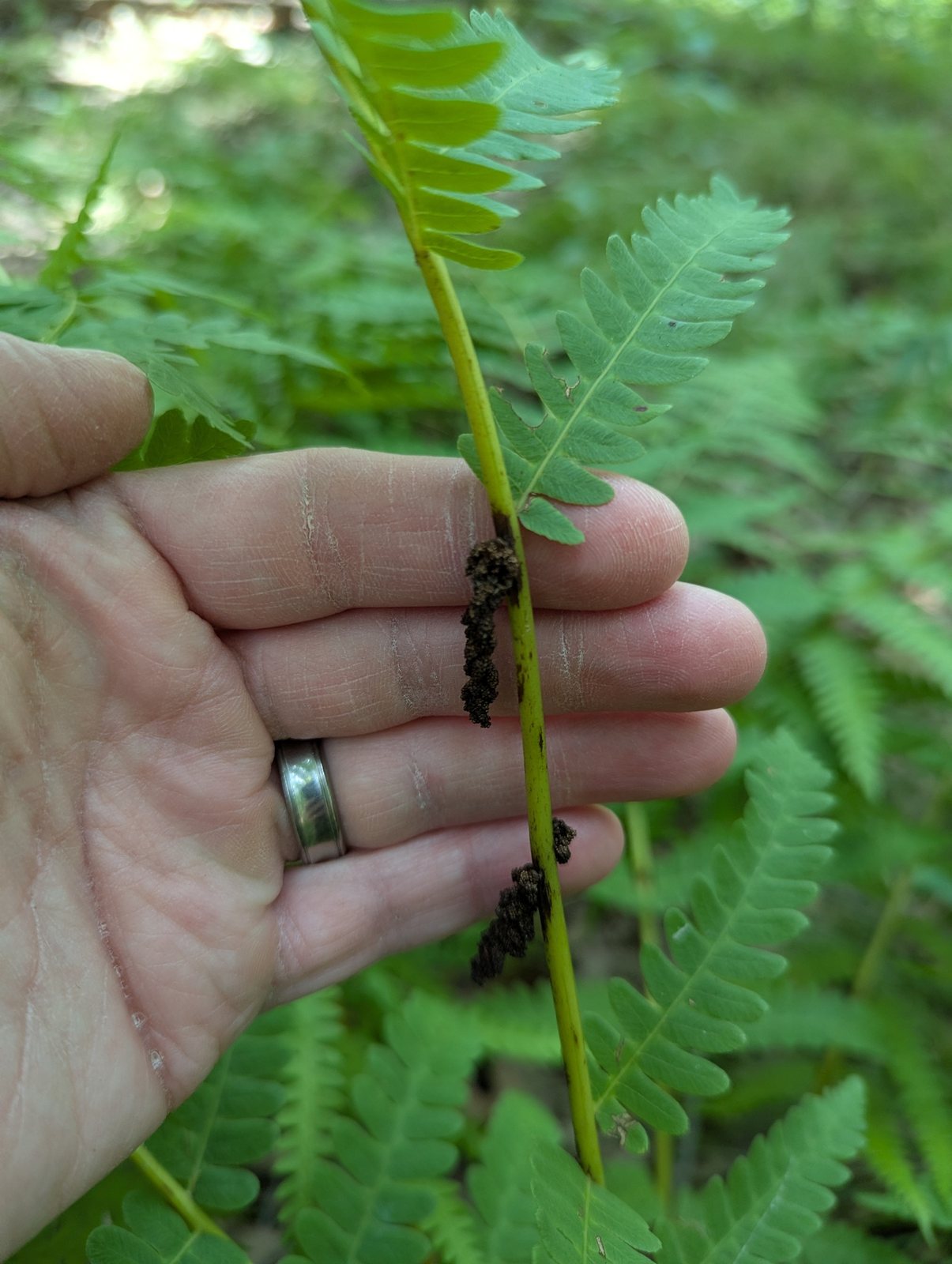
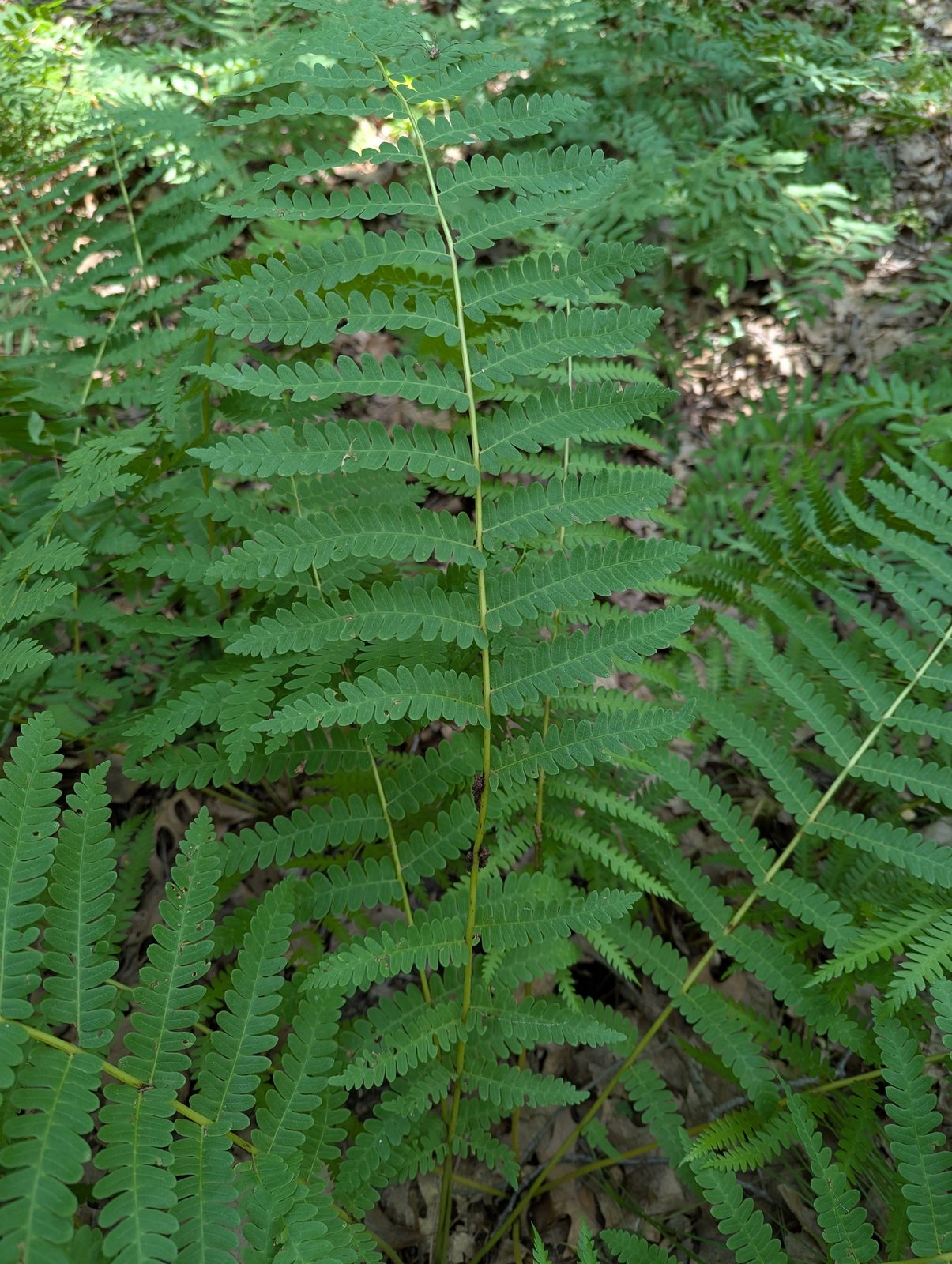
This deciduous fern forms upright, vase-shaped clumps of pale green fronds that deepen in colour through spring. Gardeners grow it for its strong shape and soft texture in moist woodland borders; its name comes from the gap left when the brown, spore-bearing leaflets midway up fertile fronds wither.
At a glance
- Sun
- Partial shade to full shade; tolerates more sun in cool climates if the soil stays moist.
- Water
- Keep consistently moist, especially during establishment and hot weather. Avoid prolonged flooding or stagnant soil.
- Soil
- Humus-rich, moisture-retentive soil with drainage; prefers acidic to neutral conditions but tolerates a range of soils.
- Height
- 2-4 ft (0.6-1.2 m)
- Spread
- 2-3 ft (0.6-0.9 m)
- Foliage
- Deciduous, upright to arching green fronds with deeply divided leaflets. Some fronds have a central section of dark brown, spore-bearing leaflets that shrivel, leaving a conspicuous interruption.
- Growth
- Slow to moderate; gradually forms a substantial clump.
- Care needed
- Low
The year at a glance
- Deer resistant
- Cold hardy
- Wildlife
| J | F | M | A | M | J | J | A | S | O | N | D | |
|---|---|---|---|---|---|---|---|---|---|---|---|---|
| Plant |
Northern hemisphere months. In Australia, shift them by six.
- Difficulty
- Easy
- Toughness
- Fairly tough
Will it suit your garden?
Pick your zone, country, light and whether you have pets.
Full sun is 6 or more hours of direct sun a day, part shade 3 to 6 hours, shade under 3.
How it grows
Planting day
1 ft (0.3 m)
After 1 year
1.5 ft (0.45 m)
After 2 years
2 ft (0.61 m)
After 3 years
2.5 ft (0.76 m)
After 5 years
3 ft (0.9 m)
full size
About 4 years to full size.
From a typical nursery size, at an average rate for this kind of plant. A rule of thumb, not a forecast.
Good to know
- Cats and dogs
- Safe
- Growth rate
- Slow
Care
Jobs through the year
- WaterApr–May, Sep–Oct, every 7 days
- Water established clumps if rainfall does not keep soil moist; check newly planted ferns more often.
- WaterJun–Aug, every 4 days
- Water established clumps during dry weather, keeping soil moist but not stagnant or flooded.
- MulchMar–Apr
- Apply leaf mould or compost around the clump, leaving the crown uncovered.
- PruneFeb–Mar
- Remove dead fronds at the base before new fiddleheads unfurl.
- DivideMar–Apr
- Divide only if necessary as growth begins; otherwise leave established clumps undisturbed.
- ProtectApr–May
- Protect emerging fronds from slugs and snails by hand-picking or using labelled iron-phosphate bait.
- Water deeply during dry spells rather than allowing the root zone to dry out.
- Mulch annually with leaf mould or compost, keeping the crown uncovered.
- Plant with the crown at soil level in a sheltered, shaded position.
- Avoid heavy feeding; an annual compost mulch is usually sufficient.
- Leave established clumps undisturbed unless division is needed.
Pruning. Remove dead fronds in late winter or early spring before the new fiddleheads unfurl. Cut close to the base without damaging the crown or emerging growth.
Through the year
- Late winter
- Cut away last year's dead fronds before new growth begins.
- Early spring
- Plant new ferns or divide established clumps if necessary, watering thoroughly afterwards.
- Spring
- Apply leaf mould or compost around the clump, leaving the crown clear.
- Late spring
- Check unfurling fronds for slug damage and protect vulnerable new plants.
- Summer
- Water during dry spells and check for scorching where plants receive direct afternoon sun.
- Autumn
- Allow fronds to die back naturally; retain fallen leaves around the plant as a loose mulch.
In the garden
- Plant in groups beneath deciduous trees where soil remains moist, using the upright clumps to give woodland borders structure.
- Combine with hostas and foamflowers for contrasting leaf shapes in shaded beds.
- Use beside a pond or stream above the permanently waterlogged margin.
- Place behind low spring woodland flowers so emerging fronds fill the space as those plants fade.
Garden styles it suits: Woodland, Japanese, Green on green, New England, Pacific Northwest woodland and Low-maintenance.
Plant it with: Hosta, Foamflower, Solomon's seal, Astilbe, Lady fern and North American wild ginger.
Wildlife: Clumps and retained leaf litter provide shelter for small invertebrates. It produces no flowers, nectar or fruit and is usually left alone by deer, though browsing is still possible.
Problems to watch for
- Brown, crisp frond edges usually indicate dry soil, hot sun or drying wind; water deeply, renew mulch and provide afternoon shade.
- Premature summer dieback can follow drought; restore steady moisture and leave the crown undisturbed, as it may recover the following spring.
- Slugs and snails may damage emerging fronds; hand-pick them and use iron-phosphate bait according to the label if needed.
- Crown or root rot can develop in stagnant, waterlogged soil; improve drainage or move the fern to moist but aerated ground.
Safety
Not known to be toxic to people, cats, dogs or horses, although species-specific safety information is limited. No part should be treated as food; do not eat the fiddleheads or other growth.
Easily confused with
Cinnamon fern (Osmundastrum cinnamomeum)
Its cinnamon-brown fertile fronds are separate, upright structures rather than brown fertile leaflets midway along otherwise green fronds.
Royal fern (Osmunda regalis)
It has more open, branching fronds with distinct oval leaflets; its brown fertile portions occur at the frond tips rather than in the middle.
Ostrich fern (Matteuccia struthiopteris)
It has strongly tapered, feather-shaped green fronds and separate, narrow fertile fronds that persist through winter; it also spreads more freely by runners.
The name
The common name describes the interrupted outline left by withered fertile leaflets, while claytoniana honours the eighteenth-century botanist John Clayton.
Propagation. Divide a large clump in early spring as growth begins, retaining several buds and a generous portion of roots on each division. Old crowns are tough and slow to replace, so divide sparingly. Propagation from freshly collected spores is possible but slow and requires clean, consistently humid conditions.
Checked against open data
- Accepted botanical name
- Claytosmunda claytoniana
Sources: GBIF (CC BY 4.0). The care and design notes are LandscapeGPT's own.
See it in your own yard.
Upload a photo of your yard and see it redesigned with plants that suit your climate, each checked against your zone.