Irish yew
Taxus baccata 'Fastigiata'. Family Taxaceae. Tree.
Also called Upright English yew, Fastigiate yew.
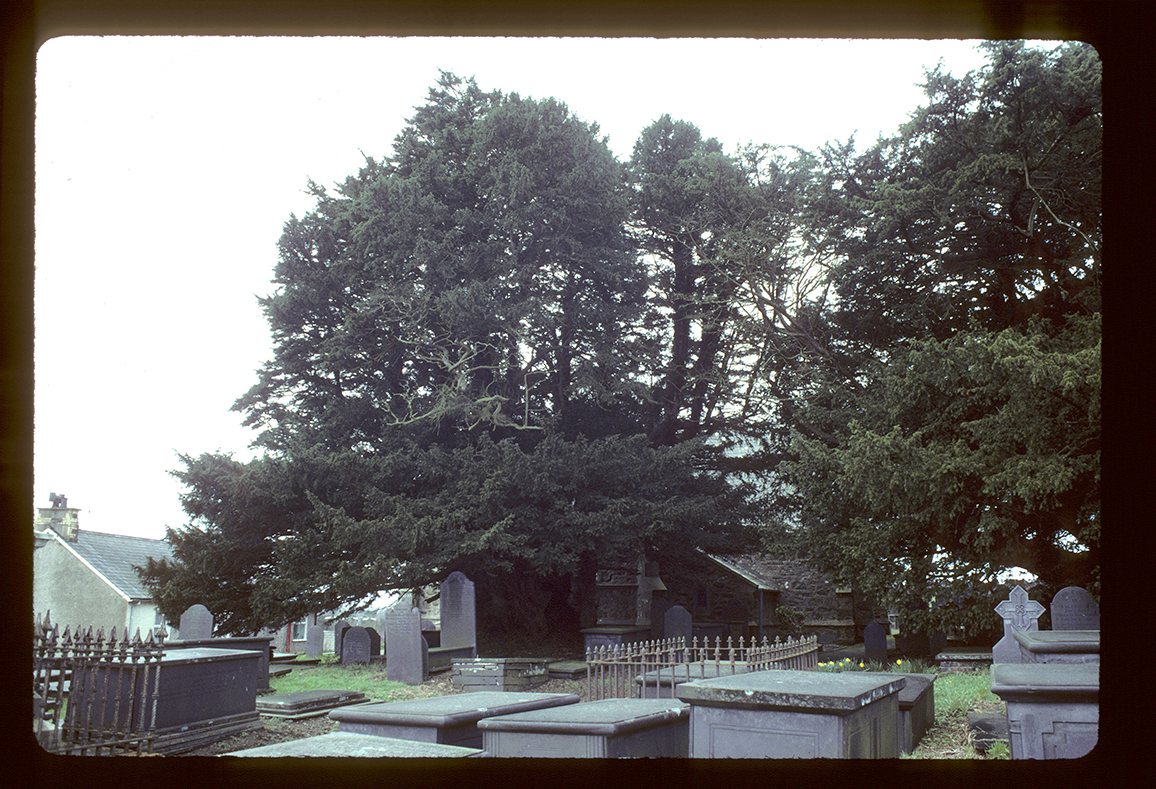
Irish yew is a slow-growing evergreen with dense, dark foliage and upright branches that form a narrow column, broadening with age. Gardeners use it for formal accents, screening and clipped shapes. It is a female cultivar and can produce red, fleshy seed coverings when a male yew grows nearby.
At a glance
- Sun
- Full sun to shade; afternoon shade helps in hot climates.
- Water
- Water regularly while establishing; established plants tolerate some drought but dislike waterlogged soil.
- Soil
- Well-drained loam, chalk, clay or sandy soil; tolerates acidic to alkaline conditions, provided drainage is good.
- Height
- 15-30 ft (4.5-9 m)
- Spread
- 6-12 ft (1.8-3.7 m)
- Foliage
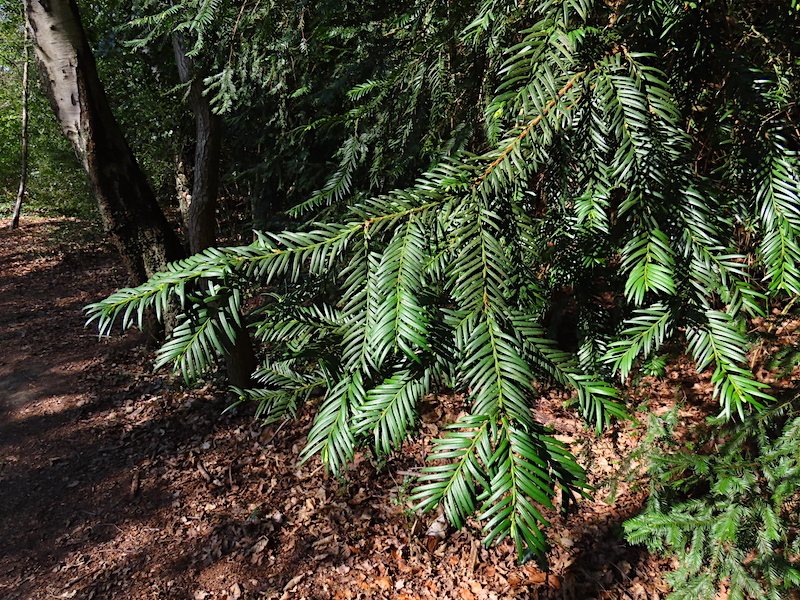
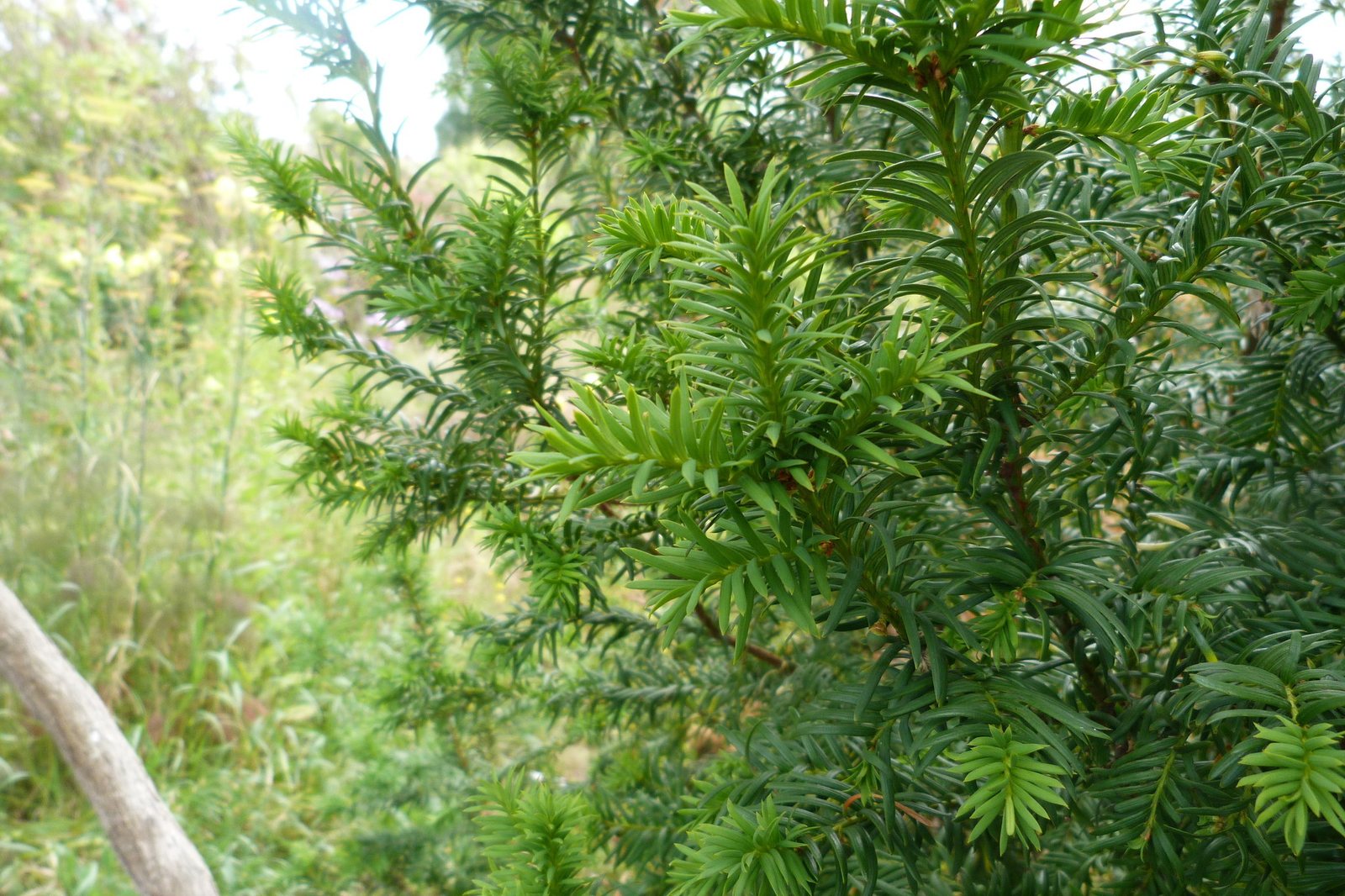
- Dark green, flattened evergreen needles arranged around upright shoots; dense and columnar when young, becoming broader with age.
- Growth
- Slow, commonly about 6-12 in (15-30 cm) a year once established; slower in shade or poor conditions.
- Care needed
- Low
The year at a glance
- Drought tolerant
- Wildlife
- Low allergen
| J | F | M | A | M | J | J | A | S | O | N | D | |
|---|---|---|---|---|---|---|---|---|---|---|---|---|
| Fruit | ||||||||||||
| Plant |
Northern hemisphere months. In Australia, shift them by six.
- Difficulty
- Easy
- Toughness
- Very tough
Will it suit your garden?
Pick your zone, country, light and whether you have pets.
Full sun is 6 or more hours of direct sun a day, part shade 3 to 6 hours, shade under 3.
How it grows
Planting day
7 ft (2 m)
After 1 year
7 ft (2.1 m)
After 2 years
8 ft (2.3 m)
After 3 years
8 ft (2.4 m)
After 5 years
9 ft (2.7 m)
About 32 years to full size.
From a typical nursery size, at an average rate for this kind of plant. A rule of thumb, not a forecast.
Good to know
- Cats and dogs
- Toxic
- Native to
- the UK
- Growth rate
- Slow
Care
Jobs through the year
- WaterApr–May, Sep–Oct, every 21 days
- Water established plants only in prolonged dry weather; water young plants more regularly.
- WaterJun–Aug, every 14 days
- Deep-water established plants during drought, allowing surface soil to dry between waterings.
- MulchMar–Apr
- Maintain 5–8 cm of organic mulch, keeping the trunk clear and avoiding waterlogged soil.
- FeedMar–Apr
- Feed lightly only if growth is weak and soil fertility is poor.
- PruneFeb–Mar
- Remove dead or broken branches; spread major renovation over several years.
- PruneJun–Jul
- Lightly trim new growth only if needed for shape; check for nesting birds first.
- ProtectJan–Feb, Dec
- Gently brush off heavy snow before branches splay; all parts except aril flesh are highly toxic.
- Water deeply during dry spells for the first two growing seasons, allowing the surface soil to dry between waterings.
- Plant with the root flare at soil level; avoid wet hollows and sites with standing winter water.
- Apply 2-3 in (5-8 cm) of organic mulch, keeping it clear of the trunk.
- Feed lightly in spring only if growth is weak and soil fertility is poor; avoid heavy nitrogen feeding.
- Gently brush off heavy snow before it splays the upright branches; do not strike frozen foliage.
Pruning. Remove damaged branches in late winter or early spring, and lightly trim new growth in late spring or summer if a tighter outline is needed. Yew can regrow from old wood, but spread major renovation over several years and check for nesting birds before cutting.
Through the year
- Late winter
- Remove broken or dead branches and carry out any necessary structural pruning.
- Spring
- Refresh mulch and check that soil drains freely around the roots.
- Late spring
- Lightly trim new growth if maintaining a formal column or clipped screen.
- Summer
- Water young plants deeply during dry weather and inspect weak plants for scale or root problems.
- Autumn
- Plant where winters are mild and soil is well drained; remove unwanted seedlings.
- Winter
- Check for snow-splayed branches and water newly planted specimens during frost-free dry spells.
In the garden
- Plant matching specimens beside an entrance or path for a formal, vertical frame.
- Use as a dark evergreen backdrop to pale flowers, silver foliage or winter stems.
- Repeat columns through a border to provide structure when perennials die back.
- Clip into upright topiary or a dense screen, allowing room for the plants to broaden with age.
Garden styles it suits: Formal, Topiary garden, Architectural minimal, English country, Grand estate and Winter interest.
Plant it with: Hellebores, Snowdrops, Japanese anemones, Hardy geraniums, Hydrangeas and Boxwood.
Wildlife: Dense evergreen growth offers shelter and nesting sites for birds. Birds eat the red arils and disperse the seeds; check for occupied nests before pruning.
Problems to watch for
- Root rot in wet soil: improve drainage before planting; replace badly affected plants rather than repeatedly watering or feeding them.
- Vine weevil: larvae can damage roots, especially in containers; use locally approved biological controls when soil temperatures suit them.
- Scale insects: inspect stems and needle undersides; prune out small infestations or use a labelled horticultural oil according to local guidance.
- Winter scorch or snow damage: shelter young plants from drying winds, water before prolonged freezes if soil is dry, and gently remove heavy snow.
Safety
Highly toxic to people, cats, dogs and horses. Needles, shoots, bark and seeds contain toxins that can cause fatal heart disturbances; dried clippings remain dangerous. The red fleshy aril is the exception, but the seed inside is toxic, so do not eat it or allow children or animals to do so. Keep all pruning waste away from livestock and seek urgent medical or veterinary help after suspected ingestion.
Easily confused with
Hicks yew (Taxus × media 'Hicksii')
Also upright and dark green, but generally forms a broader hedge-like outline; needles are often more clearly arranged in two ranks. Cultivar labels are more reliable than appearance alone.
Golden Irish yew (Taxus baccata 'Fastigiata Aurea')
Has a similar upright habit, but young needles have conspicuous yellow colouring or margins rather than being uniformly dark green.
English yew (Taxus baccata)
Ordinary seedlings usually develop spreading branches and a broad crown, unlike the closely upright branching of Irish yew.
The name
Irish yew takes its common name from its origin in Ireland, while 'Fastigiata' refers to its closely upright branches.
Propagation. Take semi-ripe cuttings from upright shoots in late summer or early autumn; rooting can be slow. Seedlings do not reliably retain the cultivar's narrow habit, so use cuttings to reproduce it.
Checked against open data
- Accepted botanical name
- Taxus baccata
- In the US and Canada
- Introduced in the lower 48 states.
- Native range
- Albania, Algeria, Austria, Azores, Baleares, Baltic States, Belarus, Belgium, Bulgaria, Central European Rus, Corse and Czechoslovakia.
- Measured
- Average height 1005 cm.
Sources: GBIF (CC BY 4.0), USDA PLANTS and Trefle (CC BY 4.0). The care and design notes are LandscapeGPT's own.
See it in your own yard.
Upload a photo of your yard and see it redesigned with plants that suit your climate, each checked against your zone.