Italian aster 'King George'
Aster amellus 'King George'. Family Asteraceae. Perennial.
Also called Aster amellus 'King George', European Michaelmas daisy 'King George'.
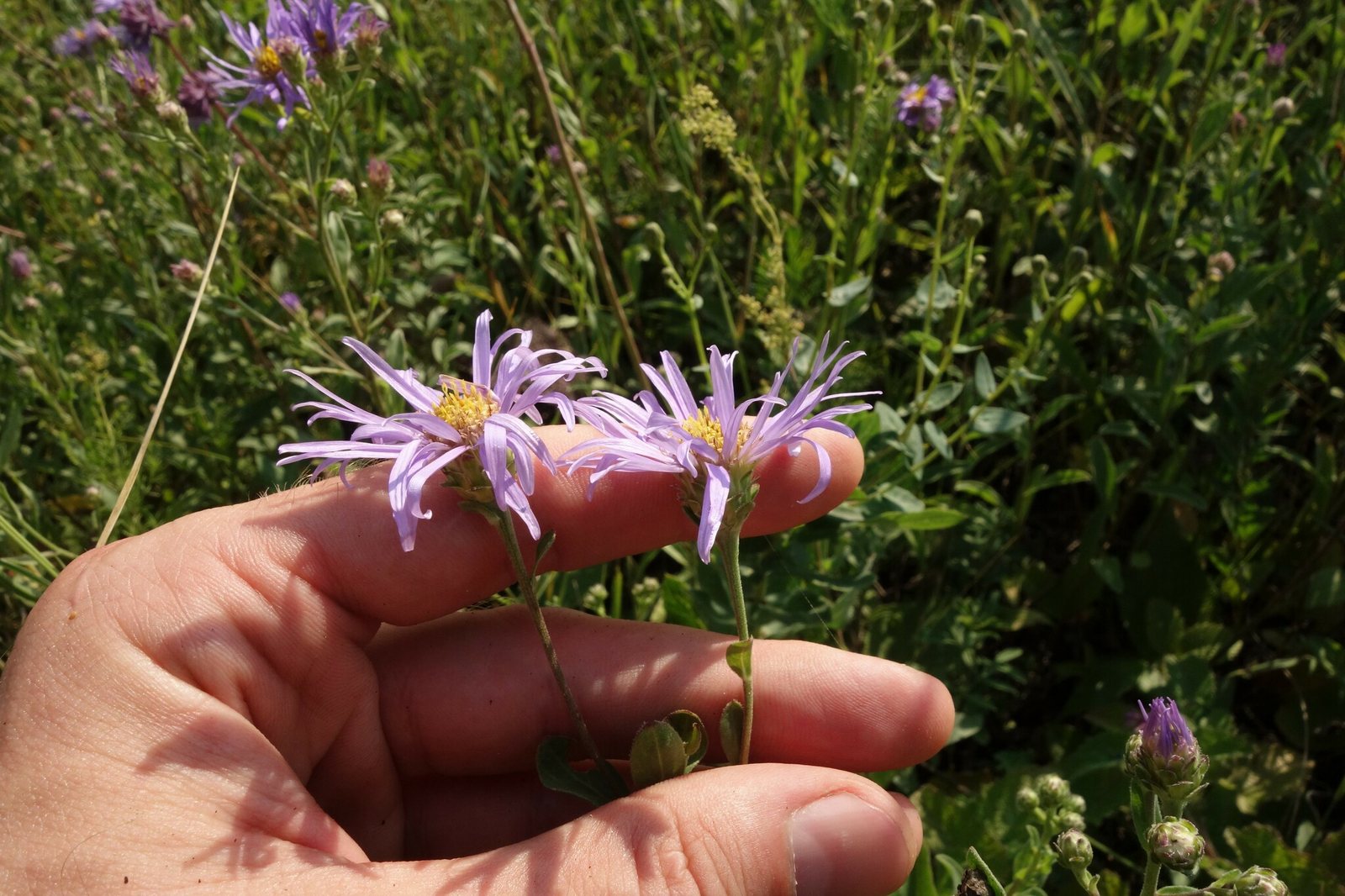
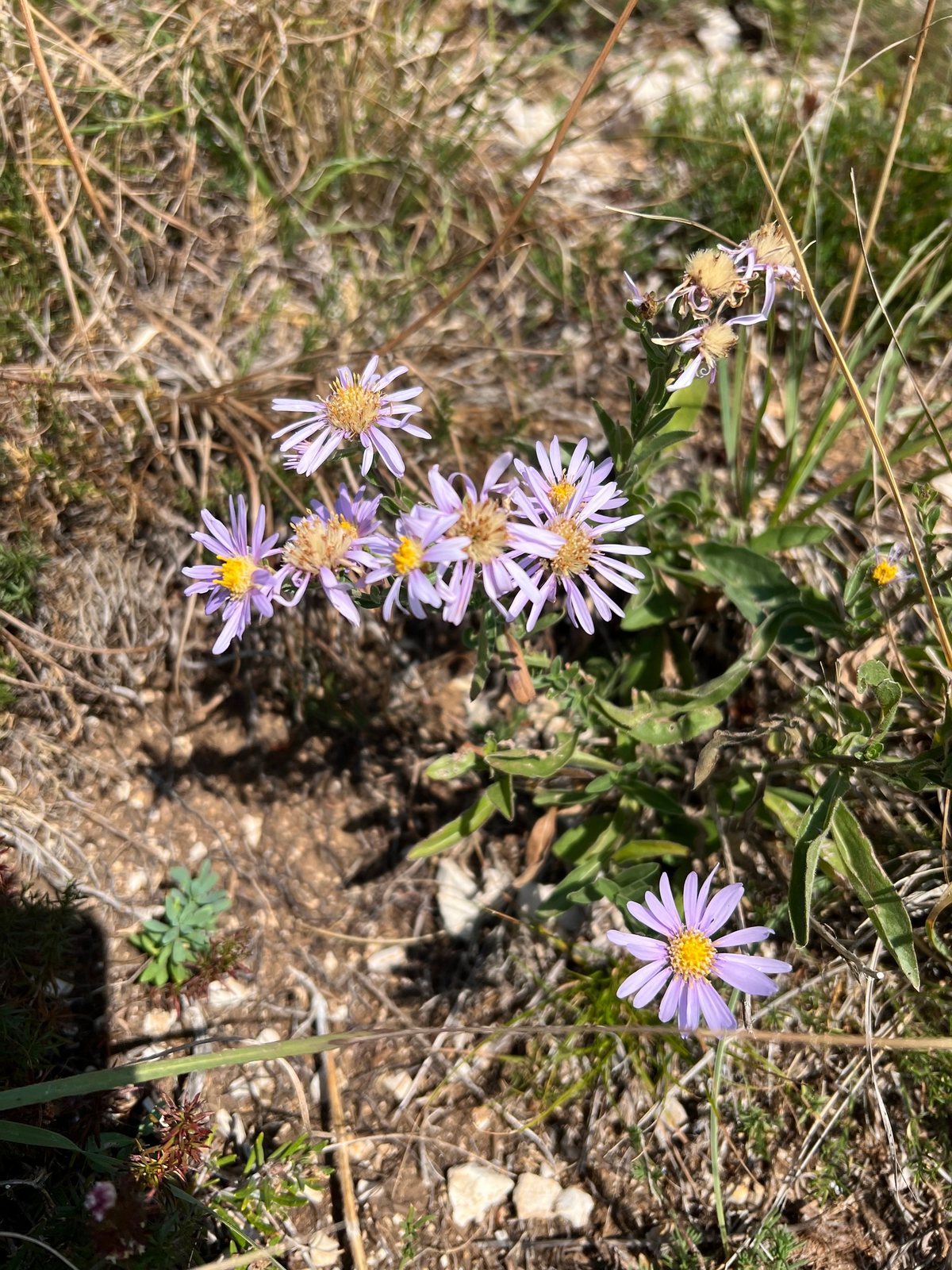
'King George' is a clump-forming perennial grown for its large violet-blue daisies with yellow centres in late summer and early autumn. Its compact habit suits sunny borders and gravel gardens, especially where the soil drains freely and is neutral to alkaline.
At a glance
- Sun
- Full sun; flowering and stem strength decline in shade.
- Water
- Water regularly during the first growing season. Once established, water during prolonged dry spells, particularly while buds are developing; avoid persistently wet soil.
- Soil
- Well-drained, moderately fertile soil, preferably neutral to alkaline. Tolerates chalk and some summer dryness but struggles in waterlogged winter soil.
- Height
- 1.5-2 ft (0.45-0.6 m)
- Spread
- 1-1.5 ft (0.3-0.45 m)
- Flowers
- Late summer to early autumn; violet-blue, daisy-like flowers with golden-yellow centres.
- Foliage
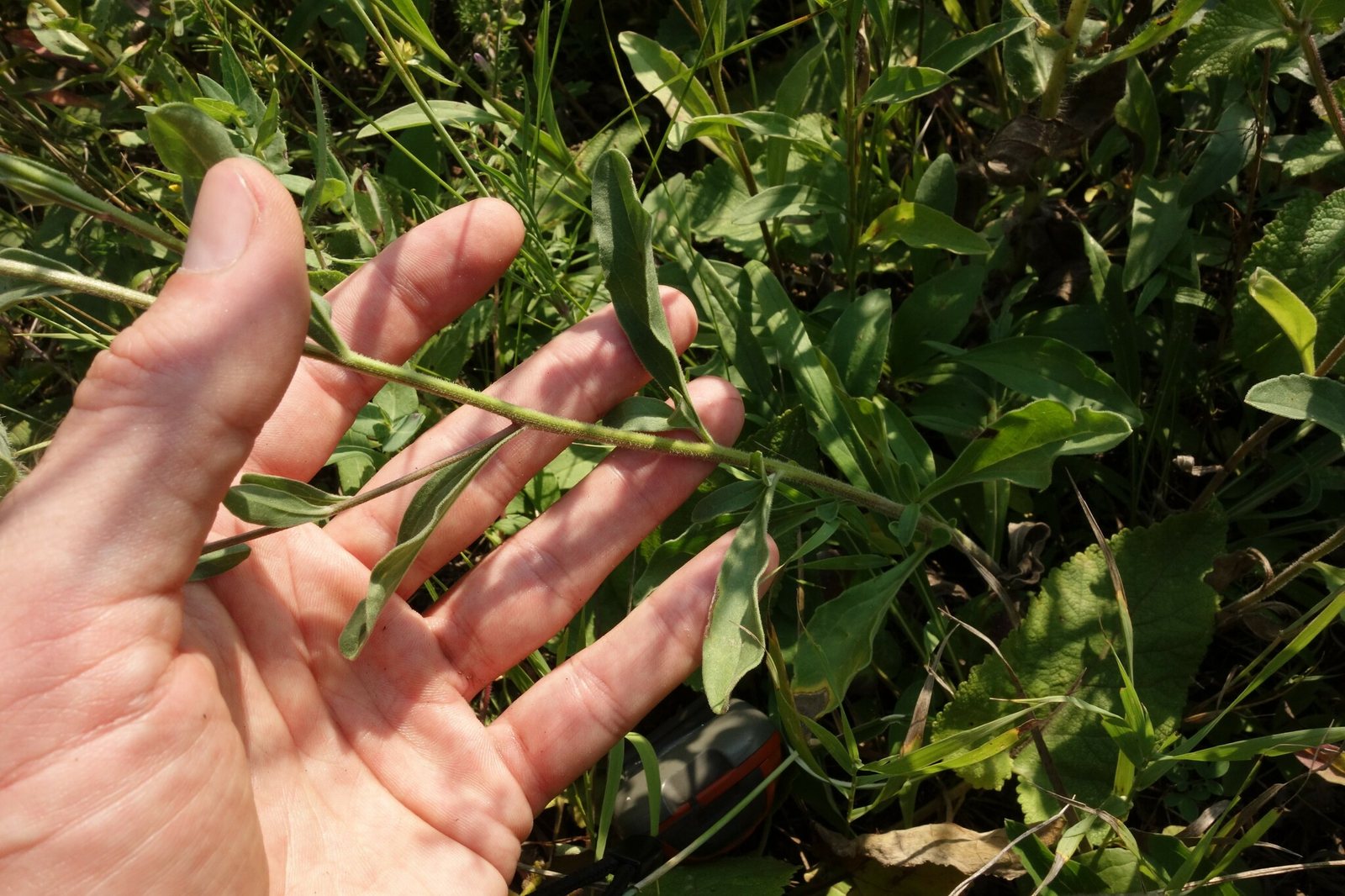
- Green, slightly hairy, oval to lance-shaped leaves on upright stems; dies back in winter.
- Growth
- Moderate; forms a steadily expanding clump rather than a running colony.
- Care needed
- Low
The year at a glance
- Pollinators
- Drought tolerant
- Low allergen
| J | F | M | A | M | J | J | A | S | O | N | D | |
|---|---|---|---|---|---|---|---|---|---|---|---|---|
| Flowers | ||||||||||||
| Fruit | ||||||||||||
| Plant |
Northern hemisphere months. In Australia, shift them by six.
- Difficulty
- Easy
- Toughness
- Fairly tough
Will it suit your garden?
Pick your zone, country, light and whether you have pets.
Full sun is 6 or more hours of direct sun a day, part shade 3 to 6 hours, shade under 3.
How it grows
Planting day
1 ft (0.3 m)
After 1 year
1.2 ft (0.37 m)
After 2 years
1.5 ft (0.45 m)
After 3 years
1.7 ft (0.53 m)
full size
About 3 years to full size.
From a typical nursery size, at an average rate for this kind of plant. A rule of thumb, not a forecast.
Good to know
- Cats and dogs
- Safe
- Native to
- the UK
- Growth rate
- Moderate
Care
Jobs through the year
- WaterApr–May, Sep, every 21 days
- Water established plants during prolonged dry spells; first-year plants need more regular watering.
- WaterJun–Aug, every 10 days
- Water established clumps deeply during extended drought, especially in bud and flower; let the surface dry.
- MulchApr–May
- Apply a light compost dressing, keeping the crown free of mulch.
- PruneFeb–Mar
- Cut dead stems to just above ground level before new shoots extend.
- DivideMar–Apr
- Divide every three to four years, or when clumps become congested or bare in the centre.
- DeadheadAug–Sep, every 14 days
- Remove faded heads for tidiness, or retain them for autumn and winter seed heads.
- ProtectApr–May
- Add discreet supports early if stems tend to lean in exposed positions.
- ProtectMar–May, every 7 days
- Inspect emerging shoots for slugs and snails and hand-pick pests where needed.
- ProtectOct–Nov
- Remove diseased fallen foliage and keep wet mulch away from the crown.
- Plant in spring in cold or winter-wet areas, allowing about 1.5 ft (0.45 m) between plants.
- Water at soil level during establishment and prolonged drought; let the surface dry between waterings.
- Apply a light dressing of compost in spring; avoid heavy nitrogen feeding, which encourages floppy growth.
- Keep mulch away from the crown, especially where winters are wet.
- Use a small support early in the season if stems lean in exposed positions.
- Divide congested clumps in spring every three to four years, or when the centre becomes bare.
Pruning. Remove faded flower heads if you want a tidier plant. Cut dead stems to just above ground level in late winter or early spring, before new shoots extend.
Through the year
- Early spring
- Cut down old stems and check that the crown has not become buried under wet mulch.
- Spring
- Plant new specimens or divide established clumps as fresh shoots appear.
- Late spring
- Apply a light compost dressing and install discreet supports where needed.
- Summer
- Water during extended dry weather and check young growth for aphids.
- Late summer
- Remove faded blooms if desired and water drought-stressed plants while they are flowering.
- Autumn
- Clear fallen diseased foliage; leave healthy stems standing until late winter if preferred.
In the garden
- Plant in small groups near the front or middle of a sunny border for a late-season band of violet-blue.
- Combine with stonecrop and ornamental grasses for contrasting flower shapes and autumn texture.
- Use in a freely drained gravel garden alongside catmint and yarrow.
- Repeat along a cottage-garden path where its compact clumps can soften the edge without blocking access.
Garden styles it suits: Cottage garden, English country, Dry gravel garden, New perennial (prairie), Pollinator garden and Blues and silvers.
Plant it with: Autumn stonecrop, Catmint, Yarrow, Feather reed grass, Russian sage and Purple coneflower.
Wildlife: Open flower heads provide accessible pollen and nectar for bees, hoverflies and butterflies late in the growing season.
Problems to watch for
- Powdery mildew: improve spacing and airflow, water drought-stressed plants at soil level, and remove affected fallen leaves.
- Slugs and snails: protect emerging spring shoots with hand-picking or suitable iron-phosphate bait used according to the label.
- Aphids: wash small colonies off young shoots with water and allow ladybirds and other predators to feed.
- Crown rot or winter losses: improve drainage, keep wet mulch off the crown, and move plants out of waterlogged ground.
Safety
Not known to be toxic to people, cats, dogs or horses. No particular part is recognised as poisonous, but it is an ornamental plant rather than a food plant.
Easily confused with
New York aster (Symphyotrichum novi-belgii)
Usually has smoother, narrower leaves and more densely branched sprays of smaller flowers; many cultivars are taller and spread more strongly.
Alpine aster (Aster alpinus)
Forms a much lower mound and usually bears single daisies on short stems in late spring or early summer, rather than branched late-season flower stems.
The name
Aster comes from the Greek word for star, referring to the shape of the flower heads.
Propagation. Divide in spring or take basal cuttings from young shoots in spring. Seed-grown plants will not reliably retain the characteristics of 'King George'.
Checked against open data
- Accepted botanical name
- Aster amellus
- Native range
- Albania, Austria, Baltic States, Belarus, Belgium, Bulgaria, Central European Rus, Czechoslovakia, East European Russia, France, Germany and Great Britain.
- Measured
- Average height 35 cm.
Sources: GBIF (CC BY 4.0) and Trefle (CC BY 4.0). The care and design notes are LandscapeGPT's own.
See it in your own yard.
Upload a photo of your yard and see it redesigned with plants that suit your climate, each checked against your zone.