Italian clematis
Clematis viticella. Family Ranunculaceae. Climber.
Also called Purple clematis, Virgin's bower.
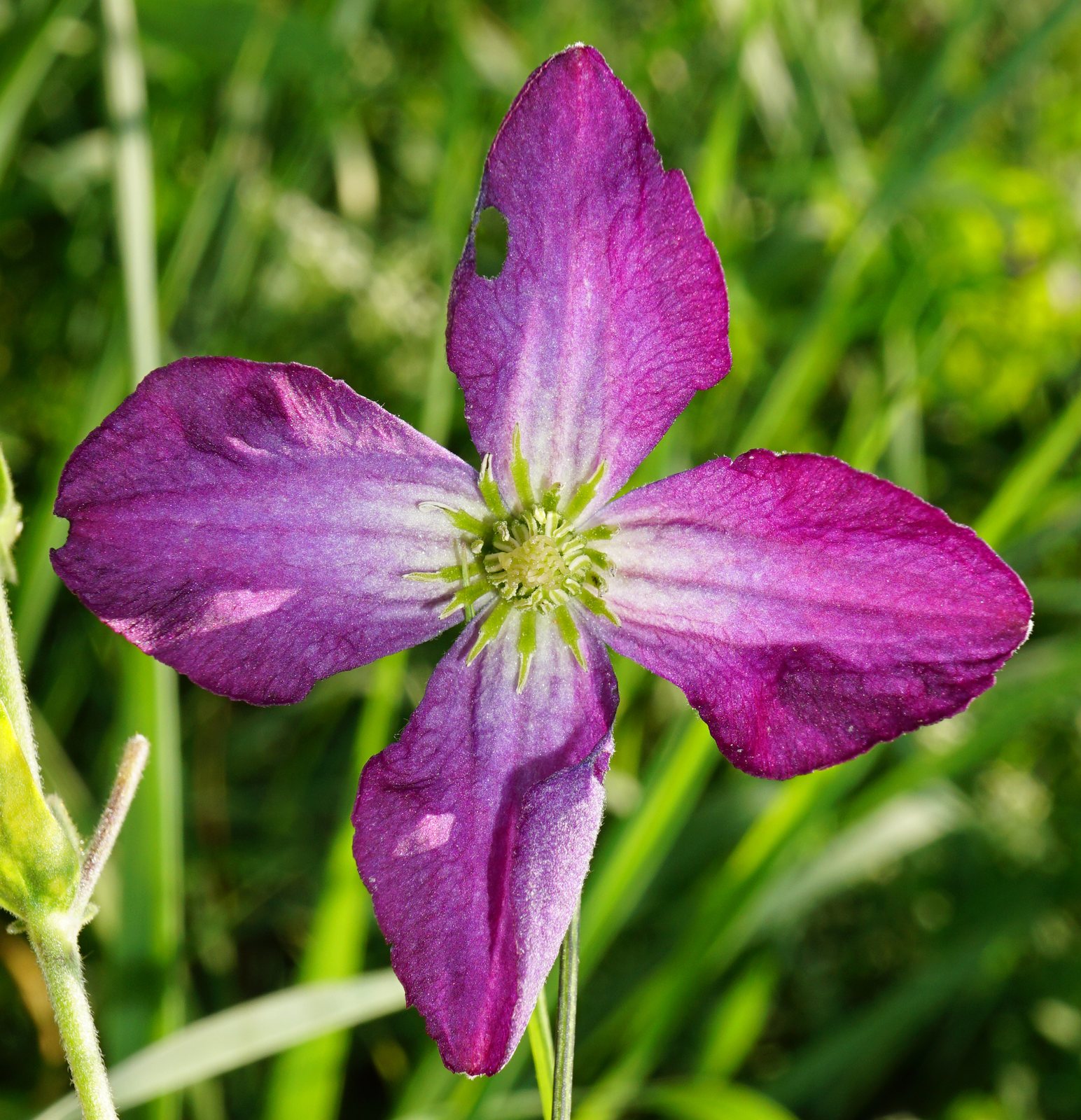
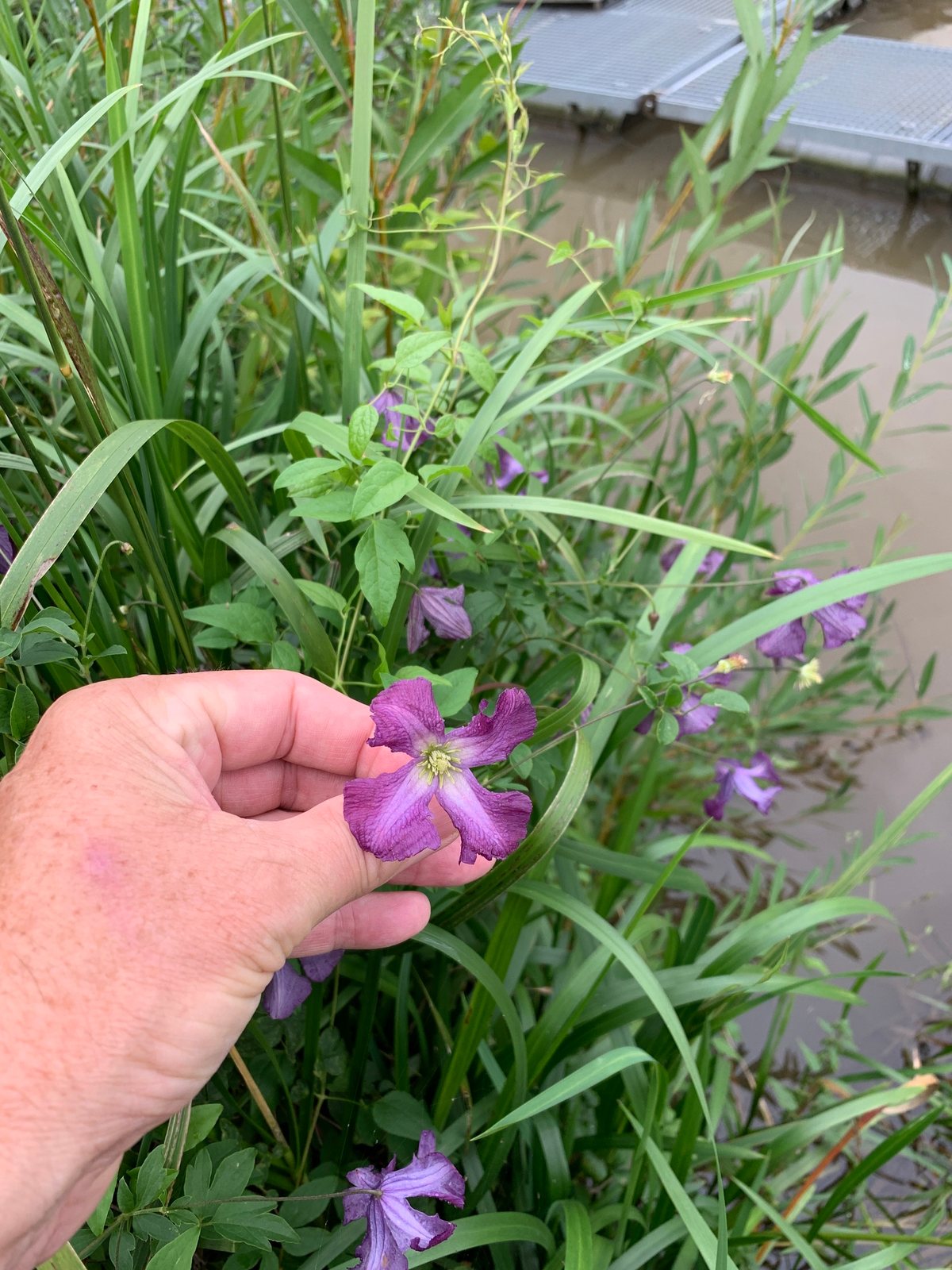
Italian clematis (Clematis viticella) is a deciduous climber grown for its small, nodding purple flowers in summer and early autumn. It climbs by wrapping its leaf stalks around slender supports and is useful for threading through roses, shrubs and trellis panels.
At a glance
- Sun
- Full sun to partial shade; flowering is best with at least 6 hours of sun. Afternoon shade helps in hot gardens.
- Water
- Keep the root zone evenly moist but not waterlogged. Water deeply during dry spells, especially during the first two growing seasons.
- Soil
- Fertile, moisture-retentive, well-drained soil; tolerates slightly acidic to alkaline conditions.
- Height
- 10-15 ft (3-4.5 m)
- Spread
- 4-6 ft (1.2-1.8 m)
- Flowers
- Summer to early autumn; small violet-purple, nodding, bell-shaped flowers with spreading tips. Named cultivars have a wider range of colours and flower forms.
- Foliage
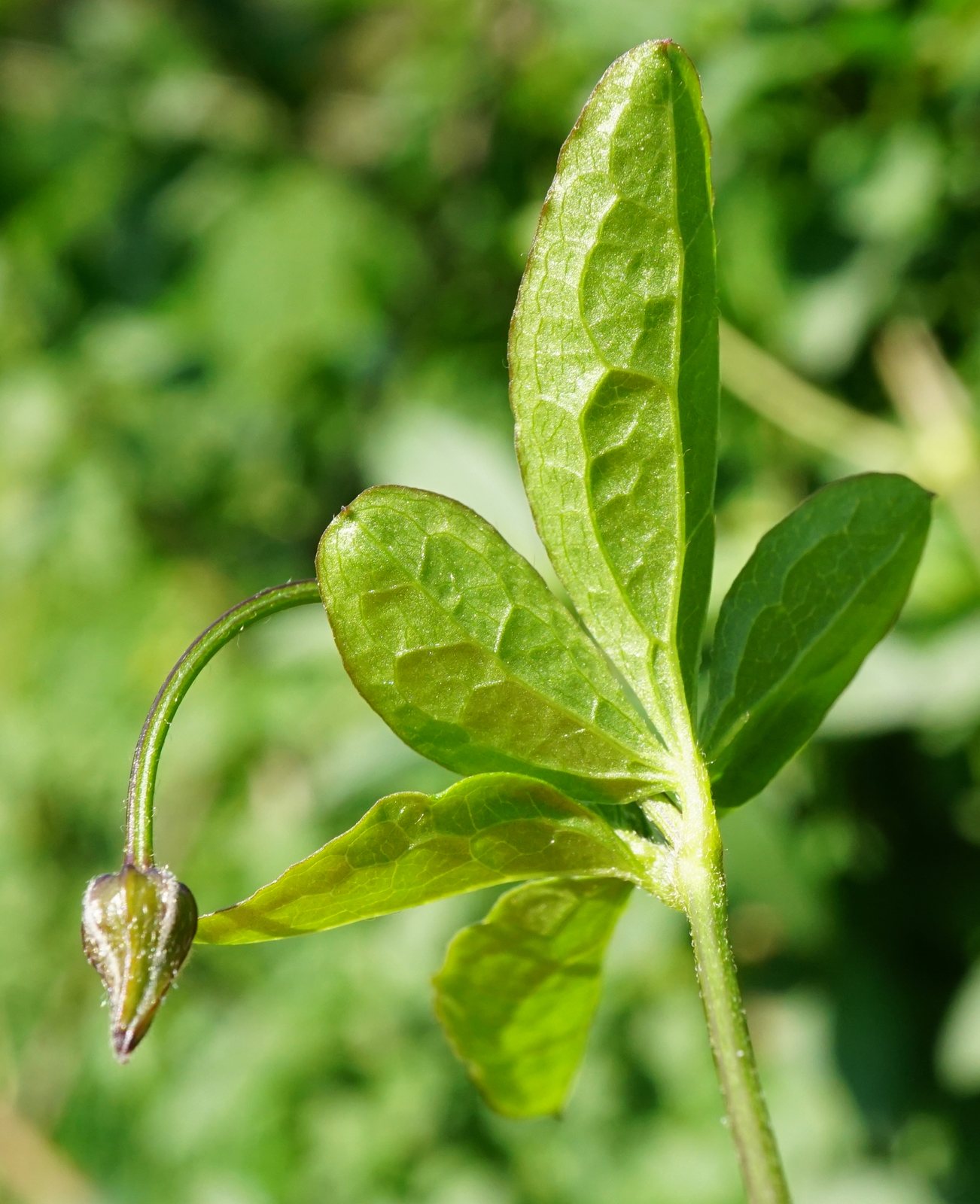
- Green, divided leaves on slender climbing stems; leaves fall in autumn.
- Growth
- Fast once established
- Care needed
- Medium
The year at a glance
- Pollinators
- Cold hardy
- Low allergen
| J | F | M | A | M | J | J | A | S | O | N | D | |
|---|---|---|---|---|---|---|---|---|---|---|---|---|
| Flowers | ||||||||||||
| Fruit | ||||||||||||
| Plant |
Northern hemisphere months. In Australia, shift them by six.
- Difficulty
- Moderate
- Toughness
- Fairly tough
Will it suit your garden?
Pick your zone, country, light and whether you have pets.
Full sun is 6 or more hours of direct sun a day, part shade 3 to 6 hours, shade under 3.
How it grows
Planting day
2 ft (0.6 m)
After 1 year
3 ft (1.1 m)
After 2 years
5 ft (1.5 m)
After 3 years
6 ft (1.8 m)
full size
About 3 years to full size.
From a typical nursery size, at an average rate for this kind of plant. A rule of thumb, not a forecast.
Good to know
- Cats and dogs
- Toxic
- Growth rate
- Fast
Care
Jobs through the year
- WaterApr–May, Sep–Oct, every 14 days
- Water established roots deeply when drying; plants in their first two seasons need more frequent watering.
- WaterJun–Aug, every 7 days
- In dry weather, soak established roots deeply to maintain even moisture without waterlogging.
- PruneFeb–Mar
- Cut all stems to strong buds 20–30 cm above ground before vigorous growth begins.
- FeedMar–Apr
- Apply balanced garden fertiliser once in spring at the label rate.
- MulchMar–Apr
- Renew compost or leaf mould over the root zone, keeping stems clear.
- ProtectApr–May
- Protect emerging shoots from slugs and guide them onto slender supports.
- Provide trellis wires, mesh or twiggy supports; leaf stalks cannot grip thick posts.
- Water deeply when the root zone begins to dry rather than giving frequent light sprinklings.
- Mulch annually with compost or leaf mould, keeping it clear of the stems.
- Apply a balanced garden fertiliser in spring at the label rate.
- Tie young shoots loosely to their support before they become tangled.
Pruning. Pruning group 3: in late winter or early spring, cut all stems back to a strong pair of buds about 8-12 in (20-30 cm) above ground. Flowers form on the current season's growth.
Through the year
- Late winter
- Cut established stems back hard before vigorous new growth begins.
- Spring
- Apply balanced fertiliser and renew the organic mulch.
- Late spring
- Guide new shoots onto slender supports and check for slug damage.
- Summer
- Water deeply during dry weather and secure loose shoots.
- Early autumn
- Leave some seedheads for their appearance, or remove them to limit self-seeding.
- Autumn
- Plant or transplant while the soil is workable, and water well after planting.
In the garden
- Train over an arch or narrow trellis for summer flowers without a solid evergreen screen.
- Grow through a shrub rose to extend the display after its first flush of flowers.
- Thread through a sturdy, spring-flowering shrub for a second season of colour.
- Use on an obelisk among border perennials to add height with little ground-level bulk.
Garden styles it suits: English country, Cottage garden, Romantic rose garden, Traditional, Secret garden and Arts and Crafts.
Plant it with: Climbing roses, Shrub roses, Catmint, Hardy geraniums, Lady's mantle and Mock orange.
Wildlife: Flowers provide pollen for visiting insects. Dense growth offers shelter, but this Eurasian species is not a substitute for locally native host plants.
Problems to watch for
- Slugs and snails can eat emerging shoots: check new growth regularly and use barriers, hand-picking or labelled iron-phosphate bait where needed.
- Aphids cluster on soft growth: wash them off with water and encourage ladybirds and other predators.
- Powdery mildew may develop in dry, crowded conditions: water the roots consistently and improve airflow around the plant.
- Sudden stem collapse can follow damage or clematis wilt, although this species is less susceptible than many large-flowered hybrids: remove affected stems to healthy growth and keep the roots evenly moist.
Safety
All parts are toxic if eaten by people, cats, dogs or horses. Fresh leaves and stems contain irritating compounds that can cause mouth irritation, drooling, vomiting or diarrhoea; sap can also irritate skin. Small accidental tastes usually cause irritation rather than severe poisoning, but seek medical or veterinary advice after ingestion.
Easily confused with
Jackman's clematis (Clematis 'Jackmanii')
Usually has much larger, flatter, open purple flowers; Italian clematis has smaller, more distinctly nodding flowers.
Old man's beard (Clematis vitalba)
Has clusters of small creamy-white flowers and conspicuous fluffy seedheads, rather than the purple, bell-shaped flowers of Italian clematis.
The name
Clematis comes from the Greek word for a climbing plant, while viticella means 'little vine' in Latin.
Propagation. Take softwood cuttings in late spring or semi-ripe cuttings in summer, or layer a low stem. The species can also be raised from seed, but germination may be slow and seedlings from garden plants may be hybrids; use cuttings to preserve a named cultivar.
Checked against open data
- Accepted botanical name
- Clematis viticella
- In the US and Canada
- Introduced in Canada and the lower 48 states.
- Native range
- Albania, Bulgaria, Cyprus, Greece, Iran, Italy, Lebanon-Syria, Transcaucasus, Turkey, Turkey-in-Europe and Yugoslavia.
- Measured
- Average height 400 cm.
Sources: GBIF (CC BY 4.0), USDA PLANTS and Trefle (CC BY 4.0). The care and design notes are LandscapeGPT's own.
See it in your own yard.
Upload a photo of your yard and see it redesigned with plants that suit your climate, each checked against your zone.