Ivory Prince hellebore
Helleborus 'Ivory Prince'. Family Ranunculaceae. Perennial.
Also called Helleborus 'Walhelleb', Helleborus × ericsmithii 'Ivory Prince'.
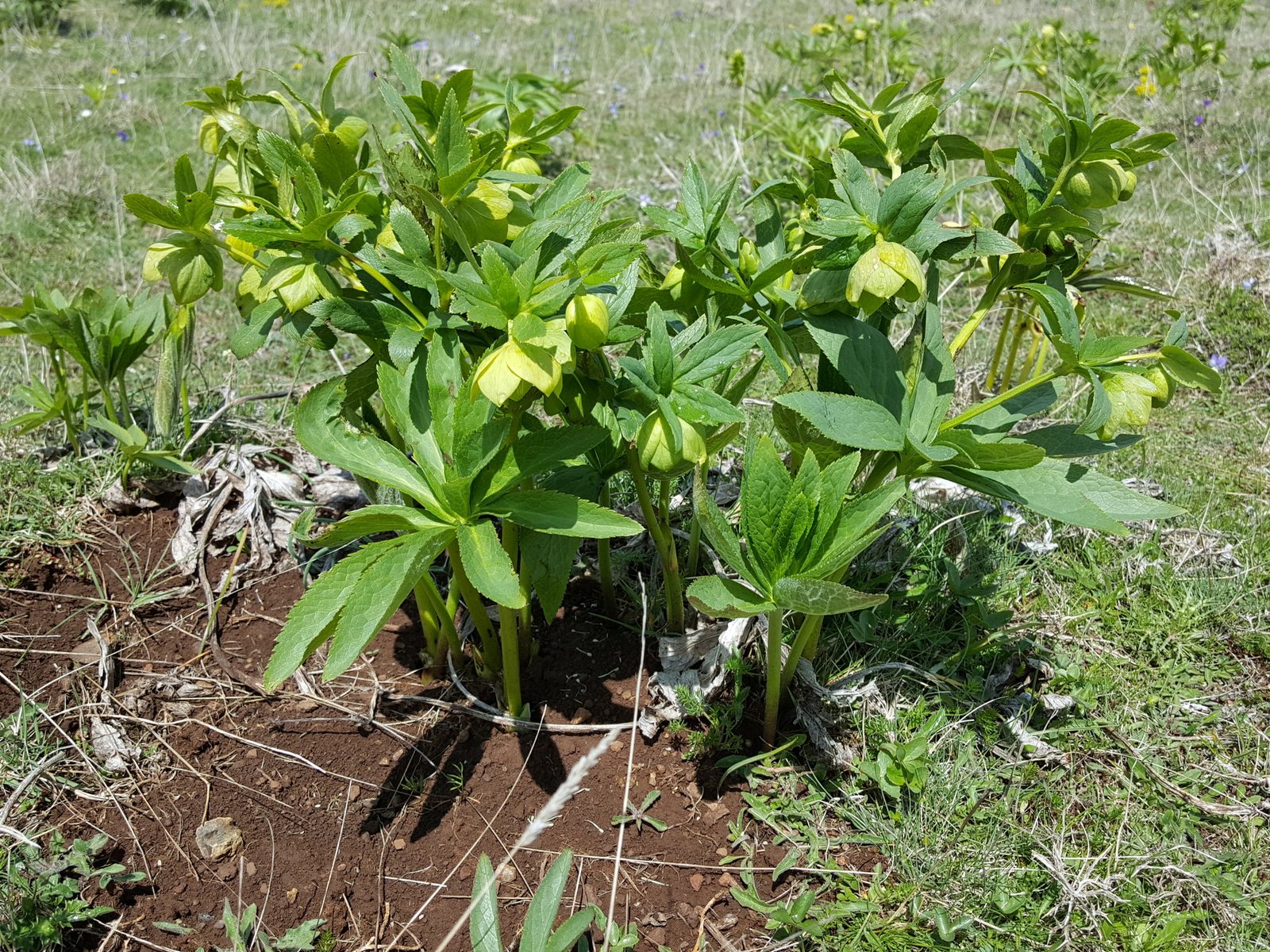
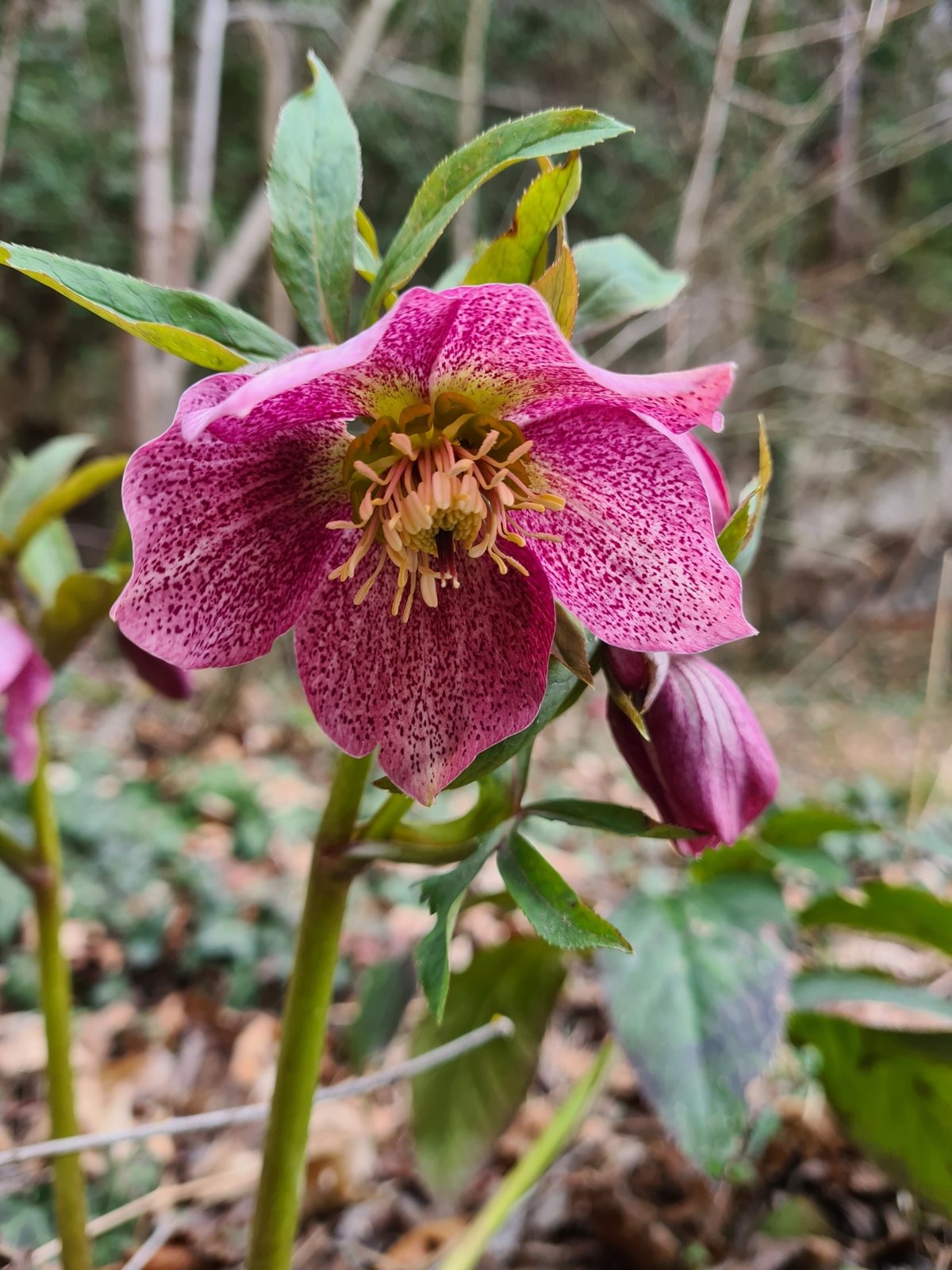
Ivory Prince is a compact, clump-forming hellebore grown for its outward-facing ivory flowers and silver-veined evergreen leaves. Burgundy buds open in late winter or early spring, and the flowers gradually develop pink and green tones. It suits sheltered borders beneath deciduous trees but struggles in waterlogged soil and prolonged tropical heat.
At a glance
- Sun
- Partial shade, ideally with winter sun and protection from hot afternoon sun; tolerates deeper shade but flowers less freely.
- Water
- Keep evenly moist while establishing. Established plants tolerate brief dry spells, but water during prolonged drought; avoid constantly wet soil.
- Soil
- Humus-rich, well-drained soil, neutral to alkaline preferred; tolerates mildly acidic soil.
- Height
- 1-1.5 ft (0.3-0.45 m)
- Spread
- 1-2 ft (0.3-0.6 m)
- Flowers
- Late winter to mid-spring; ivory-white flowers emerge from burgundy-pink buds and age to pink-flushed green.
- Foliage
- Evergreen. Leathery, divided, dark blue-green leaves with pale silver veining; cold or exposure can damage older foliage.
- Growth
- Slow to moderate; forms a substantial clump over several years.
- Care needed
- Low
The year at a glance
- Pollinators
- Deer resistant
- Cold hardy
- Heat tolerant
- Low allergen
| J | F | M | A | M | J | J | A | S | O | N | D | |
|---|---|---|---|---|---|---|---|---|---|---|---|---|
| Flowers | ||||||||||||
| Plant |
Northern hemisphere months. In Australia, shift them by six.
- Difficulty
- Easy
- Toughness
- Fairly tough
Will it suit your garden?
Pick your zone, country, light and whether you have pets.
Full sun is 6 or more hours of direct sun a day, part shade 3 to 6 hours, shade under 3.
How it grows
Planting day
1 ft (0.3 m)
After 1 year
1 ft (0.32 m)
After 2 years
1.1 ft (0.34 m)
After 3 years
1.2 ft (0.36 m)
After 5 years
1.2 ft (0.38 m)
full size
About 4 years to full size.
From a typical nursery size, at an average rate for this kind of plant. A rule of thumb, not a forecast.
Good to know
- Cats and dogs
- Toxic
- Growth rate
- Slow
Care
Jobs through the year
- WaterApr–May, Sep–Oct, every 14 days
- Water established ground clumps during extended dry spells; keep first-year plants evenly moist.
- WaterJun–Aug, every 7 days
- Water established ground clumps deeply during drought, especially beneath trees; avoid saturated soil.
- MulchMar–Apr
- Apply compost or leaf mould around the clump, keeping the crown uncovered.
- FeedMar–Apr
- Feed lightly with balanced slow-release fertiliser only on poor soil or if growth is weak.
- PruneJan–Mar
- Remove damaged or diseased leaves individually, retaining healthy foliage and emerging flower stems.
- DeadheadMay–Jun
- Cut spent flower stems at the base once their pink and green colouring fades.
- ProtectFeb–Apr, every 7 days
- Check emerging buds for slugs and snails; hand-pick pests or use labelled iron-phosphate bait.
- ProtectOct–Nov
- Keep the crown free of debris and ensure winter water drains away.
- Plant with the crown at soil level, not buried, and allow room for the clump to widen.
- Water deeply during the first growing season and during extended dry weather afterward.
- Apply leaf mould or compost annually, keeping mulch clear of the crown.
- Feed lightly with a balanced slow-release fertiliser in spring if growth is weak or soil is poor.
- Leave established clumps undisturbed unless division is necessary.
Pruning. In late winter, remove damaged or diseased leaves individually without cutting healthy evergreen foliage or emerging flower stems. Cut spent flower stems at the base when their colour no longer appeals.
Through the year
- Late winter
- Remove damaged leaves and check emerging buds for slug damage.
- Early spring
- Apply compost or leaf mould around the clump, keeping the crown uncovered.
- Late spring
- Cut off faded flower stems once their pink and green colouring has passed.
- Summer
- Water during prolonged dry spells, particularly beneath thirsty trees.
- Autumn
- Plant in well-drained ground while soil is workable and moisture is reliable.
- Winter
- Check that water drains away from the crown; avoid walking on frozen foliage.
In the garden
- Plant beside a path or entrance where the outward-facing winter flowers can be seen easily.
- Group beneath deciduous shrubs with snowdrops and early bulbs for successive winter and spring flowers.
- Use at the front of a shaded border, contrasting its leathery leaves with ferns and fine-textured sedges.
- Grow in a large, freely draining container in a sheltered courtyard; protect the roots from severe freezing.
Garden styles it suits: Woodland, Winter interest, White garden, Modern courtyard, Cottage garden and Low-maintenance.
Plant it with: Snowdrops, Cyclamen, Epimedium, Japanese painted fern, Brunnera and Japanese forest grass.
Wildlife: Flowers can provide pollen and nectar for early bees during mild weather. Deer and rabbits usually avoid the foliage, though no plant is completely browsing-proof.
Problems to watch for
- Black leaf spots: remove affected leaves promptly, clear fallen debris and improve air circulation; avoid wetting foliage when watering.
- Crown or root rot: prevent winter waterlogging and deep planting; remove badly rotted plants and improve drainage before replanting.
- Aphids: check flower stems and leaf undersides; wash off small colonies or use insecticidal soap according to the label, avoiding open flowers.
- Slugs and snails: protect emerging buds and young leaves by hand-picking or using iron-phosphate bait according to the label.
Safety
All parts are toxic if eaten by people, cats, dogs or horses. Ingestion can cause drooling, vomiting, diarrhoea and abdominal pain; larger amounts may cause serious heart effects. Sap can irritate skin, so wear gloves when cutting or dividing and keep plants away from grazing animals.
Easily confused with
Christmas rose (Helleborus niger)
Usually has simpler-looking, plain green foliage and white flowers on shorter stems; Ivory Prince has conspicuous silver-veined leaves, burgundy buds and branched flowering stems.
Lenten rose (Helleborus × hybridus)
Usually has larger, mostly nodding flowers and basal leaves without Ivory Prince's characteristic silver veining; flower colour varies widely.
Corsican hellebore (Helleborus argutifolius)
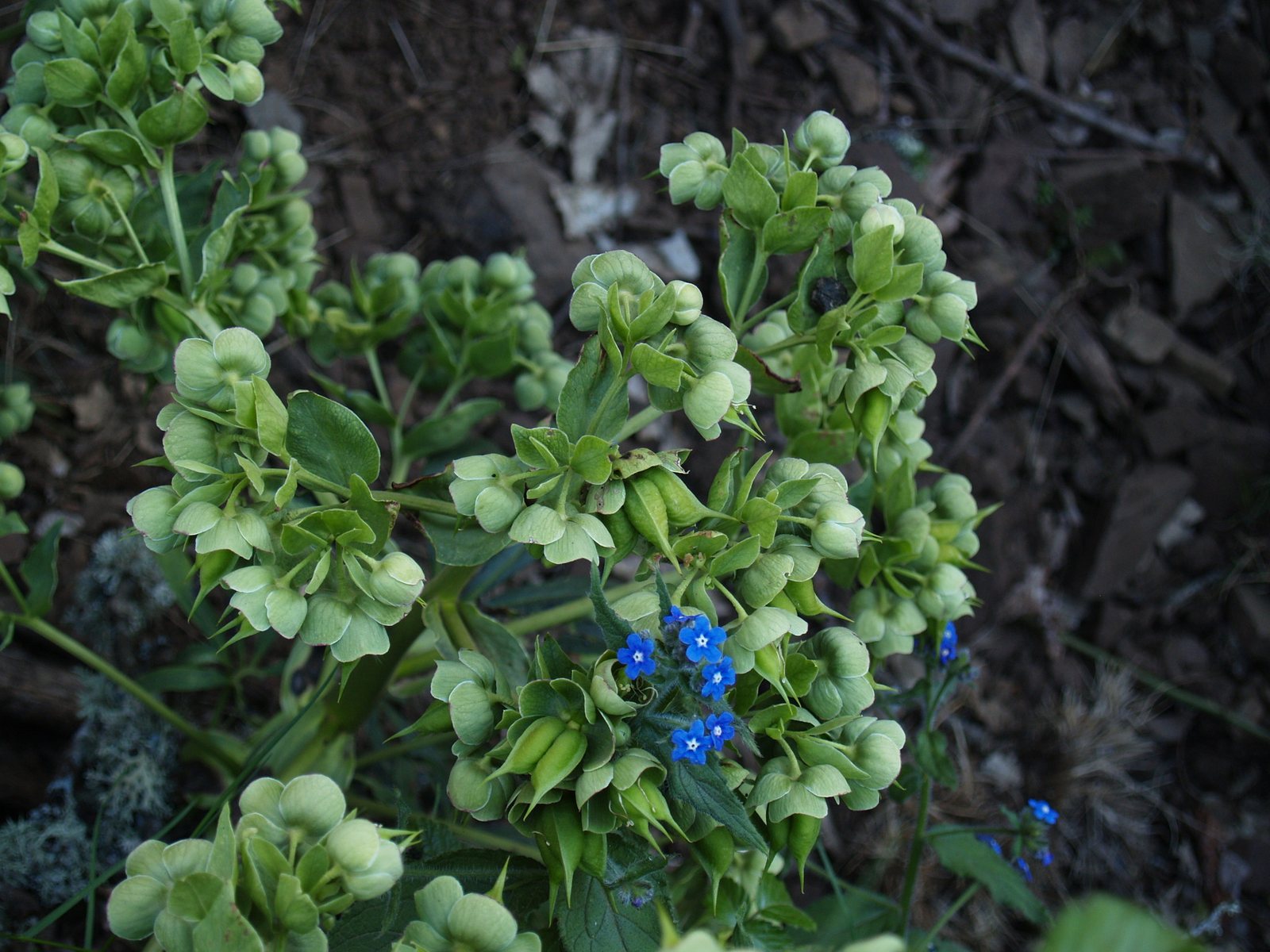
Makes taller, upright stems with coarse, sharply toothed leaves divided into three broad leaflets and clusters of green flowers.
The name
The selling name Ivory Prince refers to its ivory-coloured flowers; its cultivar name is 'Walhelleb'.
Propagation. Usually propagated commercially by tissue culture. Home gardeners can divide a mature clump carefully after flowering, keeping several shoots and good roots on each piece, but recovery can be slow. This hybrid is generally sterile; seed is not a reliable way to reproduce the cultivar.
Checked against open data
- Accepted botanical name
- Helleborus
Sources: GBIF (CC BY 4.0). The care and design notes are LandscapeGPT's own.
See it in your own yard.
Upload a photo of your yard and see it redesigned with plants that suit your climate, each checked against your zone.