Jack Frost brunnera
Brunnera macrophylla 'Jack Frost'. Family Boraginaceae. Perennial.
Also called Jack Frost Siberian bugloss, Jack Frost false forget-me-not.
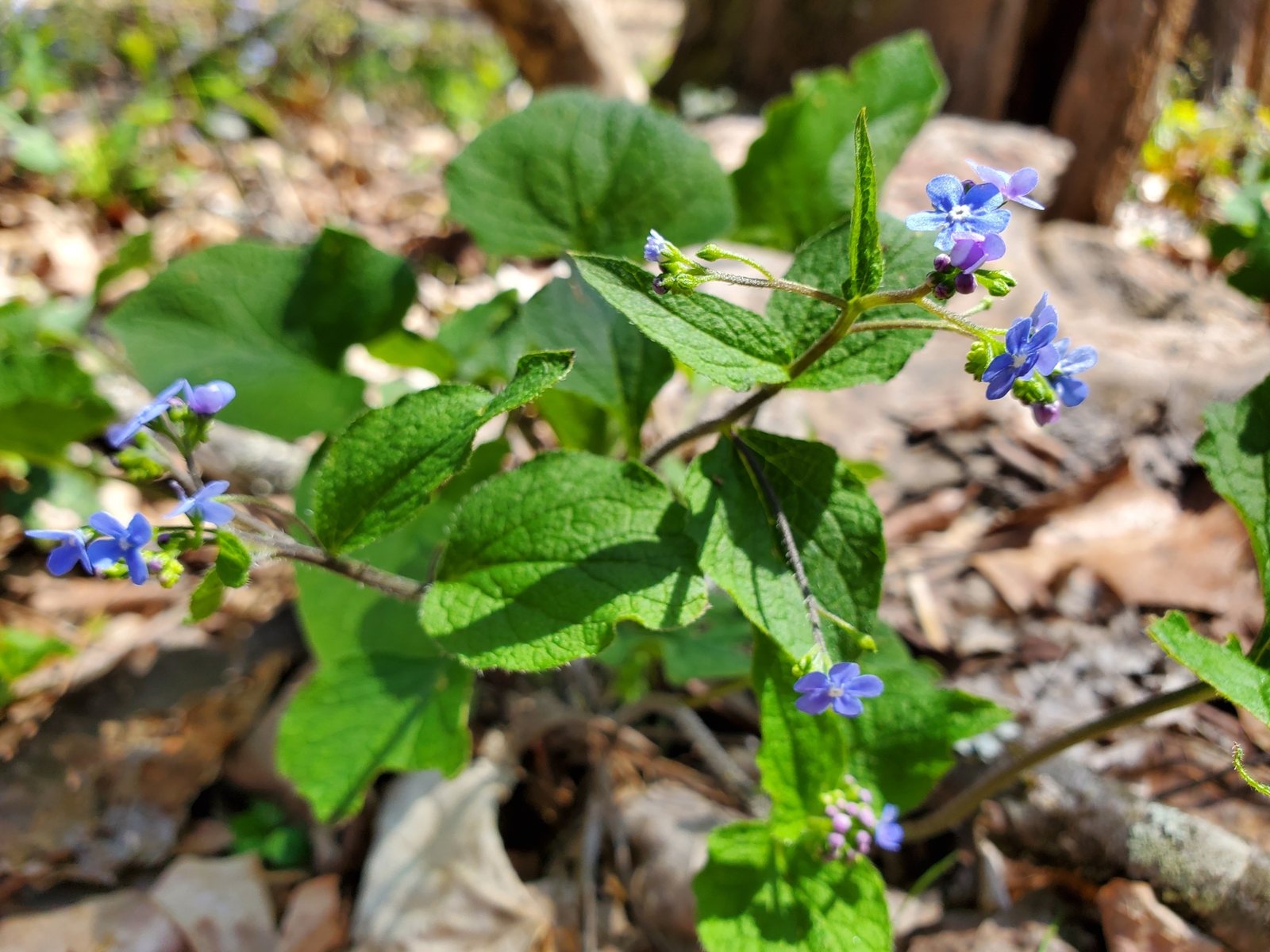
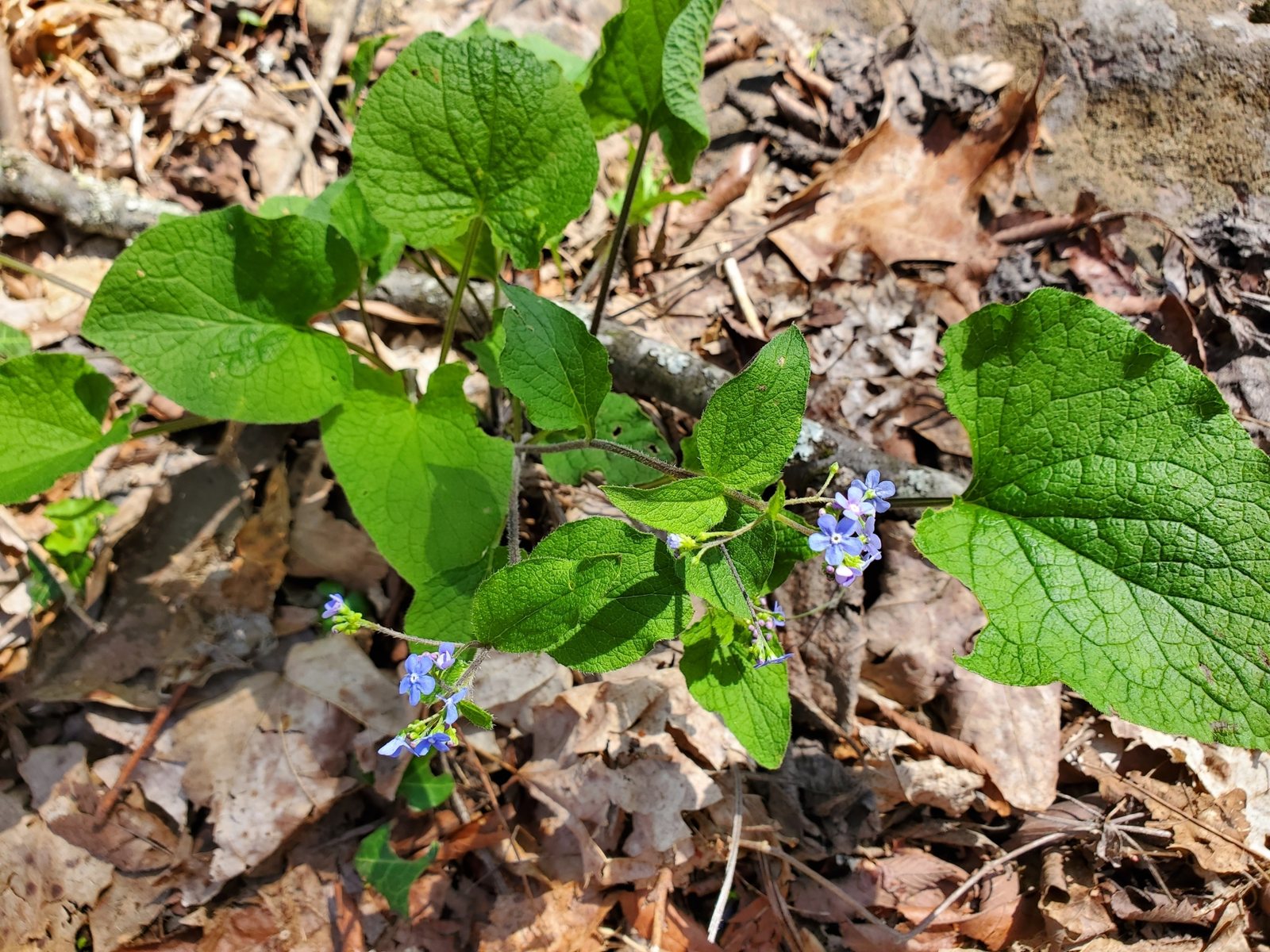
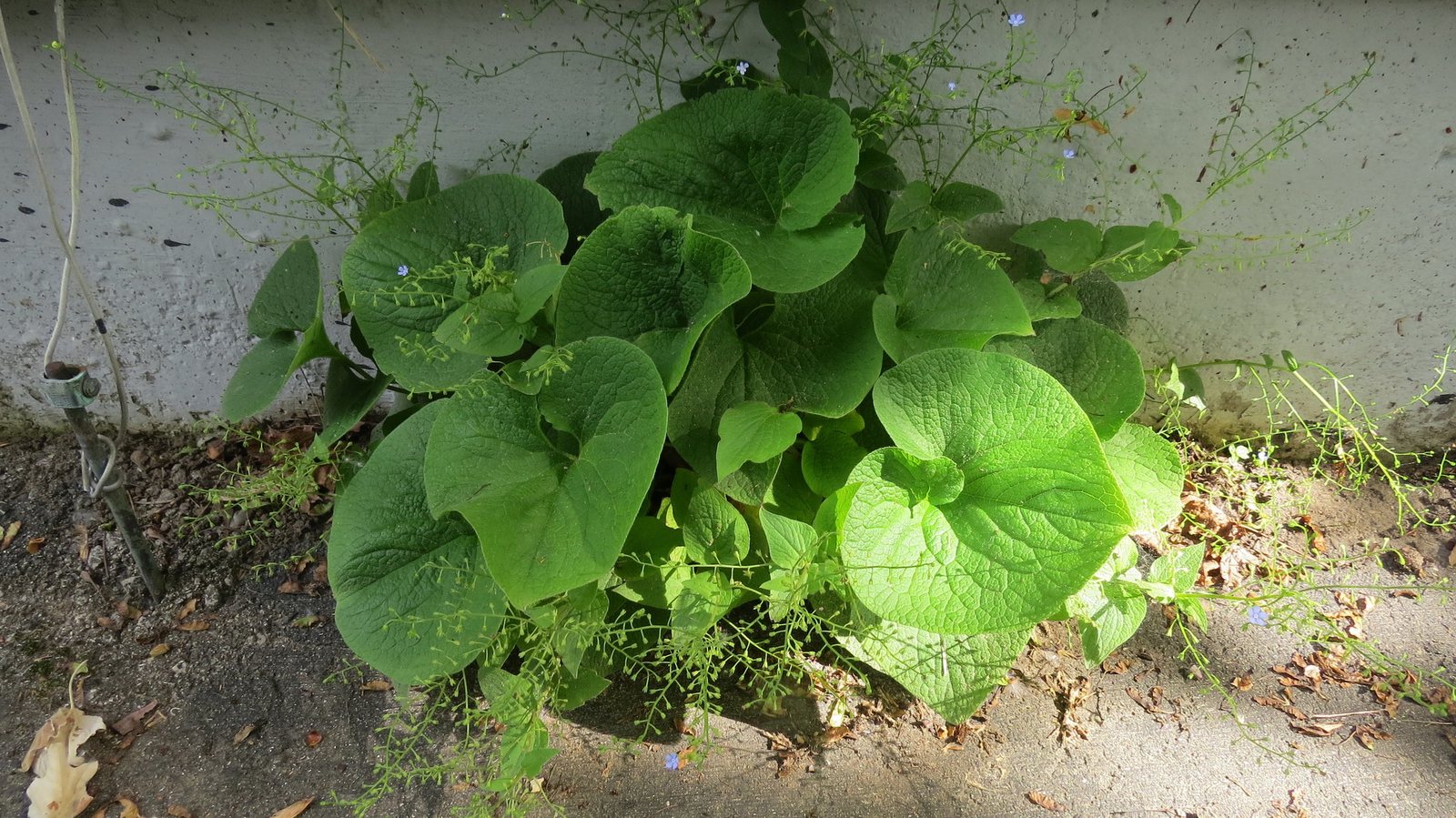
Jack Frost brunnera is a clump-forming, deciduous perennial with heart-shaped silver leaves traced with green veins. Gardeners grow it to brighten shady borders, with sprays of small blue flowers adding colour in spring. It performs best in cool conditions with consistently moist soil and struggles in hot, dry sites.
At a glance
- Sun
- Partial shade or bright shade; gentle morning sun is suitable where the soil stays moist. Avoid hot afternoon sun, especially in warmer climates.
- Water
- Keep the soil evenly moist but not waterlogged. Water deeply during dry spells, especially in the first growing season; established plants still tolerate drought poorly.
- Soil
- Humus-rich, moisture-retentive soil with good drainage. Tolerates clay improved with organic matter and a range from mildly acidic to mildly alkaline conditions.
- Height
- 1-1.5 ft (0.3-0.45 m), including flower stems
- Spread
- 1.5-2 ft (0.45-0.6 m)
- Flowers
- Small sky-blue flowers with pale centres in mid- to late spring.
- Foliage
- Large, heart-shaped, slightly rough leaves with a silver surface, green veins and narrow green margins. Leaves enlarge after flowering and die back for winter.
- Growth
- Moderate
- Care needed
- Low
The year at a glance
- Pollinators
- Deer resistant
- Cold hardy
- Low allergen
| J | F | M | A | M | J | J | A | S | O | N | D | |
|---|---|---|---|---|---|---|---|---|---|---|---|---|
| Flowers | ||||||||||||
| Plant |
Northern hemisphere months. In Australia, shift them by six.
- Difficulty
- Easy
- Toughness
- Fairly tough
Will it suit your garden?
Pick your zone, country, light and whether you have pets.
Full sun is 6 or more hours of direct sun a day, part shade 3 to 6 hours, shade under 3.
How it grows
Planting day
1 ft (0.3 m)
After 1 year
1.1 ft (0.32 m)
After 2 years
1.1 ft (0.35 m)
After 3 years
1.2 ft (0.38 m)
full size
About 3 years to full size.
From a typical nursery size, at an average rate for this kind of plant. A rule of thumb, not a forecast.
Good to know
- Cats and dogs
- Safe
- Growth rate
- Moderate
Care
Jobs through the year
- WaterMar–May, Sep–Oct, every 7 days
- Water established clumps if the root zone starts drying; keep new plants consistently moist.
- WaterJun–Aug, every 4 days
- Check established clumps and water deeply as needed to keep soil evenly moist, not waterlogged.
- MulchMar–Apr
- Top-dress with compost or leaf mould, keeping the crown uncovered.
- DeadheadMay–Jun
- Cut spent flower stems to the base to tidy clumps and limit seedlings.
- PruneFeb–Mar
- Clear old dead foliage before new shoots expand.
- PruneMay–Sep
- Remove badly scorched leaves and cut green-leaved reversions out at their origin.
- DivideMar–Apr, Sep
- Divide only congested clumps, usually every 3–5 years, and keep divisions moist.
- Plant with the crown at soil level and allow room for the mature clump.
- Water at soil level whenever the root zone begins to dry; do not let newly planted clumps dry out.
- Apply a thin layer of compost in spring; rich soil rarely needs additional fertiliser.
- Mulch with leaf mould or compost to conserve moisture, keeping it clear of the crown.
- Divide congested clumps in spring or early autumn, watering divisions until established.
Pruning. Cut spent flower stems back to the base after flowering if you do not want seedlings. Remove badly scorched or damaged leaves during the growing season, then clear dead foliage in late autumn or before new growth in spring.
Through the year
- Early spring
- Remove old dead foliage before new shoots expand, and top-dress with compost.
- Spring
- Plant or divide clumps while the weather is cool, then water thoroughly.
- Late spring
- Remove faded flower stems to tidy the plant and limit self-seeding.
- Summer
- Check soil moisture during dry spells and water deeply; watch for leaf scorch.
- Early autumn
- Plant or divide where there is enough mild weather for roots to establish before winter.
- Late autumn
- Remove collapsed foliage if desired and check that wet soil or piled mulch is not covering the crown.
In the garden
- Plant in repeated groups along a shady path, where the silver leaves make a clear, low edging.
- Combine with ferns and hostas for contrasting leaf shapes in a woodland border.
- Use beneath deciduous shrubs where spring light reaches the flowers and summer shade protects the foliage.
- Pair with dark-leaved heucheras to make the silver foliage stand out.
Garden styles it suits: Woodland, Cottage garden, English country, Blues and silvers, White garden and Pacific Northwest woodland.
Plant it with: Hostas, Japanese painted ferns, Hellebores, Heucheras, Astilbes and Snowdrops.
Wildlife: Spring flowers provide nectar and pollen for visiting bees and other small insects. The foliage is usually less attractive to deer and rabbits than many other shade plants, but browsing can still occur.
Problems to watch for
- Leaf scorch: brown, crisp edges usually indicate excessive sun, heat or dry soil. Water deeply, mulch and move the plant to a cooler, shadier position if necessary.
- Slugs and snails: young leaves may be eaten. Check after dark, remove pests and use barriers or labelled iron-phosphate bait where needed.
- Crown or root rot: persistent waterlogging can cause collapse. Improve drainage, keep the crown uncovered and replace badly rotted plants.
- Green-leaved reversions: occasionally a shoot loses its silver pattern. Remove that shoot at its point of origin so it does not dominate the clump.
Safety
Not known to be toxic to people, cats, dogs or horses. No part is recognised as a significant poisoning hazard, but it is not an edible plant and should not be deliberately eaten.
Easily confused with
Wood forget-me-not (Myosotis sylvatica)
It has similar small blue flowers but much smaller, narrow, hairy green leaves rather than broad, silver, heart-shaped leaves.
Lungwort (Pulmonaria species and hybrids)
Many lungworts have silver-spotted or silver leaves, but their leaves are generally longer and narrower, and their larger, funnel-shaped flowers often change from pink to blue.
The name
Brunnera honours Swiss botanist Samuel Brunner, macrophylla means large-leaved, and 'Jack Frost' refers to the foliage's frosted appearance.
Propagation. Divide established clumps in spring or early autumn, keeping roots and healthy buds on each division. Seedlings do not reliably retain the silver foliage of 'Jack Frost'; use division to keep the cultivar true.
Checked against open data
- Accepted botanical name
- Brunnera macrophylla
- In the US and Canada
- Introduced in the lower 48 states.
- Native range
- North Caucasus, Transcaucasus and Turkey.
Sources: GBIF (CC BY 4.0), USDA PLANTS and Trefle (CC BY 4.0). The care and design notes are LandscapeGPT's own.
See it in your own yard.
Upload a photo of your yard and see it redesigned with plants that suit your climate, each checked against your zone.