Japanese anemone 'Honorine Jobert'
Anemone × hybrida 'Honorine Jobert'. Family Ranunculaceae. Perennial.
Also called Windflower 'Honorine Jobert', Anemone × hybrida 'Honorine Jobert', Eriocapitella × hybrida 'Honorine Jobert'.
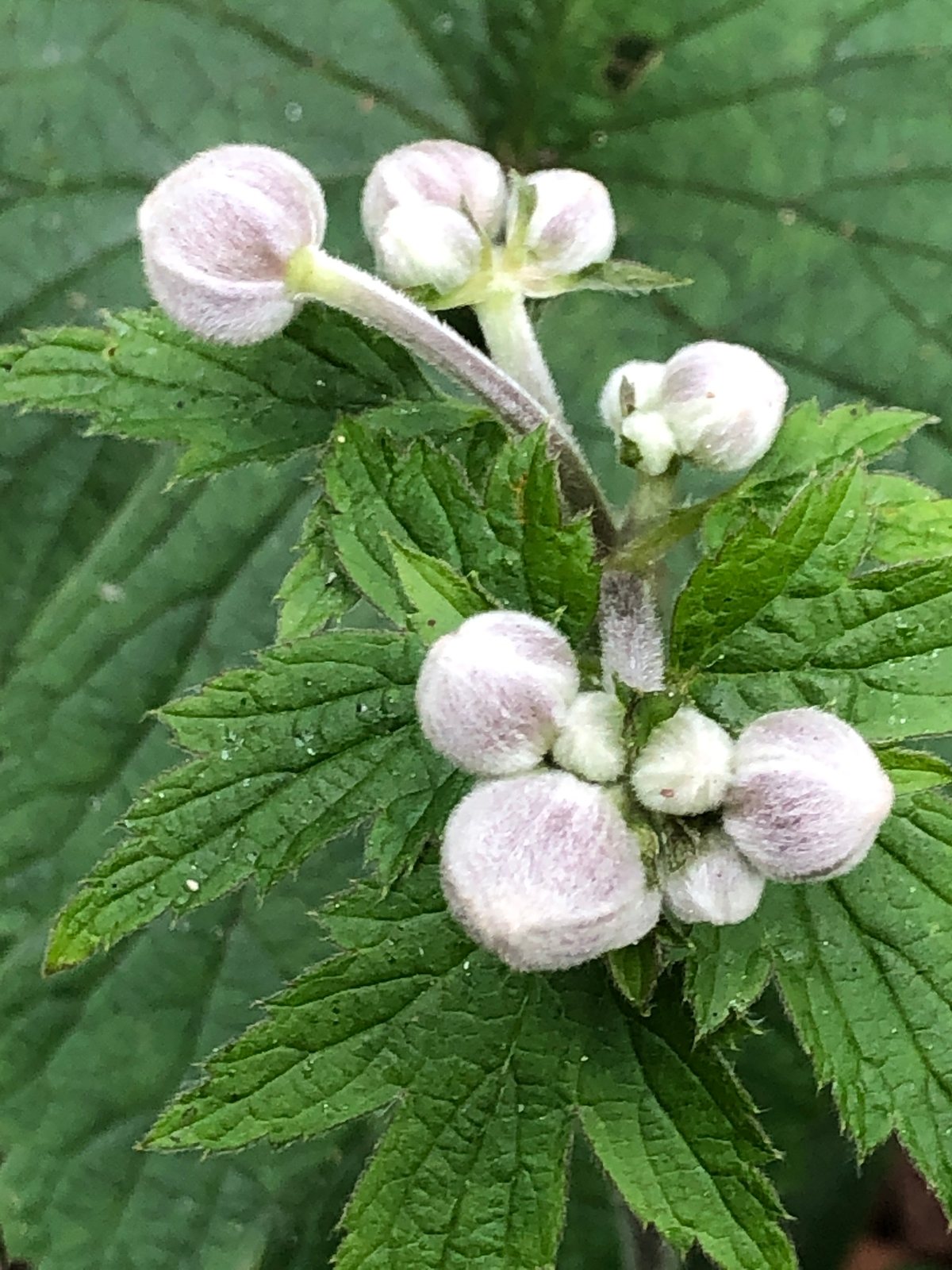
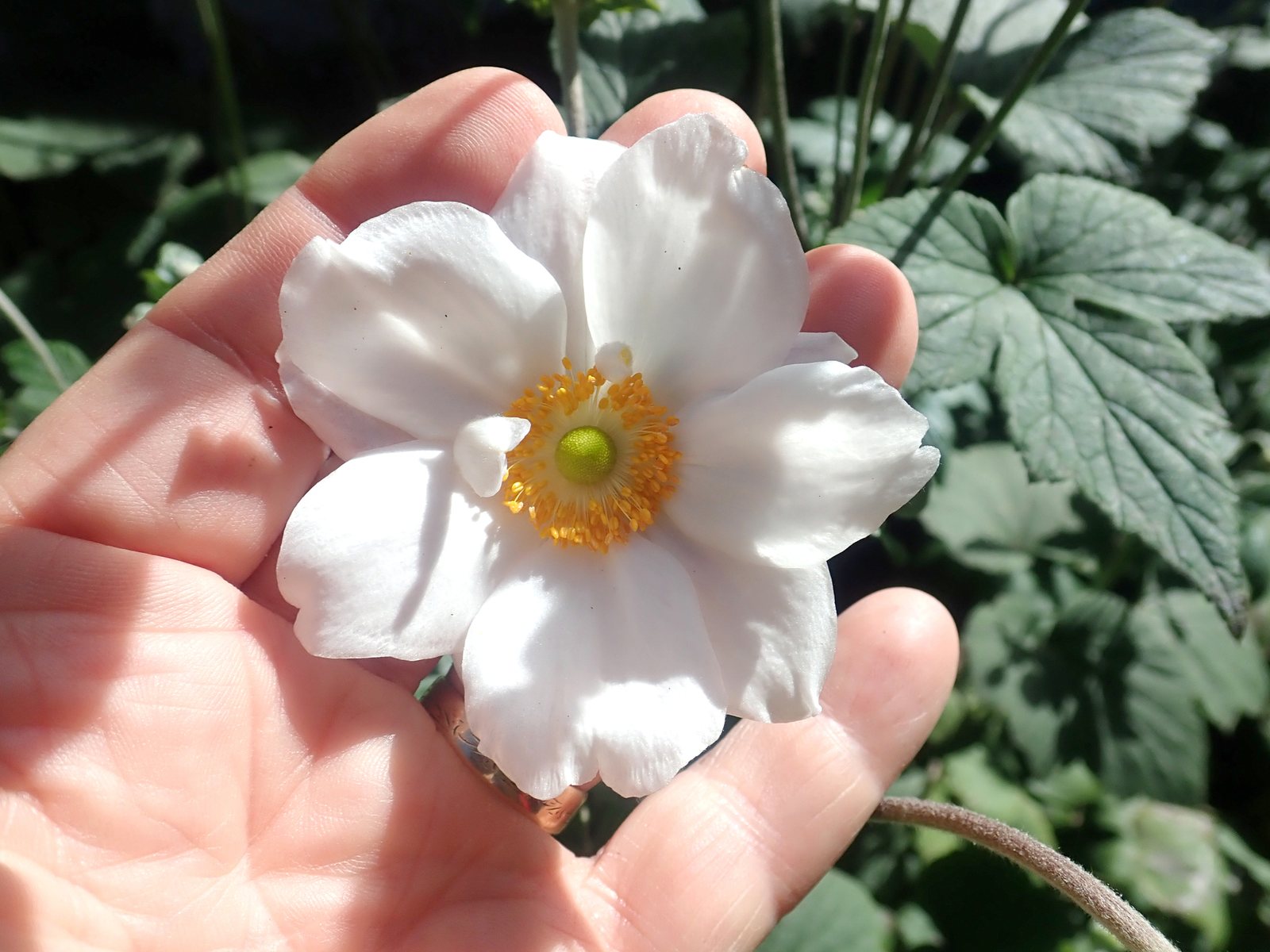
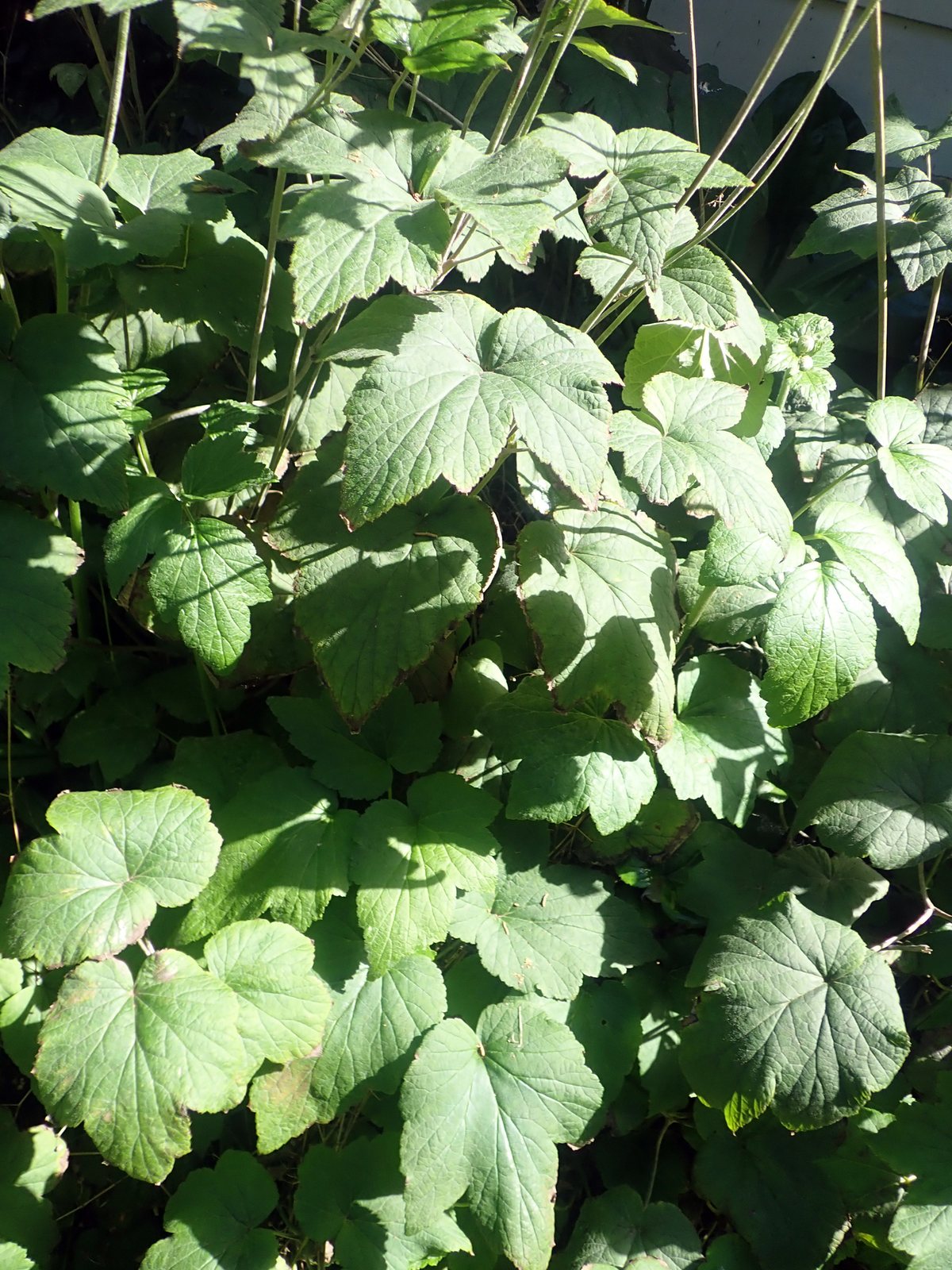
A tall, clump-forming perennial with white, yellow-centred flowers held on branching stems above dark green leaves. It brings fresh flowers to borders from late summer into autumn, especially in lightly shaded gardens. Once established, its spreading roots can carry it beyond its allotted space.
At a glance
- Sun
- Partial shade; full sun where the soil stays moist. Give afternoon shade in hot climates.
- Water
- Keep evenly moist but not waterlogged, especially while establishing and during summer drought.
- Soil
- Humus-rich, moisture-retentive soil with good drainage; tolerates acidic, neutral and alkaline conditions.
- Height
- 3-5 ft (0.9-1.5 m)
- Spread
- 2-3 ft (0.6-0.9 m), spreading farther over time through creeping roots
- Flowers
- Late summer to mid-autumn; single white flowers with golden-yellow centres.
- Foliage
- Dark green, toothed, lobed leaves form a leafy basal clump, with smaller leaves on the flowering stems.
- Growth
- Slow to establish, then moderate to vigorous where conditions suit it.
- Care needed
- Medium
The year at a glance
- Pollinators
- Deer resistant
- Low allergen
| J | F | M | A | M | J | J | A | S | O | N | D | |
|---|---|---|---|---|---|---|---|---|---|---|---|---|
| Flowers | ||||||||||||
| Fruit | ||||||||||||
| Plant |
Northern hemisphere months. In Australia, shift them by six.
- Difficulty
- Moderate
- Toughness
- Fairly tough
Will it suit your garden?
Pick your zone, country, light and whether you have pets.
Full sun is 6 or more hours of direct sun a day, part shade 3 to 6 hours, shade under 3.
How it grows
Planting day
1 ft (0.3 m)
After 1 year
2 ft (0.6 m)
After 2 years
3 ft (0.9 m)
After 3 years
4 ft (1.2 m)
full size
About 3 years to full size.
From a typical nursery size, at an average rate for this kind of plant. A rule of thumb, not a forecast.
Good to know
- Cats and dogs
- Toxic
- In the garden
- Spreads vigorously: plan to contain it.
- Growth rate
- Moderate
Care
Jobs through the year
- WaterApr–May, Sep–Oct, every 14 days
- Water established clumps deeply if rain is insufficient; keep new plants consistently moist.
- WaterJun–Aug, every 7 days
- Water established clumps deeply in dry weather; new plants may need more frequent watering.
- MulchMar–Apr
- Apply compost or leaf mould without covering the crown.
- FeedApr
- Apply a light balanced feed only if soil is poor or growth is weak.
- DivideMar–Apr
- Divide congested clumps as growth starts and remove unwanted rooted shoots.
- ProtectMay–Jun
- Fit discreet supports on exposed sites before stems become tall.
- DeadheadAug–Oct, every 14 days
- Remove spent flowers for tidiness, or leave seedheads for winter interest.
- PruneFeb–Mar
- Cut remaining dead stems and foliage to ground level before new growth.
- Water deeply during dry spells; do not let newly planted roots dry out.
- Mulch in spring with compost or leaf mould, keeping it clear of the crown.
- Apply a light balanced feed in spring only if growth is weak or the soil is poor.
- Use discreet supports early in the season on exposed sites.
- Divide congested clumps in spring and remove unwanted shoots with their attached roots.
Pruning. Cut dead flower stems and foliage to ground level in late autumn, or leave the seedheads and clear them in late winter before new growth. Deadhead spent blooms if you prefer a tidier appearance.
Through the year
- Late winter
- Cut down any remaining dead stems before new shoots emerge.
- Spring
- Plant or divide clumps, water thoroughly and mulch with compost.
- Late spring
- Install supports where wind may bend the tall flowering stems.
- Summer
- Water during dry spells and check for shoots spreading into neighbouring plants.
- Late summer
- Remove spent flowers if desired, leaving healthy leaves to support the roots.
- Late autumn
- Remove collapsed foliage, or leave upright stems for winter structure.
In the garden
- Plant toward the back of a mixed border, where the white flowers rise above lower foliage.
- Use at a bright woodland edge with ferns and hostas for late-season flowers.
- Repeat in a white garden with white asters and silver-leaved plants.
- Combine with ornamental grasses and autumn-flowering asters for contrasting flower shapes and movement.
Garden styles it suits: English country, Cottage garden, Woodland, White garden, Romantic rose garden and Autumn colour.
Plant it with: Hostas, Hardy geraniums, Lady ferns, Astrantias, Autumn asters and Japanese forest grass.
Wildlife: The open flowers provide pollen for bees and other visiting insects late in the season.
Problems to watch for
- Dry soil can cause scorched leaves, wilting and poor flowering; water deeply and mulch to conserve moisture.
- Slugs and snails may damage emerging shoots; inspect young growth and use traps or locally approved iron-phosphate bait if needed.
- Powdery mildew may appear on stressed or crowded plants; maintain soil moisture, improve spacing and remove badly affected foliage.
- Creeping roots can produce unwanted colonies; dig out shoots with their roots and recheck the area, as fragments can regrow.
Safety
Treat all parts as toxic to people, cats, dogs and horses if eaten. Fresh tissue contains irritating compounds that can cause mouth irritation, drooling, vomiting or diarrhoea; substantial ingestion can be more serious. Sap may also irritate sensitive skin.
Where it spreads. Can spread aggressively by creeping roots in moist, mild-climate gardens, including the UK and the coastal Pacific Northwest of the United States and Canada. This is a garden-management warning, not a claim that this cultivar is formally listed as invasive.
Easily confused with
Japanese anemone 'Whirlwind' (Anemone × hybrida 'Whirlwind')
Its white flowers are semi-double, with more overlapping petal-like sepals; 'Honorine Jobert' has simpler, single flowers with an open centre.
Snowdrop anemone (Anemone sylvestris)
A much shorter plant, usually flowering in spring to early summer rather than late summer and autumn.
Giant white windflower (Anemone 'Wild Swan')
Its white flowers have conspicuous violet-blue colouring on their backs, and the plant is generally shorter and begins flowering earlier.
The name
Anemone comes from the Greek word for wind, which also gives the plant its common name, windflower.
Propagation. Divide established clumps in spring or take root cuttings during dormancy. Root fragments can regenerate, so remove them carefully when relocating plants. Seedlings will not reliably retain the cultivar's characteristics.
Checked against open data
- Accepted botanical name
- Anemone hybrida
Sources: GBIF (CC BY 4.0). The care and design notes are LandscapeGPT's own.
See it in your own yard.
Upload a photo of your yard and see it redesigned with plants that suit your climate, each checked against your zone.