Japanese barberry
Berberis thunbergii. Family Berberidaceae. Shrub.
Also called Thunberg's barberry.
Japanese barberry is a dense, thorny, deciduous shrub grown for its small leaves, autumn colour and suitability for clipped hedges. Cultivars offer green, purple, red or yellow foliage, but it is invasive in parts of North America and should not be planted where it threatens local habitats or is prohibited.
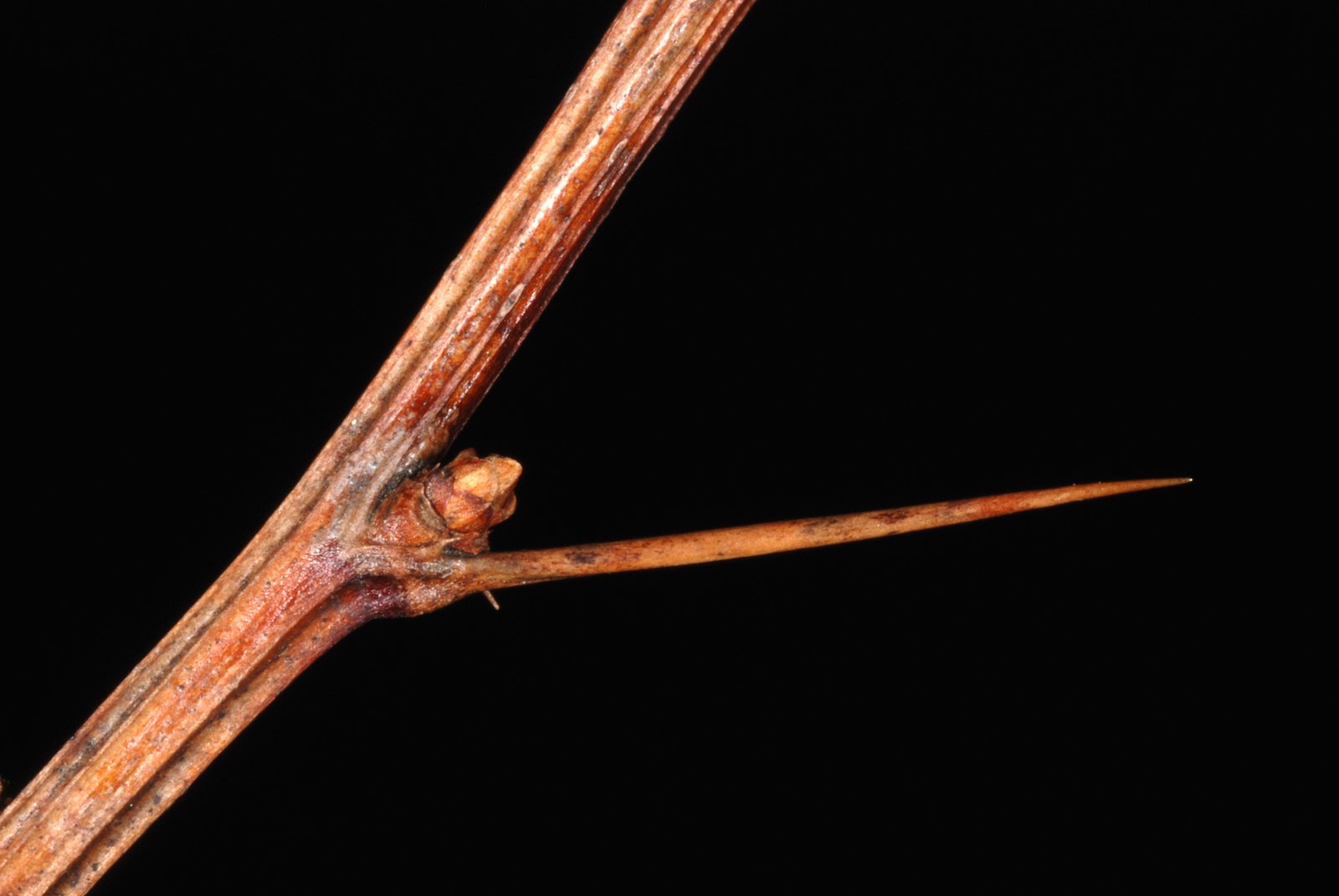
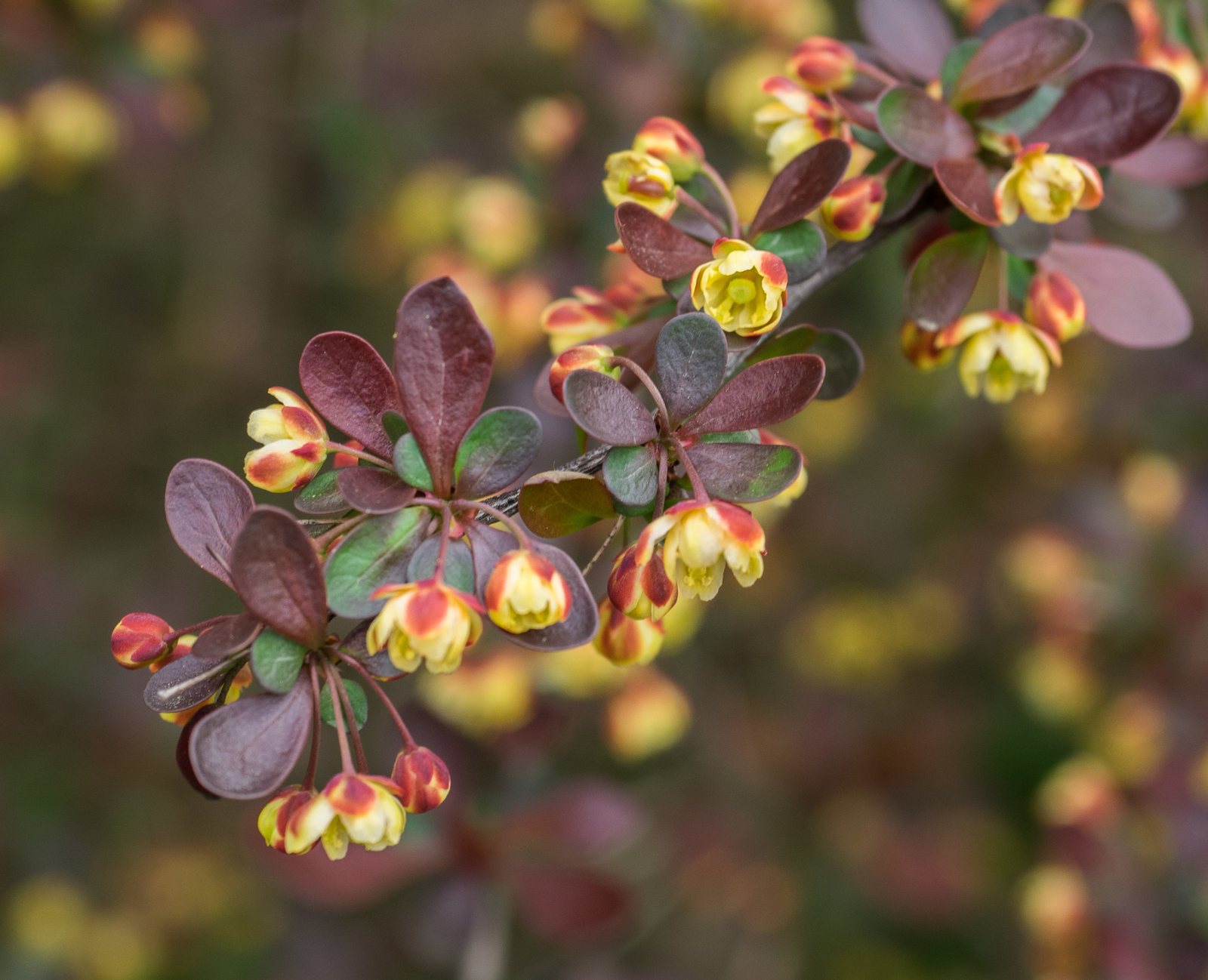
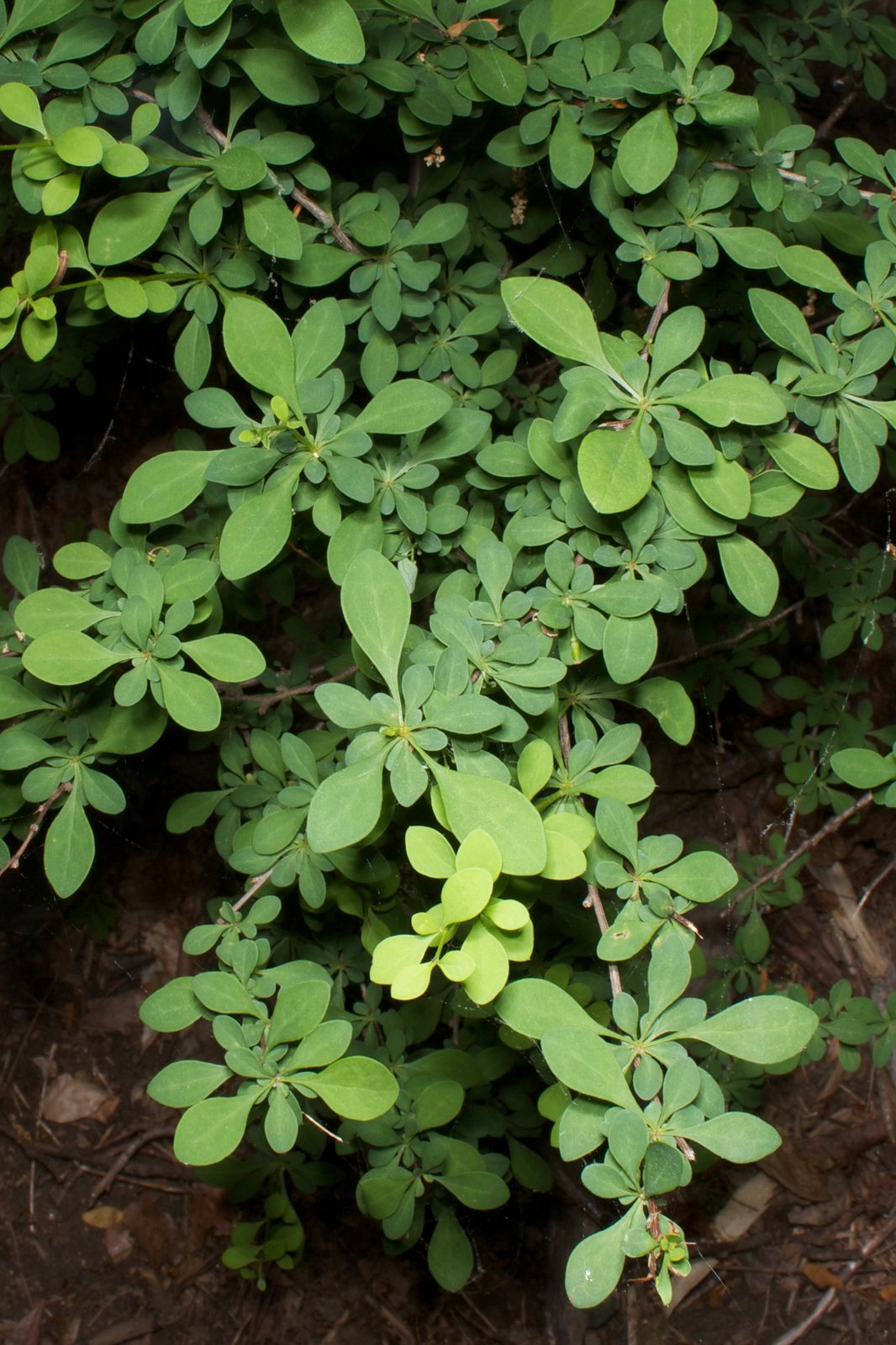
At a glance
- Sun
- Full sun to partial shade; foliage colour is usually strongest in sun, although some yellow-leaved cultivars scorch in hot afternoon sun.
- Water
- Water regularly during establishment; established plants tolerate moderate drought. Avoid persistently wet soil.
- Soil
- Most well-drained soils, including clay, sand and chalk; tolerates acidic to alkaline conditions.
- Height
- 3-6 ft (0.9-1.8 m); dwarf cultivars remain smaller
- Spread
- 4-6 ft (1.2-1.8 m); varies considerably by cultivar
- Flowers
- Small, pale yellow flowers in mid- to late spring, followed by red berries.
- Foliage
- Small, rounded to spoon-shaped leaves; green in the species, with purple, red and yellow cultivars. Autumn colour ranges from orange to scarlet.
- Growth
- Moderate
- Care needed
- Low
The year at a glance
- Pollinators
- Deer resistant
- Drought tolerant
- Cold hardy
- Wildlife
- Low allergen
| J | F | M | A | M | J | J | A | S | O | N | D | |
|---|---|---|---|---|---|---|---|---|---|---|---|---|
| Flowers | ||||||||||||
| Fruit | ||||||||||||
| Plant |
Northern hemisphere months. In Australia, shift them by six.
- Difficulty
- Easy
- Toughness
- Very tough
Will it suit your garden?
Pick your zone, country, light and whether you have pets.
Full sun is 6 or more hours of direct sun a day, part shade 3 to 6 hours, shade under 3.
How it grows
Planting day
1.6 ft (0.5 m)
After 1 year
2.2 ft (0.67 m)
After 2 years
2.8 ft (0.84 m)
After 3 years
3 ft (1 m)
After 5 years
4 ft (1.4 m)
full size
About 5 years to full size.
From a typical nursery size, at an average rate for this kind of plant. A rule of thumb, not a forecast.
Good to know
- Cats and dogs
- Mildly toxic: may upset a stomach
- Invasive in
- the US and Canada
- In the garden
- Spreads vigorously: plan to contain it.
- Growth rate
- Moderate
Care
Jobs through the year
- WaterApr–May, Sep–Oct, every 21 days
- Check established shrubs and water only during prolonged drought; water new shrubs more frequently.
- WaterJun–Aug, every 14 days
- Water established shrubs deeply only in prolonged dry spells; avoid saturated soil.
- MulchMar, Nov
- Maintain a 5–8 cm mulch layer without piling it against stems.
- FeedMar–Apr
- Feed lightly only where growth is weak and soil fertility is low.
- PruneFeb–Mar
- Remove damaged or crossing stems and selected old stems at ground level; wear thick gloves.
- PruneMay–Jun
- Trim hedges after flowering only if needed, accepting fewer berries.
- ProtectApr–Oct, every 30 days
- Remove escaped seedlings; plant or propagate only where local invasive-species rules permit.
- Check local invasive-species advice and sale restrictions before buying or propagating.
- Water deeply during dry spells in the first growing season; thereafter water during prolonged drought.
- Apply a 2-3 in (5-8 cm) mulch layer, keeping it clear of the stems.
- Do not feed routinely; use a light spring feed only if growth is weak and soil fertility is low.
- Wear thick gloves when handling or pruning, and keep thorny branches away from paths.
Pruning. In late winter, remove dead, damaged or crossing stems and cut selected old stems to ground level if renewal is needed. Trim hedges after flowering, accepting that clipping reduces flowers and berries.
Through the year
- Late winter
- Remove damaged stems and thin congested growth before leaves emerge.
- Spring
- Where planting is appropriate and legal, plant into well-drained soil and water thoroughly.
- Late spring
- Trim established hedges after flowering; inspect young shoots for aphids.
- Summer
- Water newly planted shrubs during dry weather and check for leaf scorch or mildew.
- Autumn
- Look for seedlings beneath the shrub and nearby bird perches; remove them before they establish.
- Late autumn
- Top up mulch if needed, leaving a clear gap around the stems.
In the garden
- Where non-invasive and permitted, use as a clipped boundary hedge away from pedestrian routes.
- Use compact cultivars as low edging in formal beds, allowing room for their thorny spread.
- Contrast purple-leaved cultivars with silver foliage and ornamental grasses in sunny mixed borders.
- Use green-leaved forms for autumn colour among shrubs with quieter summer foliage.
Garden styles it suits: Formal, Traditional, Modern courtyard, Autumn colour, Low-maintenance and Japanese.
Plant it with: Catmint, Russian sage, Feather reed grass, Stonecrop and Lavender.
Wildlife: Flowers provide nectar and pollen, and birds eat the berries and disperse the seeds. Dense thickets can displace native vegetation; in parts of eastern North America they also create conditions favourable to ticks.
Problems to watch for
- Root rot in waterlogged soil: improve drainage or move the shrub; do not keep watering saturated ground.
- Powdery mildew: thin crowded growth for airflow, avoid excessive nitrogen feeding and remove badly affected shoots.
- Aphids on soft shoots: dislodge with water and encourage natural predators; use insecticidal soap only if necessary.
- Leaf scorch, especially on yellow-leaved cultivars: provide afternoon shade in hot climates and prevent severe drought during establishment.
Safety
Not generally considered poisonous to cats, dogs or horses. Roots, bark and leaves contain alkaloids and should not be eaten by people; ingestion may cause digestive upset. The berries are not generally considered poisonous, but are not recommended as garden food. Thorns can cause puncture wounds to people and animals.
Where it spreads. Invasive across much of the northeastern and midwestern United States, with spread into the Mid-Atlantic and parts of the Southeast; also invasive in parts of southern Canada, including Ontario and Quebec. Birds carry seeds into woodland, where dense stands suppress native plants. Sale or planting is restricted in several US states; check current local rules.
Easily confused with
Common barberry (Berberis vulgaris)
Usually has finely toothed leaf margins, three-branched spines and longer hanging flower clusters; Japanese barberry has smooth leaf margins, mostly single spines and small flower clusters.
Ottawa barberry (Berberis × ottawensis)
This hybrid is often larger, with larger leaves that may have toothed margins and more conspicuous flower clusters; identification can be difficult without close examination.
Wintergreen barberry (Berberis julianae)
Has evergreen, leathery, sharply toothed leaves and strong three-branched spines, rather than small deciduous leaves with smooth margins.
The name
The common name refers to its Japanese origin, while thunbergii honours the Swedish botanist Carl Peter Thunberg.
Propagation. Semi-ripe cuttings in summer retain cultivar characteristics; seedlings do not reliably come true. Do not propagate where invasive or restricted, and remove unwanted seedlings promptly.
Checked against open data
- Accepted botanical name
- Berberis thunbergii
- In the US and Canada
- Introduced in Canada and the lower 48 states.
- Native range
- Japan.
- Measured
- Soil pH 5.5 to 7.2. Average height 145 cm.
Sources: GBIF (CC BY 4.0), USDA PLANTS and Trefle (CC BY 4.0). The care and design notes are LandscapeGPT's own.
See it in your own yard.
Upload a photo of your yard and see it redesigned with plants that suit your climate, each checked against your zone.