Japanese blood grass
Imperata cylindrica 'Rubra'. Family Poaceae. Ornamental grass.
Also called Red baron grass, Imperata cylindrica 'Red Baron'.
Japanese blood grass is a spreading perennial grass grown for upright green blades that turn crimson from the tips downward through summer and autumn. It makes a strong colour accent, but its parent species is highly invasive in warm regions, so check local restrictions before planting and remove any all-green reversions promptly.
At a glance
- Sun
- Full sun gives the strongest red colour; tolerates light shade, with greener foliage.
- Water
- Keep evenly moist while establishing. Once established, water during dry spells; avoid prolonged drought and waterlogged winter soil.
- Soil
- Moist, well-drained soil with some organic matter; tolerates a range of soil textures and pH levels.
- Height
- 1-2 ft (0.3-0.6 m)
- Spread
- 1-2 ft (0.3-0.6 m) initially; rhizomes can spread farther over time.
- Foliage
- Narrow, upright blades emerge green with red tips, becoming increasingly crimson through summer. Usually dies back in winter; may retain foliage in frost-free conditions.
- Growth
- Slow to moderate in cool climates; faster in warm, moist conditions.
- Care needed
- Medium
The year at a glance
- Deer resistant
- Heat tolerant
| J | F | M | A | M | J | J | A | S | O | N | D | |
|---|---|---|---|---|---|---|---|---|---|---|---|---|
| Plant |
Northern hemisphere months. In Australia, shift them by six.
- Difficulty
- Moderate
- Toughness
- Fairly tough
Will it suit your garden?
Pick your zone, country, light and whether you have pets.
Full sun is 6 or more hours of direct sun a day, part shade 3 to 6 hours, shade under 3.
How it grows
Planting day
1.1 ft (0.35 m)
After 1 year
1.3 ft (0.39 m)
After 2 years
1.4 ft (0.43 m)
After 3 years
1.5 ft (0.45 m)
full size
About 3 years to full size.
From a typical nursery size, at an average rate for this kind of plant. A rule of thumb, not a forecast.
Good to know
- Cats and dogs
- Safe
- Invasive in
- the US
- In the garden
- Spreads vigorously: plan to contain it.
- Growth rate
- Moderate
Care
Jobs through the year
- ProtectApr–Jun
- Check local weed regulations before buying, planting, dividing or moving this grass.
- WaterApr–May, Sep, every 14 days
- Water established clumps during dry spells; keep first-year plants evenly moist but not saturated.
- WaterJun–Aug, every 7 days
- Water deeply when soil begins drying; avoid prolonged drought and skip watering after substantial rain.
- PruneFeb–Mar
- Wearing gloves, cut dead foliage to 5–10 cm before new shoots appear.
- PruneMay–Sep, every 14 days
- Dig out entirely green shoots with their rhizomes immediately; do not compost them.
- PruneSep–Oct
- Check clump boundaries and dig out unwanted spreading rhizomes.
- DivideApr–May
- Divide congested clumps only where growing and sharing this plant are permitted.
- MulchApr
- Apply a thin layer of compost without covering the crown; avoid heavy nitrogen feeding.
- MulchNov
- Insulate the root area in colder gardens while keeping the crown clear and drainage open.
- Check local weed regulations before buying, moving or planting it.
- Water new plants regularly through their first growing season, keeping the soil moist but not saturated.
- Apply a thin layer of compost in spring; avoid heavy nitrogen feeding, which encourages soft, green growth.
- Mulch around the roots in colder areas, keeping mulch away from the crown.
- Inspect for entirely green shoots and dig out their attached rhizomes immediately; green bases beneath red tips are normal.
- Divide congested clumps in spring, only where growing and sharing this plant are permitted.
Pruning. In late winter or early spring, cut dead foliage to 2-4 in (5-10 cm) above the ground before new shoots appear. Wear gloves because the leaf edges can cut skin.
Through the year
- Late winter
- Cut back dead foliage before new growth starts.
- Spring
- Plant or divide where permitted, once the soil is warming; water thoroughly.
- Late spring
- Apply a thin compost mulch and check that new growth is developing red tips.
- Summer
- Water during dry spells and dig out any entirely green reversions with their rhizomes.
- Autumn
- Check the clump's boundaries and remove unwanted spreading rhizomes.
- Late autumn
- Mulch the root area in cold climates and ensure winter drainage remains clear.
In the garden
- Use small groups near the front of a sunny border for upright red foliage among rounded perennials.
- Combine with silver-leaved plants for a strong contrast in colour and texture.
- Grow in a substantial container on a sunny terrace where its spread can be monitored, provided local regulations allow it.
- Repeat small clumps beside a path to create a consistent late-season colour accent.
Garden styles it suits: Japanese, Modern, Modern courtyard, Small-space, Hot border and Autumn colour.
Plant it with: Stonecrop, Purple coneflower, Black-eyed Susan, Lamb's ears, Catmint and Coral bells.
Wildlife: Offers some shelter for small invertebrates but little nectar or pollen value; the red cultivar rarely flowers. Do not use it as a wildlife planting where the species is invasive.
Problems to watch for
- All-green reversions: these can grow much more vigorously than the red form; dig out the entire affected section and its rhizomes, and do not compost it.
- Crown or root rot in wet winter soil: improve drainage or move healthy portions to a better-drained position.
- Weak red colouring in shade: move to a sunnier position and avoid excessive nitrogen fertiliser.
- Winter losses, especially in containers or exposed sites: shelter pots, protect roots from severe freezing and avoid winter waterlogging.
Safety
Not known to be toxic to cats, dogs, horses or people, although information specific to this cultivar is limited. Its sharp-edged leaves can cut skin or irritate the mouth if chewed; it is not an edible plant.
Where it spreads. The parent species, cogongrass, is a serious rhizomatous invasive plant in the southeastern United States, including Florida, Alabama, Mississippi, Georgia and Louisiana, and is federally regulated in the US. 'Rubra' is generally less vigorous but can revert to aggressive green growth; cultivar exemptions and state restrictions vary, so do not assume it is legal to plant.
Easily confused with
Cogongrass (Imperata cylindrica)
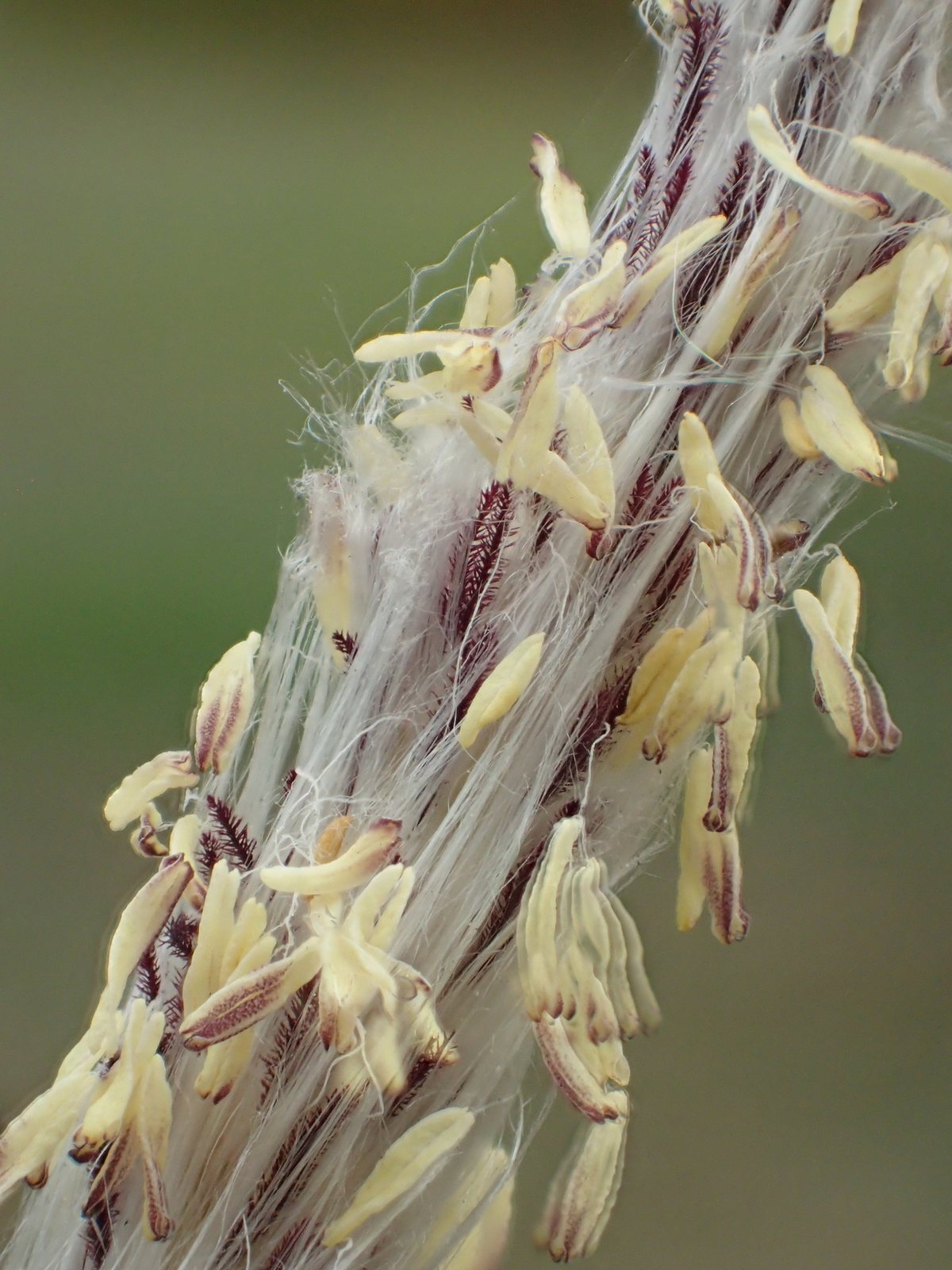
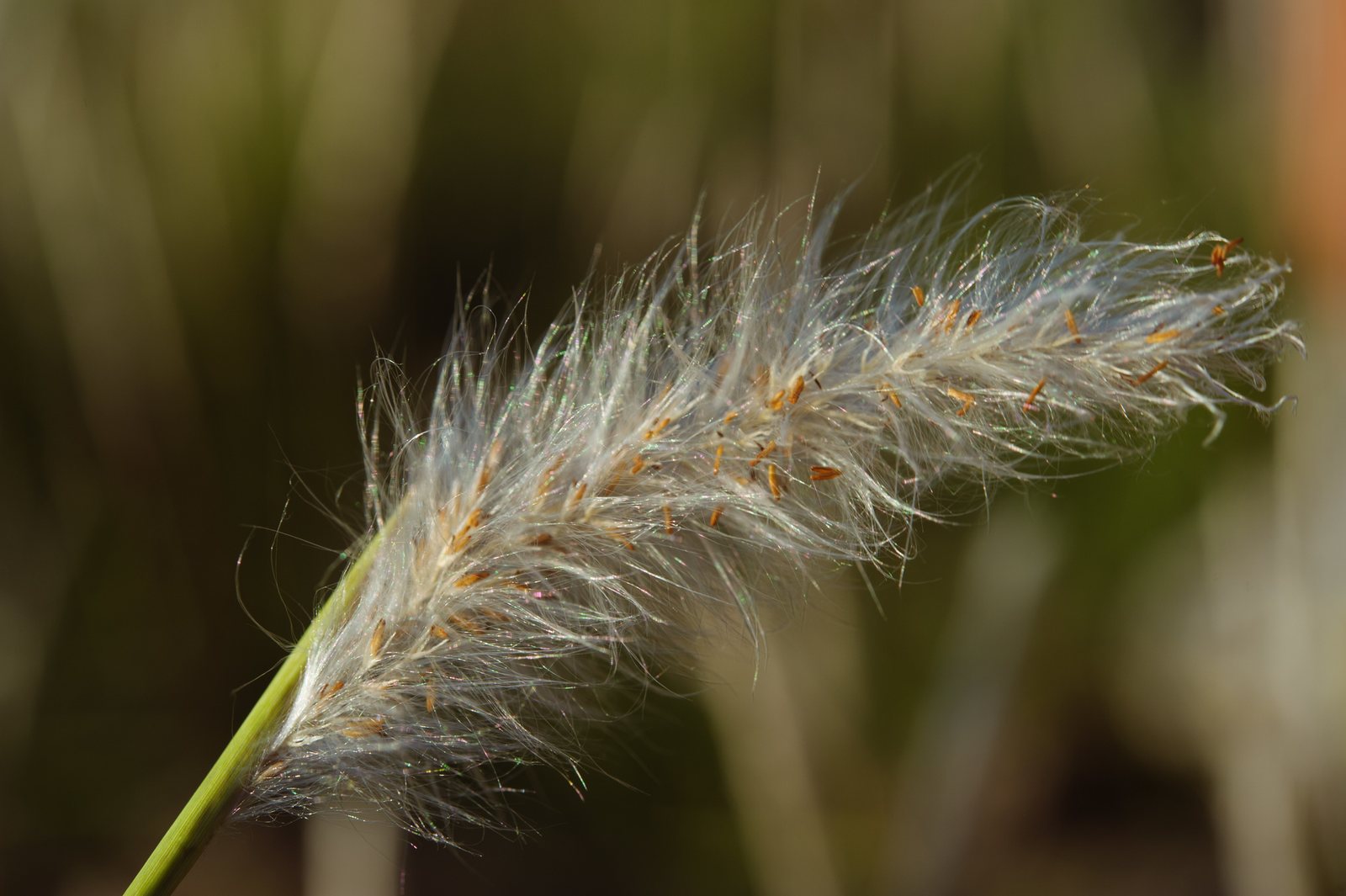
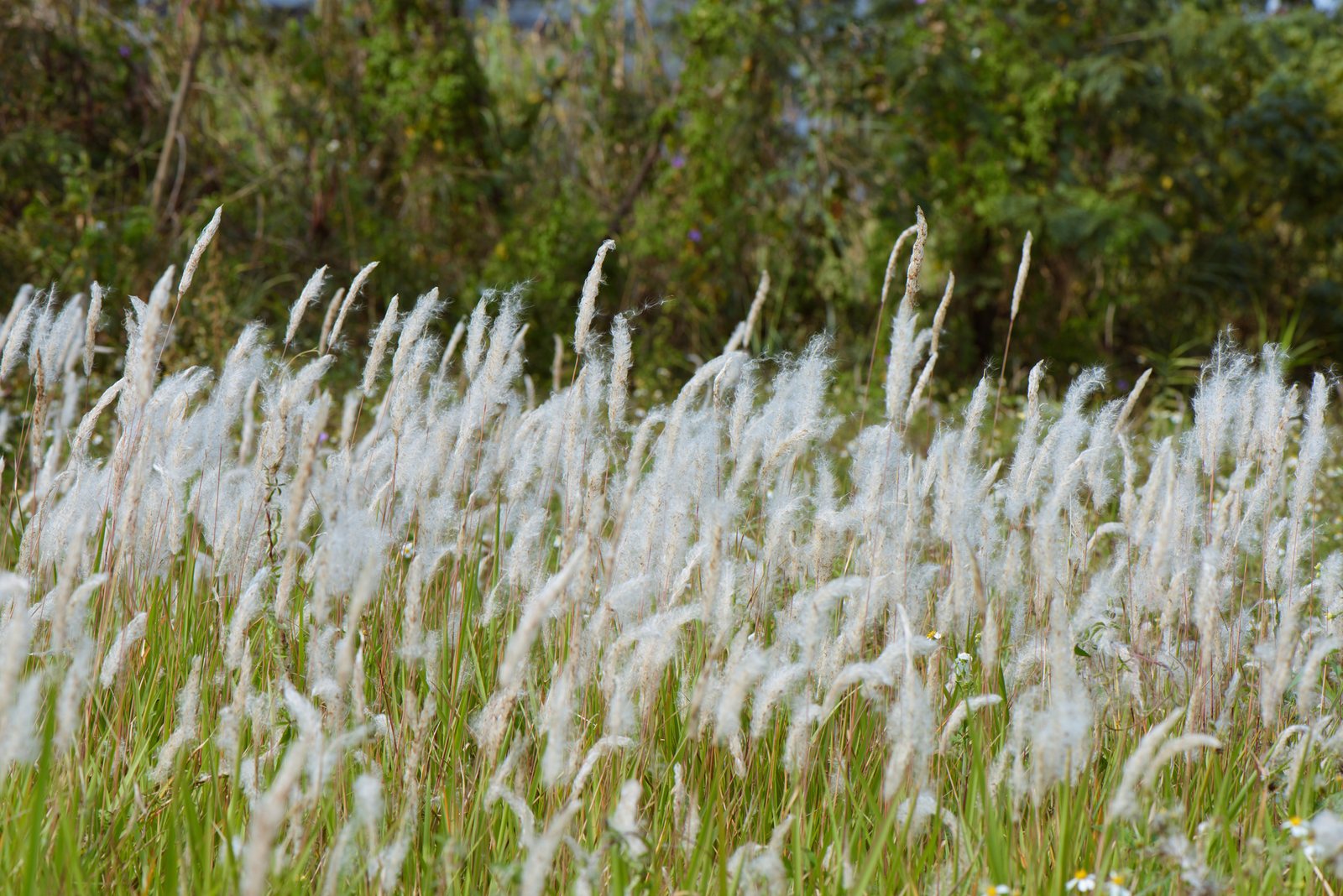
The ordinary green form has green to yellow-green leaves, often with an off-centre pale midrib, and can produce fluffy white flower heads. It lacks the persistent crimson colouring of 'Rubra' and is much more aggressive.
Switchgrass (Panicum virgatum)
Red-leaved forms can give a similar effect, but usually form taller clumps and produce open, airy flower panicles rather than the short, strongly red foliage display typical of Japanese blood grass.
The name
'Rubra' means red in Latin, and the common name refers to the blood-red colouring of the leaves.
Propagation. Divide established clumps in spring, retaining roots and several shoots on each division, only where propagation is permitted. Select reliably red growth, never propagate green reversions, and do not use seed to maintain the cultivar.
Checked against open data
- Accepted botanical name
- Imperata cylindrica
- In the US and Canada
- Native in Pacific Basin. Introduced in the lower 48 states and Pacific Basin.
- Native range
- Afghanistan, Albania, Algeria, Angola, Baleares, Benin, Botswana, Bulgaria, Burkina, Burundi, Cameroon and Canary Is..
- Measured
- Soil pH 6.5 to 7. Average height 69 cm.
Sources: GBIF (CC BY 4.0), USDA PLANTS and Trefle (CC BY 4.0). The care and design notes are LandscapeGPT's own.
See it in your own yard.
Upload a photo of your yard and see it redesigned with plants that suit your climate, each checked against your zone.