Japanese cleyera
Ternstroemia gymnanthera. Family Pentaphylacaceae. Shrub.
Also called Cleyera, False Japanese cleyera, Japanese ternstroemia.
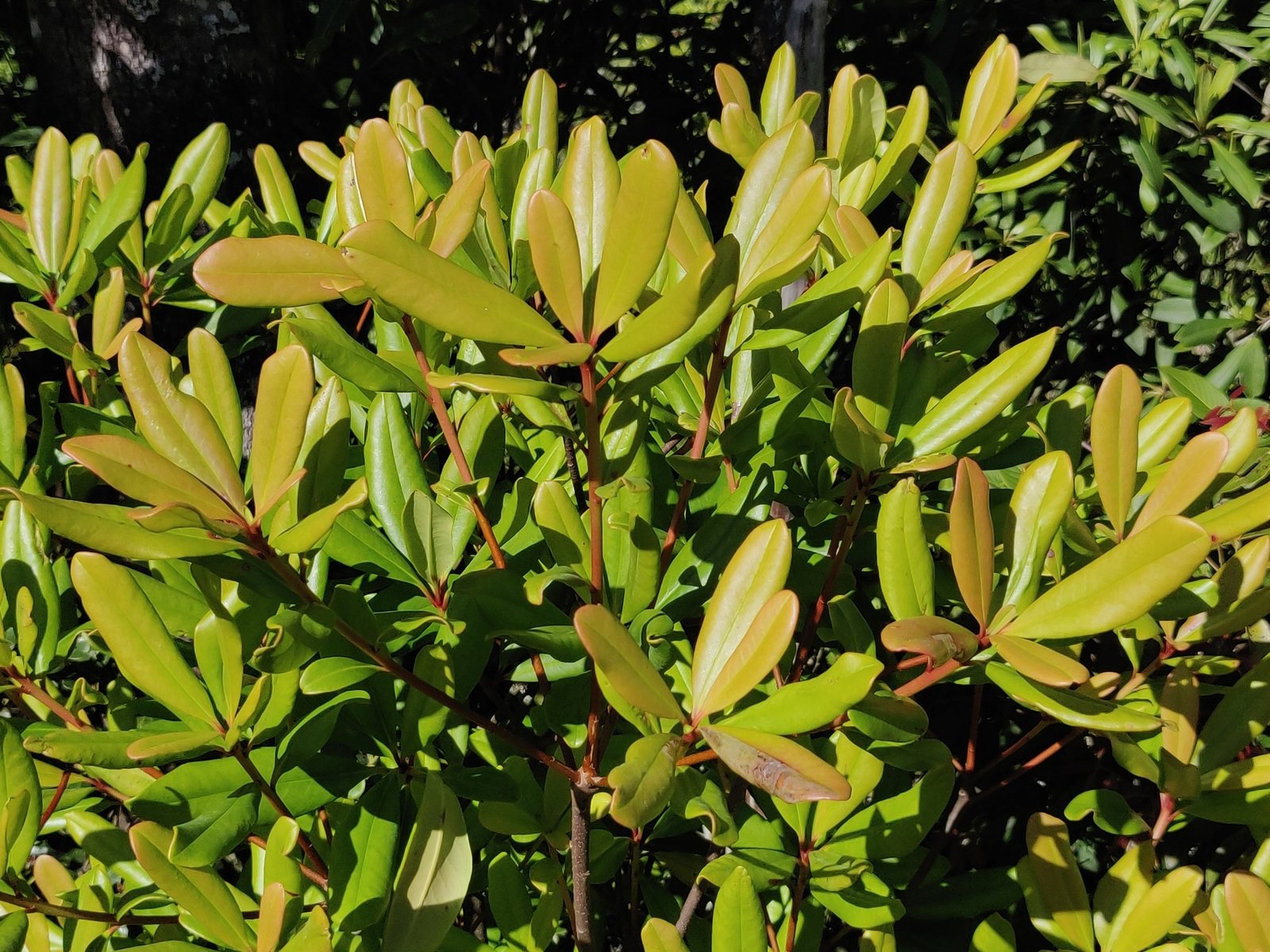
Japanese cleyera is a dense evergreen shrub grown for glossy, dark green leaves and bronze-red new growth. It makes a useful screen, hedge or backdrop in warm gardens, particularly where the soil is acidic and well drained.
At a glance
- Sun
- Full sun to partial shade; afternoon shade is helpful in hot, dry locations.
- Water
- Keep evenly moist while establishing. Established shrubs tolerate short dry spells, but need deep watering during prolonged drought.
- Soil
- Acidic, humus-rich, well-drained soil; avoid alkaline soil and sites that remain waterlogged.
- Height
- 10-15 ft (3-4.6 m), occasionally taller in favorable conditions
- Spread
- 6-10 ft (1.8-3 m)
- Flowers
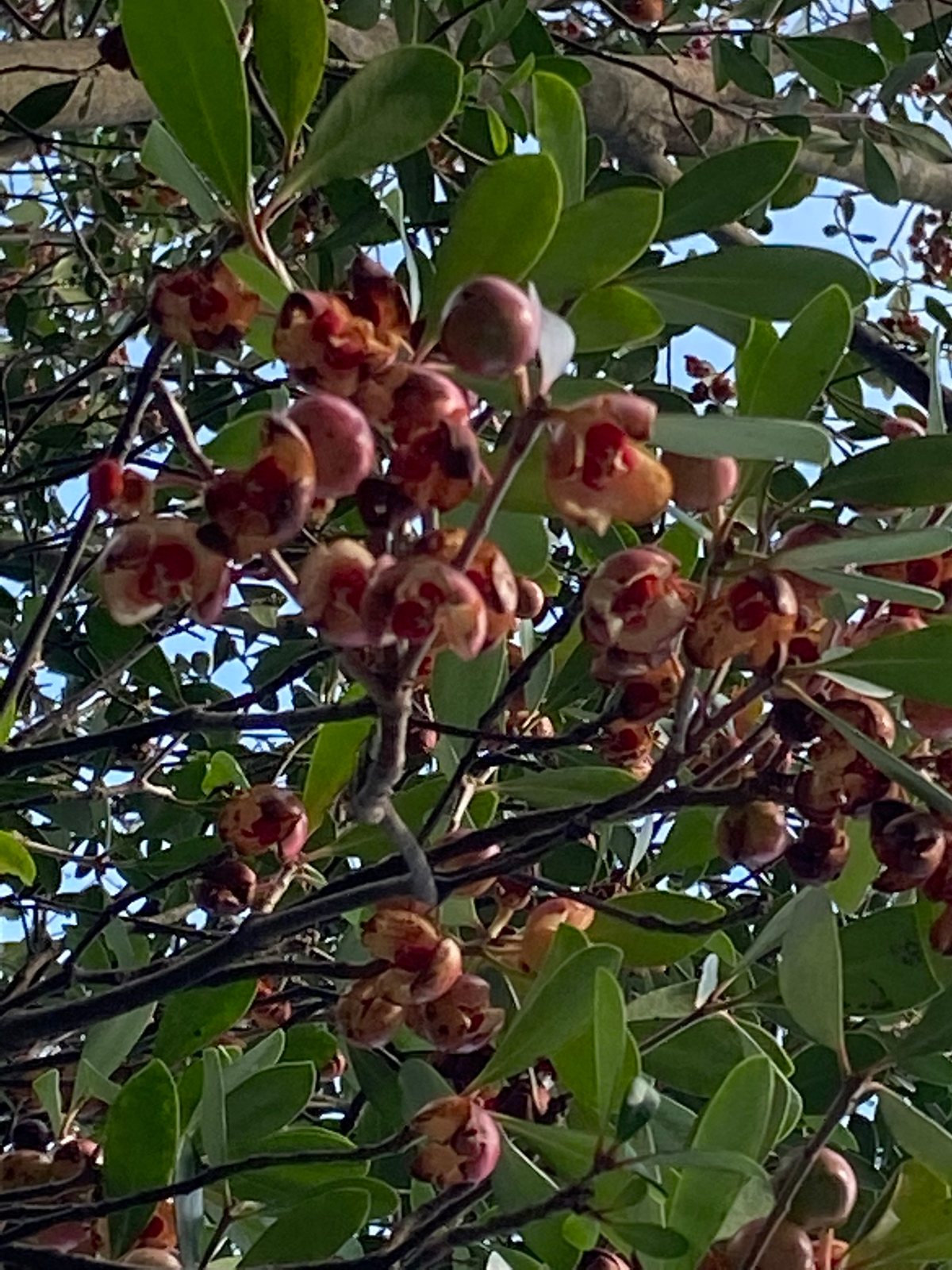
- Small, creamy-white, lightly fragrant flowers in late spring to early summer, often hidden beneath the foliage.
- Foliage
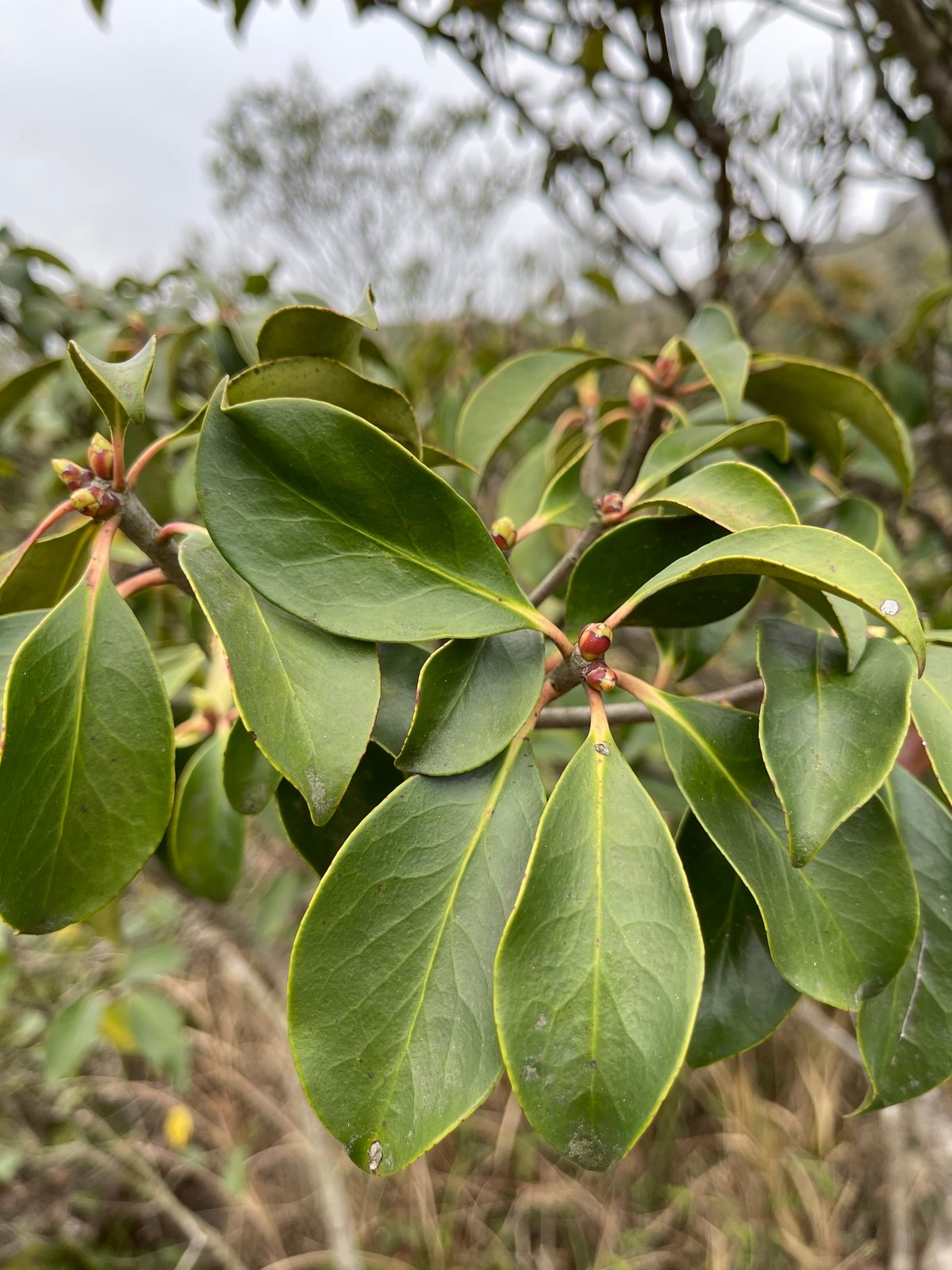
- Evergreen. Glossy, leathery, oval leaves with smooth margins; new growth is bronze to reddish before turning dark green.
- Growth
- Slow to moderate
- Care needed
- Low
The year at a glance
- Pollinators
- Heat tolerant
- Wildlife
- Low allergen
- Fragrant
| J | F | M | A | M | J | J | A | S | O | N | D | |
|---|---|---|---|---|---|---|---|---|---|---|---|---|
| Flowers | ||||||||||||
| Fruit | ||||||||||||
| Plant |
Northern hemisphere months. In Australia, shift them by six.
- Difficulty
- Moderate
- Toughness
- Fairly tough
Will it suit your garden?
Pick your zone, country, light and whether you have pets.
Full sun is 6 or more hours of direct sun a day, part shade 3 to 6 hours, shade under 3.
How it grows
Planting day
1.6 ft (0.5 m)
After 1 year
3 ft (1 m)
After 2 years
5 ft (1.5 m)
After 3 years
7 ft (2 m)
After 5 years
10 ft (3 m)
About 7 years to full size.
From a typical nursery size, at an average rate for this kind of plant. A rule of thumb, not a forecast.
Good to know
- Cats and dogs
- Safe
- Growth rate
- Slow
Care
Jobs through the year
- WaterApr–May, Sep–Oct, every 14 days
- Water established shrubs if soil is drying; check more often during the first two growing seasons.
- WaterJun–Aug, every 10 days
- Water deeply during extended dry weather, allowing excess water to drain freely.
- MulchApr
- Spread 5–8 cm of organic mulch over the roots, keeping stems clear.
- FeedApr
- Apply a modest acid-loving shrub feed only if growth is weak or a soil test indicates need.
- PruneJun–Jul
- After flowering, remove dead or crossing wood and shorten selected branches to leafy side shoots.
- ProtectJan–Mar, Nov–Dec
- Not reliably hardy in zone 6 or colder zone 7 sites; overwinter containers frost-free and shelter outdoor shrubs.
- Water deeply during the first two growing seasons whenever the upper soil begins to dry.
- Spread 2-3 in (5-8 cm) of organic mulch over the root area, keeping it clear of the stems.
- Apply a modest amount of fertilizer for acid-loving shrubs in spring only if growth is weak or soil testing indicates a need.
- Keep the root zone well drained; do not compensate for yellow leaves by watering already wet soil.
- In colder parts of its range, choose a position sheltered from drying winter winds.
Pruning. Prune after flowering, shortening selected branches to a leafy side shoot and removing dead or crossing wood. Light clipping will maintain a hedge, but repeated close shearing hides the natural form and removes much of the colorful new growth.
Through the year
- Spring
- Plant after severe frost risk has passed in colder districts; water thoroughly and mulch.
- Spring
- Check growth and leaf color; feed lightly only where needed.
- Early summer
- Prune or lightly trim after flowering.
- Summer
- Water during extended dry weather and inspect leaves and stems for scale insects.
- Autumn
- Plant in mild-winter districts and refresh mulch; avoid feeding to encourage late growth.
- Winter
- Protect young shrubs from drying winds and check that the root area is not waterlogged.
In the garden
- Use as an evergreen boundary screen where there is room for its mature width.
- Plant behind azaleas and camellias to provide a dark, year-round backdrop.
- Grow as a loose hedge along a driveway or property edge rather than a tightly clipped, narrow barrier.
- Use a single shrub beside a shaded patio, where the glossy foliage and bronze new growth can be seen closely.
Garden styles it suits: Japanese, Woodland, Southern, Traditional, Green on green and Low-maintenance.
Plant it with: Camellias, Azaleas, Japanese pieris, Gardenias, Autumn fern and Liriope.
Wildlife: The small flowers attract visiting insects. Dense evergreen branches provide shelter for birds.
Problems to watch for
- Yellow leaves with green veins often indicate iron deficiency in alkaline soil: test the soil and correct the growing conditions; use a container with acidic compost if the garden soil is strongly alkaline.
- Root rot in saturated soil causes wilting and decline: improve drainage, reduce watering and replace badly affected plants rather than replanting into the same wet conditions.
- Scale insects can cause sticky honeydew and sooty mold: inspect stems and leaf undersides, remove small infestations and use a labeled horticultural oil when appropriate.
- Winter wind and strong sun can scorch leaves: shelter exposed plants and water during dry spells when the ground is unfrozen.
Safety
Not known to be toxic to people, cats, dogs or horses, but species-specific safety information is limited. Leaves and fruits are not food and should not be eaten.
Easily confused with
Japanese camellia (Camellia japonica)
Camellia leaves usually have finely toothed edges and its flowers are much larger and showier; Japanese cleyera has smooth leaf margins and small, inconspicuous flowers.
Red-tip photinia (Photinia × fraseri)
Photinia also has red new growth, but its leaves have clearly toothed edges and its white flowers appear in conspicuous clusters.
The name
Ternstroemia honors the Swedish naturalist Christopher Ternström, while the common name reflects its resemblance to plants in the genus Cleyera.
Propagation. Take semi-ripe cuttings in summer and root them in a free-draining medium under humid conditions. Seed is another option, but seedlings may vary and named cultivars should be propagated from cuttings.
Checked against open data
- Accepted botanical name
- Ternstroemia gymnanthera
- Native range
- Assam, Bangladesh, Cambodia, China South-Central, China Southeast, East Himalaya, India, Laos, Myanmar, Nepal, Sri Lanka and Thailand.
- Measured
- Average height 880 cm.
Sources: GBIF (CC BY 4.0) and Trefle (CC BY 4.0). The care and design notes are LandscapeGPT's own.
See it in your own yard.
Upload a photo of your yard and see it redesigned with plants that suit your climate, each checked against your zone.