Japanese euonymus
Euonymus japonicus. Family Celastraceae. Shrub.
Also called Japanese spindle, Evergreen spindle.
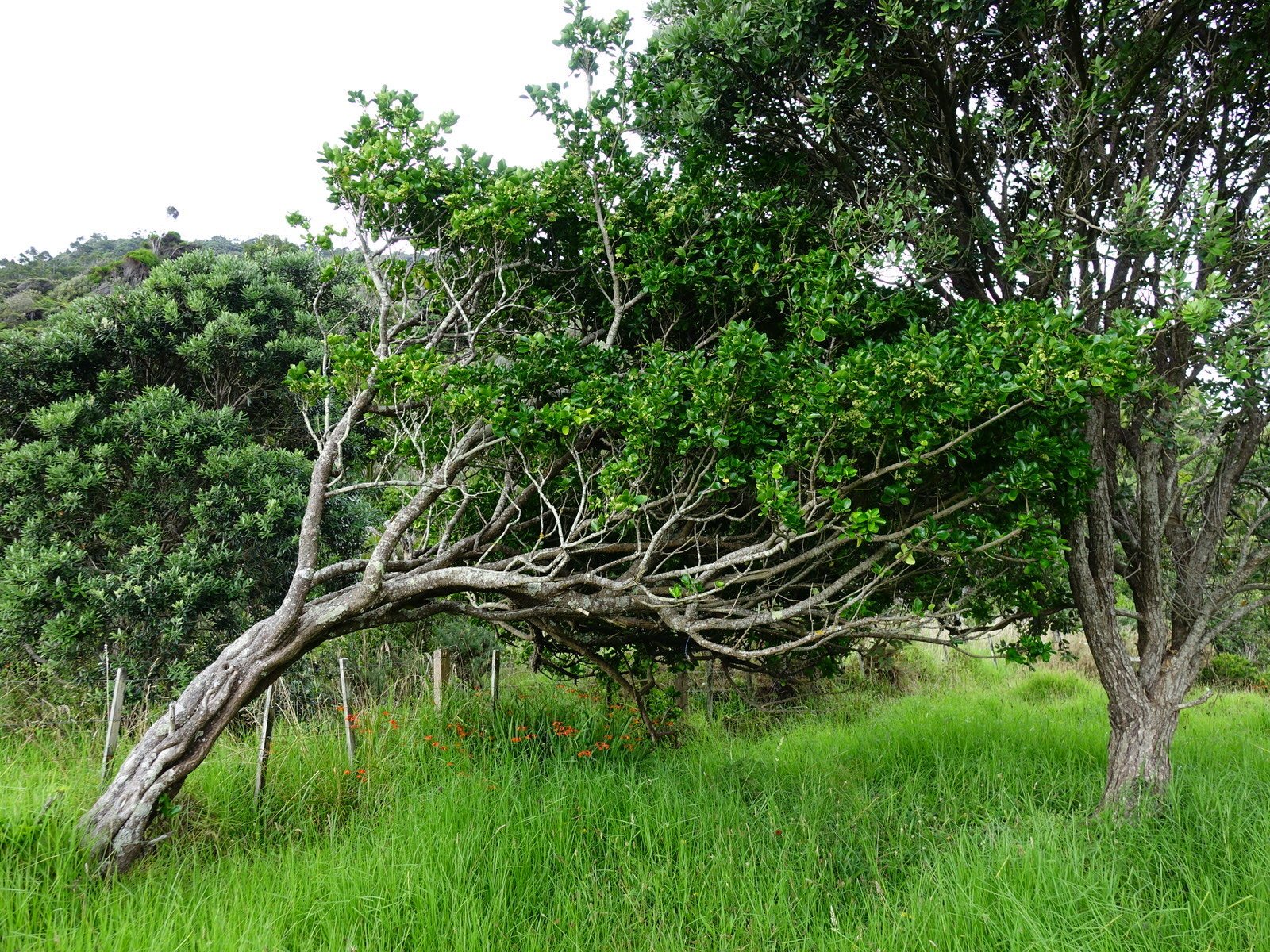
Japanese euonymus is a dense evergreen shrub grown for its glossy leaves and tolerance of clipping, coastal conditions and urban gardens. Green-leaved and variegated forms make useful hedges and year-round structure, although scale insects can be a persistent problem.
At a glance
- Sun
- Full sun to partial shade; variegated forms usually colour best with several hours of sun. Shelter from cold, drying winds near its hardiness limit.
- Water
- Water regularly while establishing. Established plants tolerate short dry spells, but benefit from deep watering during prolonged drought.
- Soil
- Well-drained soil, including sandy, loamy or clay soils that do not remain waterlogged; tolerates a broad pH range and coastal salt exposure.
- Height
- 10-15 ft (3-4.6 m) unpruned; compact cultivars remain much smaller
- Spread
- 6-10 ft (1.8-3 m) unpruned
- Flowers
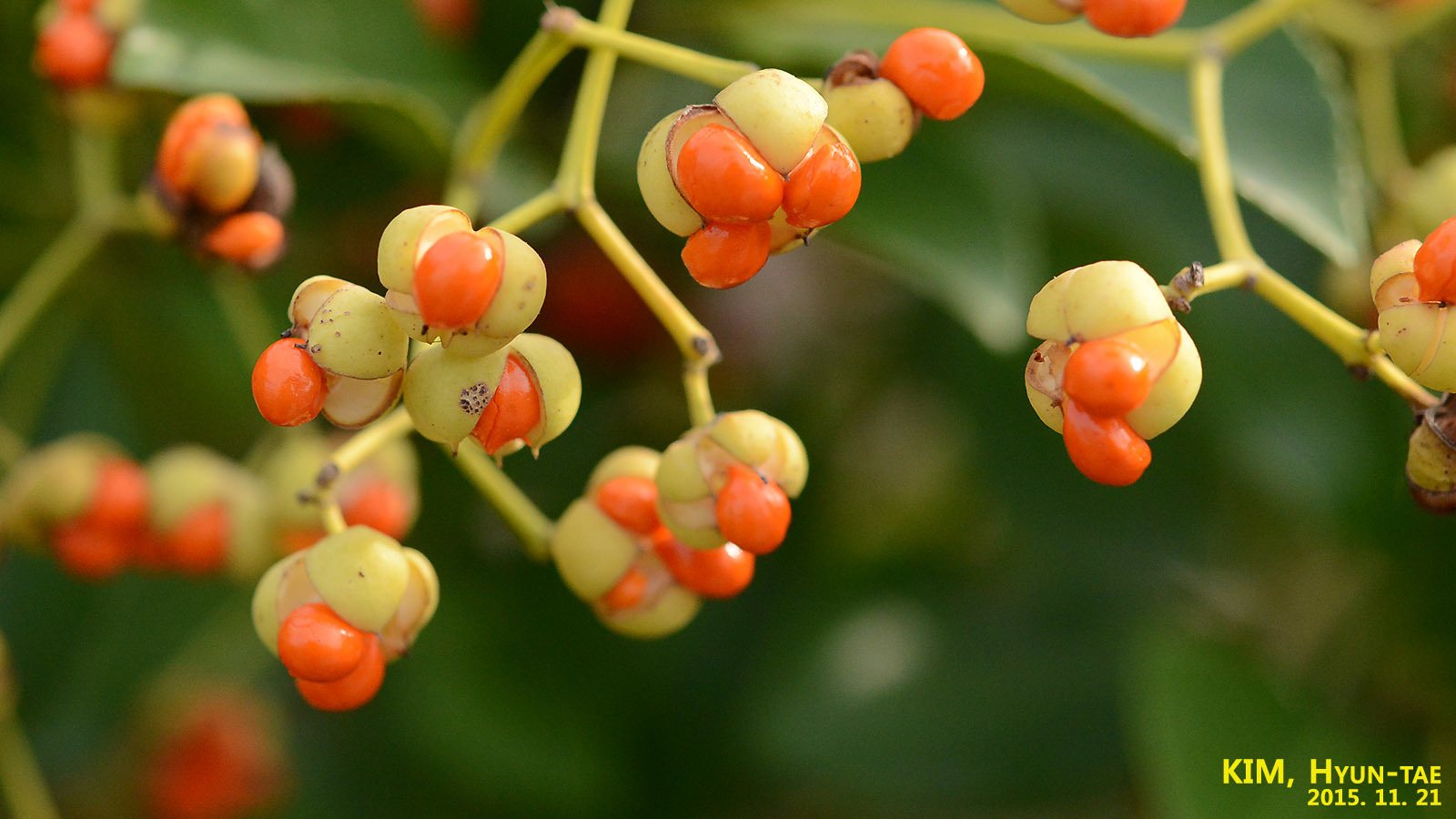
- Small, inconspicuous greenish-white flowers in early summer; occasional pinkish fruits open to reveal orange-coated seeds.
- Foliage
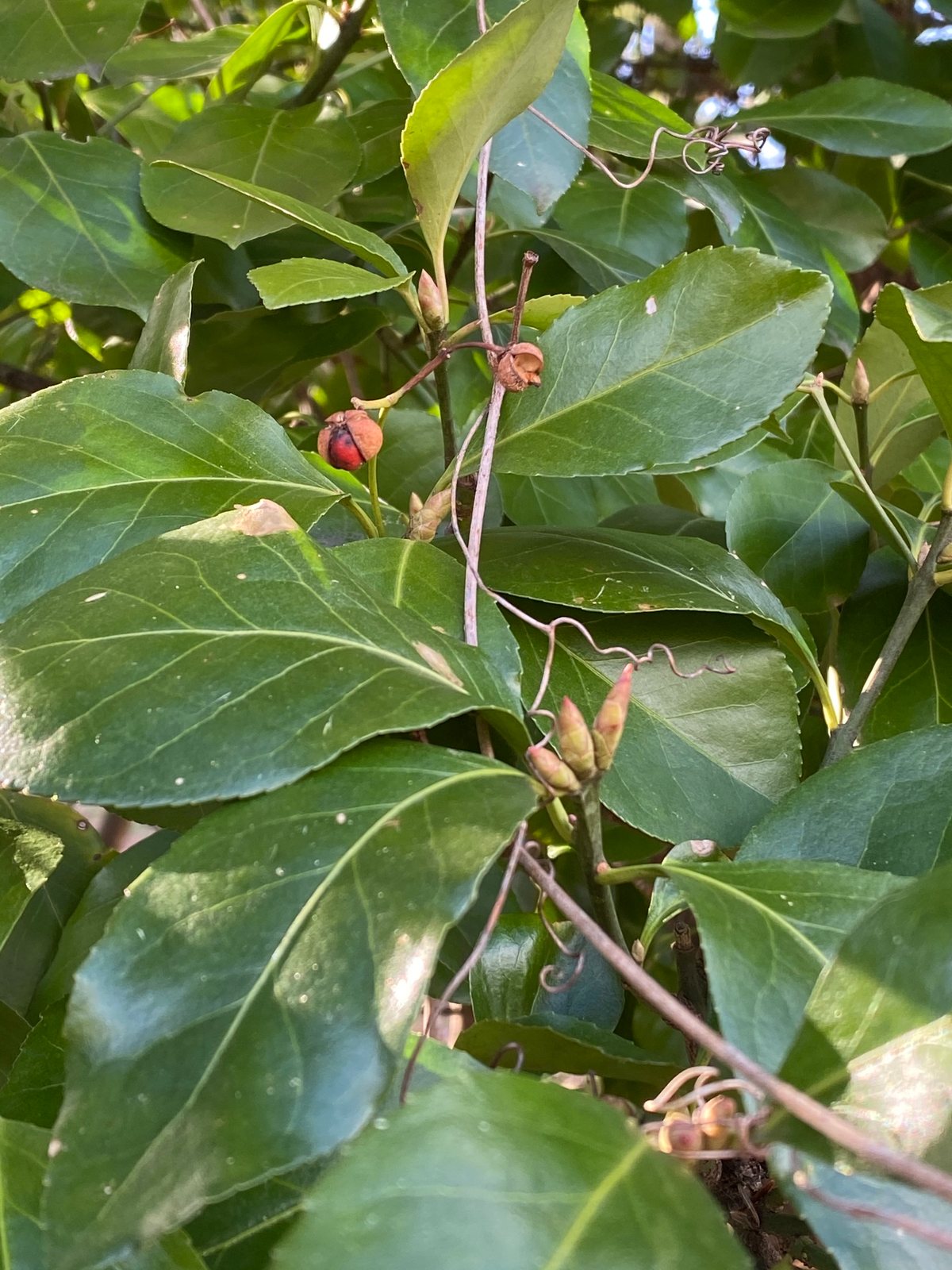
- Evergreen. Opposite, leathery, glossy dark green leaves with finely toothed margins. Cultivars may have cream, white or yellow markings.
- Growth
- Moderate
- Care needed
- Medium
The year at a glance
- Pollinators
- Drought tolerant
- Heat tolerant
- Wildlife
- Low allergen
| J | F | M | A | M | J | J | A | S | O | N | D | |
|---|---|---|---|---|---|---|---|---|---|---|---|---|
| Flowers | ||||||||||||
| Fruit | ||||||||||||
| Plant |
Northern hemisphere months. In Australia, shift them by six.
- Difficulty
- Moderate
- Toughness
- Fairly tough
Will it suit your garden?
Pick your zone, country, light and whether you have pets.
Full sun is 6 or more hours of direct sun a day, part shade 3 to 6 hours, shade under 3.
How it grows
Planting day
1.6 ft (0.5 m)
After 1 year
4 ft (1.2 m)
After 2 years
6 ft (1.8 m)
After 3 years
8 ft (2.5 m)
After 5 years
12 ft (3.8 m)
full size
About 5 years to full size.
From a typical nursery size, at an average rate for this kind of plant. A rule of thumb, not a forecast.
Good to know
- Cats and dogs
- Toxic
- Invasive in
- Australia
- Growth rate
- Moderate
Care
Jobs through the year
- WaterApr–May, Sep–Oct, every 14 days
- Water established shrubs only during dry spells; new plants need regular watering through their first growing season.
- WaterJun–Aug, every 14 days
- Give established shrubs a deep soak during prolonged drought, allowing the surface to dry between waterings.
- MulchMar–Apr
- Maintain 5–8 cm of organic mulch over the root zone, keeping it away from stems.
- FeedApr
- Feed lightly only if growth is weak or soil is poor.
- PruneApr–May
- After severe frost risk passes, remove damaged growth and shorten stems to shape.
- PruneJun–Jul
- Lightly clip hedges if needed and remove fully green reversions from variegated plants at their origin.
- ProtectMay–Aug, every 14 days
- Inspect stems and leaf undersides for scale; treat confirmed infestations at the crawler stage with an approved product.
- ProtectJan–Feb, Nov–Dec
- Shelter exposed plants from cold drying winds, particularly near the colder end of their hardiness range.
- Water deeply through the first growing season, allowing the surface soil to dry slightly between waterings.
- Apply 2-3 in (5-8 cm) of organic mulch, keeping it clear of the stems.
- Feed lightly in spring only if growth is weak or the soil is poor; avoid heavy nitrogen feeding.
- Inspect leaf undersides and stems regularly for scale insects, especially on crowded hedges.
- Remove fully green shoots from variegated plants at their point of origin.
Pruning. Prune in spring after the risk of severe frost has passed, removing dead or damaged growth and shortening stems to shape. Clip hedges lightly again in early to midsummer if needed, keeping the base wider than the top and avoiding late-season hard pruning.
Through the year
- Spring
- Plant when the soil is workable, water thoroughly and mulch around the root zone.
- Mid-spring
- Remove winter-damaged growth and prune established shrubs to shape.
- Late spring
- Check stems and leaf undersides for scale; treat crawler stages with a locally approved product if needed.
- Early summer
- Lightly clip hedges and remove green reversions from variegated plants.
- Summer
- Water during prolonged dry weather and check dense growth for mildew and scale.
- Autumn
- Plant in mild regions, clear fallen diseased leaves and avoid pruning that encourages soft new growth.
- Winter
- Check exposed plants for wind scorch and water container plants during frost-free dry spells.
In the garden
- Clip into evergreen boundary hedges or screens where year-round privacy is needed.
- Use compact cultivars as low edging around formal beds and paths.
- Place variegated forms against dark fencing or green foliage to create contrast.
- Grow compact forms in large, well-drained containers beside entrances.
- Combine with coastal shrubs and ornamental grasses for a wind-tolerant planting.
Garden styles it suits: Formal, Topiary garden, Coastal, Urban city garden, Japanese and Winter interest.
Plant it with: Japanese pittosporum, New Zealand flax, Lilyturf, Japanese sedge, Shrub roses and Lavender.
Wildlife: The small flowers attract visiting insects, and birds may eat the orange-coated seeds and disperse them. Dense foliage provides shelter, but this is not a native wildlife shrub in the United States, United Kingdom, Canada or Australia.
Problems to watch for
- Euonymus scale causes yellow spotting, leaf loss and crusty white or brown insects on stems and leaves. Prune out badly infested growth and target newly hatched crawlers with horticultural oil or another locally approved treatment; follow label precautions.
- Powdery mildew produces white patches on leaves, especially in crowded growth. Thin congested stems, improve airflow and avoid excessive nitrogen feeding.
- Root rot and decline follow prolonged waterlogging. Improve drainage or move the plant; do not keep the root zone constantly wet.
- Winter wind scorch browns exposed leaves. Choose a sheltered site, mulch the root zone and wait until spring to assess damaged stems before pruning.
Safety
Toxic if eaten by people, cats, dogs and horses. All parts should be treated as poisonous, especially the fruits and seeds. Ingestion can cause vomiting, diarrhoea and abdominal pain; substantial amounts may cause more serious poisoning. Seek medical or veterinary advice after ingestion.
Where it spreads. Reported as an environmental weed in parts of New South Wales and Victoria, Australia, where escaped plants can establish in bushland. Check local weed guidance before planting near natural vegetation.
Easily confused with
Wintercreeper (Euonymus fortunei)
Usually creeps across the ground or climbs using aerial roots, whereas Japanese euonymus normally forms a self-supporting upright shrub.
Japanese pittosporum (Pittosporum tobira)
Has smooth-edged leaves clustered toward shoot tips and conspicuous, fragrant creamy-white flowers; Japanese euonymus has opposite leaves with finely toothed edges.
Japanese holly (Ilex crenata)
Has alternate rather than opposite leaves and produces black berries. Its leaves are generally smaller and more rounded.
The name
The species name japonicus means 'Japanese', referring to Japan within its native East Asian range.
Propagation. Take semi-ripe cuttings in late summer and root them in a free-draining medium under humid conditions. Cuttings preserve cultivar markings; seedlings may differ from the parent.
Checked against open data
- Accepted botanical name
- Euonymus japonicus
- In the US and Canada
- Introduced in the lower 48 states.
- Native range
- Japan, Korea and Nansei-shoto.
- Measured
- Soil pH 5 to 7.5. Average height 475 cm.
Sources: GBIF (CC BY 4.0), USDA PLANTS and Trefle (CC BY 4.0). The care and design notes are LandscapeGPT's own.
See it in your own yard.
Upload a photo of your yard and see it redesigned with plants that suit your climate, each checked against your zone.