Japanese hydrangea vine
Schizophragma hydrangeoides. Family Hydrangeaceae. Climber.
Also called Japanese climbing hydrangea, Hydrangea vine.
A deciduous, self-clinging woody climber grown for its broad leaves and flat clusters of creamy-white summer flowers, edged with conspicuous white bracts. It suits sheltered walls and woodland gardens, but needs several years to establish and can eventually cover a substantial structure.
At a glance
- Sun
- Partial shade is ideal. Tolerates full shade with fewer flowers, or more sun where summers are cool and the soil stays moist; protect from hot afternoon sun.
- Water
- Keep evenly moist, especially during establishment and summer dry spells. Established plants tolerate brief dry periods but perform poorly in persistently dry soil.
- Soil
- Humus-rich, moist but well-drained soil, preferably slightly acidic to neutral. Avoid waterlogged ground and shallow, dry soil beside foundations.
- Height
- 20-40 ft (6-12 m)
- Spread
- 6-12 ft (1.8-3.6 m)
- Flowers
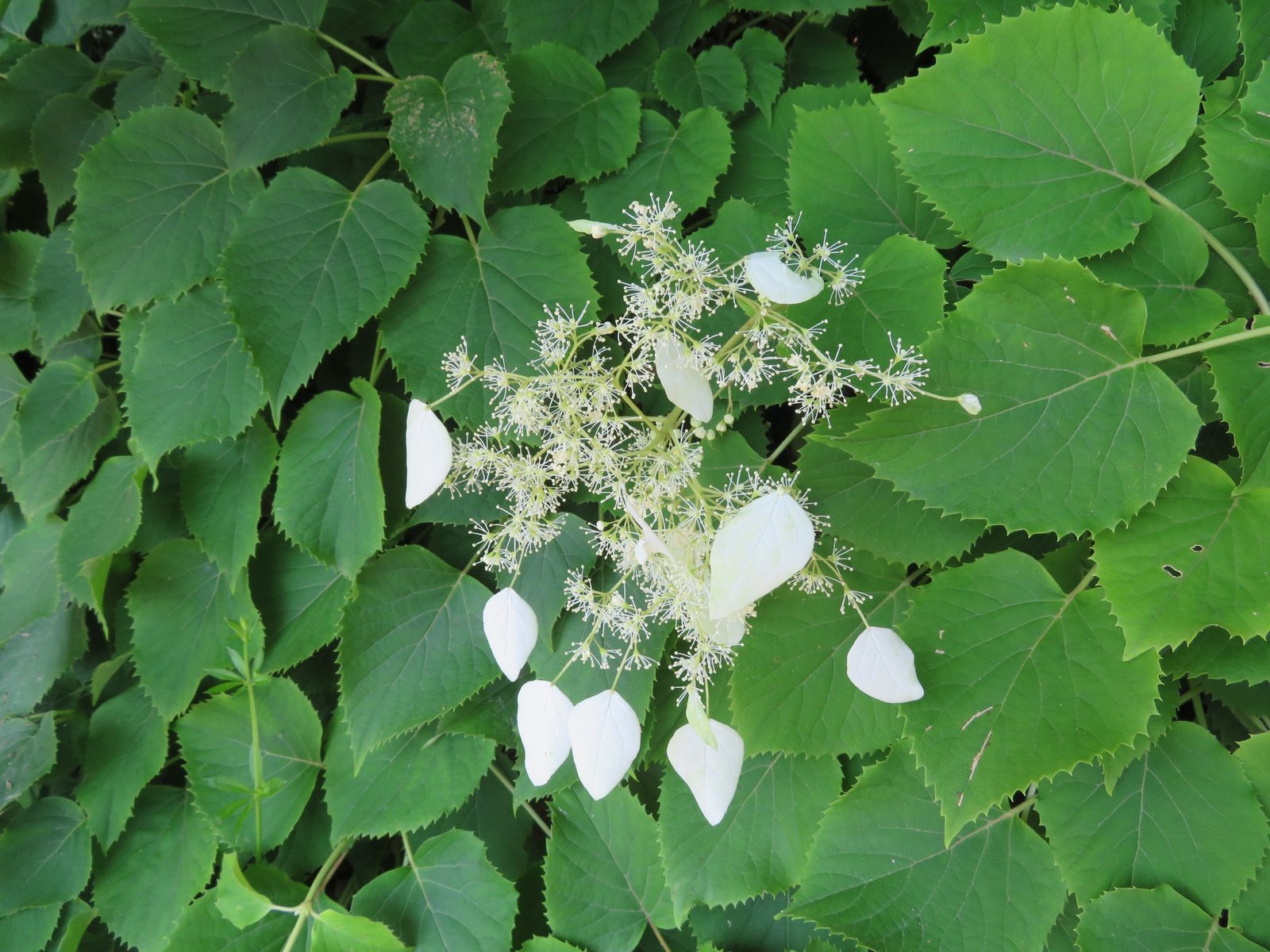
- Early to midsummer; flat clusters of tiny creamy-white flowers surrounded by showy, single white bracts.
- Foliage
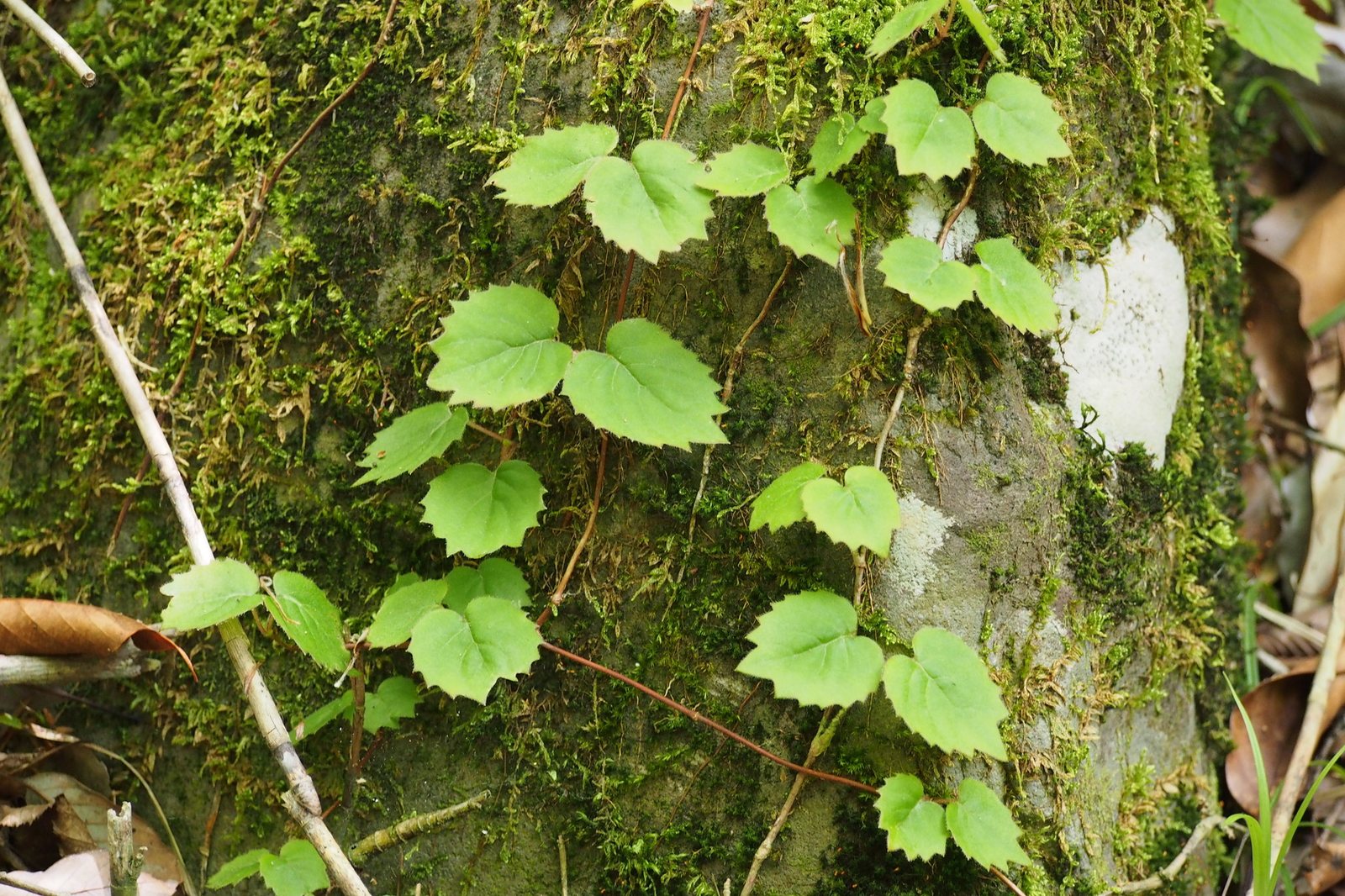
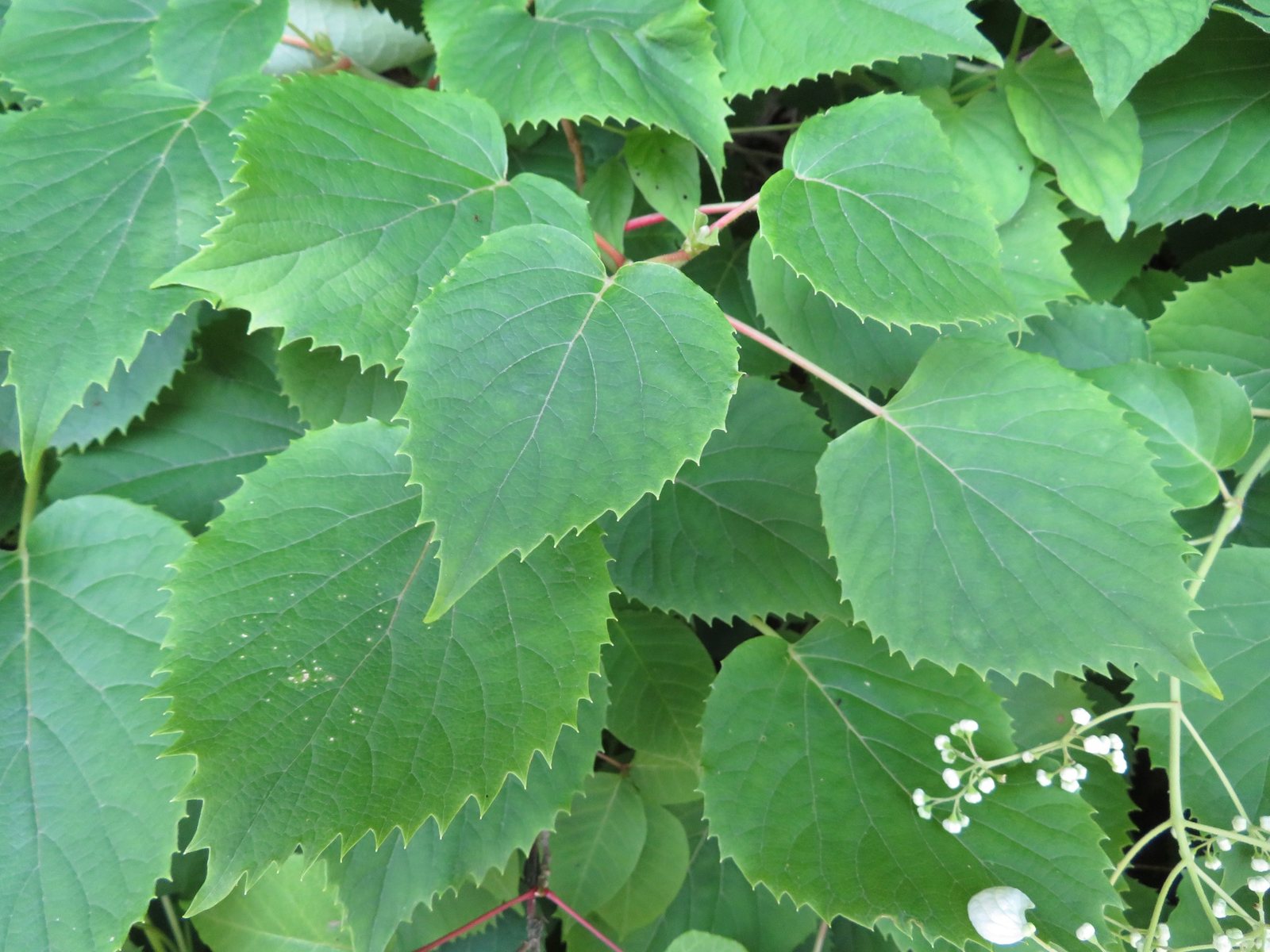
- Broad, pointed, toothed green leaves on reddish-brown stems; leaves often turn yellow in autumn before falling.
- Growth
- Slow during its first few years, then moderate once established.
- Care needed
- Medium
The year at a glance
- Pollinators
- Heat tolerant
- Wildlife
- Low allergen
| J | F | M | A | M | J | J | A | S | O | N | D | |
|---|---|---|---|---|---|---|---|---|---|---|---|---|
| Flowers | ||||||||||||
| Plant |
Northern hemisphere months. In Australia, shift them by six.
- Difficulty
- Moderate
- Toughness
- Fairly tough
Will it suit your garden?
Pick your zone, country, light and whether you have pets.
Full sun is 6 or more hours of direct sun a day, part shade 3 to 6 hours, shade under 3.
How it grows
Planting day
2 ft (0.6 m)
After 1 year
2.7 ft (0.83 m)
After 2 years
3 ft (1.1 m)
After 3 years
4 ft (1.3 m)
After 5 years
6 ft (1.8 m)
About 5 years to full size.
From a typical nursery size, at an average rate for this kind of plant. A rule of thumb, not a forecast.
Good to know
- Cats and dogs
- Safe
- Growth rate
- Slow
Care
Jobs through the year
- WaterApr–May, Sep–Oct, every 10 days
- Water established plants if soil is drying; check young plants more often for their first three years.
- WaterJun–Aug, every 7 days
- Water the whole root area deeply during dry weather, keeping soil moist but not saturated.
- MulchMar–Apr
- Apply 5–8 cm of leaf mould or compost, keeping the stem base clear.
- FeedApr
- Apply balanced fertilizer only if growth is weak; avoid heavy nitrogen feeding.
- PruneFeb–Mar
- Remove dead or damaged stems and avoid heavy pruning.
- PruneJul–Aug
- Immediately after flowering, lightly shorten unwanted shoots and clear gutters and windows.
- ProtectApr–Jun
- Tie young stems to a secure support until rootlets attach, leaving ties loose.
- Water deeply during dry weather for the first two or three growing seasons, keeping the root zone moist rather than saturated.
- Apply a 2-3 in (5-8 cm) mulch of leaf mould or compost each spring, leaving the stem base clear.
- Plant away from the driest strip beneath roof overhangs, and water the planting area rather than just the stem base.
- Tie young shoots to a sturdy support until their aerial rootlets attach; use sound masonry or a substantial trellis, not damaged mortar or painted timber.
- If growth is weak, apply a balanced fertiliser in spring at the label rate; avoid heavy feeding with nitrogen.
Pruning. Prune lightly just after flowering to shorten shoots that have outgrown their space, keeping growth clear of gutters and windows. Remove dead or damaged stems in late winter; heavy pruning can reduce subsequent flowering.
Through the year
- Late winter
- Check supports and ties, and remove dead or damaged stems.
- Spring
- Plant when the ground is workable, water thoroughly, and mulch the root area.
- Late spring
- Guide new shoots onto their support and check moisture beside walls.
- Summer
- Water deeply during dry spells, particularly while the plant is establishing.
- After flowering
- Shorten unwanted shoots and clear growth from roofs, gutters and openings.
- Autumn
- Plant in mild regions while the soil is still warm, and water if autumn is dry.
In the garden
- Cover a sturdy wall in partial shade with leafy growth and white summer flowers.
- Train over a substantial pergola or arbour where the flowering side shoots can hang freely.
- Use as a vertical backdrop to hostas, ferns and other woodland perennials.
- Grow against dark brick or timber on a separate trellis to make the white bracts stand out.
Garden styles it suits: Woodland, Japanese, English country, Romantic rose garden, White garden and Secret garden.
Plant it with: Hostas, Japanese painted ferns, Astilbes, Hellebores, Japanese forest grass and Rhododendrons.
Wildlife: The small fertile flowers attract visiting bees and other insects. Mature growth can provide shelter and nesting cover for birds.
Problems to watch for
- Little growth or few flowers in the early years: establishment is naturally slow; maintain moisture and avoid repeated moving or hard pruning.
- Scorched leaves or wilting: improve watering, mulch the roots and protect from strong afternoon sun and drying wind.
- Yellow leaves and weak growth in wet ground: check drainage and reduce watering; roots need moisture but not standing water.
- Shoots fail to attach or pull away: tie young stems to a secure framework and check that the supporting surface is sound.
Safety
Not known to be toxic to people, cats, dogs or horses, although species-specific poisoning information is limited. No particular plant part is established as hazardous; it is ornamental, not an edible plant.
Easily confused with
Climbing hydrangea (Hydrangea anomala subsp. petiolaris)
Its showy sterile flowers usually have four broad sepals forming small flower-like units; Japanese hydrangea vine has a single conspicuous, teardrop-shaped white bract beside each outer sterile flower.
The name
Schizophragma comes from Greek words meaning 'split partition', referring to the fruit capsule, while hydrangeoides means 'resembling a hydrangea'.
Propagation. Layer a low, flexible stem in spring and leave it attached until well rooted, often until the following year. Softwood cuttings in early summer or semi-ripe cuttings later in summer can also be rooted.
Checked against open data
- Accepted botanical name
- Hydrangea hydrangeoides Schizophragma hydrangeoides is an older name for Hydrangea hydrangeoides.
- Native range
- Japan, Korea and Kuril Is..
- Measured
- Average height 700 cm.
Sources: GBIF (CC BY 4.0) and Trefle (CC BY 4.0). The care and design notes are LandscapeGPT's own.
See it in your own yard.
Upload a photo of your yard and see it redesigned with plants that suit your climate, each checked against your zone.