Japanese kerria
Kerria japonica. Family Rosaceae. Shrub.
Also called Japanese rose, Easter rose.
Japanese kerria is a deciduous, suckering shrub with arching green stems and yellow spring flowers. Gardeners grow it to brighten lightly shaded borders and woodland edges, while its green stems provide winter interest. It needs room to spread or regular removal of unwanted suckers.
At a glance
- Sun
- Partial shade is ideal. Tolerates deeper shade with fewer flowers; strong afternoon sun can bleach the flowers, especially in hot climates.
- Water
- Water regularly during establishment. Once established, water during prolonged dry spells; avoid persistently wet soil.
- Soil
- Well-drained soil with moderate moisture; tolerates clay, loam and sandy soil, and a broad range of soil pH.
- Height
- 3-8 ft (0.9-2.4 m)
- Spread
- 6-9 ft (1.8-2.7 m), potentially wider through suckering
- Flowers
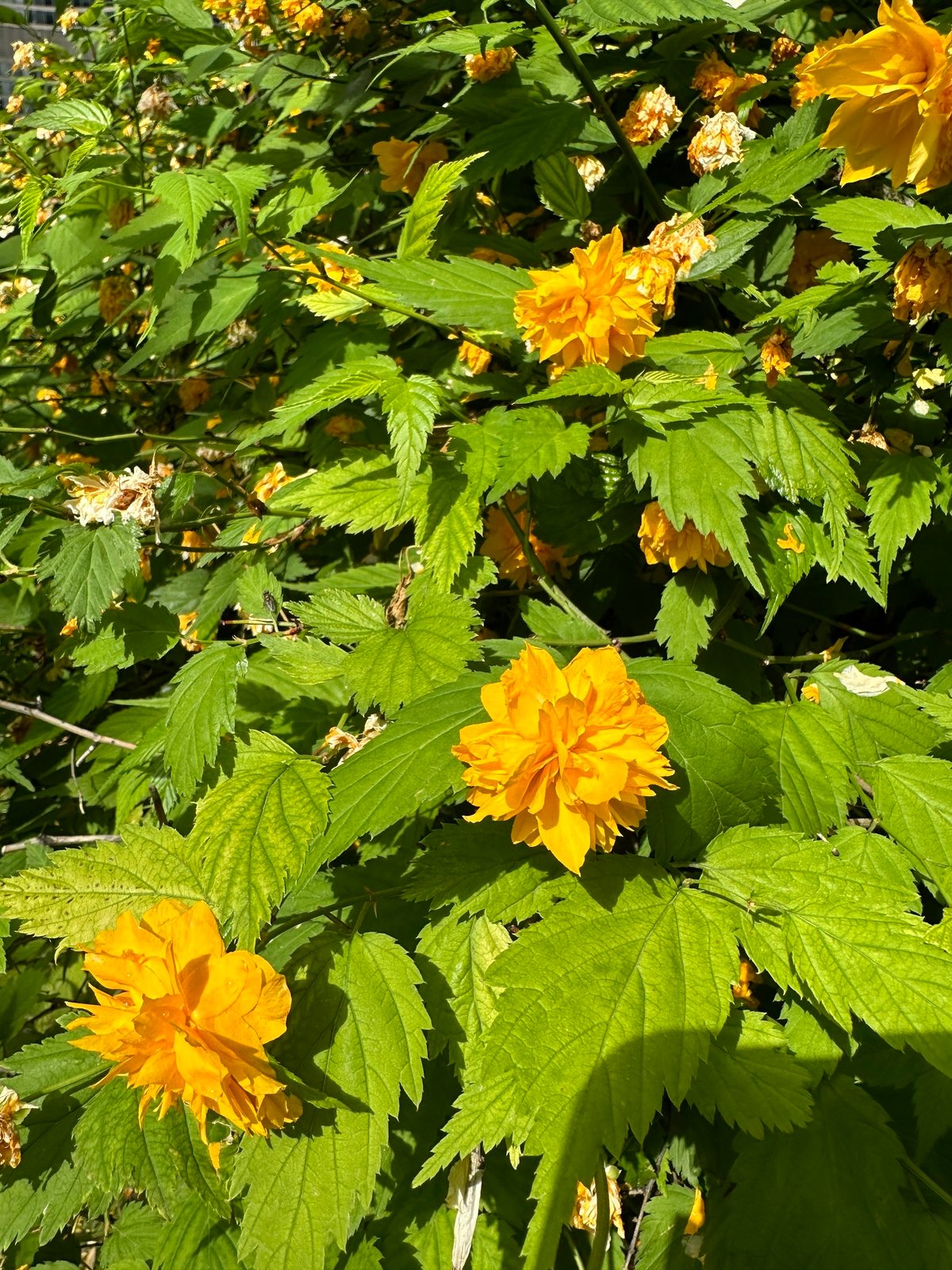
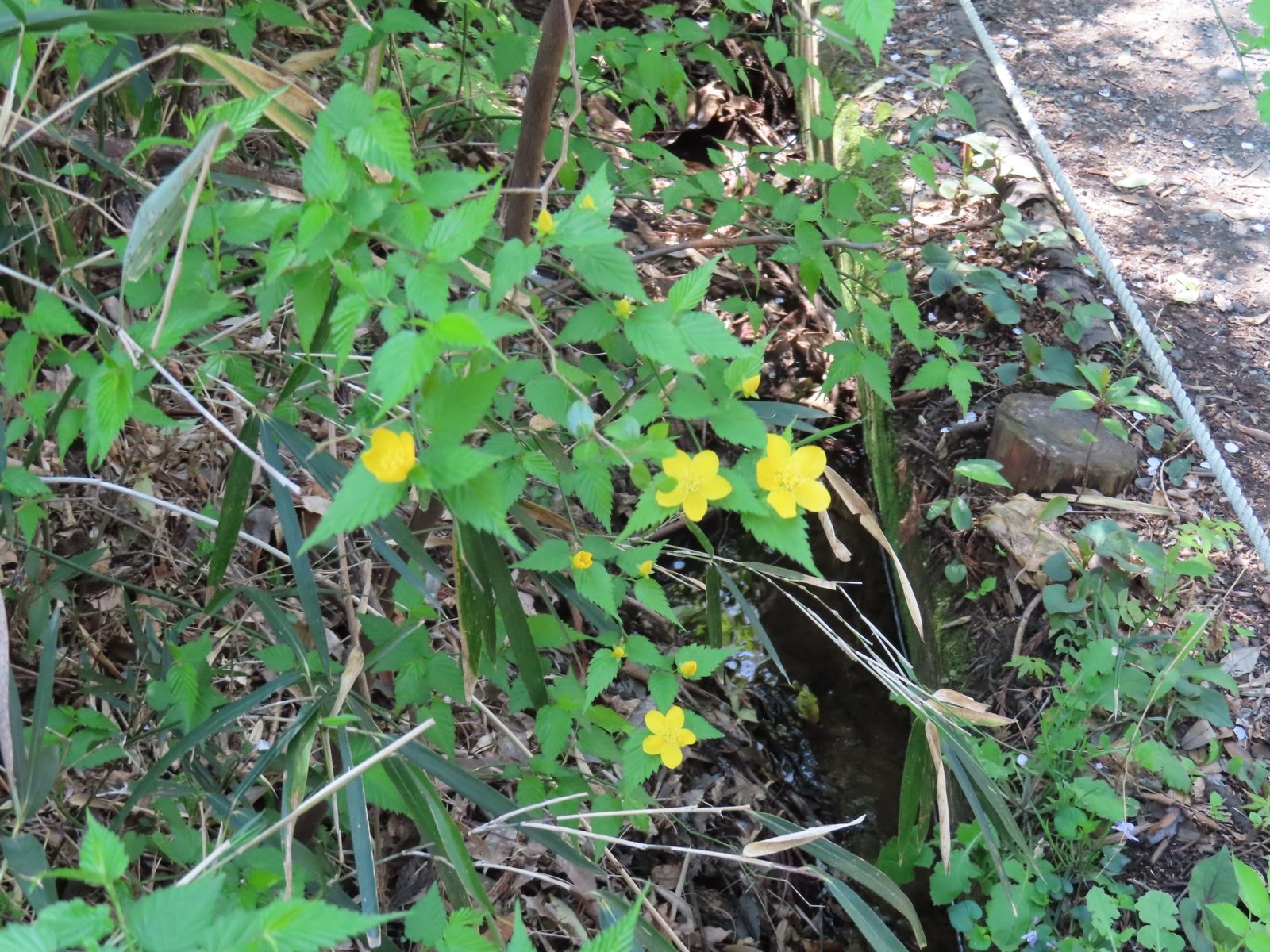
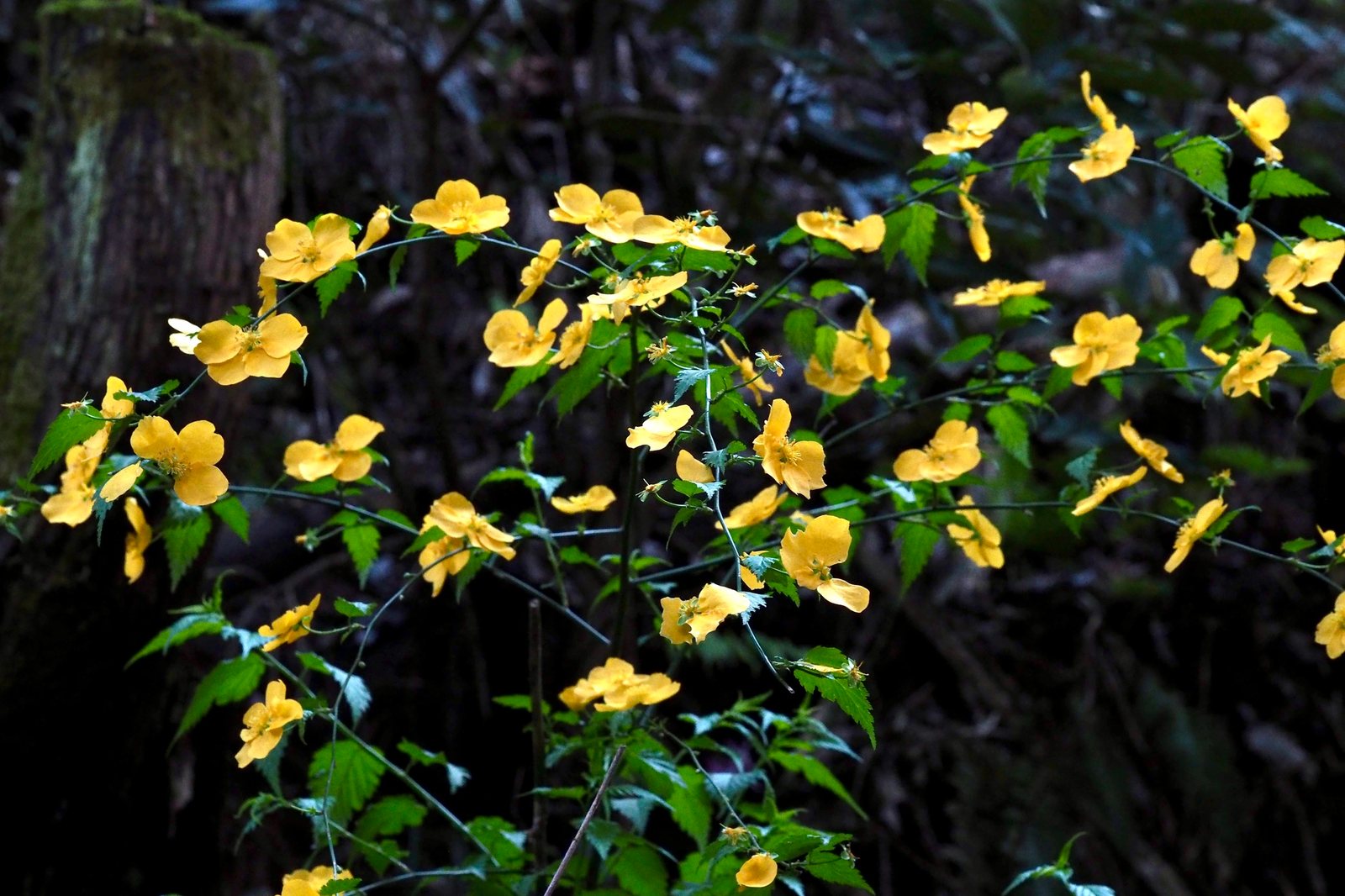
- Bright yellow flowers in mid- to late spring, sometimes followed by scattered summer flowers. The species has single, five-petalled flowers; 'Pleniflora' has double, pompom-like flowers.
- Foliage
- Bright green, pointed leaves with sharply toothed edges and prominent veins; autumn colour is usually pale yellow.
- Growth
- Fast
- Care needed
- Medium
The year at a glance
- Pollinators
- Cold hardy
- Wildlife
- Low allergen
| J | F | M | A | M | J | J | A | S | O | N | D | |
|---|---|---|---|---|---|---|---|---|---|---|---|---|
| Flowers | ||||||||||||
| Plant |
Northern hemisphere months. In Australia, shift them by six.
- Difficulty
- Moderate
- Toughness
- Fairly tough
Will it suit your garden?
Pick your zone, country, light and whether you have pets.
Full sun is 6 or more hours of direct sun a day, part shade 3 to 6 hours, shade under 3.
How it grows
Planting day
1.6 ft (0.5 m)
After 1 year
2.8 ft (0.85 m)
After 2 years
4 ft (1.2 m)
After 3 years
5 ft (1.6 m)
After 5 years
5 ft (1.7 m)
full size
About 3 years to full size.
From a typical nursery size, at an average rate for this kind of plant. A rule of thumb, not a forecast.
Good to know
- Cats and dogs
- Toxic
- In the garden
- Spreads vigorously: plan to contain it.
- Growth rate
- Fast
Care
Jobs through the year
- WaterApr–May, Sep–Oct, every 14 days
- Water established shrubs only if soil is dry; water new plants more often.
- WaterJun–Aug, every 10 days
- Water deeply during prolonged dry spells; avoid saturated soil.
- FeedMar
- Top-dress with a thin layer of compost; avoid heavy feeding.
- MulchMar–Apr
- Refresh organic mulch, keeping it clear of stem bases.
- PruneMay–Jun
- Immediately after flowering, remove one-third of the oldest stems at ground level.
- PruneApr–Sep, every 30 days
- Remove unwanted suckers and cut out diseased stems promptly; disinfect tools.
- Water deeply during dry weather in the first growing season.
- Apply a thin layer of compost in spring; routine heavy feeding is unnecessary.
- Mulch the root area, keeping mulch clear of the stem bases.
- Remove unwanted suckers at their point of origin before they form a thicket.
- Choose a site sheltered from hot afternoon sun to preserve flower colour.
Pruning. Immediately after flowering, cut about one-third of the oldest stems to ground level and shorten flowered shoots only where needed. Remove dead or diseased stems promptly; avoid routine winter trimming, which removes spring flower buds.
Through the year
- Early spring
- Apply compost and refresh mulch without burying the stem bases.
- Spring
- Check emerging leaves and stems for spotting or dieback; remove affected growth promptly.
- Late spring
- After flowering, remove older stems at ground level to encourage fresh green canes.
- Summer
- Water during prolonged drought and remove suckers spreading beyond the allotted space.
- Autumn
- Plant or transplant while the soil is moist and workable; water thoroughly.
- Winter
- Remove broken stems, but leave healthy canes intact for spring flowering.
In the garden
- Plant along a lightly shaded woodland edge, with ferns and hellebores beneath its arching stems.
- Use in an informal mixed shrub border for an early yellow-flowered accent.
- Train loosely against a shaded wall or fence, allowing space for outward-arching shoots.
- Place where the green winter stems can be seen against a dark fence or evergreen backdrop.
Garden styles it suits: Woodland, Cottage garden, Japanese, English country, Traditional and Winter interest.
Plant it with: Hellebores, Hostas, Japanese painted ferns, Epimediums, Snowdrops and Brunnera.
Wildlife: Single flowers are accessible to visiting insects; double-flowered forms offer less accessible forage. Dense stems can provide shelter for small birds, but this is not a native wildlife plant in the United States, United Kingdom, Canada or Australia.
Problems to watch for
- Kerria twig and leaf blight can cause leaf spots, stem lesions and extensive dieback. Cut out affected stems into healthy wood, collect fallen leaves and disinfect pruning tools; badly affected plants may need removal.
- Flowers fade or bleach in strong sun. Choose partial shade, especially protection from hot afternoon sun.
- Waterlogged soil can cause root decline and dieback. Improve drainage or move the shrub rather than watering repeatedly.
- Root suckers can overwhelm nearby plants. Remove them regularly, digging out their connecting roots where practical.
Safety
Seeds are reported to contain cyanogenic compounds and should not be eaten by people or animals. Specific poisoning information for cats, dogs and horses is limited, so seed ingestion should be treated as potentially serious and discussed promptly with a veterinarian or poison service. Toxicity of the other plant parts is not well established.
Where it spreads. Spreads vigorously by underground suckers and can form dense colonies. It has escaped cultivation in parts of the eastern United States and is naturalised in parts of the United Kingdom. Keep it away from natural woodland margins and check local invasive-plant guidance before planting.
Easily confused with
Forsythia (Forsythia species)
Forsythia usually flowers on bare stems and has opposite leaves and four-lobed yellow flowers. Kerria has alternate, sharply toothed leaves and five-petalled single flowers, or double flowers in some cultivars.
Black jetbead (Rhodotypos scandens)
Black jetbead has opposite leaves, white four-petalled flowers and conspicuous shiny black fruits. Kerria has alternate leaves and yellow flowers.
The name
Kerria honours the Scottish plant collector William Kerr, while japonica means 'of Japan'.
Propagation. Lift rooted suckers while dormant and replant promptly, or take softwood cuttings in early summer. Propagate named cultivars vegetatively to preserve their characteristics.
Checked against open data
- Accepted botanical name
- Kerria japonica
- In the US and Canada
- Introduced in Canada and the lower 48 states.
- Native range
- China North-Central, China South-Central, China Southeast, Japan and Korea.
- Measured
- Soil pH 5 to 6.8. Average height 200 cm.
Sources: GBIF (CC BY 4.0), USDA PLANTS and Trefle (CC BY 4.0). The care and design notes are LandscapeGPT's own.
See it in your own yard.
Upload a photo of your yard and see it redesigned with plants that suit your climate, each checked against your zone.