Japanese pagoda tree
Styphnolobium japonicum. Family Fabaceae. Tree.
Also called Scholar tree, Chinese scholar tree, Sophora japonica.
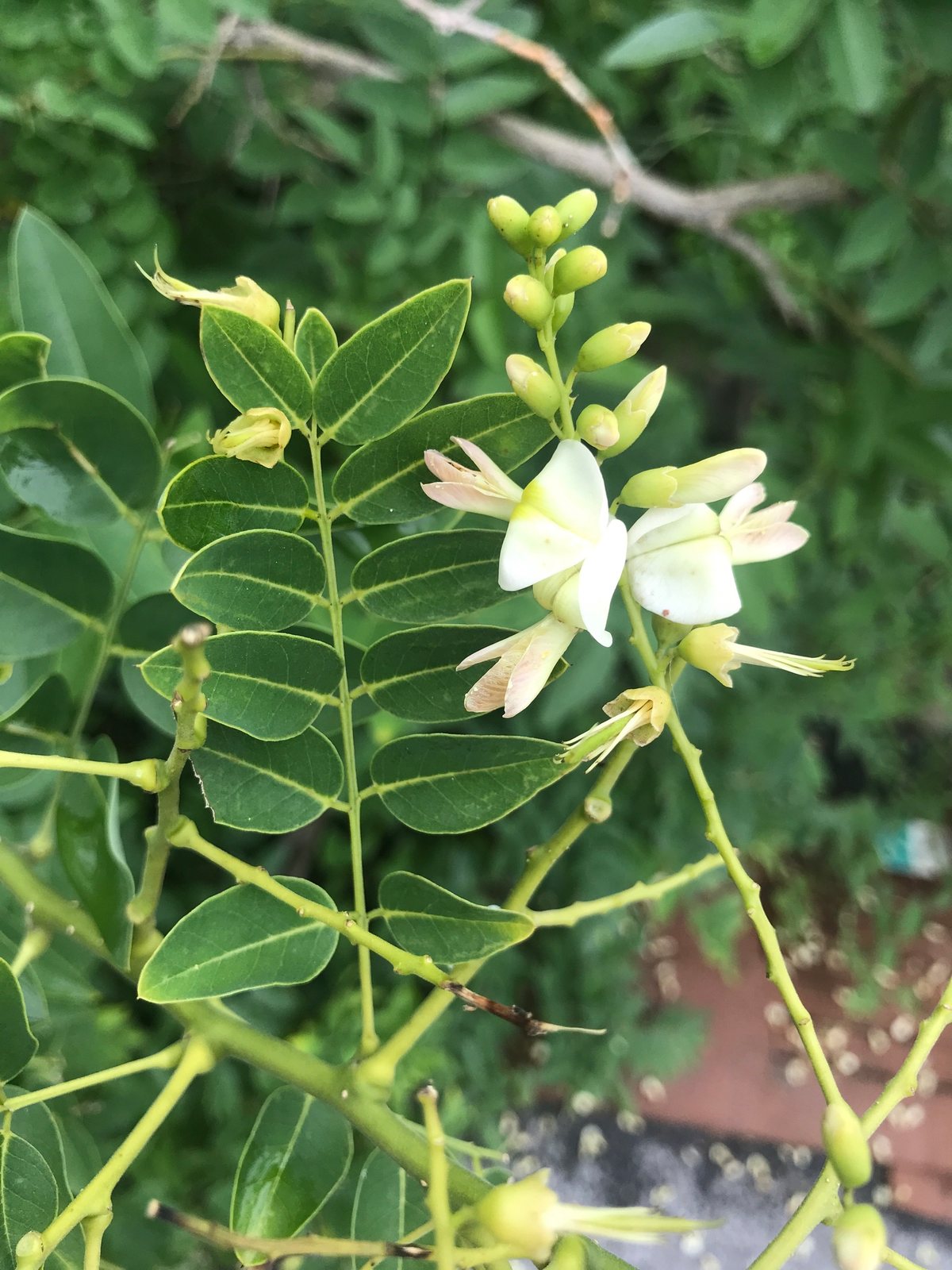
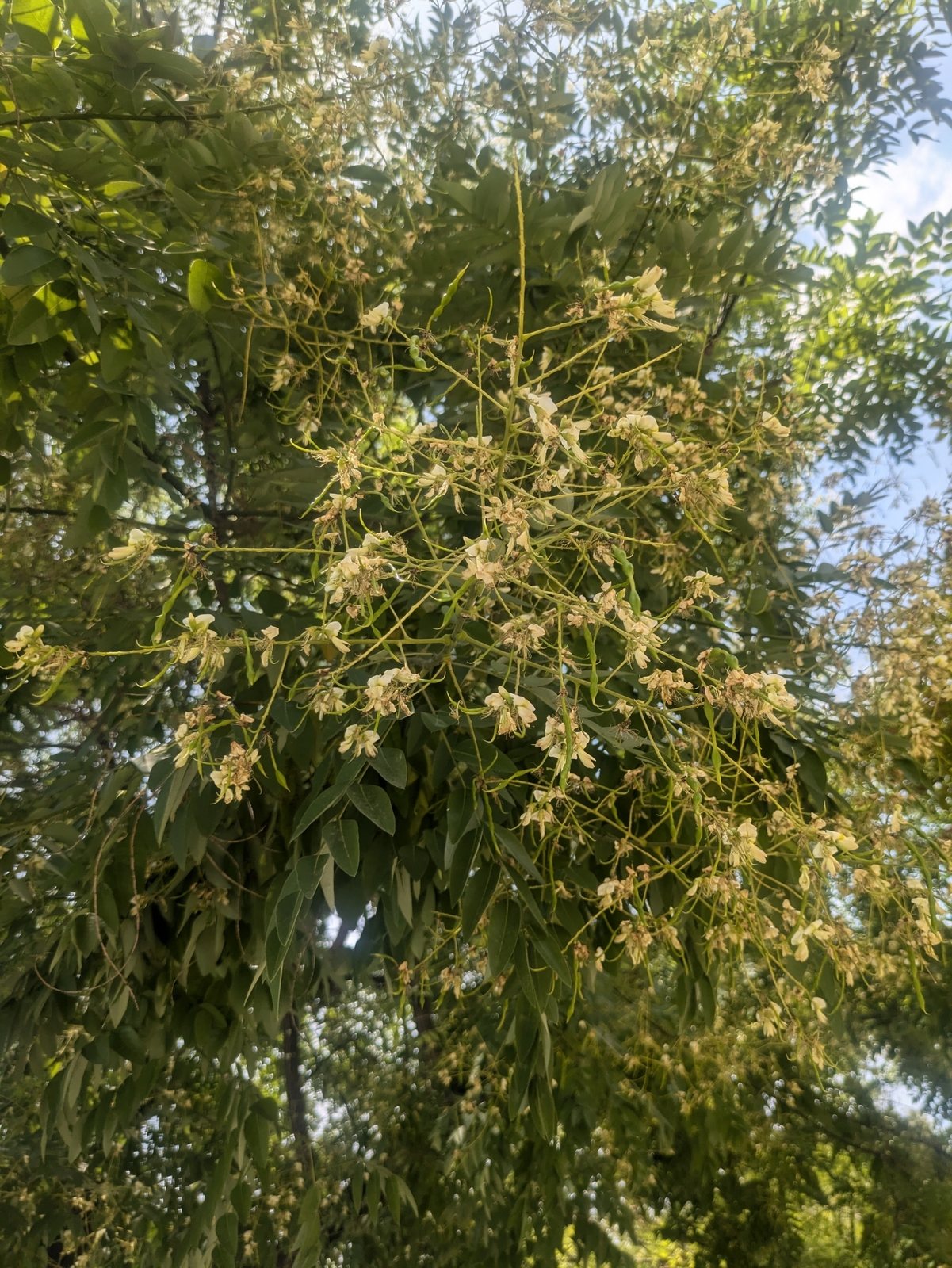
A large deciduous shade tree with a broad, rounded crown, fine-textured leaves and hanging clusters of creamy-white flowers in late summer. It suits spacious gardens and parks, tolerates urban conditions, and flowers best where summers are warm; seed-grown trees may take 10 years or more to bloom.
At a glance
- Sun
- Full sun; tolerates light shade but flowers less freely.
- Water
- Water regularly while establishing; established trees tolerate dry spells but benefit from deep watering during prolonged drought.
- Soil
- Well-drained soil, including clay, loam and sandy soil; tolerates alkaline conditions and moderately poor soil, but not persistent waterlogging.
- Height
- 50-75 ft (15-23 m)
- Spread
- 40-60 ft (12-18 m)
- Flowers
- Late summer to early autumn; branched, hanging clusters of small creamy-white, pea-shaped flowers. Flowering can be sparse in cool-summer areas.
- Foliage
- Pinnate leaves with oval, dark green leaflets; autumn colour is usually yellow-green to yellow and can be brief.
- Growth
- Moderate, sometimes faster when young on good soil.
- Care needed
- Medium
The year at a glance
- Pollinators
- Drought tolerant
- Wildlife
- Low allergen
| J | F | M | A | M | J | J | A | S | O | N | D | |
|---|---|---|---|---|---|---|---|---|---|---|---|---|
| Flowers | ||||||||||||
| Fruit | ||||||||||||
| Plant |
Northern hemisphere months. In Australia, shift them by six.
- Difficulty
- Moderate
- Toughness
- Very tough
Will it suit your garden?
Pick your zone, country, light and whether you have pets.
Full sun is 6 or more hours of direct sun a day, part shade 3 to 6 hours, shade under 3.
How it grows
Planting day
7 ft (2.3 m)
After 1 year
11 ft (3.3 m)
After 2 years
14 ft (4.4 m)
After 3 years
18 ft (5.4 m)
After 5 years
25 ft (7.5 m)
About 16 years to full size.
From a typical nursery size, at an average rate for this kind of plant. A rule of thumb, not a forecast.
Good to know
- Cats and dogs
- Toxic
- Growth rate
- Fast
Care
Jobs through the year
- WaterApr–May, Sep–Oct, every 21 days
- Deep-water established trees only during prolonged dry weather; water more often for the first two years.
- WaterJun–Aug, every 14 days
- In prolonged drought, soak the established root zone; young trees need more frequent watering.
- MulchMar–Apr
- Maintain 5–8 cm of organic mulch over the roots, keeping the trunk clear.
- PruneFeb–Mar
- Train young branches to a strong framework; on mature trees remove only defective growth and use an arborist for large limbs.
- Plant where the mature crown has room to spread, away from buildings and overhead wires.
- Water deeply through the first two growing seasons, allowing the soil surface to dry between waterings.
- Spread 2-3 in (5-8 cm) of organic mulch over the root area, keeping it clear of the trunk.
- Avoid routine high-nitrogen feeding; feed only if poor growth or a soil test indicates a need.
- Stake only if the root ball moves in wind, and remove ties once the tree is securely rooted.
- Keep fallen flowers and pods cleared from paths, where they can make a slippery mess.
Pruning. In late winter, train young trees to a sound framework with well-spaced branches and remove competing leaders or narrow, weak forks. Once established, remove only dead, damaged or crossing branches; use a qualified arborist for large limbs.
Through the year
- Autumn
- Plant while the soil is workable in mild climates; in cold regions, wait until spring.
- Late winter
- Check branch structure and carry out light formative pruning before new growth begins.
- Spring
- Plant in colder regions, refresh mulch and check that stakes and ties are not rubbing.
- Summer
- Deep-water young trees during dry weather and inspect leaves and shoots for pests.
- Late summer
- Enjoy the flowers and sweep fallen blooms from paving.
- Late autumn
- Clear fallen pods from paths and areas used by children or animals.
In the garden
- Use as a specimen in a large lawn, allowing its broad crown to develop without crowding.
- Plant for summer shade beside a spacious seating area, allowing for flower and pod litter.
- Combine with ornamental grasses and sun-loving perennials around the outer edge of the canopy.
- Use in large urban gardens or park-like settings where heat, alkaline soil and occasional drought limit less adaptable trees.
Garden styles it suits: Grand estate, Urban city garden, Traditional, Chinese scholar garden, Japanese and Pollinator garden.
Plant it with: Catmint, Russian sage, Switchgrass, Purple coneflower, Hardy geranium and Lilyturf.
Wildlife: Flowers provide late-season nectar and pollen for bees and other insects. The mature crown offers shelter and nesting sites for birds.
Problems to watch for
- Weak forks and branch breakage: train young trees early and have large or defective limbs assessed by an arborist.
- Cankers and twig dieback: prune affected growth back to healthy wood in dry weather, avoid trunk injuries and reduce drought stress.
- Aphids or scale insects: inspect shoots and leaf undersides; tolerate light infestations and use a labelled horticultural oil when treatment is necessary.
- Little or no flowering: young trees and trees in cool summers may flower poorly; provide full sun and avoid heavy nitrogen feeding.
Safety
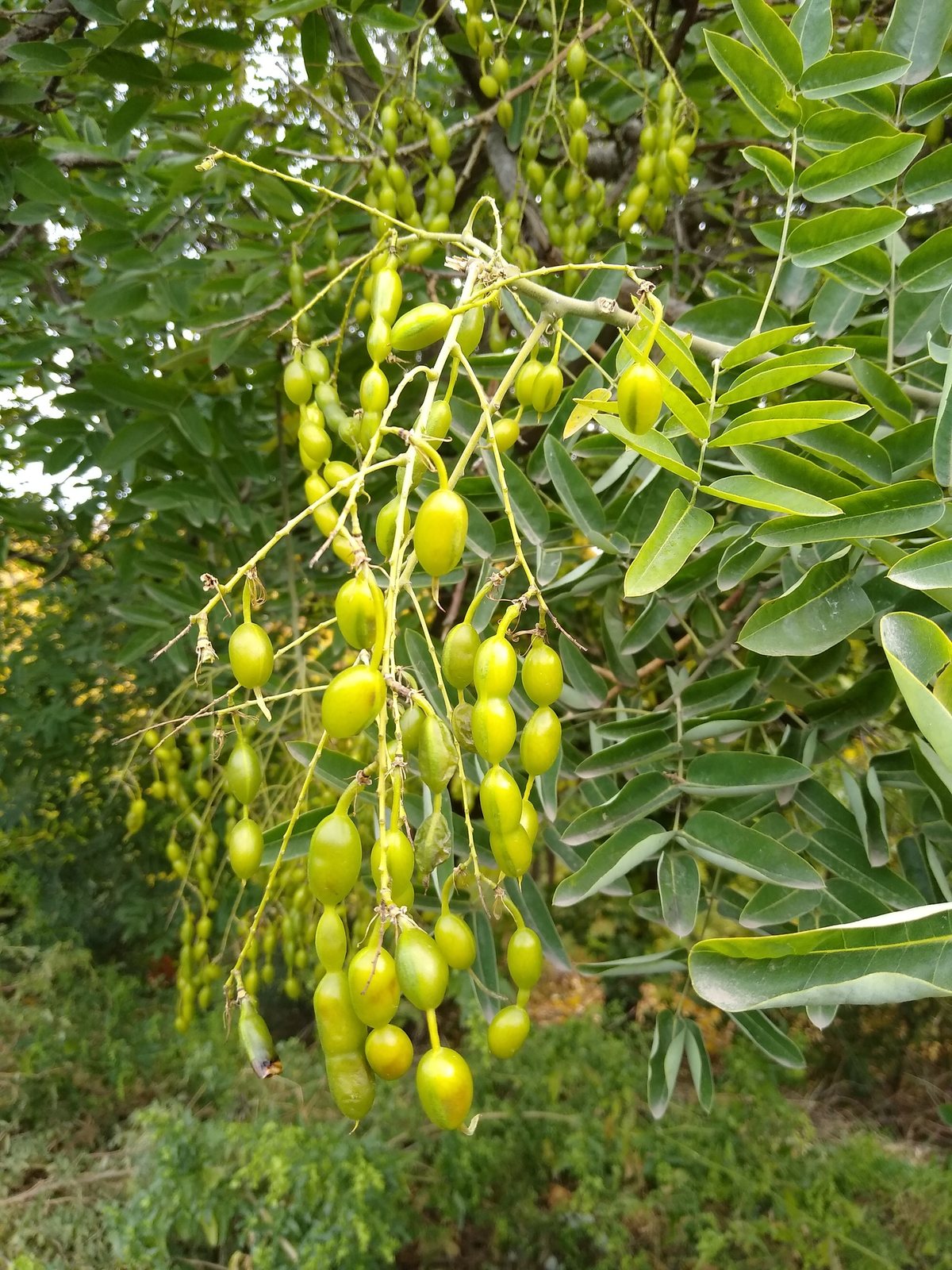
Seeds and pods are reported poisonous if eaten and should not be treated as edible. Keep them away from children, cats, dogs and horses; species-specific information on toxic doses is limited, so seek medical or veterinary advice after ingestion rather than assuming it is harmless.
Easily confused with
Black locust (Robinia pseudoacacia)
Black locust usually has paired thorns on young shoots, flowers in spring and produces flat pods. Japanese pagoda tree is thornless, flowers in late summer and has pods constricted between the seeds.
Honey locust (Gleditsia triacanthos)
Honey locust has smaller leaflets, sometimes twice-divided leaves, inconspicuous flowers and long, flat, often twisted pods; the species also bears large branched thorns.
Japanese wisteria (Wisteria floribunda)
Wisteria is a twining climber with long spring flower clusters and velvety pods, rather than a self-supporting tree with late-summer flowers and bead-like pods.
The name
The name japonicum refers to Japan, where the tree has long been cultivated despite its Chinese and Korean origins, while 'pagoda tree' reflects its traditional planting near temples.
Propagation. Grow the species from seed after carefully nicking the hard seed coat and soaking the seed before sowing. Seedlings vary and can take many years to flower; named cultivars are usually grafted.
Checked against open data
- Accepted botanical name
- Styphnolobium japonicum
- In the US and Canada
- Introduced in the lower 48 states.
- Native range
- China North-Central, China South-Central and China Southeast.
- Measured
- Soil pH 6.5 to 7. Average height 1800 cm.
Sources: GBIF (CC BY 4.0), USDA PLANTS and Trefle (CC BY 4.0). The care and design notes are LandscapeGPT's own.
See it in your own yard.
Upload a photo of your yard and see it redesigned with plants that suit your climate, each checked against your zone.