Japanese privet
Ligustrum japonicum. Family Oleaceae. Shrub.
Also called Wax-leaf privet, Japanese wax-leaf privet.
Japanese privet is a dense evergreen shrub or small tree grown for its glossy leaves and ability to take clipping into hedges, screens and simple topiary. Untrimmed plants produce creamy-white flowers followed by black berries. It can escape into natural areas, so check local invasive-plant guidance before planting.
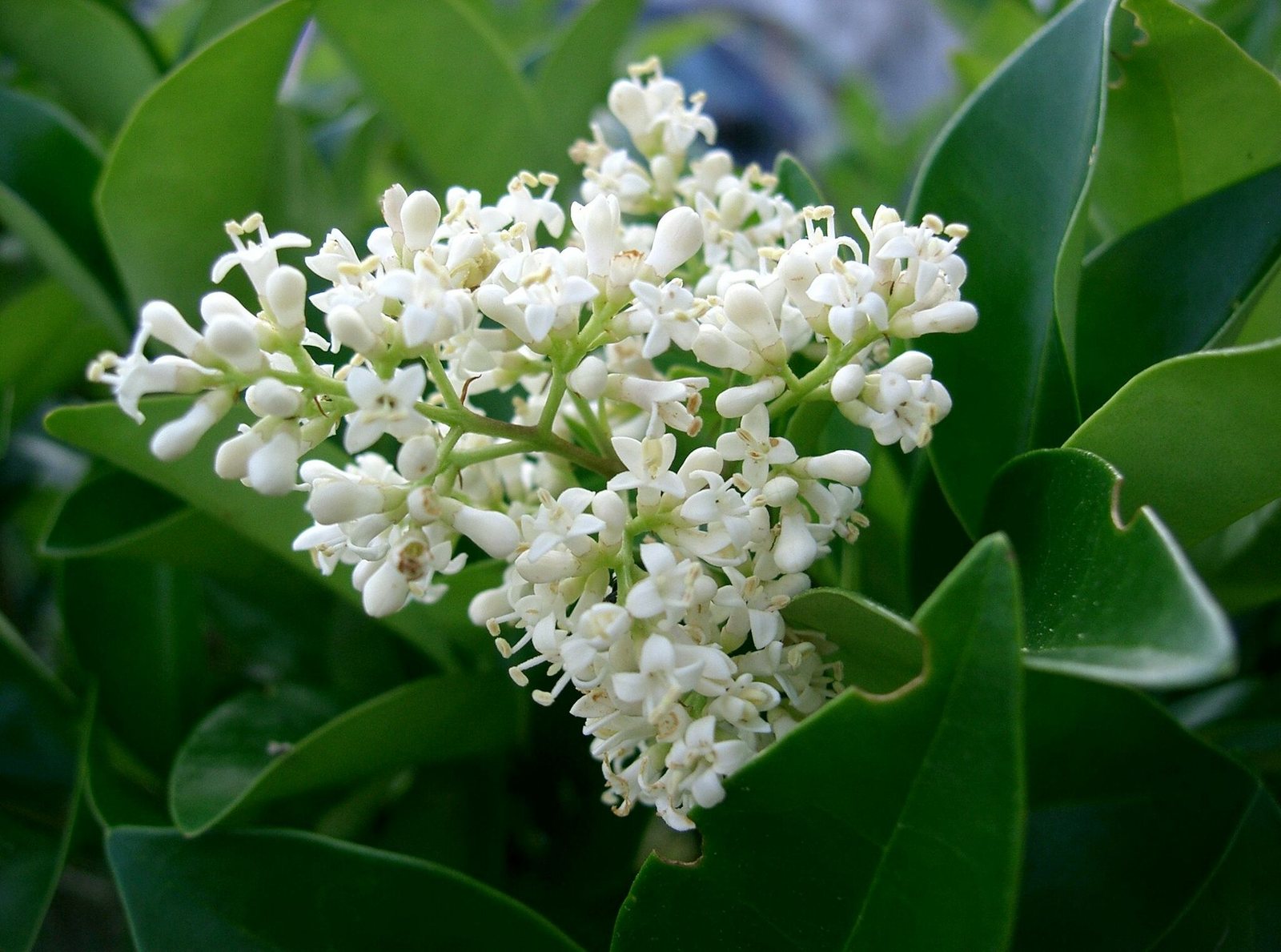
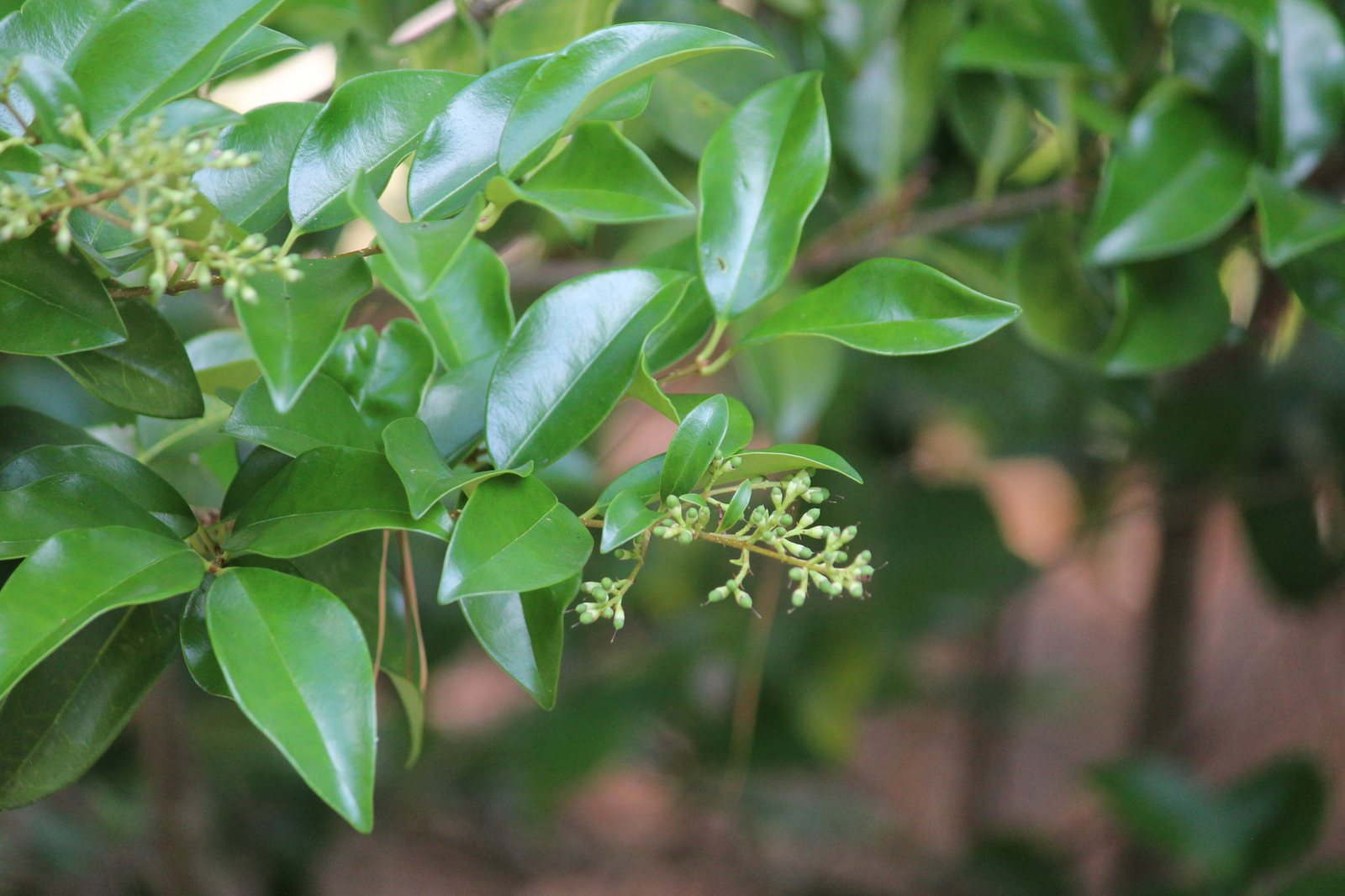
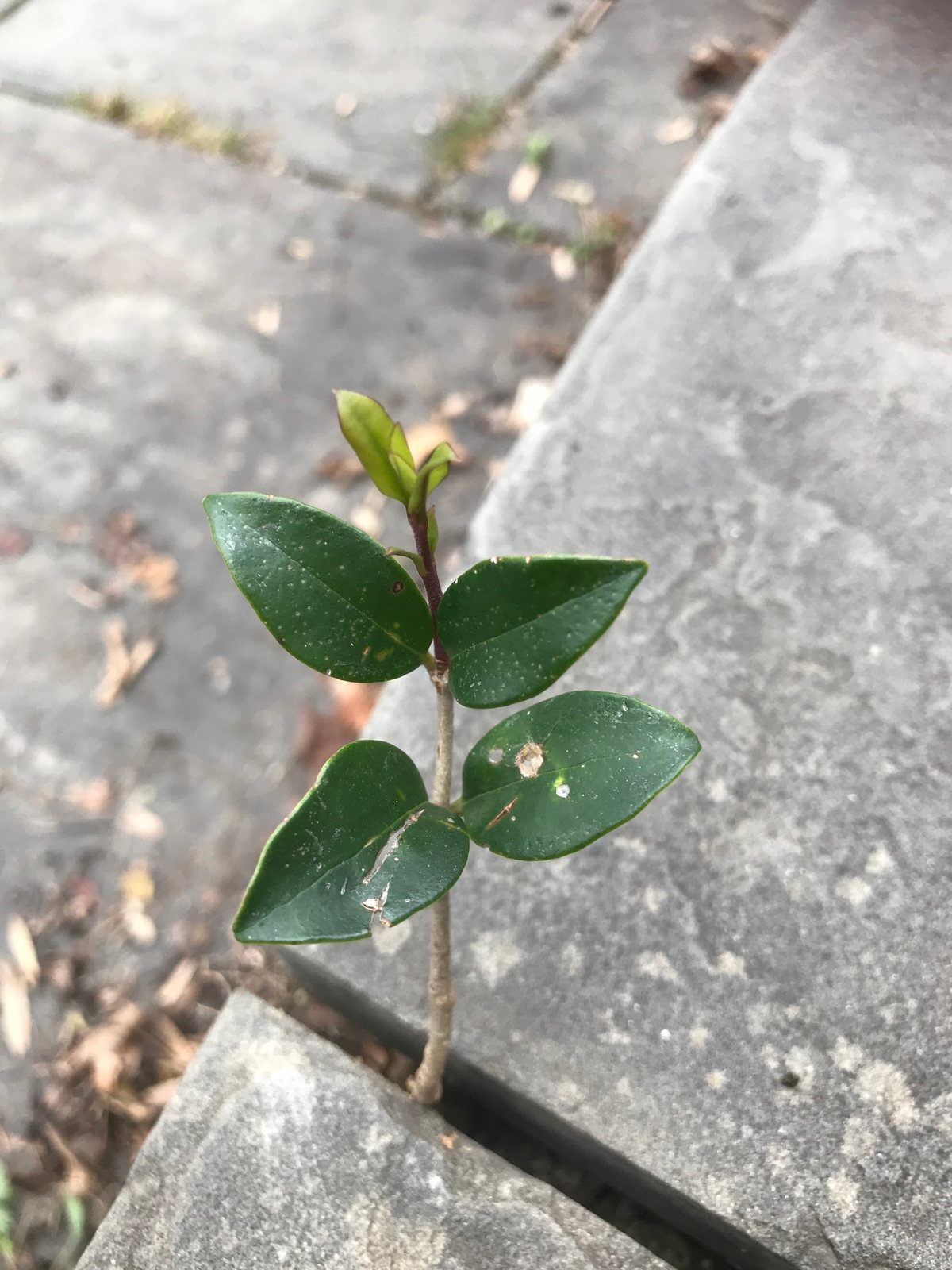
At a glance
- Sun
- Full sun to partial shade; dense growth and flowering are best with several hours of direct sun.
- Water
- Water regularly while establishing; established plants tolerate short dry spells but grow better with occasional deep watering during drought.
- Soil
- Most well-drained soils, including clay, sand and chalk; tolerates acidic to alkaline conditions but not prolonged waterlogging.
- Height
- 6-15 ft (1.8-4.6 m), occasionally taller if left unpruned
- Spread
- 6-10 ft (1.8-3 m)
- Flowers
- Late spring to early summer; upright clusters of small creamy-white flowers with a strong scent that some people find unpleasant.
- Foliage
- Evergreen. Opposite, thick, glossy dark-green leaves with smooth edges; paler beneath.
- Growth
- Moderate, becoming faster in warm conditions with adequate moisture.
- Care needed
- Medium
The year at a glance
- Pollinators
- Drought tolerant
- Heat tolerant
- Wildlife
- Fragrant
| J | F | M | A | M | J | J | A | S | O | N | D | |
|---|---|---|---|---|---|---|---|---|---|---|---|---|
| Flowers | ||||||||||||
| Fruit | ||||||||||||
| Plant |
Northern hemisphere months. In Australia, shift them by six.
- Difficulty
- Moderate
- Toughness
- Very tough
Will it suit your garden?
Pick your zone, country, light and whether you have pets.
Full sun is 6 or more hours of direct sun a day, part shade 3 to 6 hours, shade under 3.
How it grows
Planting day
1.6 ft (0.5 m)
After 1 year
4 ft (1.2 m)
After 2 years
6 ft (1.9 m)
After 3 years
8 ft (2.5 m)
After 5 years
10 ft (3.2 m)
full size
About 4 years to full size.
From a typical nursery size, at an average rate for this kind of plant. A rule of thumb, not a forecast.
Good to know
- Cats and dogs
- Toxic
- Invasive in
- the US and Australia
- Growth rate
- Fast
Care
Jobs through the year
- WaterApr–May, Sep–Oct, every 21 days
- Water established shrubs only if dry; young plants need more for two seasons.
- WaterJun–Aug, every 14 days
- Water deeply during drought, allowing the soil surface to dry between waterings.
- MulchApr
- Apply 5–8 cm of organic mulch, keeping it away from stems.
- FeedApr
- Feed lightly only if growth is weak or soil is poor.
- PruneFeb–Mar
- Thin congested growth and remove damaged wood outside freezing weather.
- PruneJun–Jul
- Clip hedges after the spring flush if needed; check for active bird nests.
- PruneAug–Sep
- Remove developing berry clusters where bird-dispersed seedlings could escape.
- ProtectApr, Oct
- Pull unwanted seedlings; avoid planting where this species is invasive.
- ProtectJan–Mar, Nov–Dec
- Shelter from cold, drying winds; not reliably hardy in zone 6.
- Water deeply during dry spells through the first two growing seasons, allowing the soil surface to dry between waterings.
- Apply 2-3 in (5-8 cm) of organic mulch over the root area, keeping it clear of the stems.
- Feed lightly in spring only if growth is weak or the soil is poor; avoid heavy nitrogen feeding.
- Allow enough room for the mature spread rather than relying on repeated severe clipping.
- Remove seedlings and cut off developing fruit where escape into nearby vegetation is a concern.
Pruning. Thin or reduce established shrubs in late winter or early spring, avoiding severe cuts during freezing weather. Clip hedges after the main spring growth flush and again in summer if needed, keeping the base wider than the top; check for nesting birds before cutting.
Through the year
- Late winter
- Remove dead or damaged branches and thin congested growth before new shoots develop.
- Spring
- Plant in prepared, well-drained soil, water thoroughly and mulch; use spring planting in colder parts of its range.
- Late spring
- Clip formal hedges after the first growth flush, checking for active bird nests first.
- Summer
- Water young plants during dry weather and inspect leaves and stems for scale insects.
- Late summer
- Remove developing berry clusters where self-seeding or bird dispersal is a concern.
- Autumn
- Pull unwanted seedlings and refresh mulch without piling it against the stems.
In the garden
- Clip into a dense boundary hedge where the species is not invasive.
- Use as a dark evergreen backdrop to hydrangeas and flowering perennials.
- Train into standards or simple rounded topiary for formal entrances and courtyards.
- Allow to grow as a small multistemmed tree where there is room for its spreading crown.
Garden styles it suits: Formal, Topiary garden, Traditional, Modern courtyard, Japanese and Green on green.
Plant it with: Camellia, Bigleaf hydrangea, Lilyturf, Cast-iron plant and Japanese anemone.
Wildlife: Flowers attract bees and other insects. Birds eat the berries and disperse the seeds; dense growth may provide nesting cover, but escaping plants can displace native vegetation.
Problems to watch for
- Scale insects: inspect stems and leaf undersides; prune heavily infested shoots and treat susceptible stages with horticultural oil according to the label.
- Leaf spots: remove fallen affected leaves, improve airflow and water at soil level rather than over the foliage.
- Root rot in wet soil: correct drainage and reduce watering; replace badly affected plants rather than replanting into the same waterlogged conditions.
- Winter scorch or dieback: shelter from cold, drying winds and wait until spring growth shows which branches are dead before pruning.
Safety
Toxic to people, cats, dogs and horses if eaten, particularly the leaves and berries. Ingestion can cause vomiting, diarrhoea and abdominal pain; substantial ingestion can be serious, especially in horses. Keep hedge clippings away from livestock and seek medical or veterinary advice after ingestion.
Where it spreads. Escapes cultivation and is listed as invasive in parts of the southeastern United States, including Florida. It is also naturalised in parts of eastern Australia, including New South Wales and Queensland. Birds spread its seeds into woodland and other vegetation; check local restrictions and choose a non-invasive alternative near natural areas.
Easily confused with
Glossy privet (Ligustrum lucidum)
Usually develops into a larger tree, with longer, more distinctly pointed leaves and larger flower clusters; Japanese privet generally has shorter, thicker leaves.
Chinese privet (Ligustrum sinense)
Has much smaller, thinner leaves and often noticeably hairy young twigs; Japanese privet has larger, leathery, glossy leaves.
Japanese mock orange (Pittosporum tobira)
Leaves are alternate and crowded near shoot tips rather than arranged in opposite pairs; its flowers smell of orange blossom and its capsules reveal sticky orange-red seeds.
The name
The epithet japonicum means 'of Japan', referring to part of the plant's native range.
Propagation. Take semi-ripe cuttings in summer and root them in a moist, free-draining medium under cover. Seed also germinates, but deliberate seed propagation is best avoided where the plant can escape.
Checked against open data
- Accepted botanical name
- Ligustrum japonicum
- In the US and Canada
- Introduced in the lower 48 states and Puerto Rico.
- Native range
- China Southeast, Japan, Korea, Nansei-shoto and Taiwan.
- Measured
- Soil pH 5.5 to 6.9. Average height 310 cm.
Sources: GBIF (CC BY 4.0), USDA PLANTS and Trefle (CC BY 4.0). The care and design notes are LandscapeGPT's own.
See it in your own yard.
Upload a photo of your yard and see it redesigned with plants that suit your climate, each checked against your zone.