Japanese snowbell
Styrax japonicus. Family Styracaceae. Tree.
Also called Japanese snowbell tree.
Japanese snowbell is a small deciduous tree with spreading branches and lightly fragrant, white bell-shaped flowers hanging beneath the leaves. Grow it where you can look up into the flowers, such as beside a terrace or woodland path. It needs reliable moisture and shelter from drying winds.
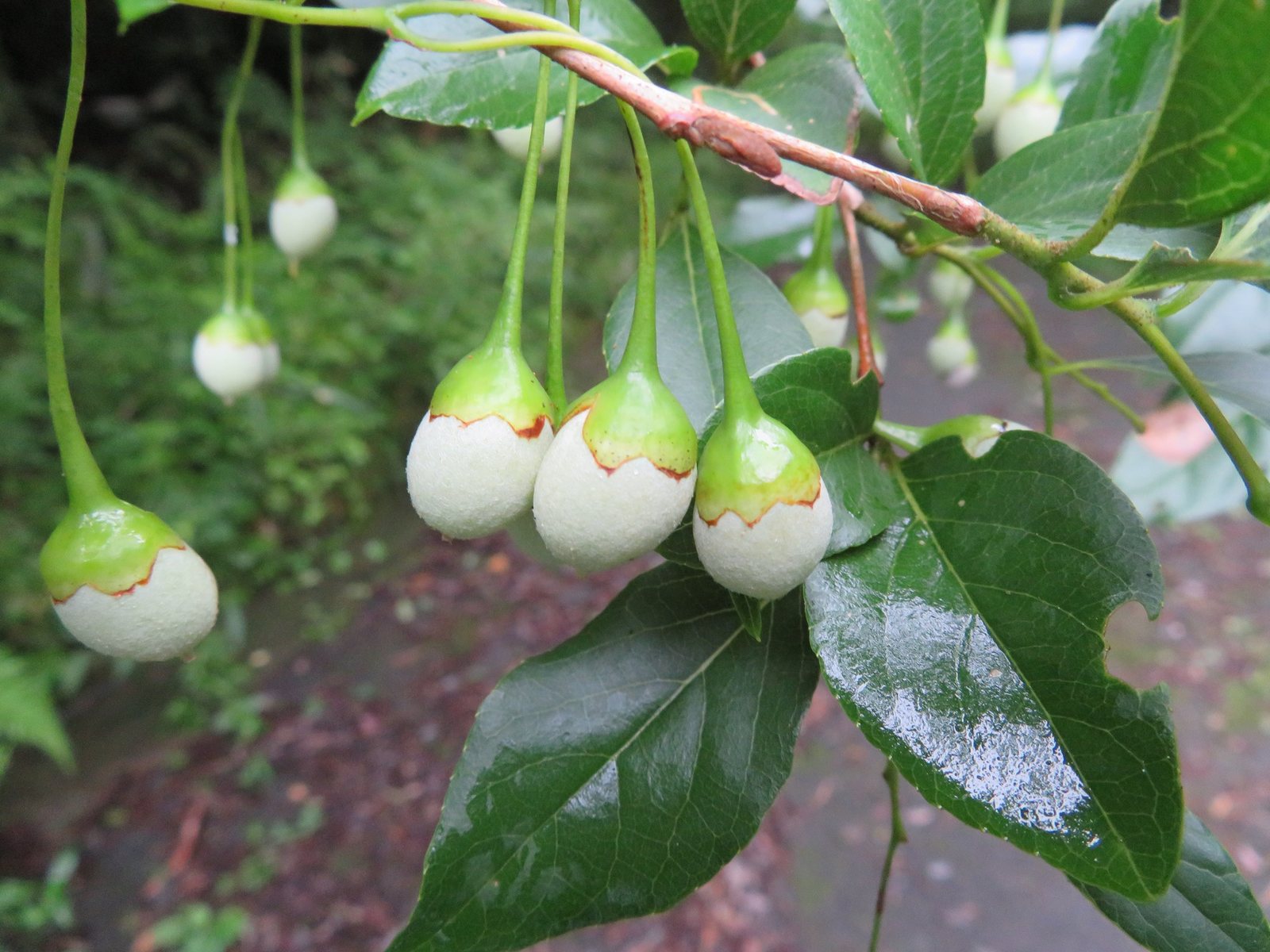
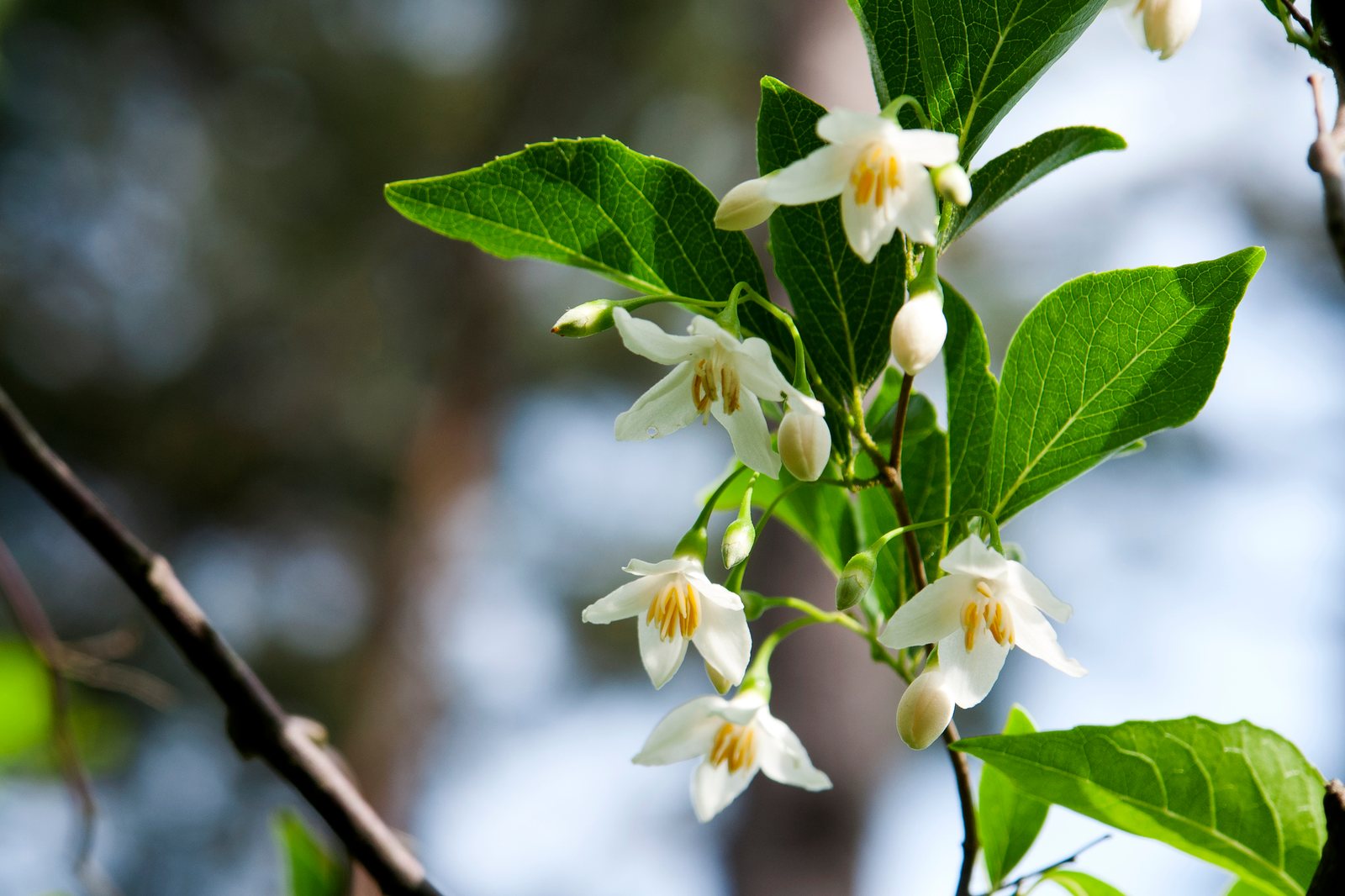
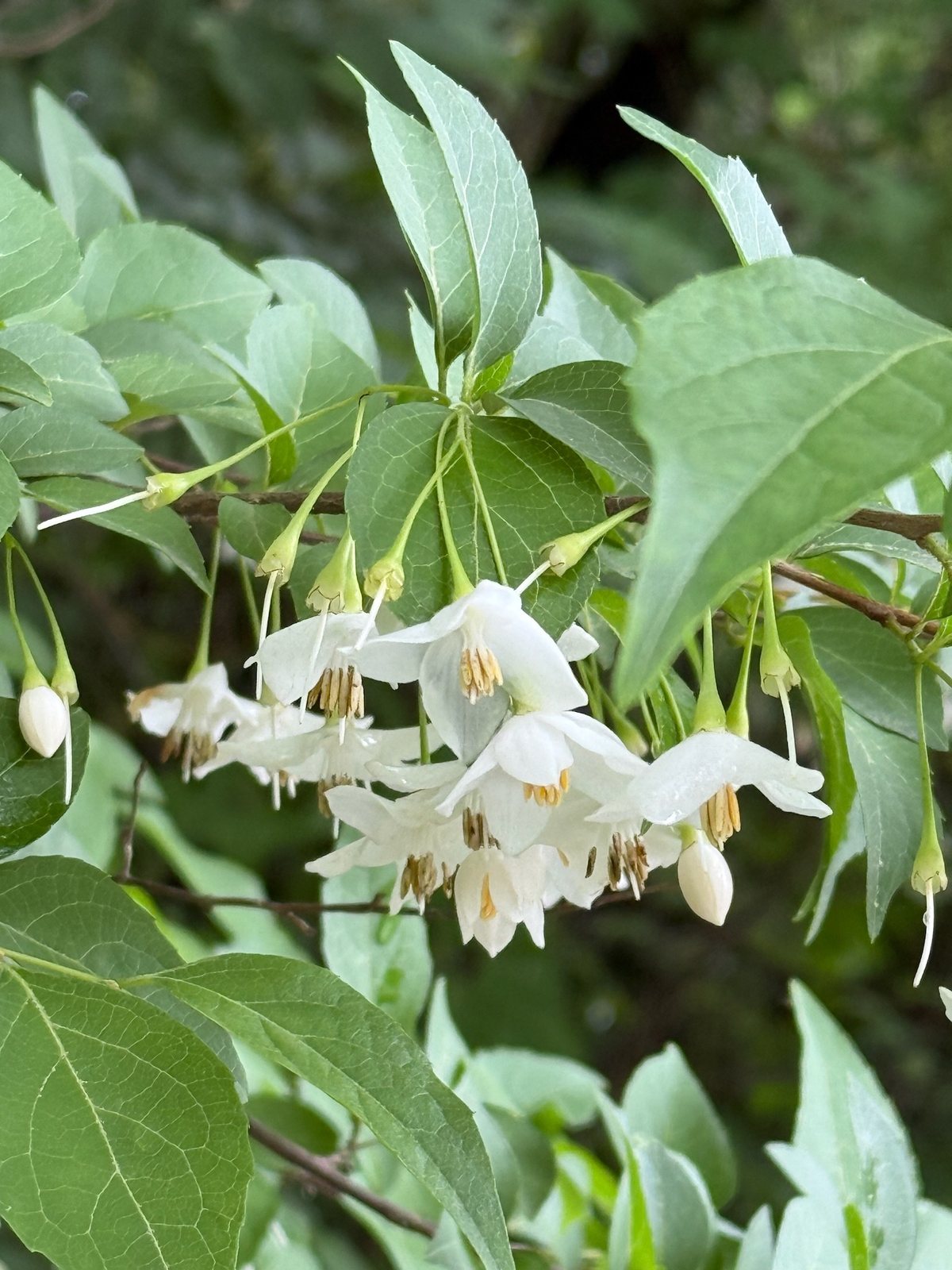
At a glance
- Sun
- Full sun to partial shade; afternoon shade is helpful in hot climates.
- Water
- Moderate; keep the root zone evenly moist but not waterlogged. Water established trees during prolonged dry spells.
- Soil
- Humus-rich, well-drained soil that retains moisture; acidic to neutral soil is best. Avoid chalky soil and poorly drained clay.
- Height
- 20-30 ft (6-9 m)
- Spread
- 20-30 ft (6-9 m)
- Flowers
- Late spring to early summer; white, nodding bells with yellow stamens. Usually May-June in the Northern Hemisphere and November-December in Australia, depending on climate.
- Foliage
- Small to medium, oval green leaves arranged above the hanging flowers; autumn colour is usually yellow but can be modest.
- Growth
- Slow to moderate
- Care needed
- Medium
The year at a glance
- Pollinators
- Wildlife
- Low allergen
- Fragrant
| J | F | M | A | M | J | J | A | S | O | N | D | |
|---|---|---|---|---|---|---|---|---|---|---|---|---|
| Flowers | ||||||||||||
| Fruit | ||||||||||||
| Plant |
Northern hemisphere months. In Australia, shift them by six.
- Difficulty
- Moderate
- Toughness
- Fairly tough
Will it suit your garden?
Pick your zone, country, light and whether you have pets.
Full sun is 6 or more hours of direct sun a day, part shade 3 to 6 hours, shade under 3.
How it grows
Planting day
7 ft (2 m)
After 1 year
7 ft (2.2 m)
After 2 years
8 ft (2.4 m)
After 3 years
9 ft (2.6 m)
After 5 years
10 ft (3.1 m)
About 26 years to full size.
From a typical nursery size, at an average rate for this kind of plant. A rule of thumb, not a forecast.
Good to know
- Cats and dogs
- Mildly toxic: may upset a stomach
- Growth rate
- Slow
Care
Jobs through the year
- WaterApr–May, Sep–Oct, every 14 days
- Water established trees deeply if soil is drying; water more often for the first two years.
- WaterJun–Aug, every 7 days
- Water deeply during dry spells, keeping roots moist but not waterlogged.
- MulchMar–Apr
- Refresh organic mulch to 5–8 cm deep, leaving the trunk clear.
- FeedMar–Apr
- Feed lightly only if growth is weak and soil fertility is low.
- PruneFeb
- Remove dead, damaged or crossing branches and basal shoots; avoid hard pruning.
- Water deeply during the first two growing seasons, checking soil moisture during warm or windy weather.
- Spread a 2-3 in (5-8 cm) layer of organic mulch over the root zone, keeping it clear of the trunk.
- Refresh the mulch in spring; feed lightly only if growth is weak and soil fertility is low.
- Choose a sheltered position away from hot reflected heat and drying winds.
- Stake only if the root ball moves in the wind, and remove supports once the tree is firmly rooted.
Pruning. Prune lightly in late winter while dormant, removing dead, damaged or crossing branches and any unwanted basal shoots. Establish the main framework while young; avoid hard pruning or removing the naturally spreading lower branches without a clear need.
Through the year
- Autumn
- Plant while the soil is moist and workable in mild climates; in cold regions, wait until spring.
- Late winter
- Remove damaged or crossing branches and check young trees for tight ties.
- Spring
- Plant in cold regions and refresh organic mulch around established trees.
- Late spring
- Check moisture during flowering, particularly for newly planted trees.
- Summer
- Water deeply during dry spells and watch for scorched leaf edges.
- Early winter
- Check drainage and keep fallen leaves or mulch from accumulating against the trunk.
In the garden
- Place beside a terrace or seating area where the hanging flowers can be seen from below.
- Use as a small lawn specimen with room for its spreading crown.
- Plant at a woodland edge above ferns, hostas and other shade-tolerant groundcover.
- Combine with Japanese maples and restrained evergreen planting in a Japanese-style garden.
- Use as the main tree in a sheltered courtyard large enough for its mature canopy and roots.
Garden styles it suits: Japanese, Woodland, Romantic rose garden, White garden, Sensory garden and Pacific Northwest woodland.
Plant it with: Japanese maple, Camellia, Rhododendron, Hosta, Japanese painted fern and Japanese forest grass.
Wildlife: Flowers provide nectar and pollen for bees and other visiting insects. The canopy offers shelter and potential nesting sites for small birds.
Problems to watch for
- Leaf scorch or premature leaf drop in drought and drying winds: water deeply, mulch and provide shelter; avoid hot, exposed sites.
- Yellow leaves with green veins on alkaline soil: check soil pH and drainage; use chelated iron for temporary relief and address unsuitable soil conditions.
- Root rot in waterlogged soil: improve drainage before planting and avoid frequent watering when the soil is already wet.
- Scale insects on stems: inspect regularly, remove small infestations by hand and use a labelled horticultural oil when appropriate.
Safety
Not known to cause serious poisoning in cats, dogs, horses or people, but species-specific safety information is limited. Seeds contain saponins and should not be eaten; ingestion may cause digestive upset. Do not treat the fruits or seeds as edible.
Easily confused with
Fragrant snowbell (Styrax obassia)
Has much larger, broad leaves, often with hairy undersides, and longer clusters of strongly fragrant white flowers.
Carolina silverbell (Halesia carolina)
Flowers usually open before or as the leaves emerge; the later fruits have distinct wings rather than the olive-shaped fruits of Japanese snowbell.
Snowdrop tree (Sinojackia xylocarpa)
Has more noticeably toothed leaves and woody fruits with a persistent pointed tip.
The name
The species name japonicus means 'Japanese', while 'snowbell' describes the hanging, white, bell-shaped flowers.
Propagation. Raise the species from seed, which can require a warm period followed by cold stratification and may germinate slowly. Softwood cuttings taken in early summer can root under humid conditions; named cultivars should be propagated vegetatively to retain their characteristics.
Checked against open data
- Accepted botanical name
- Styrax japonicus
- In the US and Canada
- Introduced in the lower 48 states.
- Native range
- China North-Central, China South-Central, China Southeast, East Himalaya, Hainan, Japan, Korea, Laos, Myanmar, Nansei-shoto, Nepal and Philippines.
- Measured
- Average height 700 cm.
Sources: GBIF (CC BY 4.0), USDA PLANTS and Trefle (CC BY 4.0). The care and design notes are LandscapeGPT's own.
See it in your own yard.
Upload a photo of your yard and see it redesigned with plants that suit your climate, each checked against your zone.