Japanese wisteria
Wisteria floribunda. Family Fabaceae. Climber.
Also called Wisteria.
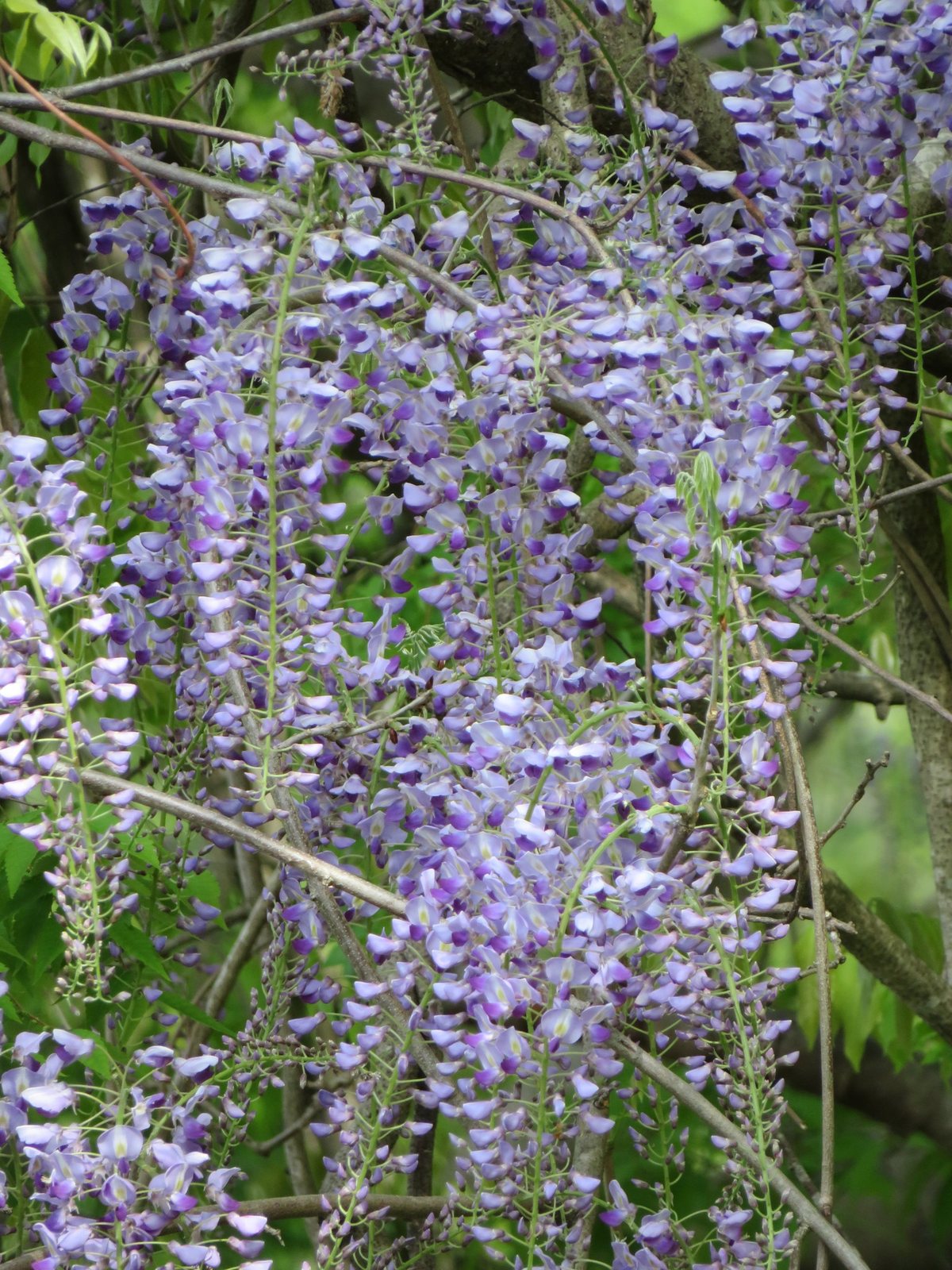
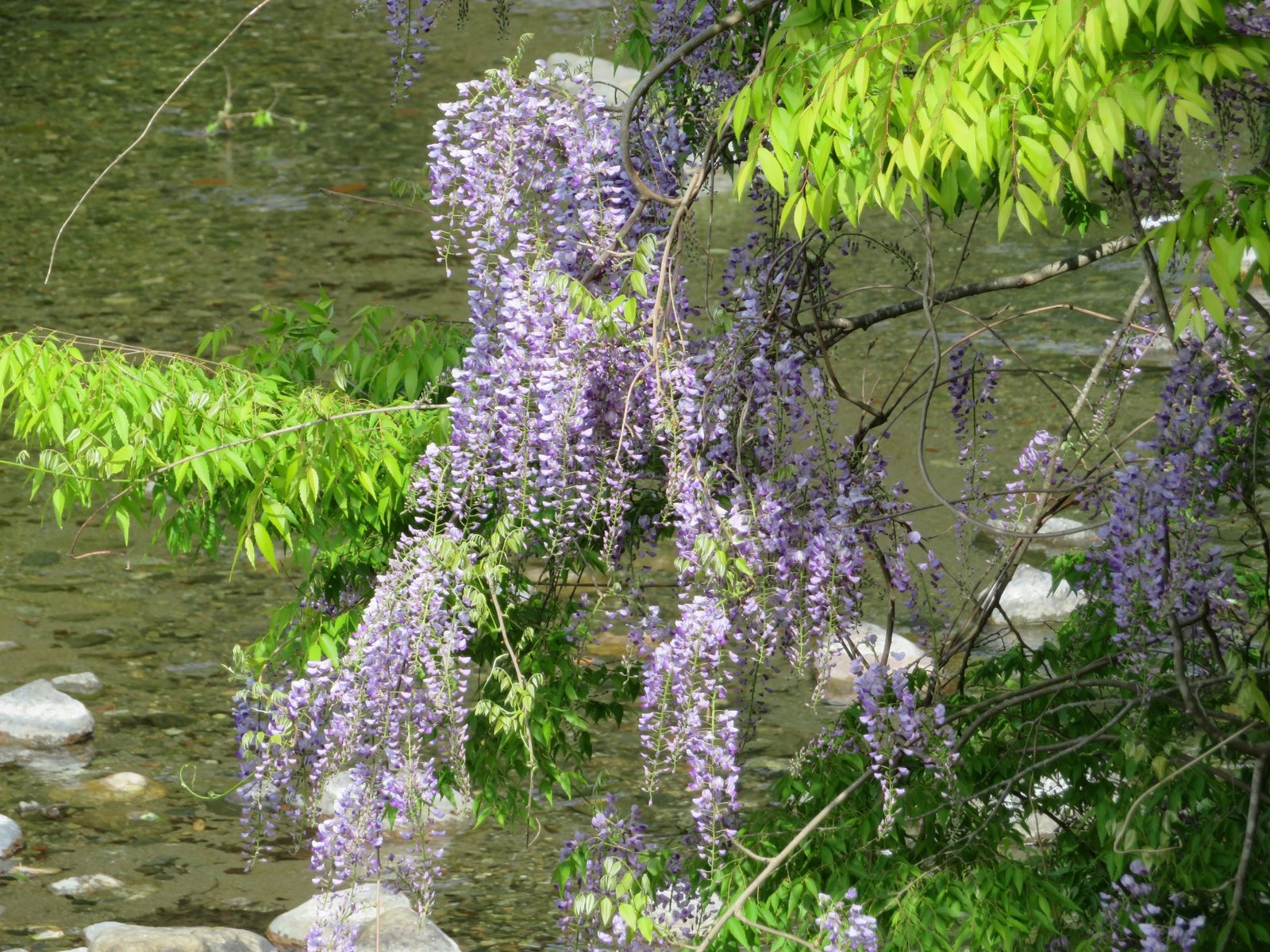
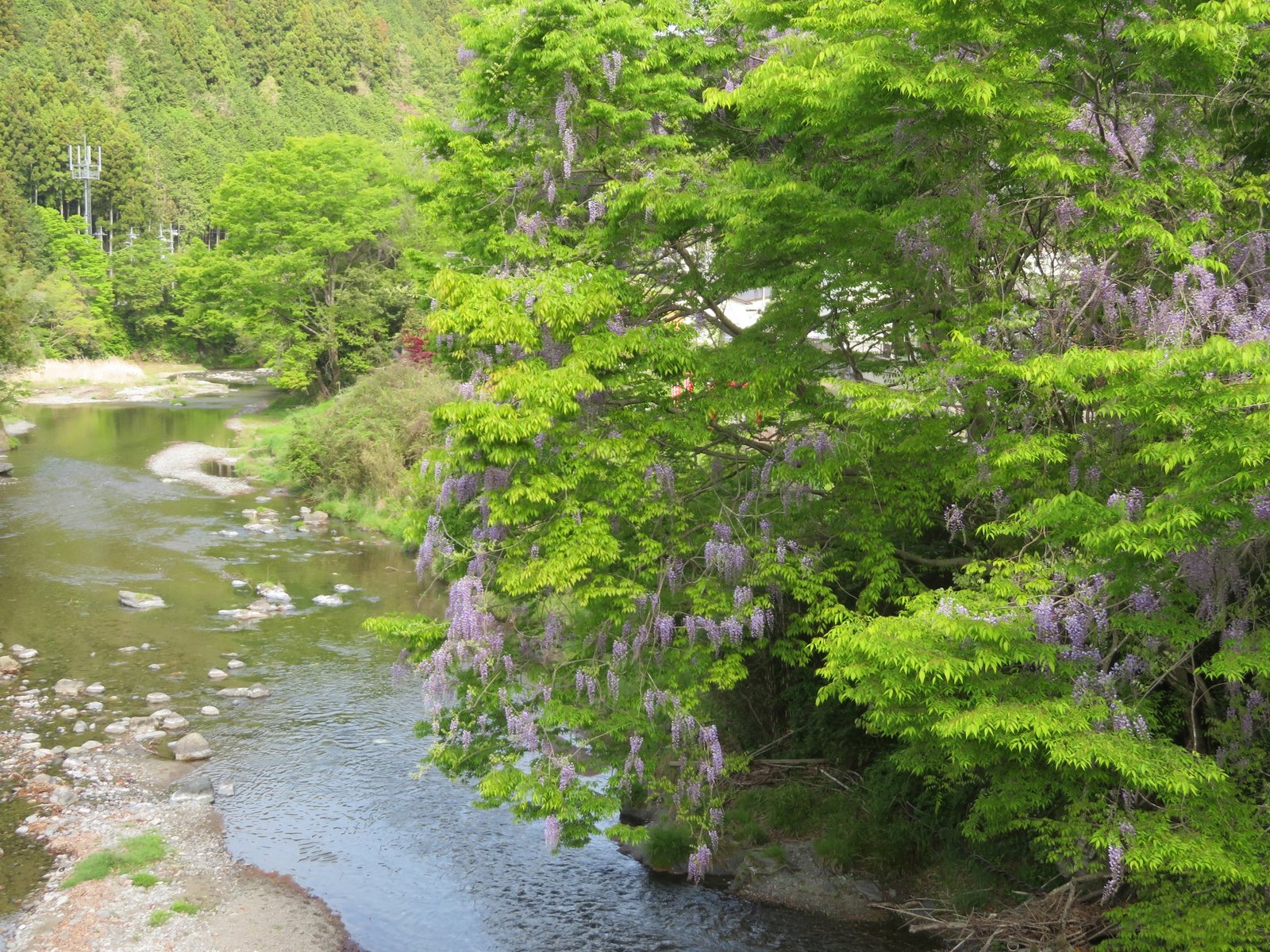
Japanese wisteria is a vigorous, deciduous woody climber grown for long, hanging clusters of fragrant flowers in late spring and early summer. It needs a substantial permanent support and regular pruning; its heavy, thickening stems can damage gutters, light trellises and nearby trees.
At a glance
- Sun
- Full sun gives the best flowering; tolerates light shade but flowers less freely.
- Water
- Water deeply during establishment and during prolonged dry spells, especially while flower buds are developing in summer. Established plants tolerate some drought.
- Soil
- Moderately fertile, moist but well-drained soil; tolerates clay, loam and sandy soil if drainage is adequate. Very alkaline soil can cause yellowing leaves.
- Height
- 20-30 ft (6-9 m), sometimes higher with suitable support
- Spread
- 10-20 ft (3-6 m), depending on training and pruning
- Flowers
- Late spring to early summer, usually as the leaves emerge; fragrant violet-blue or lilac flowers in long hanging clusters. White and pink forms are also available.
- Foliage
- Pinnate green leaves, usually with 13-19 leaflets, often turning yellow in autumn.
- Growth
- Fast once established
- Care needed
- High
The year at a glance
- Pollinators
- Deer resistant
- Drought tolerant
- Heat tolerant
- Low allergen
- Fragrant
| J | F | M | A | M | J | J | A | S | O | N | D | |
|---|---|---|---|---|---|---|---|---|---|---|---|---|
| Flowers | ||||||||||||
| Fruit | ||||||||||||
| Plant |
Northern hemisphere months. In Australia, shift them by six.
- Difficulty
- Hard
- Toughness
- Very tough
Will it suit your garden?
Pick your zone, country, light and whether you have pets.
Full sun is 6 or more hours of direct sun a day, part shade 3 to 6 hours, shade under 3.
How it grows
Planting day
2 ft (0.6 m)
After 1 year
3 ft (1.1 m)
After 2 years
5 ft (1.5 m)
After 3 years
6 ft (1.8 m)
full size
About 3 years to full size.
From a typical nursery size, at an average rate for this kind of plant. A rule of thumb, not a forecast.
Good to know
- Cats and dogs
- Toxic
- Invasive in
- the US
- In the garden
- Spreads vigorously: plan to contain it.
- Growth rate
- Fast
Care
Jobs through the year
- WaterApr–May, Sep–Oct, every 14 days
- Water established plants only if the soil is dry; water regularly during the first two growing seasons.
- WaterJun–Aug, every 7 days
- Water deeply during prolonged dry spells, especially while next year's flower buds develop.
- MulchMar–Apr
- Mulch the root area, keeping the main stem clear.
- PruneJan–Feb
- Shorten previously trimmed side shoots to two or three buds and remove unwanted growth.
- PruneJul–Aug
- Shorten long side shoots to five or six leaves, retaining selected framework extensions.
- ProtectMar–Apr
- Inspect heavy-duty supports and adjust ties before vigorous growth starts.
- ProtectApr–May
- Cover accessible flowering shoots with fleece when late frost is forecast.
- PruneOct
- Remove reachable poisonous pods where children or pets might eat them, plus unwanted runners.
- Install a heavy-duty pergola or firmly anchored wires before planting; keep stems away from gutters and roof tiles.
- Water deeply through the first two growing seasons and during extended summer drought.
- Mulch the root area in spring, keeping mulch clear of the main stem.
- Avoid high-nitrogen lawn feeds near the roots; excessive feeding encourages leafy growth rather than flowers.
- Tie in selected framework stems and remove unwanted basal shoots, including any shoots arising below a graft.
Pruning. In midsummer, shorten the current season's long side shoots to five or six leaves, retaining shoots needed to extend the framework. In late winter, shorten those same side shoots to two or three buds, and remove dead, crowded or unwanted growth.
Through the year
- Late winter
- Prune side shoots to two or three buds and inspect supports and ties before growth starts.
- Spring
- Apply mulch, water new plants and guide young stems onto their permanent support.
- Late spring
- Watch for frost damage to opening buds; cover accessible young plants with horticultural fleece when frost is forecast.
- Midsummer
- Shorten long side shoots to five or six leaves and tie in selected framework extensions.
- Late summer
- Water during prolonged dry weather while next year's flower buds develop.
- Autumn
- Remove reachable seed pods where children or animals might eat them, and remove seedlings or unwanted rooted runners.
In the garden
- Train over a substantial pergola so the flower clusters hang freely overhead.
- Cover a sunny masonry wall using strong wires set away from the surface.
- Frame a broad garden entrance with a robust arch, allowing room for thickening stems.
- Train as a freestanding standard on a permanent stout support for a formal focal point.
Garden styles it suits: Japanese, English country, Romantic rose garden, Formal, Traditional and Sensory garden.
Plant it with: Alliums, Catmint, Hardy geraniums, Peonies, Hellebores and Snowdrops.
Wildlife: Flowers provide nectar and pollen for bees. In regions where it is invasive, its dense growth can smother native vegetation and reduce habitat quality.
Problems to watch for
- Few or no flowers: seed-grown plants can take many years to bloom. Choose a flowering, grafted or cutting-grown plant, provide full sun, avoid excess nitrogen and follow the summer and winter pruning routine.
- Yellow leaves with green veins: alkaline soil can restrict iron uptake. Check soil conditions and drainage, and use a suitable chelated iron treatment if iron deficiency is confirmed.
- Scale insects: inspect stems for attached bumps and sticky honeydew. Remove small infestations by hand; for persistent infestations, use a locally approved treatment according to its label.
- Frost-damaged flower buds: late frosts can blacken buds and spoil flowering. Choose a sheltered site and protect accessible plants with horticultural fleece during frost warnings.
Safety
Toxic to people, cats, dogs and horses if eaten. All parts should be treated as poisonous, especially the seeds and pods; ingestion can cause severe vomiting, abdominal pain and diarrhoea, with dehydration and more serious illness after larger amounts. Seek medical or veterinary advice promptly after ingestion.
Where it spreads. Spreads aggressively by runners, rooting stems and seed in parts of the eastern and southeastern United States, and is listed as invasive in states including Virginia and North Carolina. It can climb into and smother trees; check local invasive-plant guidance before planting.
Easily confused with
Chinese wisteria (Wisteria sinensis)
Usually has 7-13 leaflets and shorter flower clusters whose flowers open almost together, often before the leaves expand.
American wisteria (Wisteria frutescens)
Has shorter, denser flower clusters that appear after the leaves have expanded, and smooth seed pods rather than the velvety pods of Japanese wisteria.
Silky wisteria (Wisteria brachybotrys)
Has conspicuously silky young leaves and shorter, broader clusters of relatively large flowers, rather than the long, narrow clusters typical of Japanese wisteria.
The name
Wisteria honours the American physician Caspar Wistar, floribunda means abundantly flowering, and the common name refers to the species' Japanese origin.
Propagation. Layer a low-growing stem or take softwood cuttings in early summer. Named forms are also propagated by grafting. Seedlings are variable and may take a decade or more to flower.
Checked against open data
- Accepted botanical name
- Wisteria floribunda
- In the US and Canada
- Introduced in the lower 48 states.
- Native range
- Japan.
- Measured
- Average height 1000 cm.
Sources: GBIF (CC BY 4.0), USDA PLANTS and Trefle (CC BY 4.0). The care and design notes are LandscapeGPT's own.
See it in your own yard.
Upload a photo of your yard and see it redesigned with plants that suit your climate, each checked against your zone.