Japanese zelkova
Zelkova serrata. Family Ulmaceae. Tree.
Also called Keaki, Keyaki, Saw-leaf zelkova.
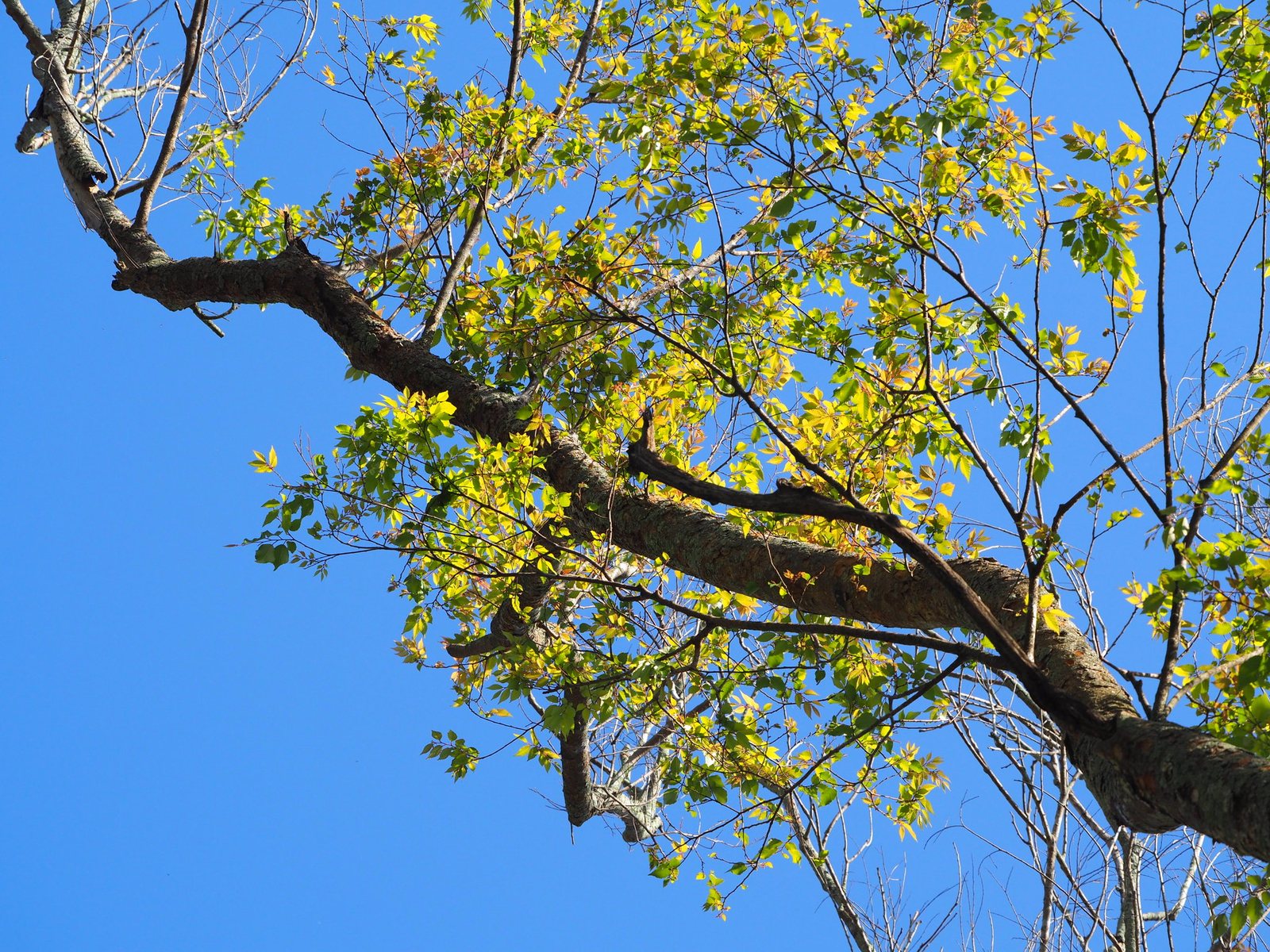
Japanese zelkova is a large deciduous shade tree with an upright, vase-shaped crown that broadens with age. Gardeners grow it for its graceful branching, finely toothed leaves, yellow-to-russet autumn colour and mottled bark; give it room well away from buildings.
At a glance
- Sun
- Full sun; tolerates light partial shade, but develops its best crown and autumn colour in sun.
- Water
- Water regularly while establishing. Established trees tolerate moderate drought, but benefit from deep watering during prolonged hot, dry weather.
- Soil
- Deep, moist, well-drained soil is ideal. Tolerates clay, loam, sand and a fairly wide pH range, provided drainage is adequate; avoid waterlogged ground.
- Height
- 50-80 ft (15-24 m)
- Spread
- 50-80 ft (15-24 m)
- Flowers
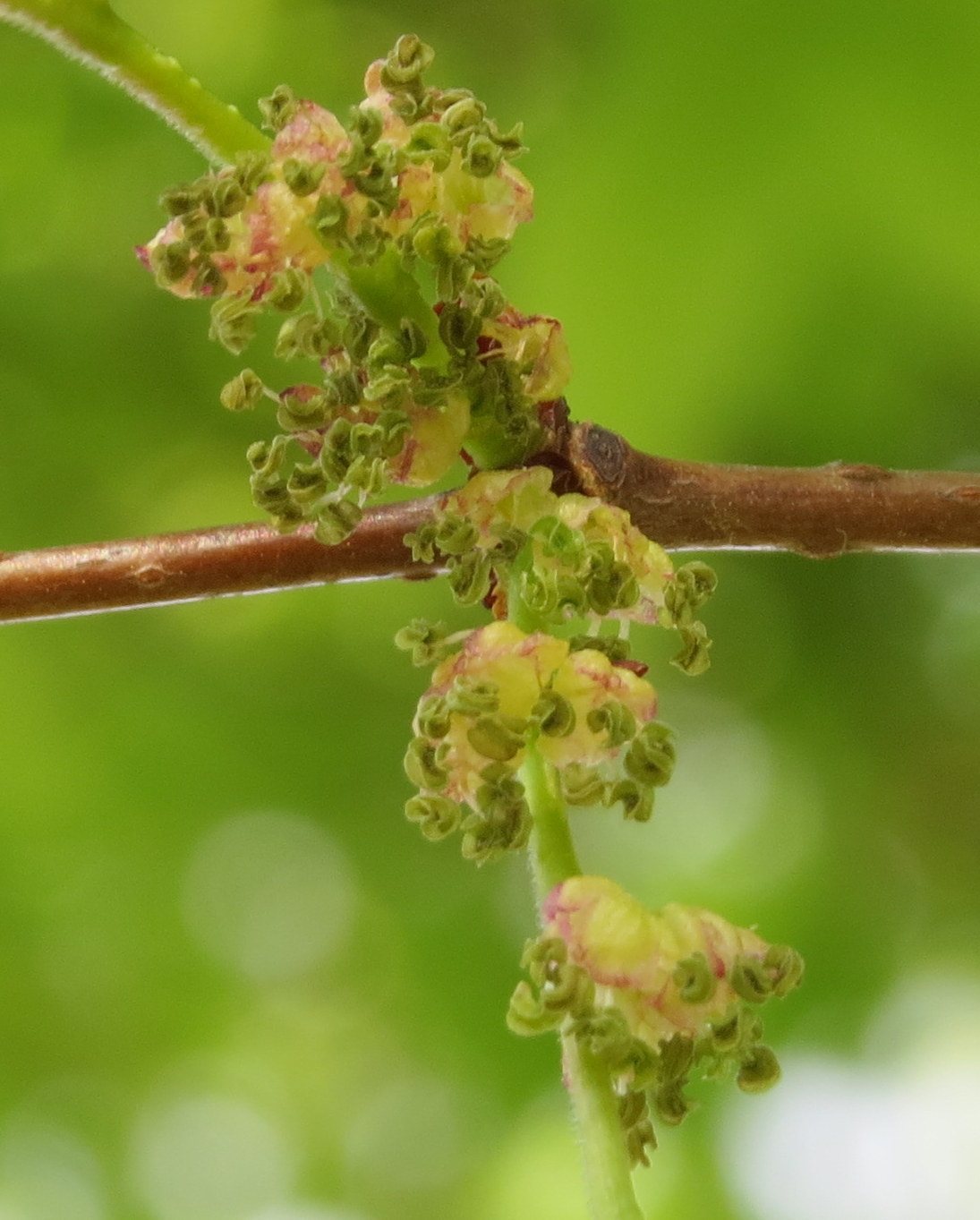
- Small, inconspicuous greenish flowers in spring as the leaves emerge.
- Foliage
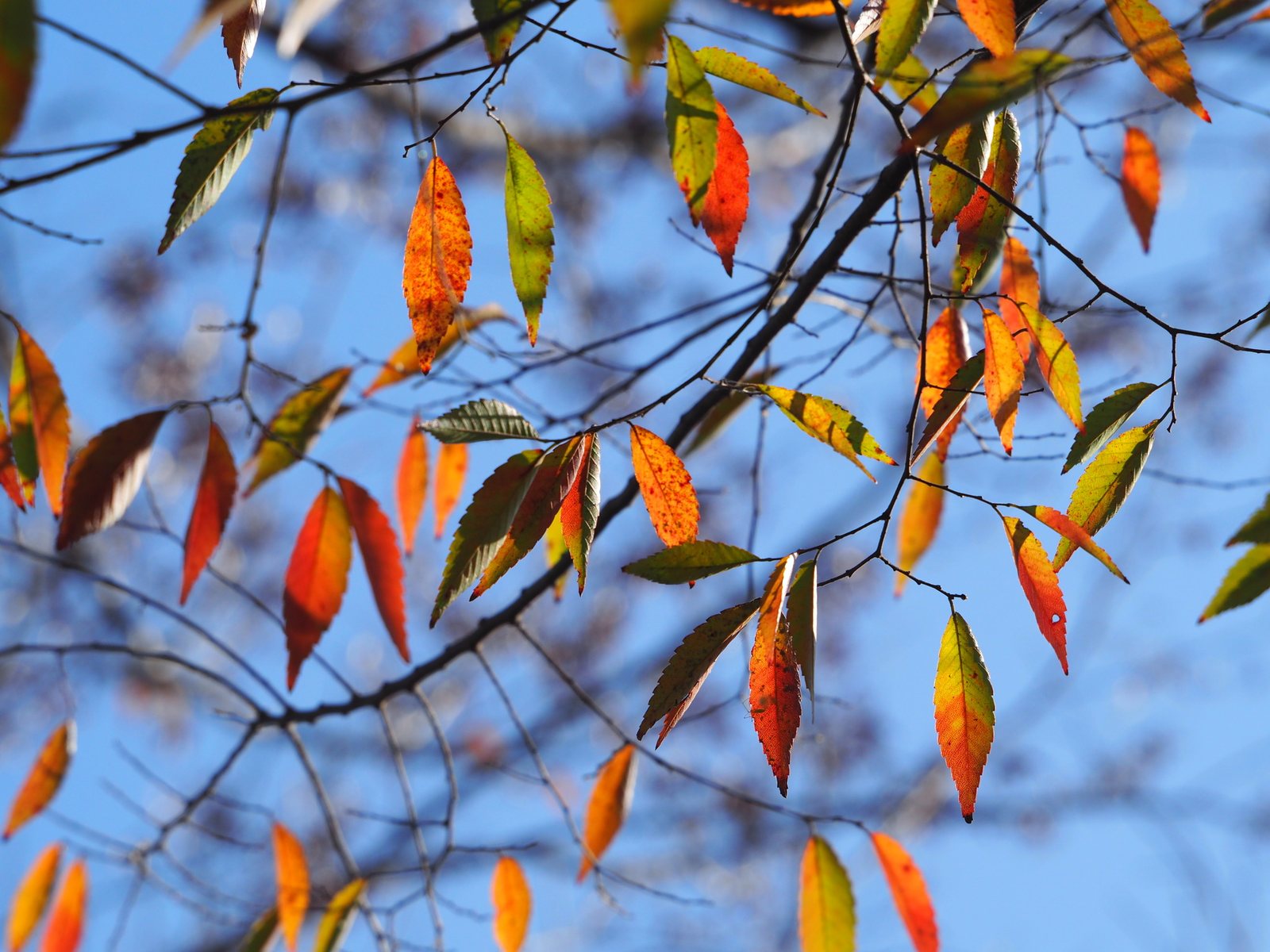
- Alternate, pointed, oval leaves with sharply toothed edges and prominent veins; dark green in summer, turning yellow, orange, russet or red in autumn, depending on the tree and conditions.
- Growth
- Moderate to fast when young, slowing with maturity.
- Care needed
- Medium
The year at a glance
- Drought tolerant
- Wildlife
| J | F | M | A | M | J | J | A | S | O | N | D | |
|---|---|---|---|---|---|---|---|---|---|---|---|---|
| Plant |
Northern hemisphere months. In Australia, shift them by six.
- Difficulty
- Moderate
- Toughness
- Very tough
Will it suit your garden?
Pick your zone, country, light and whether you have pets.
Full sun is 6 or more hours of direct sun a day, part shade 3 to 6 hours, shade under 3.
How it grows
Planting day
8 ft (2.3 m)
After 1 year
10 ft (3.2 m)
After 2 years
13 ft (4.1 m)
After 3 years
16 ft (4.9 m)
After 5 years
22 ft (6.6 m)
About 20 years to full size.
From a typical nursery size, at an average rate for this kind of plant. A rule of thumb, not a forecast.
Good to know
- Cats and dogs
- Safe
- Growth rate
- Moderate
Care
Jobs through the year
- WaterApr–May, Sep–Oct, every 14 days
- Water established trees only when soil is dry; young trees need regular moisture for two to three years.
- WaterJun–Aug, every 14 days
- Give established trees a deep soaking during prolonged hot drought; avoid shallow sprinkling.
- MulchApr–May
- Maintain 5–8 cm of organic mulch over the root zone, clear of the trunk.
- FeedMar–Apr
- Feed only if poor growth or a soil test indicates a deficiency.
- PruneFeb–Mar
- Train young trees with well-spaced branches; remove competing stems while small and never top.
- ProtectApr–May
- Check ties for rubbing and remove stakes once roots hold the tree securely.
- ProtectSep
- Inspect crowded branch unions and have suspect mature forks assessed by an arborist.
- Choose a permanent site with room for the mature crown and roots; avoid narrow beds beside paving or buildings.
- Plant with the root flare at ground level and keep soil evenly moist through the first two or three growing seasons.
- Apply a 2-3 in (5-8 cm) mulch layer over the root zone, keeping it clear of the trunk.
- Water deeply during prolonged drought rather than giving frequent shallow sprinklings.
- Stake only if the root ball is unstable, and remove supports once the tree is securely rooted.
- Do not feed routinely; fertilise only where poor growth or a soil test indicates a deficiency.
Pruning. Prune in late winter while dormant, training young trees to a strong framework with well-spaced branches and removing competing upright stems before they become large. Remove dead or damaged wood as needed; do not top the tree, and use a qualified arborist for large branches.
Through the year
- Late winter
- Inspect branch unions and carry out light formative pruning before growth begins.
- Spring
- Plant container-grown trees when soil is workable, and water thoroughly after planting.
- Late spring
- Refresh mulch and check that stakes and ties are not rubbing or constricting the trunk.
- Summer
- Check soil moisture around young trees and water deeply during dry spells.
- Early autumn
- Check for dead twigs, bark damage and crowded branch unions while the crown is still in leaf.
- Late autumn
- Plant dormant trees where winters are mild and soil drains freely; collect fallen leaves for leaf mould.
In the garden
- Use as a specimen shade tree in a large lawn, allowing the vase-shaped crown to develop naturally.
- Plant in spacious avenues or broad verges where roots have ample uncompacted soil.
- Use in a Japanese-style garden as a deciduous canopy above ferns and shade-tolerant groundcovers.
- Set against evergreen planting to highlight its autumn colour and winter branching.
Garden styles it suits: Japanese, Architectural minimal, Grand estate, Traditional, Autumn colour and Woodland.
Plant it with: Japanese forest grass, Epimedium, Japanese painted fern, Hellebores, Snowdrops and Camellias.
Wildlife: The canopy provides shelter and nesting sites for birds, and the foliage supports some leaf-feeding insects. Its small, wind-pollinated flowers are not a significant nectar source.
Problems to watch for
- Weak, crowded branch unions: train young trees early, removing competing stems while cuts are small; have suspect mature unions assessed by an arborist.
- Leaf scorch during heat or drought: water deeply, maintain mulch and protect the root zone from compaction.
- Scale insects: look for bumps on twigs and sticky honeydew; encourage natural predators and use a labelled horticultural oil if an infestation warrants treatment.
- Cankers and twig dieback: prune affected wood back to healthy growth, clean tools between cuts and reduce drought or root stress.
Safety
Not known to be toxic to people, cats, dogs or horses. No particular part is recognised as seriously poisonous, although species-specific toxicity information is limited; it is not an edible plant.
Easily confused with
Japanese elm (Ulmus davidiana var. japonica)
Elm leaves usually have more noticeably uneven bases, and elms produce flat, winged seeds; zelkova produces small, unwinged fruits.
Chinese elm (Ulmus parvifolia)
Both can develop mottled bark, but Chinese elm generally has smaller, glossier leaves and produces flat, winged seeds rather than zelkova's small, unwinged fruits.
European hornbeam (Carpinus betulus)
Hornbeam has strongly pleated, usually double-toothed leaves, smooth grey bark and hanging fruit clusters with leafy bracts; zelkova develops flaking, mottled bark and small, inconspicuous fruits.
The name
The species name serrata means saw-toothed in Latin, referring to the leaf margins, while Japanese zelkova identifies its familiar Japanese origin.
Propagation. Grow the species from seed, usually with a period of cold, moist stratification before spring sowing. Named cultivars must be propagated vegetatively, commonly by grafting or cuttings, to retain their characteristics.
Checked against open data
- Accepted botanical name
- Zelkova serrata
- In the US and Canada
- Introduced in the lower 48 states.
- Native range
- China North-Central, China South-Central, China Southeast, Japan, Korea, Kuril Is., Manchuria and Taiwan.
- Measured
- Soil pH 6 to 6.9. Average height 995 cm.
Sources: GBIF (CC BY 4.0), USDA PLANTS and Trefle (CC BY 4.0). The care and design notes are LandscapeGPT's own.
See it in your own yard.
Upload a photo of your yard and see it redesigned with plants that suit your climate, each checked against your zone.