Jostaberry
Ribes × nidigrolaria. Family Grossulariaceae. Shrub.
Also called Josta berry.
Jostaberry is a thornless, deciduous hybrid of blackcurrant and gooseberry relatives, grown for its large, dark berries. It is self-fertile, so one bush can crop, and its tart fruit is useful fresh when fully ripe or cooked into preserves and desserts. It grows best where winters are cold and summers are not excessively hot.
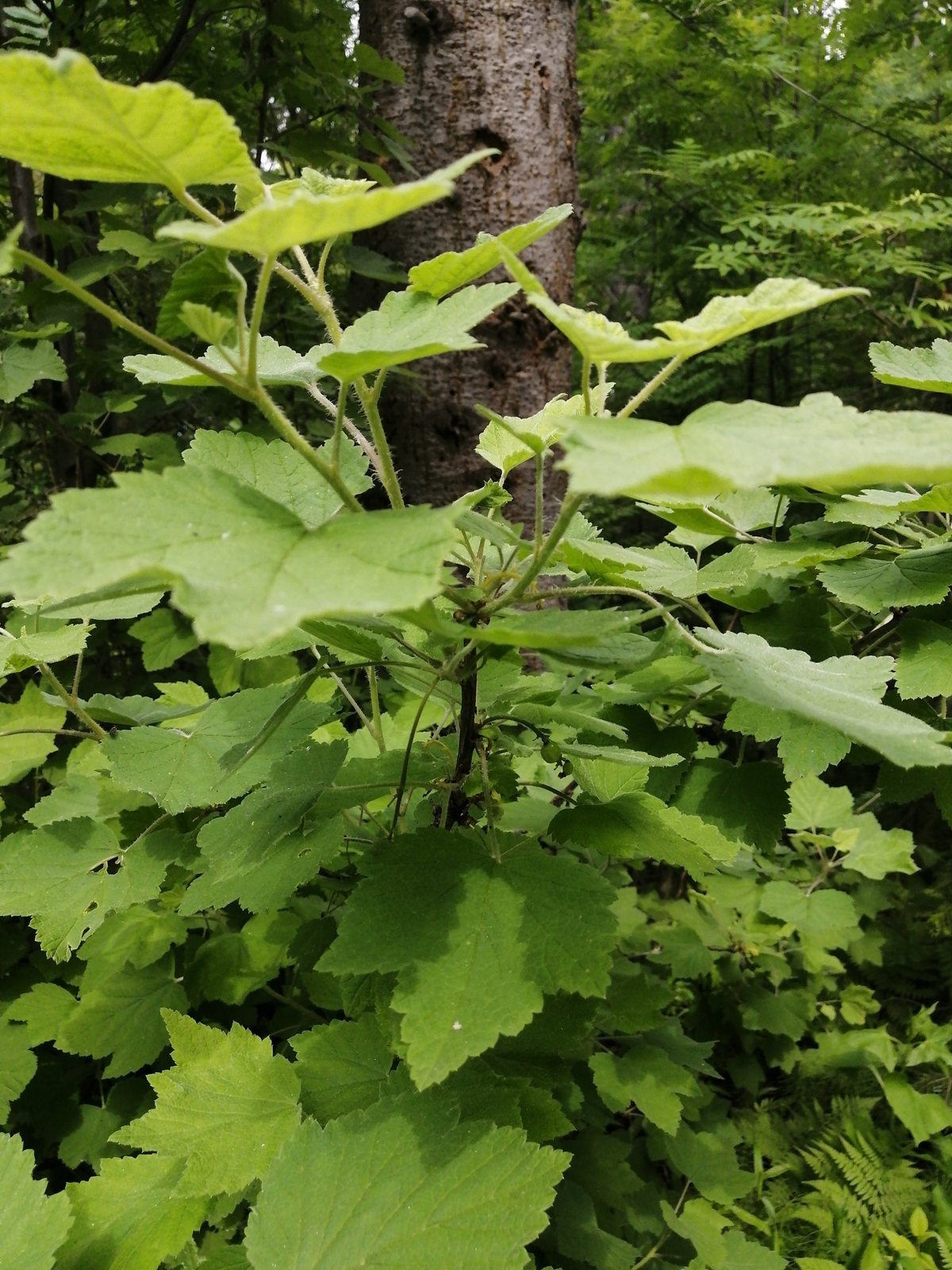
At a glance
- Sun
- Full sun in cool climates; light afternoon shade where summers are hot.
- Water
- Keep the root zone evenly moist, especially during establishment and while berries swell; avoid waterlogged ground.
- Soil
- Fertile, moisture-retentive but well-drained soil, preferably slightly acidic to neutral.
- Height
- 4-6 ft (1.2-1.8 m)
- Spread
- 4-6 ft (1.2-1.8 m)
- Flowers
- Small, inconspicuous greenish flowers flushed reddish-purple in spring.
- Foliage
- Lobed, mid-green leaves on a broad framework of thornless branches; leaves fall in autumn.
- Growth
- Moderate to fast once established.
- Care needed
- Medium
The year at a glance
- Pollinators
- Cold hardy
- Disease resistant
- Wildlife
- Low allergen
- Edible
| J | F | M | A | M | J | J | A | S | O | N | D | |
|---|---|---|---|---|---|---|---|---|---|---|---|---|
| Flowers | ||||||||||||
| Fruit | ||||||||||||
| Plant |
Northern hemisphere months. In Australia, shift them by six.
- Difficulty
- Easy
- Toughness
- Very tough
Will it suit your garden?
Pick your zone, country, light and whether you have pets.
Full sun is 6 or more hours of direct sun a day, part shade 3 to 6 hours, shade under 3.
How it grows
Planting day
1.6 ft (0.5 m)
After 1 year
2.5 ft (0.75 m)
After 2 years
3 ft (1 m)
After 3 years
4 ft (1.3 m)
After 5 years
5 ft (1.5 m)
full size
About 4 years to full size.
From a typical nursery size, at an average rate for this kind of plant. A rule of thumb, not a forecast.
Good to know
- Cats and dogs
- Safe
- Growth rate
- Fast
Care
Jobs through the year
- WaterApr–May, Sep–Oct, every 14 days
- Water established bushes deeply in dry spells; water young bushes more often.
- WaterJun–Aug, every 7 days
- Keep soil evenly moist while berries swell, allowing for rain and avoiding waterlogging.
- FeedMar
- Apply a modest balanced fruit fertilizer feed; avoid excessive nitrogen.
- MulchMar
- Spread 5–8 cm of compost or well-rotted organic matter, keeping stems clear.
- PruneFeb–Mar
- Remove damaged or crossing branches and up to one-third of the oldest stems at ground level.
- ProtectApr–May
- Protect flowers during severe late frosts and inspect leaf undersides for sawfly larvae.
- ProtectJun–Aug
- Before berries colour, install taut wildlife-safe netting on a frame and check it daily.
- HarvestJun–Aug
- Pick deep purple-black, slightly soft berries when pleasantly ripe; taste rather than judging colour alone.
- Water deeply during dry spells, particularly from flowering until harvest.
- Apply a modest amount of balanced fruit fertilizer in early spring; avoid heavy nitrogen feeding.
- Mulch annually with 2-3 in (5-8 cm) of compost or well-rotted organic matter, keeping it clear of the stems.
- Keep weeds and grass away from the shallow root zone; avoid deep hoeing.
- Protect ripening berries with taut, wildlife-safe netting over a frame, checking it daily.
- Before planting in the United States, check state and local restrictions on growing Ribes.
Pruning. In late winter, remove dead, damaged and crossing branches, then cut up to one-third of the oldest stems to ground level. Retain a mixture of younger and mature stems, and avoid shearing the whole bush, which removes fruiting wood.
Harvest
Pick in early to midsummer when the berries are deep purple-black, slightly soft and no longer sharply sour; taste a few rather than judging by colour alone. Pick individual berries as they ripen, since a bush may need several passes. Expect the first worthwhile crop about 2-3 years after planting, sometimes longer from a small plant.
Through the year
- Late autumn
- Plant dormant bushes when the soil is workable and not waterlogged or frozen.
- Late winter
- Prune out damaged branches and thin the oldest stems at their bases.
- Early spring
- Feed lightly, renew the mulch and water newly planted bushes.
- Spring
- Inspect leaf undersides for sawfly larvae and aphids; protect flowers if a severe late frost is forecast.
- Early summer
- Keep moisture steady and fit a netting frame before berries colour.
- Midsummer
- Harvest ripe berries regularly and remove netting once picking is finished.
- Autumn
- Clear fallen diseased leaves and take hardwood cuttings after leaf fall.
In the garden
- Plant in a fruit garden with currants and gooseberries, allowing room to reach the whole bush for picking.
- Use as an informal edible hedge where its broad, thornless growth can develop without close clipping.
- Place behind low herbs or strawberries in an edible border, keeping its root zone accessible for mulching.
- Include along a sunny food-forest edge, away from heavy tree shade and root competition.
Garden styles it suits: Cottage garden, Potager (kitchen garden), Food forest, Edible landscape, Homestead and Backyard orchard.
Plant it with: Chives, Strawberries, Rhubarb and Calendula.
Wildlife: Spring flowers provide nectar and pollen for bees and other insects. Birds eat the berries and may shelter in established bushes.
Problems to watch for
- Birds take ripening berries: cover the bush with taut, wildlife-safe netting supported clear of the fruit.
- Gooseberry sawfly larvae can strip leaves: inspect regularly from spring and remove larvae by hand, including those low inside the bush.
- Aphids distort young shoots: wash small colonies off with water and encourage ladybirds and other predators.
- Poor cropping can follow late frost, excessive shade or severe pruning: choose a bright site outside frost pockets and retain a mixture of stem ages.
Safety
Jostaberry is not known to be toxic to people, cats, dogs or horses; the ripe berries are edible. Leaves and stems are not normally eaten, and animal-specific safety information is limited. Large amounts of fruit may cause digestive upset.
Easily confused with
Blackcurrant (Ribes nigrum)
Blackcurrant leaves have a strong characteristic scent when rubbed, and the smaller berries usually hang in longer clusters. Jostaberry leaves are much less aromatic and its berries are larger.
European gooseberry (Ribes uva-crispa)
Most gooseberries have conspicuous spines at the stem nodes and often visibly veined or hairy fruit. Jostaberry has thornless stems and smooth, dark purple-black ripe berries.
The name
Jostaberry combines parts of the German words Johannisbeere, meaning currant, and Stachelbeere, meaning gooseberry.
Propagation. Take pencil-thick hardwood cuttings from healthy current-season growth after leaf fall, or layer a low branch into the soil. Vegetative propagation preserves the parent plant; seedlings may differ.
Checked against open data
- Accepted botanical name
- Ribes nidigrolaria
Sources: GBIF (CC BY 4.0). The care and design notes are LandscapeGPT's own.
See it in your own yard.
Upload a photo of your yard and see it redesigned with plants that suit your climate, each checked against your zone.