Katsura pieris
Pieris japonica 'Katsura'. Family Ericaceae. Shrub.
Also called Pieris japonica 'Katsura', Katsura Japanese andromeda, Katsura lily-of-the-valley shrub.
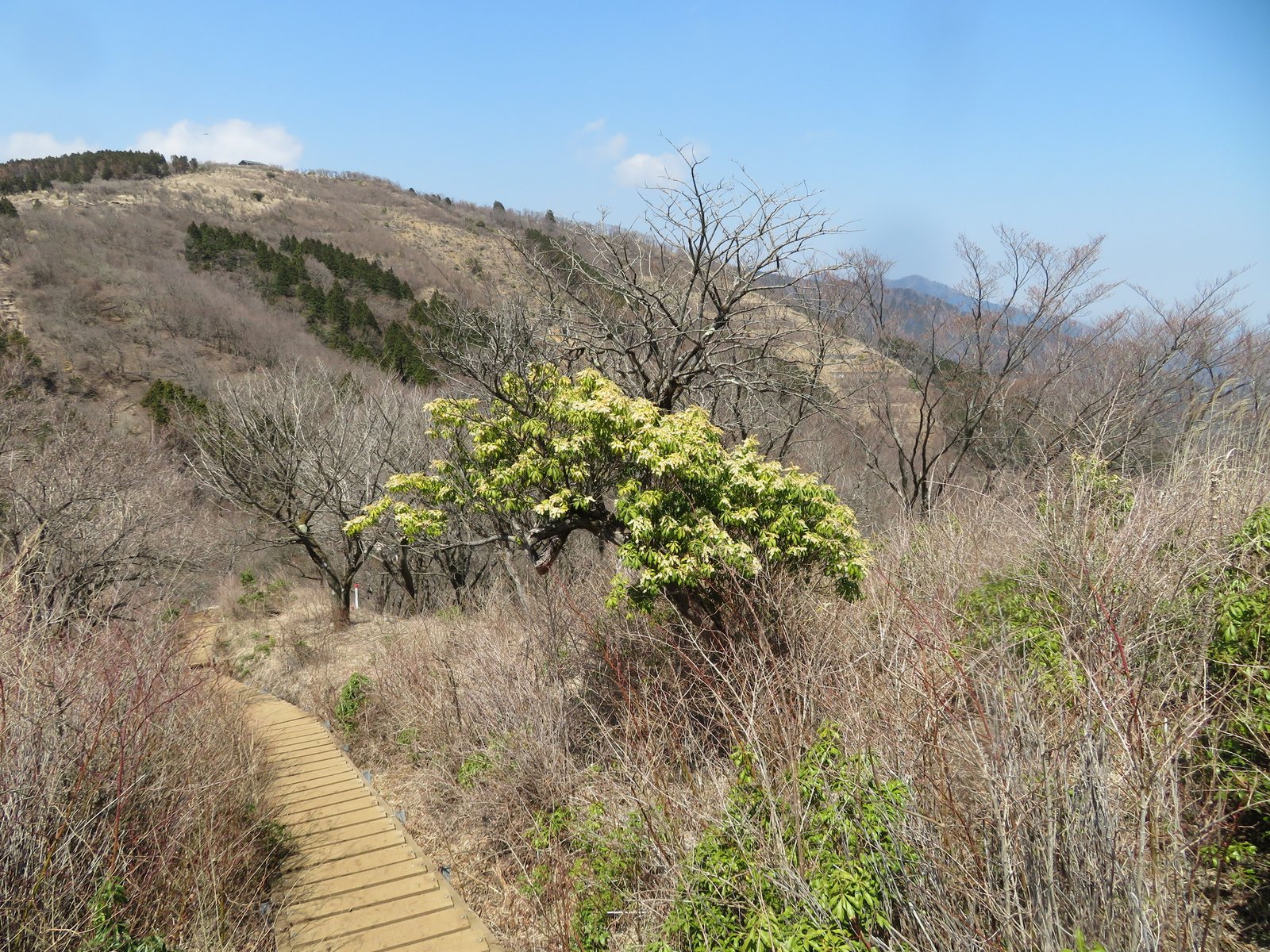
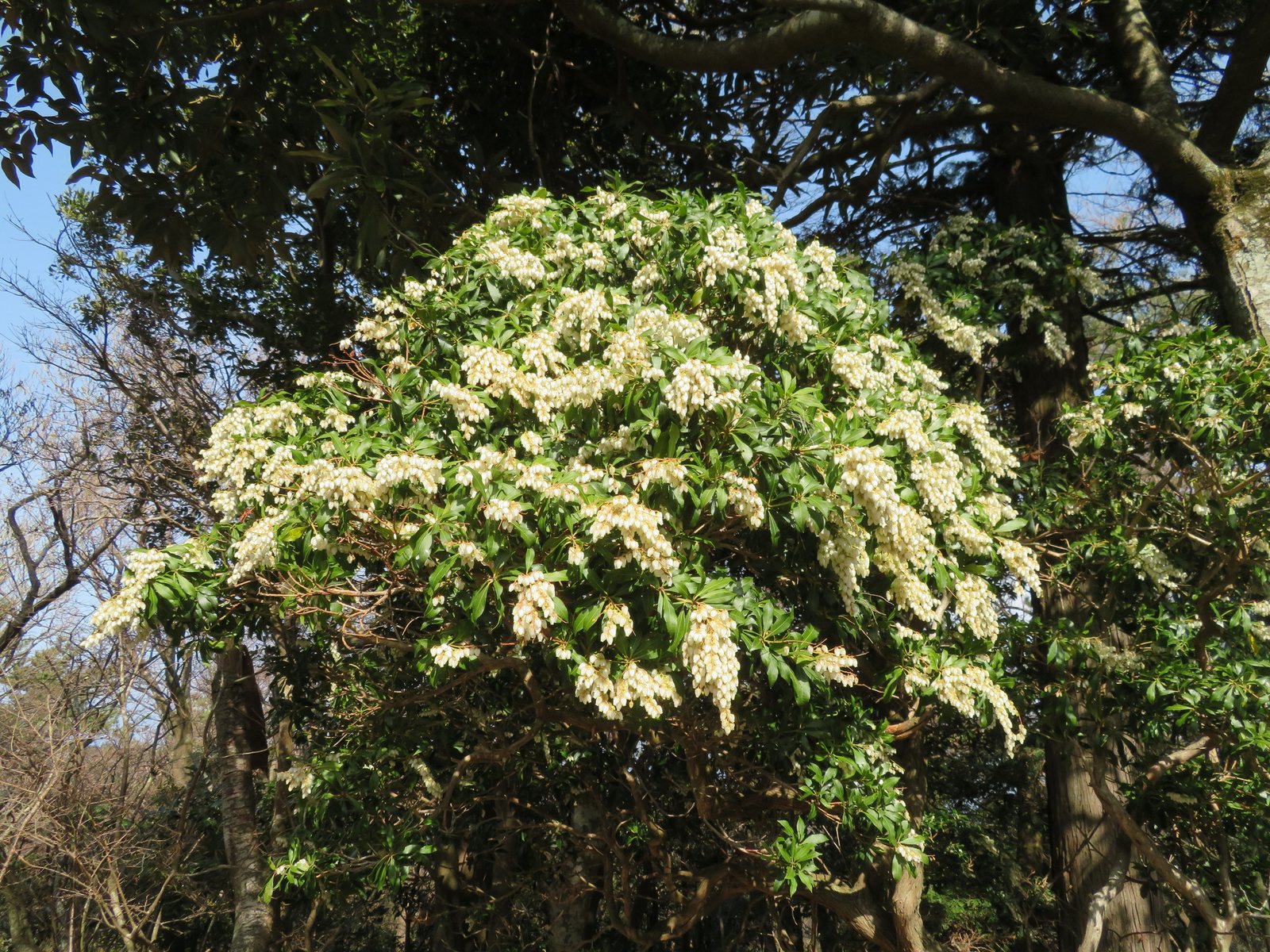
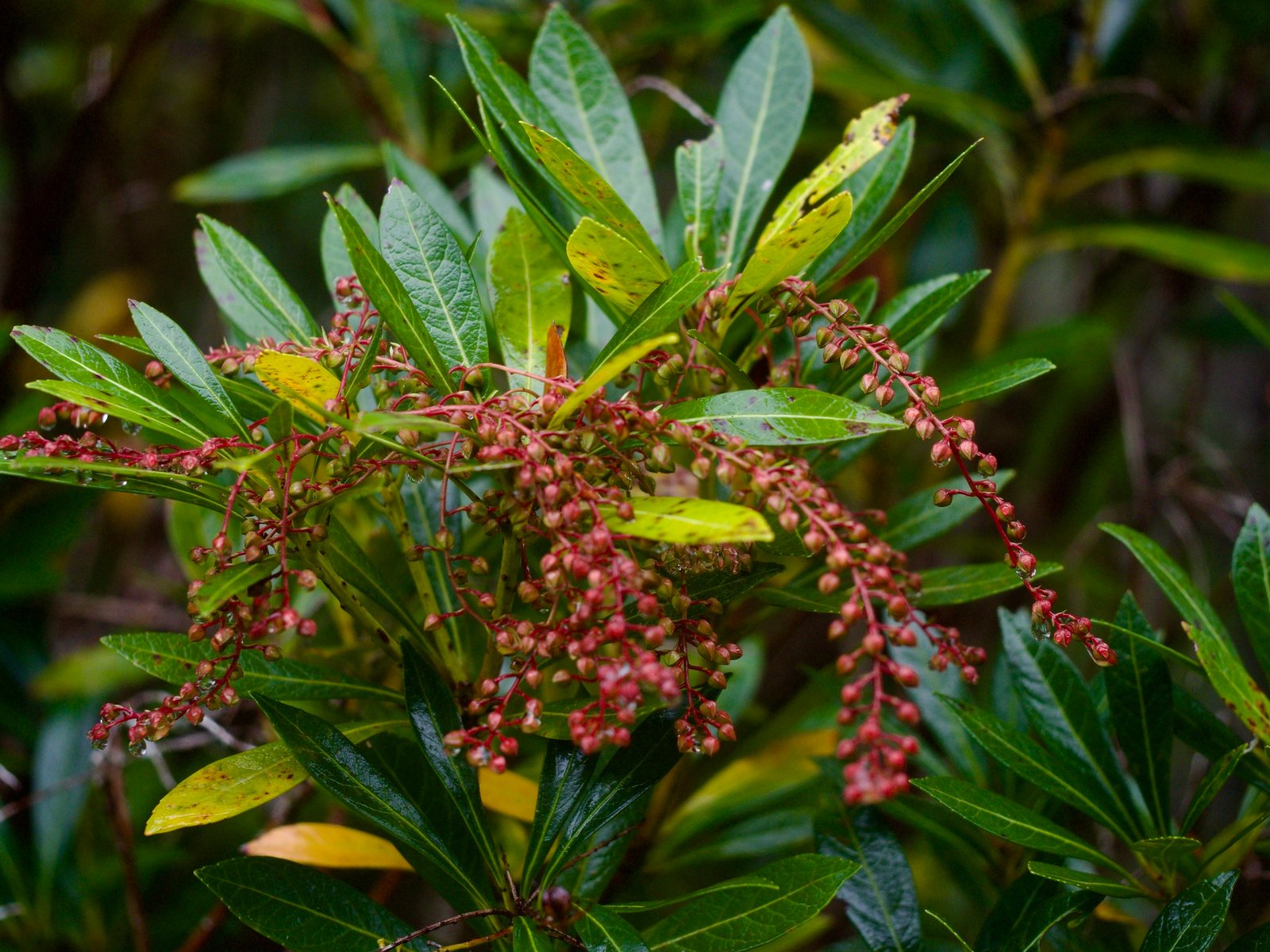
Katsura pieris is a compact evergreen shrub grown for its wine-red young leaves and hanging clusters of pink, bell-shaped spring flowers. It suits sheltered, partly shaded gardens with acidic soil, and its repeated flushes of coloured new growth extend its interest beyond flowering.
At a glance
- Sun
- Partial shade, ideally morning sun and afternoon shade. More sun is tolerable in cool climates if the soil stays moist; avoid hot afternoon sun and exposed, windy sites.
- Water
- Keep the root zone evenly moist but not waterlogged. Water during dry spells, especially while establishing and when growing in a container.
- Soil
- Acidic, humus-rich, well-drained soil, ideally pH 4.5-6.0. Unsuitable for chalky soil; use ericaceous compost in a container where garden soil is alkaline.
- Height
- 3-5 ft (0.9-1.5 m)
- Spread
- 3-4 ft (0.9-1.2 m)
- Flowers
- Early to mid-spring; hanging clusters of pale to rose-pink bells opening from darker pink-red buds.
- Foliage
- Glossy, narrow oval evergreen leaves; new growth emerges deep wine-red, then matures to dark green. Further red flushes may appear during the growing season.
- Growth
- Slow
- Care needed
- Medium
The year at a glance
- Pollinators
- Deer resistant
- Wildlife
- Low allergen
| J | F | M | A | M | J | J | A | S | O | N | D | |
|---|---|---|---|---|---|---|---|---|---|---|---|---|
| Flowers | ||||||||||||
| Plant |
Northern hemisphere months. In Australia, shift them by six.
- Difficulty
- Moderate
- Toughness
- Fairly tough
Will it suit your garden?
Pick your zone, country, light and whether you have pets.
Full sun is 6 or more hours of direct sun a day, part shade 3 to 6 hours, shade under 3.
How it grows
Planting day
1.6 ft (0.5 m)
After 1 year
1.9 ft (0.59 m)
After 2 years
2.2 ft (0.68 m)
After 3 years
2.5 ft (0.76 m)
After 5 years
3 ft (0.94 m)
About 8 years to full size.
From a typical nursery size, at an average rate for this kind of plant. A rule of thumb, not a forecast.
Good to know
- Cats and dogs
- Toxic
- Growth rate
- Slow
Care
Jobs through the year
- WaterMar–May, Sep–Oct, every 14 days
- Water established plants if the surface is drying; check young plants more frequently.
- WaterJun–Aug, every 7 days
- Water deeply during dry weather, keeping shallow roots moist; use rainwater where tap water is hard.
- MulchMar
- Spread 5–8 cm of leaf mould or fine composted bark, keeping stems clear.
- FeedMar–Apr
- Feed lightly with an acid-loving shrub fertiliser only if growth is weak.
- DeadheadApr–May
- Remove spent flower clusters if practical without damaging nearby new growth.
- PruneApr–May
- Immediately after flowering, remove damaged branches and shorten straggly shoots to leafy side branches.
- ProtectMar–May
- Temporarily cover tender new shoots with fleece when late frost is forecast.
- ProtectJan–Feb, Nov–Dec
- Shelter from drying winds and protect container roots from prolonged hard freezing.
- Plant with the top of the root ball level with the surrounding soil; do not bury the stem base.
- Water deeply during dry weather, keeping the shallow roots moist without leaving them saturated.
- Apply 2-3 in (5-8 cm) of leaf mould or fine composted bark over the root zone, keeping it clear of the stems.
- Feed lightly in spring with a fertiliser for acid-loving shrubs if growth is weak; avoid heavy feeding.
- Use rainwater where tap water is very hard, especially for container plants.
- Shelter young growth from drying winds and late frosts.
Pruning. Prune only as needed immediately after flowering, removing dead or damaged branches and shortening straggly shoots to a leafy side branch. Avoid routine autumn or winter clipping, which removes the following spring's flower buds.
Through the year
- Late winter
- Check soil moisture and protect container plants from cold, drying winds; leave developing flower clusters intact.
- Spring
- Refresh the mulch and apply a light acid-loving shrub feed if needed.
- Spring, after flowering
- Remove spent flower clusters if practical and carry out any light shaping.
- Summer
- Water during dry spells and inspect leaf undersides for lace bugs.
- Late summer
- Take semi-ripe cuttings if propagating; avoid late heavy feeding.
- Autumn
- Plant while soil is moist and workable, or wait until spring in colder areas.
In the garden
- Place near a sheltered entrance or path where the hanging flowers and red shoots can be seen closely.
- Combine with rhododendrons, azaleas and camellias in an acidic-soil shrub border.
- Use with ferns and hostas beneath open tree canopies, avoiding sites crowded with thirsty surface roots.
- Grow in a large container of ericaceous compost for year-round structure in a partly shaded courtyard.
Garden styles it suits: Woodland, Japanese, Modern courtyard, Traditional, Small-space and Pacific Northwest woodland.
Plant it with: Japanese azaleas, Rhododendrons, Camellias, Hostas, Japanese painted ferns and Japanese forest grass.
Wildlife: The spring flowers attract bees, including bumblebees. Dense evergreen foliage provides some shelter for small garden wildlife.
Problems to watch for
- Yellow leaves with green veins usually indicate iron chlorosis from alkaline soil or water. Check soil pH; move to suitable acidic soil or ericaceous container compost rather than relying on repeated iron treatments.
- Pieris lace bugs cause pale stippling above and dark specks beneath leaves. Inspect undersides, remove badly affected leaves and use a labelled insecticidal soap where appropriate, covering leaf undersides thoroughly.
- Phytophthora root rot causes wilting and dieback in wet soil. Improve drainage, avoid overwatering and remove severely affected plants; do not replace them in the same poorly drained spot.
- Late frost, strong sun and drying winds can scorch young leaves. Choose a sheltered position, maintain soil moisture and remove dead tips once the extent of damage is clear.
Safety
Toxic to people, cats, dogs and horses if eaten. All parts, including leaves, flowers and nectar, contain grayanotoxins; ingestion can cause vomiting, weakness, dangerously slow heart rate and potentially fatal poisoning. Seek urgent medical or veterinary advice after suspected ingestion.
Easily confused with
Mountain pieris (Pieris floribunda)
Usually has upright clusters of white flowers rather than the hanging pink clusters of 'Katsura'; it also lacks this cultivar's repeated deep wine-red leaf flushes.
Drooping leucothoe (Leucothoe fontanesiana)
Has a lower, more arching habit, with flower clusters along the stems rather than the conspicuous terminal clusters typical of pieris.
Katsura tree (Cercidiphyllum japonicum)
An unrelated deciduous tree with rounded, heart-shaped leaves, not a compact evergreen shrub with narrow leaves and bell-shaped flowers.
The name
The species name japonica means 'of Japan', referring to part of the plant's native range.
Propagation. Root semi-ripe cuttings in summer in an acidic, free-draining medium with steady humidity. Seed will not reliably produce plants identical to 'Katsura'.
Checked against open data
- Accepted botanical name
- Pieris japonica
- Native range
- China South-Central, China Southeast, Japan and Taiwan.
- Measured
- Soil pH 4.2 to 5.5. Average height 332 cm.
Sources: GBIF (CC BY 4.0) and Trefle (CC BY 4.0). The care and design notes are LandscapeGPT's own.
See it in your own yard.
Upload a photo of your yard and see it redesigned with plants that suit your climate, each checked against your zone.