Kohuhu
Pittosporum tenuifolium. Family Pittosporaceae. Shrub.
Also called Kōhūhū, Black matipo, New Zealand pittosporum.
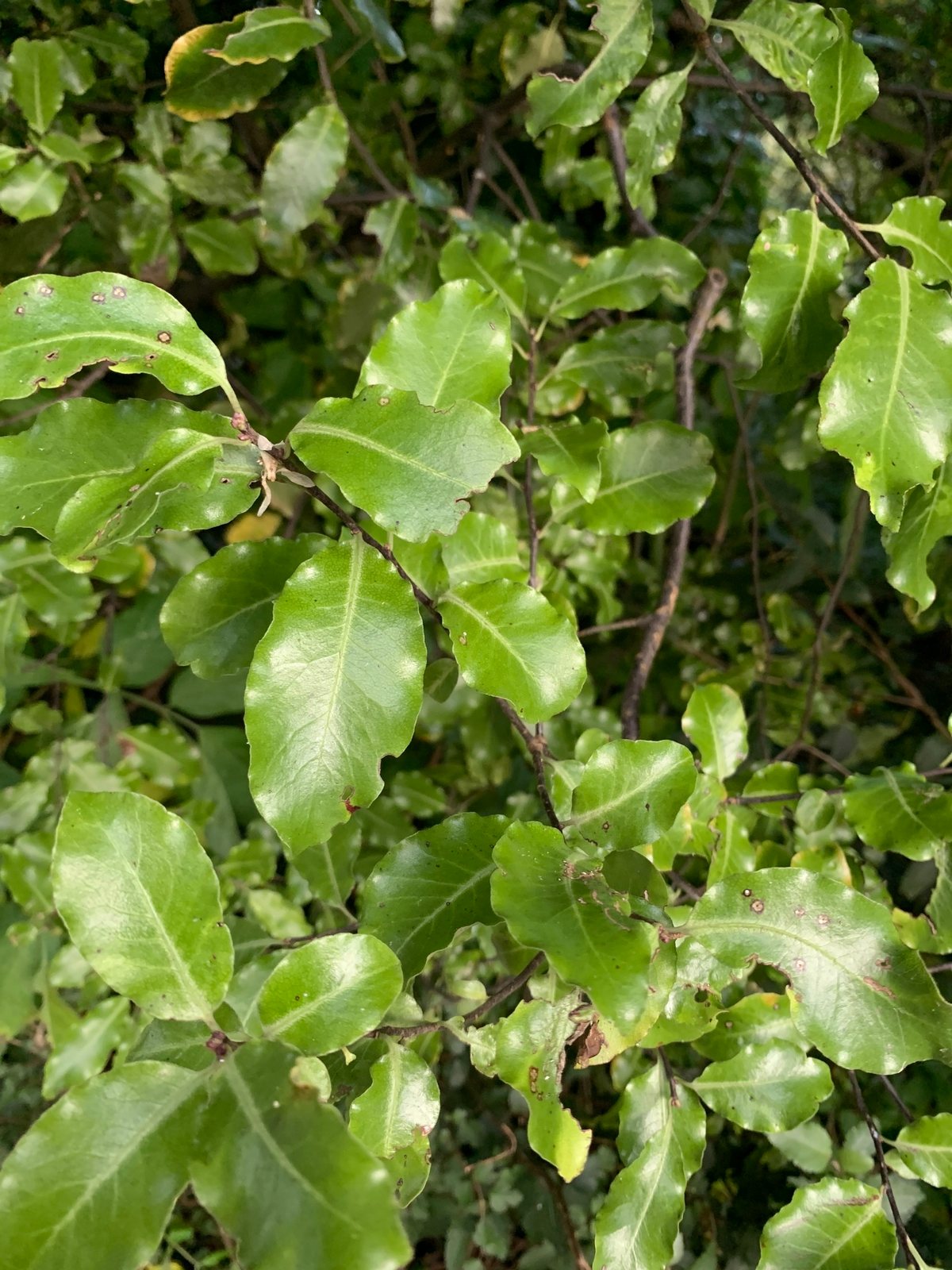
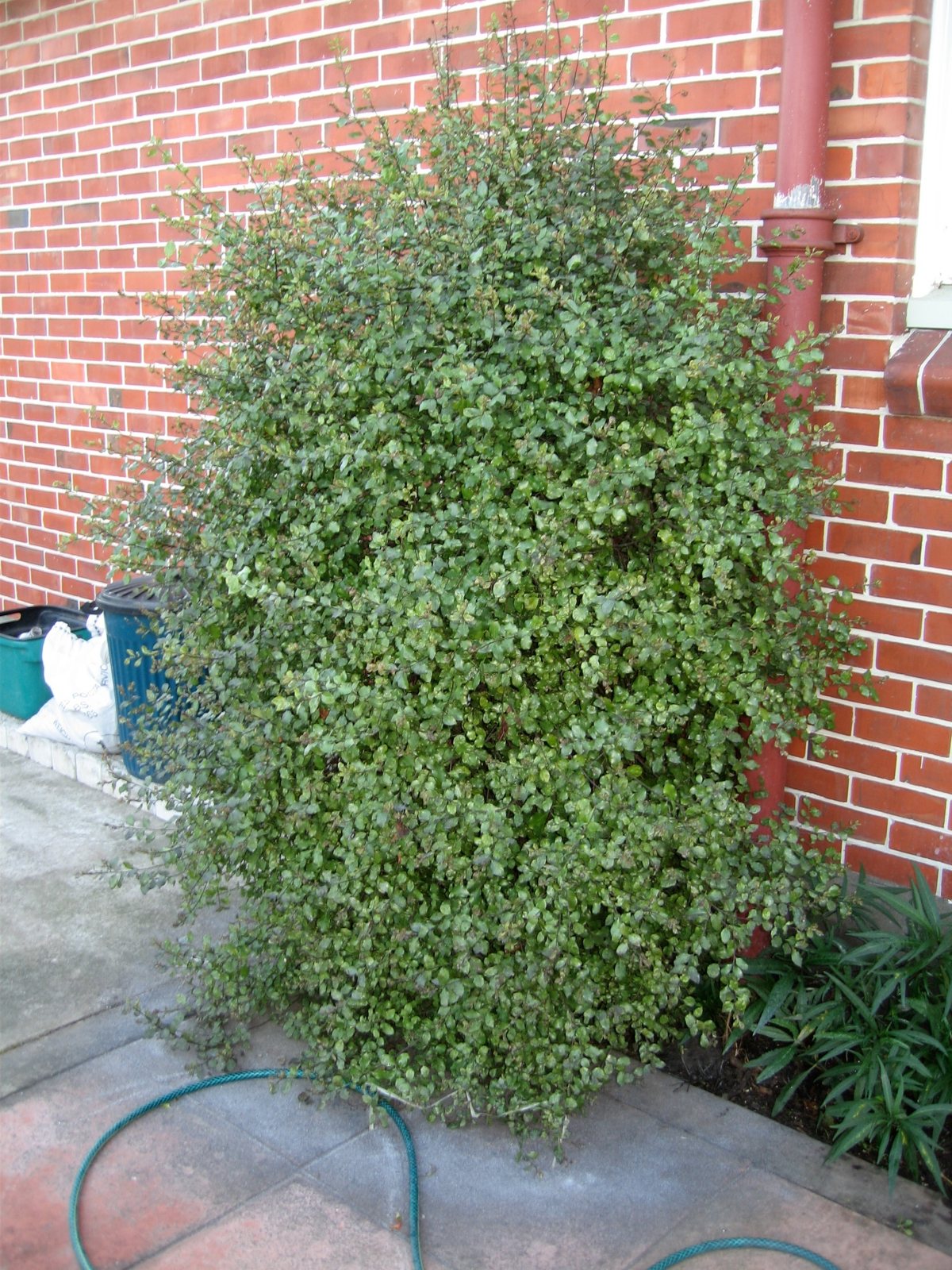
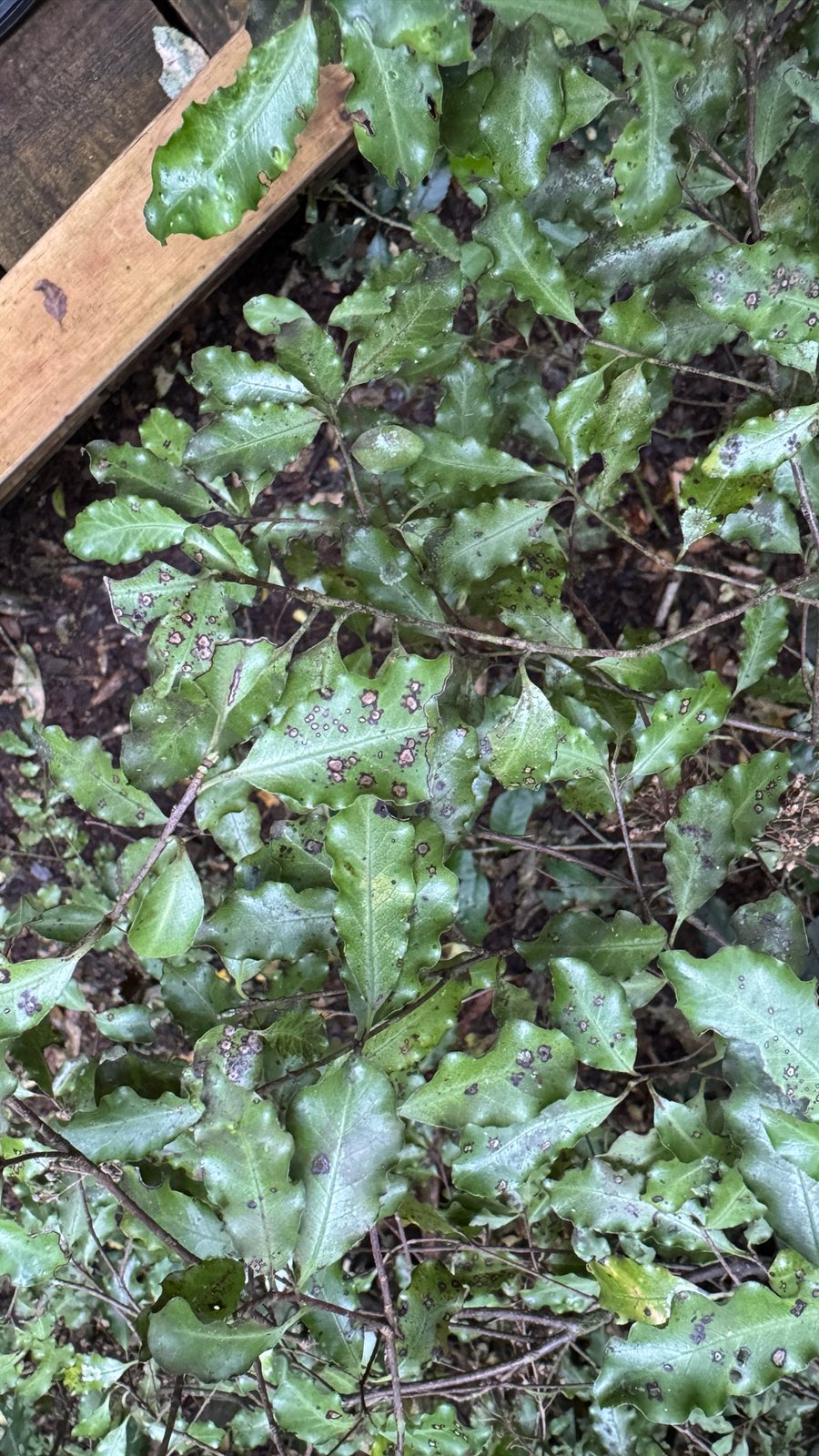
Kohuhu is a New Zealand evergreen shrub or small tree with small, wavy-edged leaves and dark stems. Gardeners grow it for screening, clipped hedges and a light-textured backdrop to flowering plants. It suits mild climates but needs shelter from severe frost and cold, drying winds.
At a glance
- Sun
- Full sun to partial shade; coloured-leaf cultivars generally develop their best colour in sun.
- Water
- Water regularly while establishing; once rooted, it tolerates short dry spells but benefits from deep watering during prolonged drought.
- Soil
- Well-drained soil, from slightly acidic to slightly alkaline; avoid waterlogged ground.
- Height
- 15-30 ft (4.5-9 m), unless clipped; compact cultivars stay much smaller
- Spread
- 10-20 ft (3-6 m), unless clipped; varies considerably by cultivar
- Flowers
- Small, dark purple to nearly black flowers in spring, often fragrant in the evening; easily hidden among the leaves.
- Foliage
- Evergreen. Small, oval, glossy green leaves with wavy margins, carried on slender, dark stems; cultivars include silver, variegated and purple-leaved forms.
- Growth
- Moderate to fast in mild conditions with adequate moisture.
- Care needed
- Low
The year at a glance
- Pollinators
- Heat tolerant
- Wildlife
- Low allergen
- Fragrant
| J | F | M | A | M | J | J | A | S | O | N | D | |
|---|---|---|---|---|---|---|---|---|---|---|---|---|
| Flowers | ||||||||||||
| Fruit | ||||||||||||
| Plant |
Northern hemisphere months. In Australia, shift them by six.
- Difficulty
- Moderate
- Toughness
- Needs looking after
Will it suit your garden?
Pick your zone, country, light and whether you have pets.
Full sun is 6 or more hours of direct sun a day, part shade 3 to 6 hours, shade under 3.
How it grows
Planting day
2.7 ft (0.81 m)
After 1 year
8 ft (2.3 m)
After 2 years
12 ft (3.8 m)
After 3 years
17 ft (5.3 m)
After 5 years
22 ft (6.8 m)
full size
About 4 years to full size.
From a typical nursery size, at an average rate for this kind of plant. A rule of thumb, not a forecast.
Good to know
- Cats and dogs
- Safe
- Invasive in
- Australia
- Growth rate
- Fast
Care
Jobs through the year
- WaterApr–May, Sep–Oct, every 14 days
- Water established in-ground plants if soil is dry; young plants and containers require more frequent checks.
- WaterJun–Aug, every 7 days
- Water established plants deeply during prolonged dry spells; prevent young plants and containers drying out.
- MulchApr
- Spread 5–8 cm of organic mulch over the roots, keeping it clear of the trunk.
- FeedApr
- Feed lightly only if growth is weak or soil is poor; avoid excessive nitrogen.
- PruneMay–Jun
- After frost risk passes, remove damaged shoots and lightly shape within leafy growth.
- ProtectJan–Apr, Oct–Dec
- In zones 6–7, use a container and bright frost-free winter shelter; fleece alone will not ensure survival.
- Plant in spring in cooler districts; autumn planting also suits mild areas with freely draining soil.
- Water deeply during dry weather for the first two growing seasons, letting the soil surface dry slightly between waterings.
- Spread 2-3 in (5-8 cm) of organic mulch over the root area, keeping it clear of the trunk.
- Feed lightly in spring only if growth is weak or the soil is poor; avoid heavy nitrogen feeding.
- Choose a sheltered position near its cold limit, and protect young plants with horticultural fleece during sharp frosts.
Pruning. Trim hedges and shaped plants in late spring or early summer, after the main frost risk has passed; a light summer trim can maintain the outline. Remove dead or damaged growth in spring, and avoid hard pruning into old, leafless wood.
Through the year
- Spring
- Plant in cooler districts once severe frosts have passed, and water thoroughly.
- Mid-spring
- Check for winter damage, remove dead shoots and renew mulch.
- Late spring
- Clip hedges or lightly shape individual plants after the main frost risk.
- Summer
- Water young plants deeply during dry spells and inspect crowded growth for scale insects.
- Late summer
- Take semi-ripe cuttings from healthy, non-flowering shoots.
- Autumn
- Plant in mild districts; remove unwanted seedlings before they become established.
- Winter
- Protect young plants during severe freezes and check that containers drain freely.
In the garden
- Clip into a hedge or screen where an evergreen boundary is needed in a mild climate.
- Use green-leaved plants behind flowering perennials to provide a quiet, fine-textured backdrop.
- Plant compact cultivars as rounded forms beside paths or terraces, contrasting them with grasses.
- Train a specimen as a small, multi-stemmed tree where there is room for its mature canopy.
- Use in sheltered coastal gardens, away from the harshest direct salt spray.
Garden styles it suits: Coastal, Modern, Architectural minimal, Formal, Green on green and Low-maintenance.
Plant it with: New Zealand flax, Hebes, Lavender, Rosemary and Fountain grass.
Wildlife: The small flowers provide nectar for visiting insects, and birds may eat the exposed seeds. Dense growth offers shelter and potential nesting cover.
Problems to watch for
- Root rot in saturated soil: improve drainage or move the plant to a raised position; do not keep watering wet ground.
- Frost or cold-wind scorch: shelter young plants, protect during hard freezes and wait until spring growth begins before removing damaged shoots.
- Scale insects and associated sooty mould: inspect stems and leaf undersides, remove small infestations by hand and use a labelled horticultural oil if needed.
- Sparse or uneven hedges in deep shade: provide more light and trim lightly rather than cutting back into bare old wood.
Safety
Not known to be toxic to people, cats or dogs. Reliable horse-specific safety information is limited, so do not use clippings as feed. The foliage, fruit and seeds are not intended for eating.
Where it spreads. It can escape cultivation and is reported as an environmental weed in parts of southeastern Australia, including Victoria and Tasmania. Check local weed guidance, especially near native vegetation, and remove volunteer seedlings.
Easily confused with
Sweet pittosporum (Pittosporum undulatum)
Usually has larger leaves and conspicuous clusters of creamy-white, strongly scented flowers, followed by orange capsules; kohuhu has smaller leaves and dark purple flowers.
Japanese mock orange (Pittosporum tobira)
Has thicker, leathery, spoon-shaped leaves clustered near shoot tips and cream-white flowers; kohuhu has thinner leaves distributed along slender, dark stems.
Lemonwood (Pittosporum eugenioides)
Has larger, usually paler leaves that smell distinctly lemony when crushed, and yellowish flowers rather than kohuhu's dark purple flowers.
The name
Kōhūhū is the Māori name; Pittosporum refers to the sticky coating around the seeds, and tenuifolium means thin-leaved.
Propagation. Take semi-ripe cuttings in late summer and root them in a free-draining medium with gentle humidity. Seed can be used for the species, but seedlings of named cultivars will not reliably retain the parent's colour or habit.
Checked against open data
- Accepted botanical name
- Pittosporum tenuifolium
- In the US and Canada
- Introduced in the lower 48 states.
- Native range
- New Zealand North and New Zealand South.
- Measured
- Average height 710 cm.
Sources: GBIF (CC BY 4.0), USDA PLANTS and Trefle (CC BY 4.0). The care and design notes are LandscapeGPT's own.
See it in your own yard.
Upload a photo of your yard and see it redesigned with plants that suit your climate, each checked against your zone.