Korean feather reed grass
Calamagrostis brachytricha. Family Poaceae. Ornamental grass.
Also called Korean feather grass, Diamond grass.
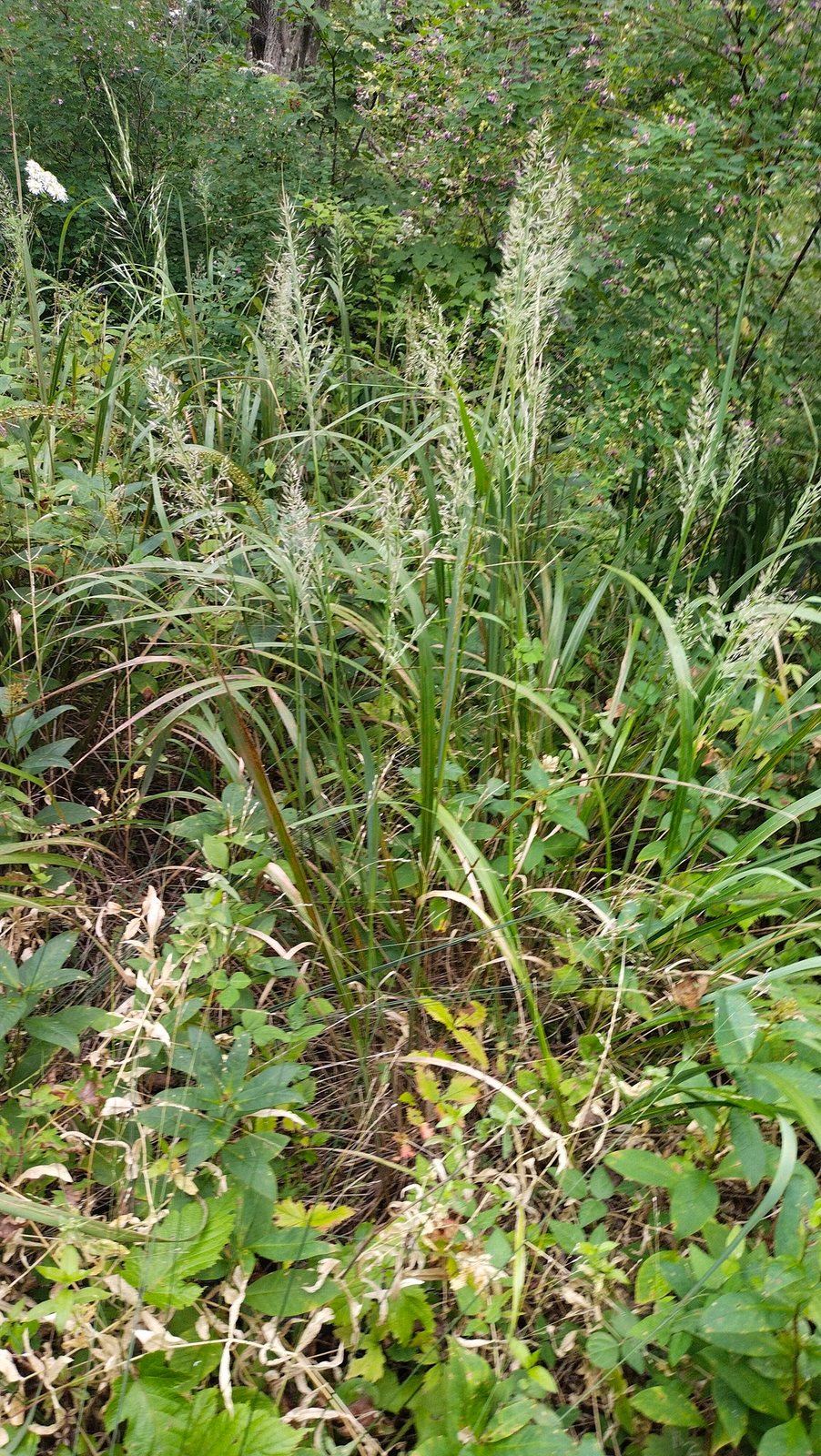
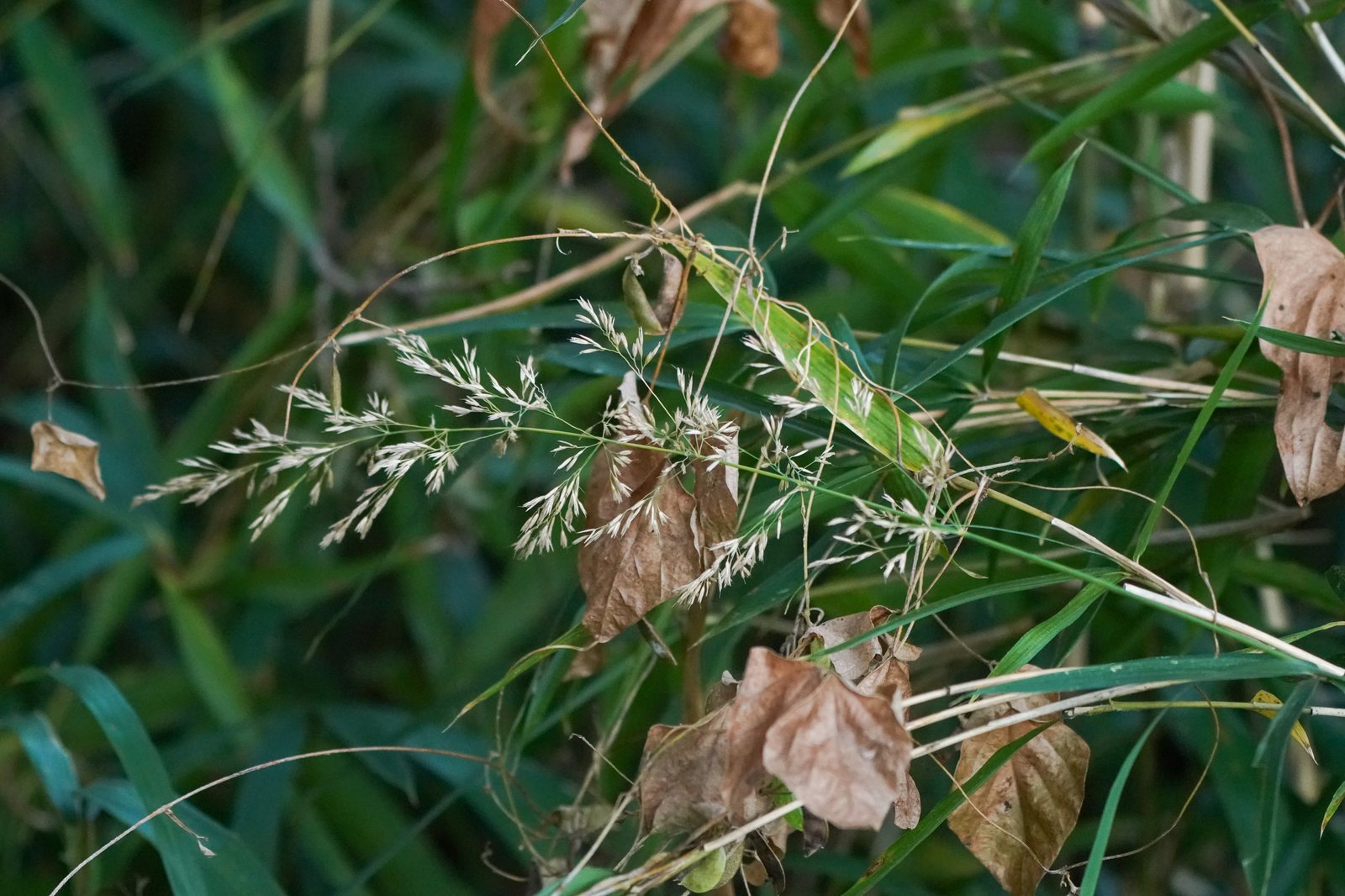
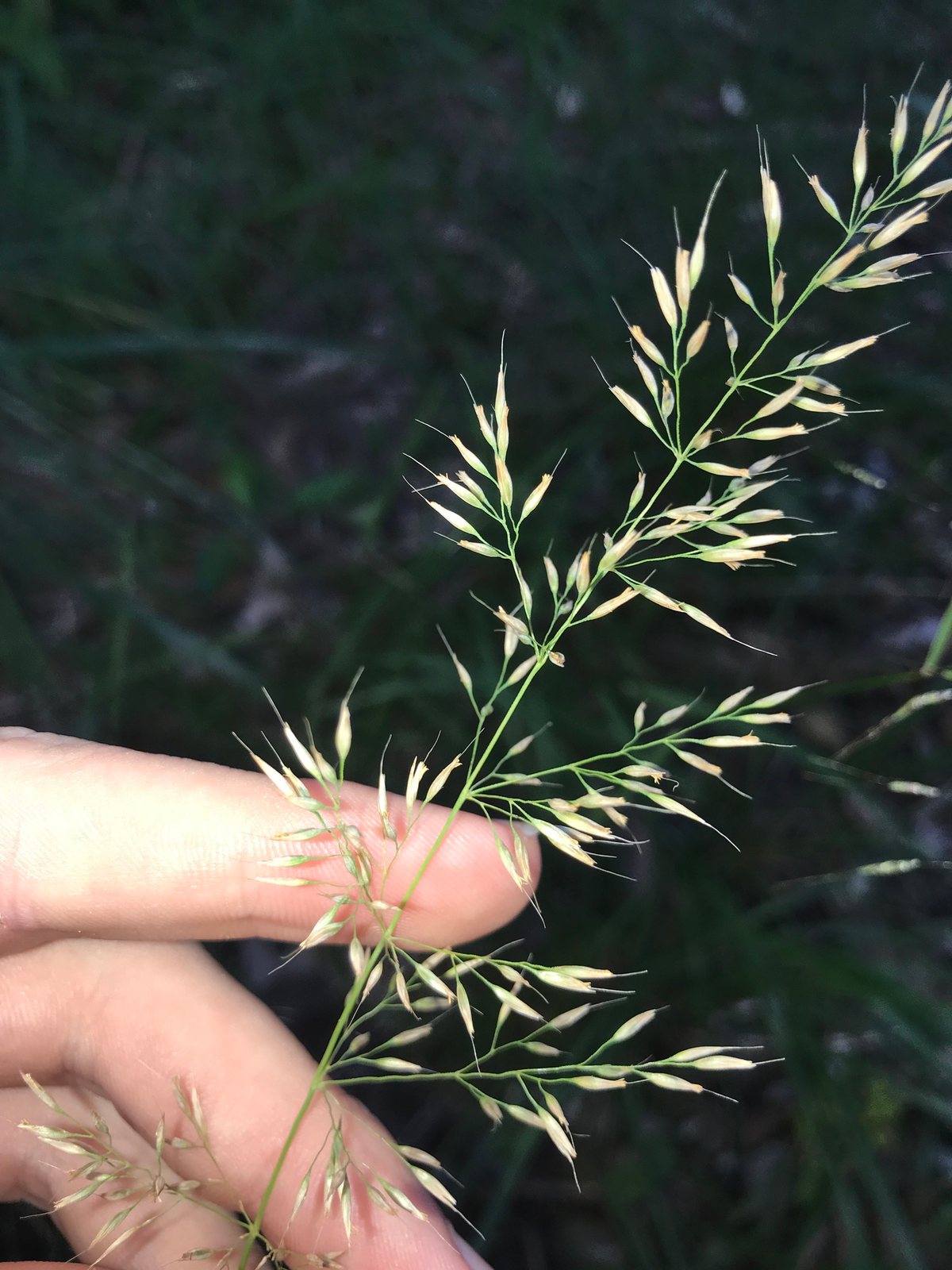
Korean feather reed grass (Calamagrostis brachytricha) is a deciduous, clump-forming grass native to eastern Asia. Gardeners grow it for its arching green leaves and soft, pinkish flower plumes that catch dew and fade to buff, providing interest into winter.
At a glance
- Sun
- Full sun to partial shade; afternoon shade is helpful in hot climates.
- Water
- Moderate; keep the root zone evenly moist, especially during establishment and hot, dry weather.
- Soil
- Moist, well-drained soil enriched with organic matter; tolerates clay if it is not persistently waterlogged.
- Height
- 3-4 ft (0.9-1.2 m), including flower stems
- Spread
- 2-3 ft (0.6-0.9 m)
- Flowers
- Late summer through autumn; airy, pink-flushed to purplish plumes age to silvery buff.
- Foliage
- Arching, narrow green leaves form a rounded mound and turn yellow to straw-coloured in autumn.
- Growth
- Moderate
- Care needed
- Low
The year at a glance
- Deer resistant
- Cold hardy
- Heat tolerant
- Wildlife
| J | F | M | A | M | J | J | A | S | O | N | D | |
|---|---|---|---|---|---|---|---|---|---|---|---|---|
| Flowers | ||||||||||||
| Fruit | ||||||||||||
| Plant |
Northern hemisphere months. In Australia, shift them by six.
- Difficulty
- Easy
- Toughness
- Fairly tough
Will it suit your garden?
Pick your zone, country, light and whether you have pets.
Full sun is 6 or more hours of direct sun a day, part shade 3 to 6 hours, shade under 3.
How it grows
Planting day
1.1 ft (0.35 m)
After 1 year
2.1 ft (0.63 m)
After 2 years
3 ft (0.91 m)
After 3 years
3 ft (1.1 m)
full size
About 3 years to full size.
From a typical nursery size, at an average rate for this kind of plant. A rule of thumb, not a forecast.
Good to know
- Cats and dogs
- Safe
- Growth rate
- Moderate
Care
Jobs through the year
- WaterApr–May, Sep–Oct, every 14 days
- Water established clumps if rain is insufficient; young plants need more frequent moisture checks.
- WaterJun–Aug, every 7 days
- Water deeply in dry weather to keep the root zone evenly moist, not waterlogged.
- PruneFeb–Mar
- Cut old stems to 10–15 cm before fresh shoots lengthen.
- MulchMar–Apr
- Top-dress with a thin compost layer and renew mulch without covering the crown.
- DivideMar–Apr
- Divide only when the centre becomes sparse or the clump outgrows its space.
- DeadheadSep–Oct
- Remove plumes before seed sheds only if seedlings are unwanted; otherwise retain for winter.
- Water deeply during the first growing season whenever the soil begins to dry.
- Water established clumps during prolonged dry spells; drought can brown the foliage.
- Apply a thin layer of compost in spring; avoid heavy nitrogen feeding, which encourages floppy growth.
- Mulch around the clump to conserve moisture, keeping mulch clear of the crown.
- Divide in spring if the centre becomes sparse or the clump outgrows its space.
Pruning. Leave the dry foliage and plumes standing through winter if they remain attractive. Cut the whole clump to 4-6 in (10-15 cm) above ground in late winter or early spring, before new shoots lengthen.
Through the year
- Late winter
- Cut back old stems and leaves before fresh growth starts.
- Spring
- Plant or divide clumps, then water thoroughly.
- Spring
- Add a thin compost dressing and renew mulch around, not over, the crown.
- Summer
- Water during dry spells and check for browning leaf tips.
- Autumn
- Leave plumes for seasonal colour, or remove them before seed sheds if seedlings are unwanted.
- Winter
- Leave sound stems standing for structure; remove any that collapse onto nearby plants.
In the garden
- Plant in repeated groups through perennial borders to soften upright flowers and link the planting together.
- Use along bright woodland edges with hostas, ferns and Japanese anemones.
- Place where low autumn sunlight can shine through the airy plumes.
- Combine with asters and autumn stonecrops for late-season colour and contrasting flower shapes.
Garden styles it suits: New perennial (prairie), Woodland, Autumn colour, Winter interest, Korean and Low-maintenance.
Plant it with: Japanese anemone, Hosta, Astilbe, Purple coneflower, Autumn stonecrop and Aster.
Wildlife: Dense clumps provide shelter for insects and other small animals. The flowers are wind-pollinated and are not a significant nectar source for bees or butterflies.
Problems to watch for
- Brown leaf tips or early browning in drought: water deeply and mulch to reduce moisture loss.
- Flopping stems in deep shade or very rich soil: provide more light and stop high-nitrogen feeding.
- Crown rot in persistently wet soil: improve drainage or move the plant to a better-drained position.
- Unwanted seedlings in moist, open soil: remove plumes before seed sheds and pull young seedlings promptly.
Safety
Not known to be toxic to cats, dogs, horses or people; no part is recognised as poisonous. It is an ornamental grass, not a food or forage recommendation, and coarse leaves or stems may irritate the mouth if chewed.
Easily confused with
Karl Foerster feather reed grass (Calamagrostis × acutiflora 'Karl Foerster')
Has a more rigid, upright habit and narrower flower heads that usually appear earlier; Korean feather reed grass has broader, softer plumes and more arching foliage.
Tufted hair grass (Deschampsia cespitosa)
Forms a denser mound of finer leaves with a more open, branching cloud of tiny flowers, rather than the fuller, feather-like plumes of Korean feather reed grass.
The name
The common name refers to its Korean range and feathery plumes, while the species name brachytricha comes from Greek words meaning 'short-haired'.
Propagation. Divide established clumps in spring as growth begins, keeping several shoots and a good portion of roots on each division. It can also be raised from seed and may self-seed in moist garden soil.
Checked against open data
- Accepted botanical name
- Calamagrostis arundinacea Calamagrostis brachytricha is an older name for Calamagrostis arundinacea.
- Native range
- Albania, Altay, Amur, Austria, Baltic States, Belarus, Belgium, Bulgaria, Buryatiya, Central European Rus, China North-Central and China South-Central.
- Measured
- Soil pH 5 to 5.5. Average height 85 cm.
Sources: GBIF (CC BY 4.0) and Trefle (CC BY 4.0). The care and design notes are LandscapeGPT's own.
See it in your own yard.
Upload a photo of your yard and see it redesigned with plants that suit your climate, each checked against your zone.