Korean fir
Abies koreana. Family Pinaceae. Tree.
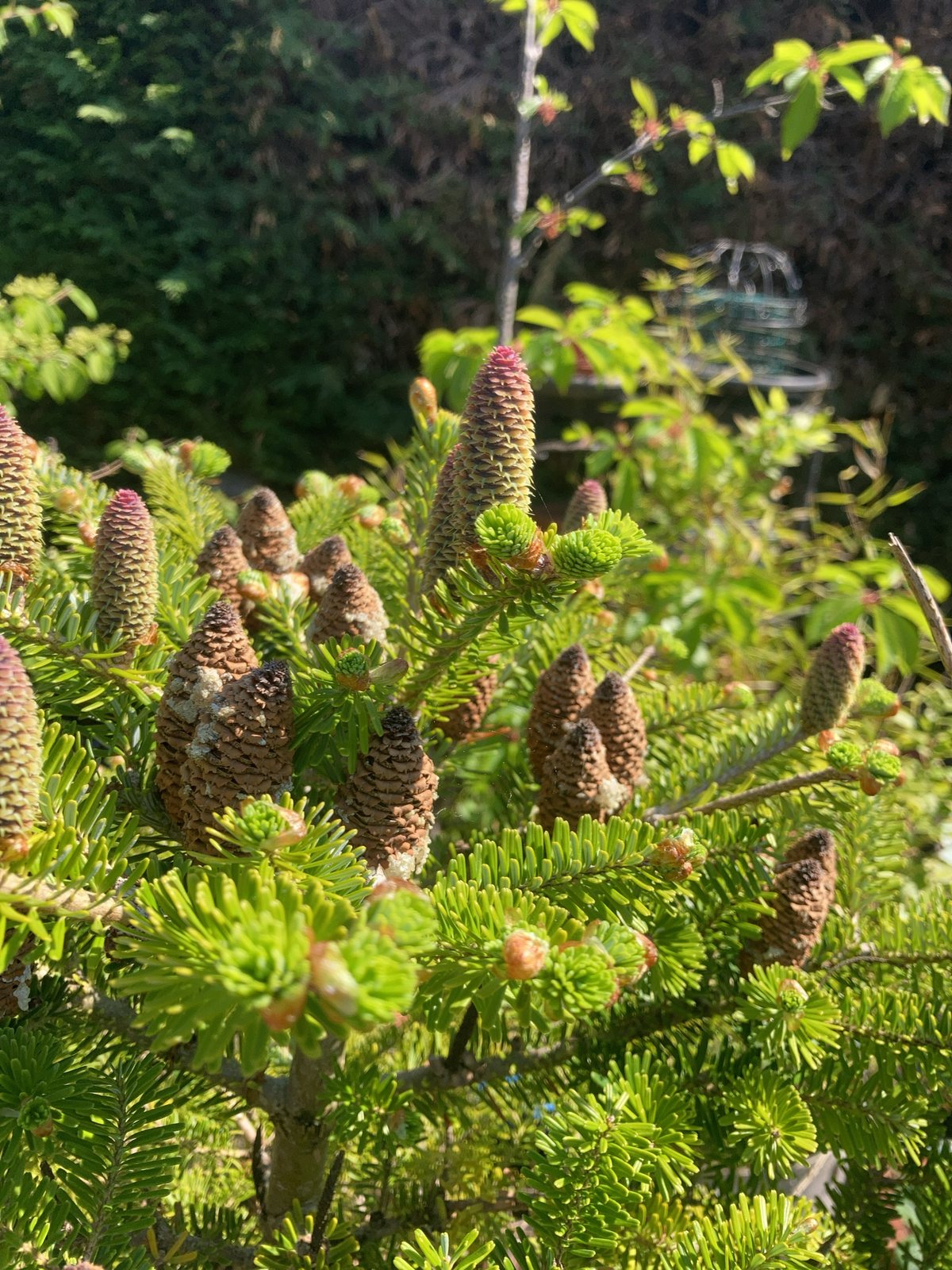
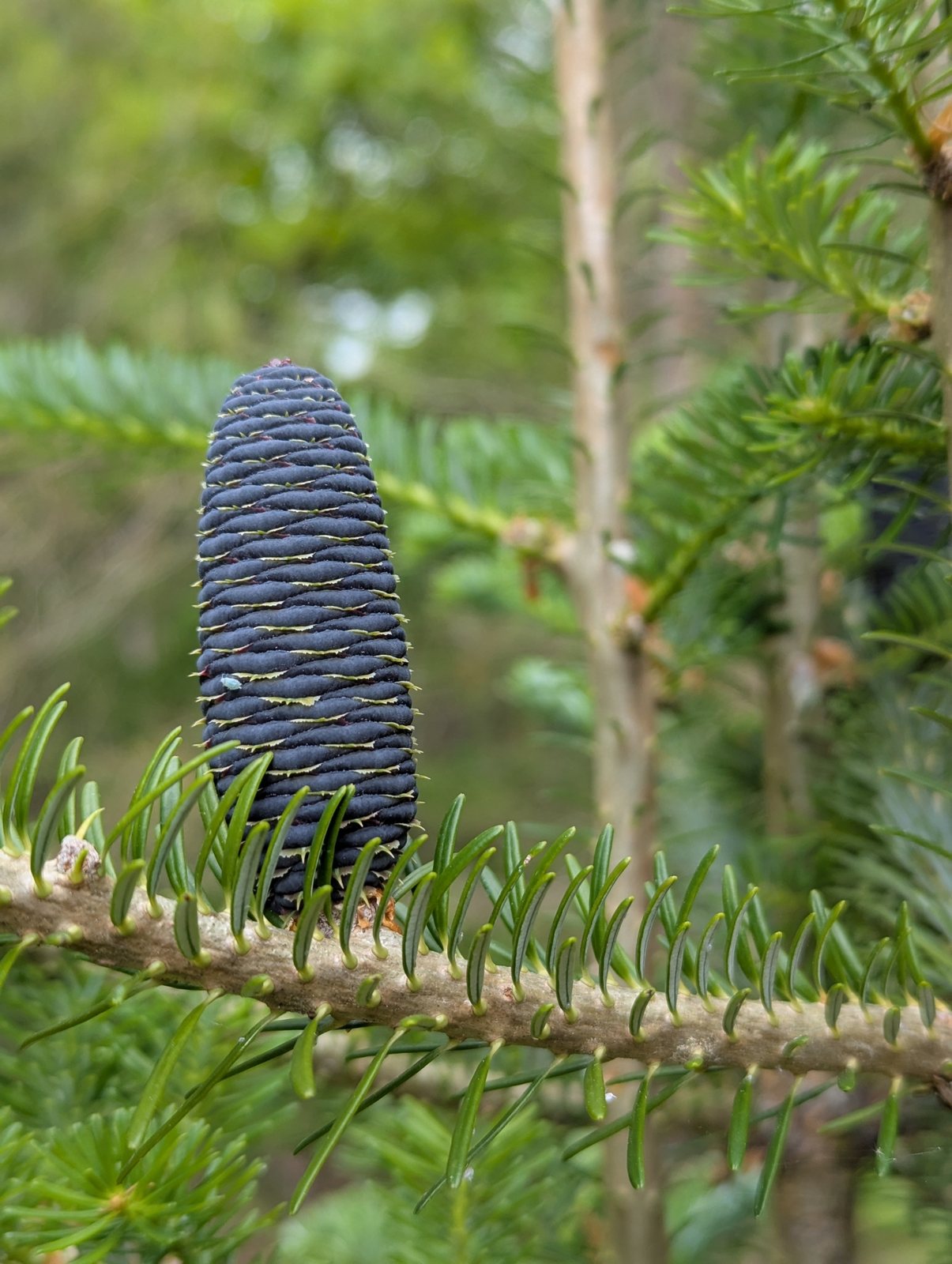
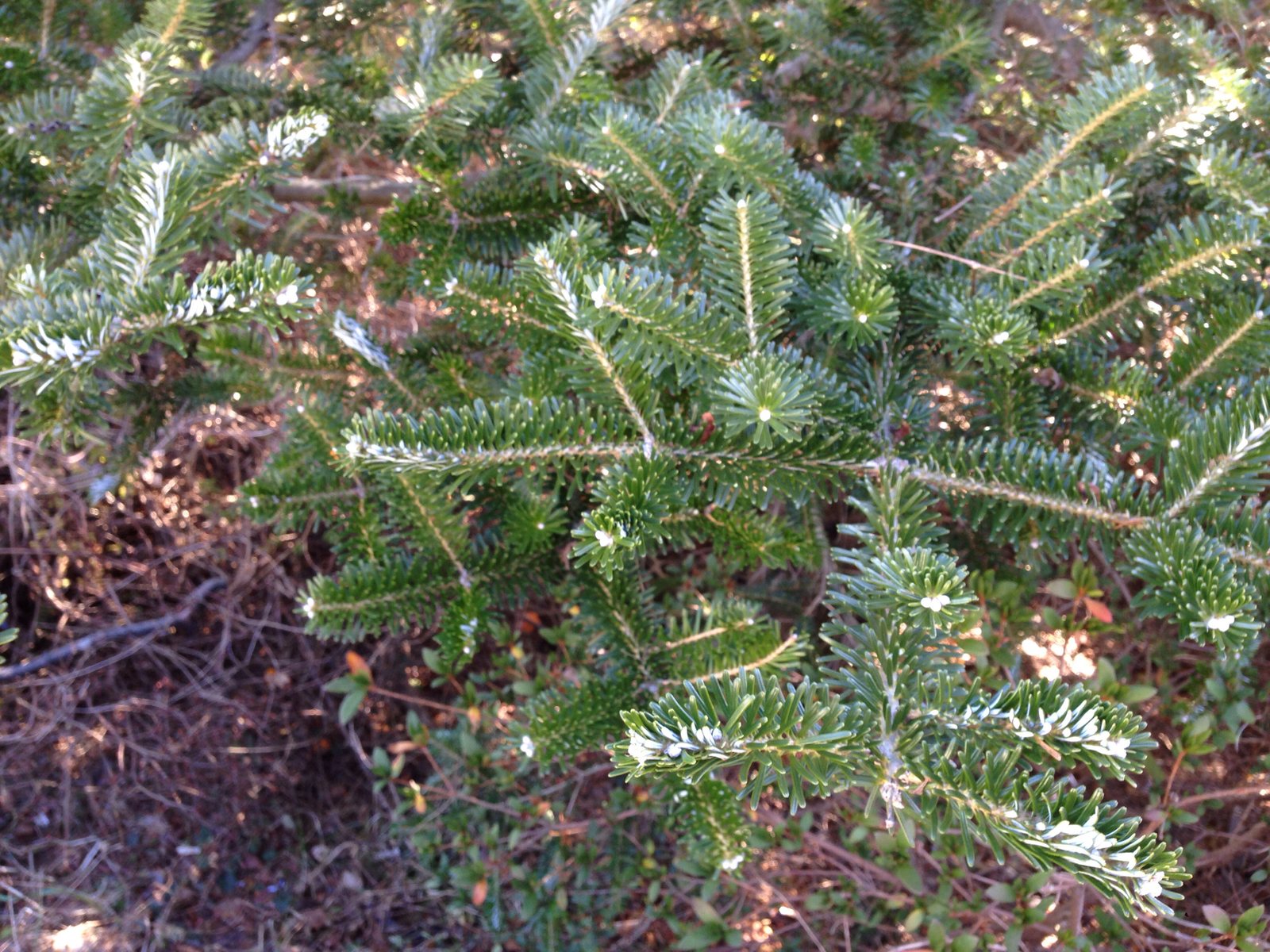
Korean fir is a slow-growing evergreen conifer with a neat, conical crown and short needles showing bright silver-white undersides. Gardeners grow it for its year-round structure and upright violet-purple cones, which can appear on relatively young trees. It performs best in cool climates and struggles with hot summers, drought and waterlogged soil.
At a glance
- Sun
- Full sun in cool climates; light afternoon shade where summers are warmer. Shelter from hot, drying winds.
- Water
- Keep the root zone evenly moist but never waterlogged. Water deeply during dry spells, especially for the first two or three years.
- Soil
- Moist, well-drained, humus-rich soil, preferably slightly acidic. Avoid shallow, drought-prone soil and sites that remain saturated after rain.
- Height
- 30-50 ft (9-15 m) at maturity; often considerably smaller in gardens for many years
- Spread
- 15-25 ft (4.5-7.5 m)
- Foliage
- Evergreen. Short, flattened, dark green needles with rounded or slightly notched tips and two broad silver-white bands beneath; retained year-round.
- Growth
- Slow, often around 4-8 in (10-20 cm) a year once established, depending on conditions.
- Care needed
- Low
The year at a glance
- Wildlife
| J | F | M | A | M | J | J | A | S | O | N | D | |
|---|---|---|---|---|---|---|---|---|---|---|---|---|
| Fruit | ||||||||||||
| Plant |
Northern hemisphere months. In Australia, shift them by six.
- Difficulty
- Moderate
- Toughness
- Fairly tough
Will it suit your garden?
Pick your zone, country, light and whether you have pets.
Full sun is 6 or more hours of direct sun a day, part shade 3 to 6 hours, shade under 3.
How it grows
Planting day
7 ft (2 m)
After 1 year
8 ft (2.3 m)
After 2 years
9 ft (2.6 m)
After 3 years
10 ft (2.9 m)
After 5 years
12 ft (3.6 m)
About 32 years to full size.
From a typical nursery size, at an average rate for this kind of plant. A rule of thumb, not a forecast.
Good to know
- Cats and dogs
- Safe
- Growth rate
- Slow
Care
Jobs through the year
- WaterApr–May, Sep–Nov, every 14 days
- Water established trees when soil below the surface begins drying; young trees need more frequent checks.
- WaterJun–Aug, every 7 days
- Water deeply during dry weather to maintain even moisture without waterlogging.
- MulchApr–May
- Maintain 5–8 cm of organic mulch over the roots, keeping the trunk clear.
- PruneFeb–Mar
- Remove damaged, dead or crossing branches only; retain the leader and avoid bare old wood.
- ProtectJan–Feb, Nov–Dec
- Check young trees for wind-rock and rubbing ties; leave ice on branches to thaw naturally.
- Plant with the root flare at soil level, allowing space for the mature crown.
- Water deeply during dry weather; check moisture beneath the surface rather than watering on a fixed schedule.
- Apply 2-3 in (5-8 cm) of organic mulch over the root zone, keeping it clear of the trunk.
- Feed only if growth is poor and a soil test indicates a deficiency; avoid heavy nitrogen feeding.
- Stake only if the root ball moves in wind, and remove supports once the tree is firmly rooted.
Pruning. Little pruning is needed; remove dead, damaged or crossing branches in late winter or early spring. Retain the central leader and avoid cutting back into bare old wood, which usually does not regrow.
Through the year
- Spring
- Plant when the ground is workable and not waterlogged; water thoroughly after planting.
- Early spring
- Check for winter damage and remove dead or broken branches without reshaping the crown.
- Late spring
- Refresh mulch and inspect new shoots for aphids or distorted growth.
- Summer
- Check soil moisture during dry spells and water deeply before the root zone dries out.
- Autumn
- Water during dry weather before the ground freezes, and check that drainage remains clear.
- Winter
- Check young trees for wind rocking and loose ties; avoid knocking ice from branches.
In the garden
- Use as a single specimen on a lawn or in a broad border, with room for its lower branches to remain intact.
- Set against a dark hedge or woodland backdrop to make the silver needle undersides and purple cones more visible.
- Combine with rhododendrons, ferns and hostas in a cool, moisture-retentive woodland-edge planting.
- Use as an evergreen anchor among deciduous shrubs and grasses for winter structure.
Garden styles it suits: Woodland, Winter interest, Mountain lodge, Japanese, Korean and Pacific Northwest woodland.
Plant it with: Rhododendrons, Japanese maples, Hostas, Japanese painted ferns, Japanese forest grass and Winter heathers.
Wildlife: The dense evergreen branches provide shelter and potential nesting cover for birds. Seeds may be eaten by birds and small mammals; the tree is wind-pollinated and offers little for nectar-feeding insects.
Problems to watch for
- Root rot in saturated soil: improve drainage before planting and avoid overwatering; severely affected trees may need removal.
- Balsam woolly adelgid: look for white woolly patches on bark, distorted growth and decline; seek local advice because treatment options and pest importance vary by region.
- Spider mites during hot, dry weather: look for fine stippling and webbing; maintain soil moisture and rinse reachable foliage with water.
- Browning needles from drought, heat or drying winter winds: water deeply, mulch the root zone and shelter young trees; choose another species if summers are consistently hot.
Safety
Not known to be toxic to cats, dogs, horses or people. Needles and resin are not food and may irritate the mouth or stomach if chewed or swallowed; seek veterinary or medical advice after substantial ingestion or if symptoms develop.
Easily confused with
Nordmann fir (Abies nordmanniana)
Usually has longer, more densely arranged needles and becomes a much larger tree. Its young seed cones are generally green rather than the conspicuous violet-purple typical of Korean fir.
Norway spruce (Picea abies)
Has pointed, four-sided needles attached to small woody pegs and cones that hang down. Korean fir has flattened needles and upright cones that break apart on the tree.
The name
Abies is the Latin name for fir, and koreana refers to the species' native home in Korea.
Propagation. Grow the species from seed, usually after a period of cold, moist stratification. Seedlings vary; named cultivars are generally grafted by specialist growers to preserve their characteristics.
Checked against open data
- Accepted botanical name
- Abies koreana
- Native range
- Korea.
- Measured
- Average height 1800 cm.
Sources: GBIF (CC BY 4.0) and Trefle (CC BY 4.0). The care and design notes are LandscapeGPT's own.
See it in your own yard.
Upload a photo of your yard and see it redesigned with plants that suit your climate, each checked against your zone.