Koreanspice viburnum
Viburnum carlesii. Family Viburnaceae. Shrub.
Also called Korean spice viburnum, Korean viburnum.
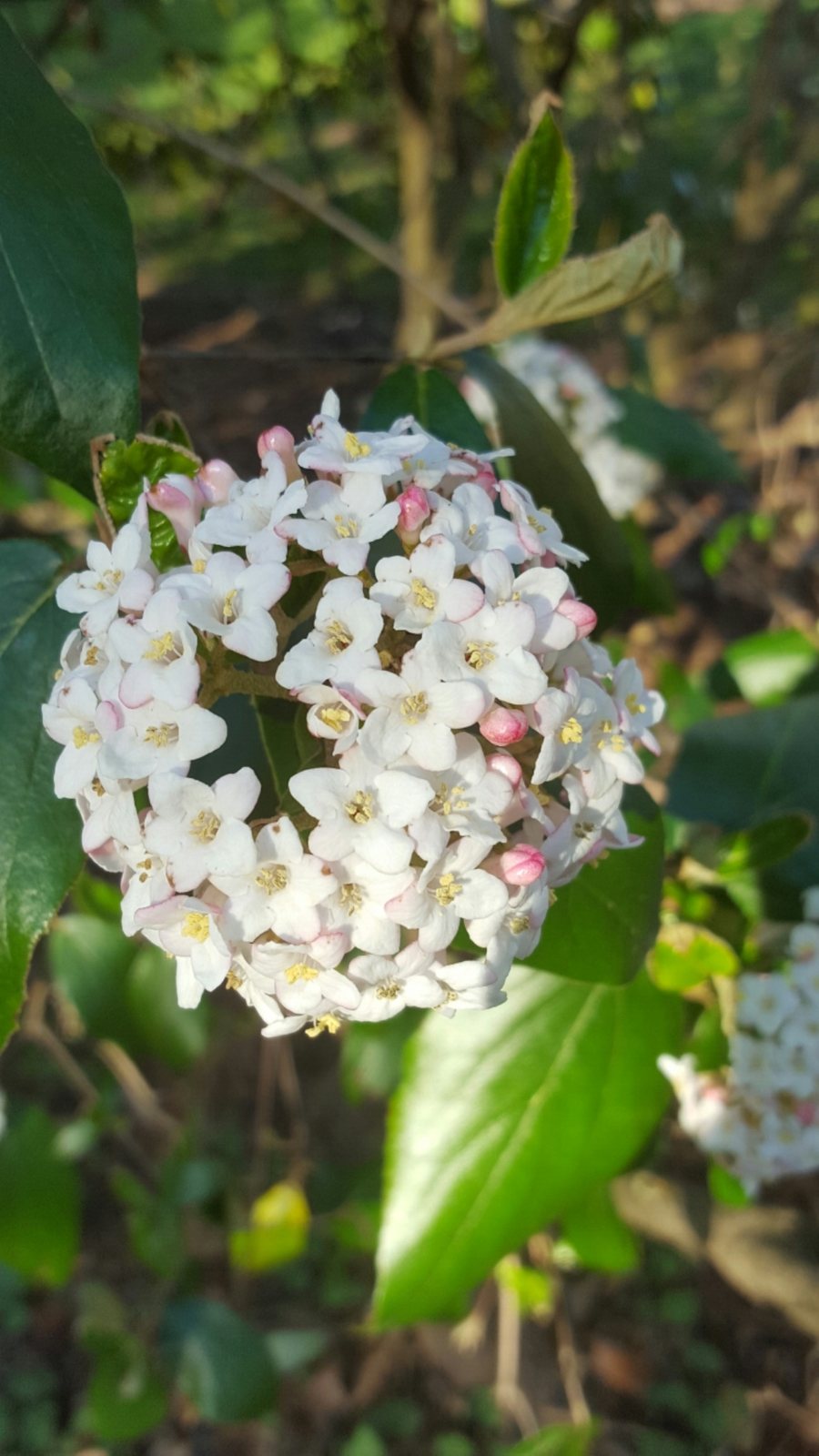
Koreanspice viburnum is a rounded, deciduous shrub grown for its strongly spicy-scented spring flowers, which open white from pink buds. It makes a useful specimen near a path or seating area and often develops red to burgundy autumn foliage. It performs best in climates with cold winters and moderate summers, including cooler districts of Australia.
At a glance
- Sun
- Full sun to partial shade; provide afternoon shade where summers are hot.
- Water
- Moderate; keep the root zone evenly moist while establishing and water established plants during prolonged dry spells.
- Soil
- Moist, well-drained soil enriched with organic matter; tolerates clay if drainage is adequate and grows in slightly acidic to slightly alkaline soil.
- Height
- 4-6 ft (1.2-1.8 m)
- Spread
- 4-7 ft (1.2-2.1 m)
- Flowers
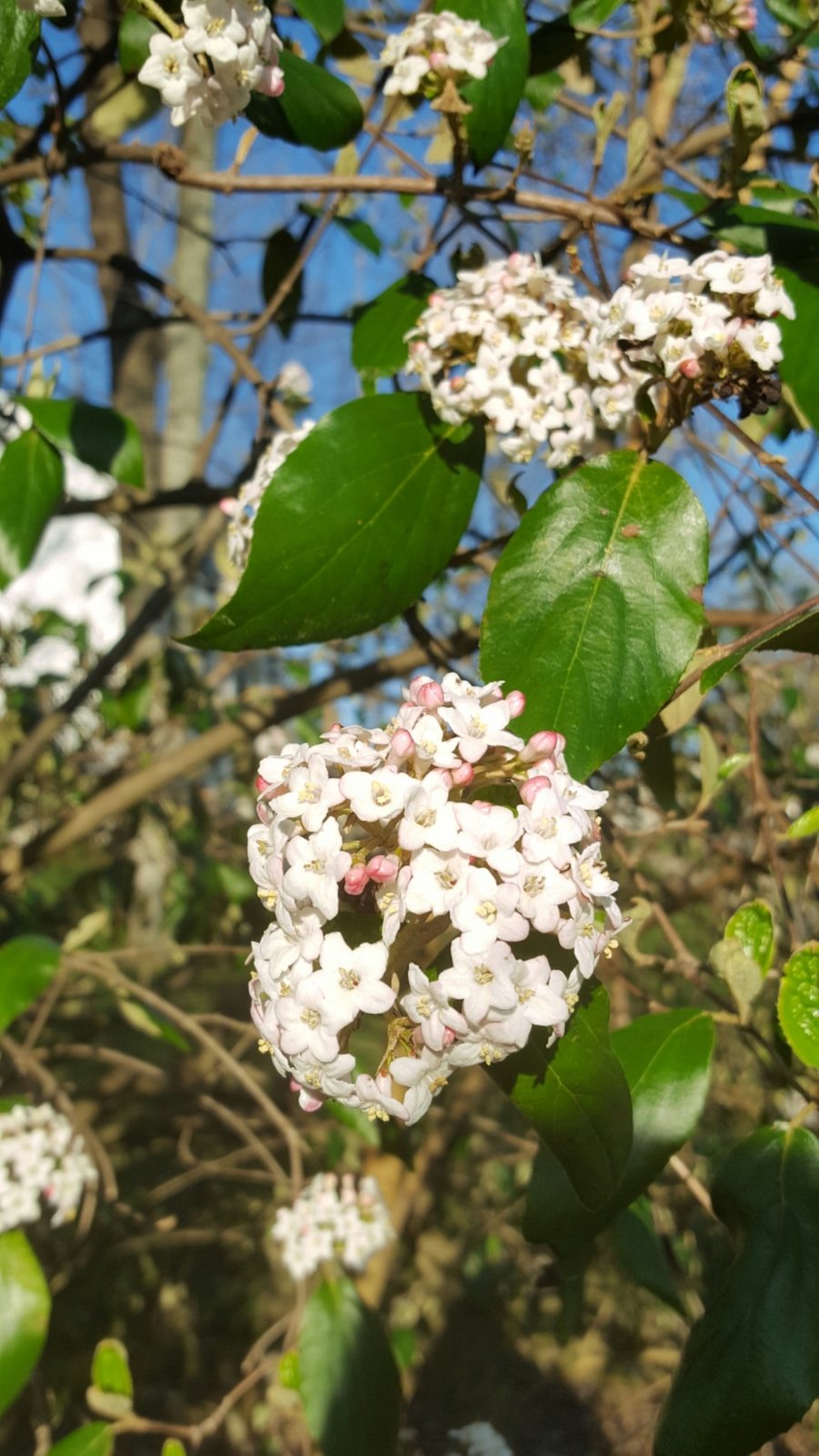
- Early to mid-spring; rounded clusters of pink buds open to white or pink-flushed, strongly fragrant flowers.
- Foliage
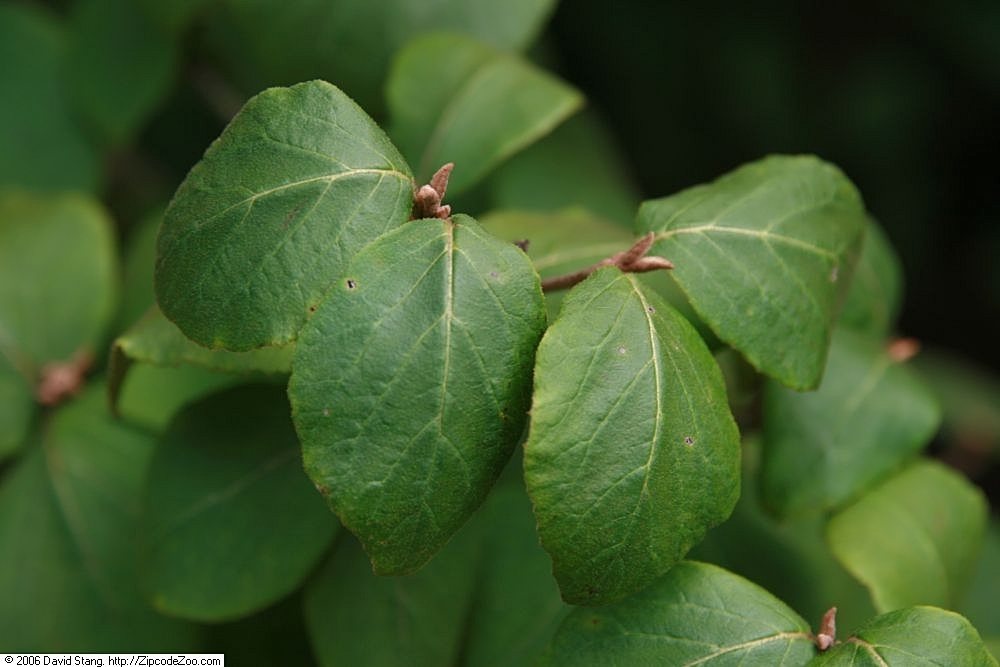
- Opposite, broadly oval, toothed, dull green leaves with a softly hairy surface; autumn colour ranges from muted red to rich burgundy.
- Growth
- Slow to moderate
- Care needed
- Low
The year at a glance
- Pollinators
- Cold hardy
- Wildlife
- Low allergen
- Fragrant
| J | F | M | A | M | J | J | A | S | O | N | D | |
|---|---|---|---|---|---|---|---|---|---|---|---|---|
| Flowers | ||||||||||||
| Fruit | ||||||||||||
| Plant |
Northern hemisphere months. In Australia, shift them by six.
- Difficulty
- Easy
- Toughness
- Fairly tough
Will it suit your garden?
Pick your zone, country, light and whether you have pets.
Full sun is 6 or more hours of direct sun a day, part shade 3 to 6 hours, shade under 3.
How it grows
Planting day
1.6 ft (0.5 m)
After 1 year
2.1 ft (0.65 m)
After 2 years
2.7 ft (0.81 m)
After 3 years
3 ft (0.96 m)
After 5 years
4 ft (1.3 m)
About 7 years to full size.
From a typical nursery size, at an average rate for this kind of plant. A rule of thumb, not a forecast.
Good to know
- Cats and dogs
- Mildly toxic: may upset a stomach
- Growth rate
- Slow
Care
Jobs through the year
- WaterApr–May, Sep–Oct, every 14 days
- Water established shrubs if soil is drying; keep young plants evenly moist for two seasons.
- WaterJun–Aug, every 7 days
- Soak deeply during dry spells, skipping watering when rainfall is sufficient.
- MulchMar–Apr
- Top-dress with compost and maintain 5–8 cm of mulch clear of the stems.
- FeedMar–Apr
- Use a balanced slow-release feed only if growth is weak or soil is poor.
- PruneApr–May
- Prune only after flowering; remove crossing shoots and a few old stems if congested.
- Water deeply during the first two growing seasons whenever the soil begins to dry; avoid keeping it saturated.
- Spread 2-3 in (5-8 cm) of organic mulch over the root zone, leaving a clear gap around the stems.
- Apply compost in spring; use a balanced slow-release fertiliser only if growth is weak or soil fertility is poor.
- Allow room for the natural rounded shape rather than repeatedly shearing it.
- For a better chance of fruit, grow a genetically different, compatible viburnum that flowers at the same time.
Pruning. Prune only as needed immediately after flowering, removing dead, damaged or crossing branches and shortening wayward shoots. To renew an older shrub, remove a few of the oldest stems at ground level; late-season pruning removes next spring's flower buds.
Through the year
- Early spring
- Refresh mulch and top-dress with compost without burying the base of the stems.
- Spring
- Check tender new shoots for aphids and wash off small colonies with water.
- Late spring
- After flowering, prune lightly if needed and remove selected old stems from congested shrubs.
- Summer
- Water deeply during extended dry weather, particularly while plants are establishing.
- Early summer
- Take softwood cuttings from healthy, non-flowering shoots.
- Autumn
- Plant while the soil is workable, water thoroughly and mulch; in very cold districts, plant in spring instead.
In the garden
- Place near a frequently used path, doorway or bench so the spring fragrance is easy to enjoy.
- Use as a specimen in a mixed border with spring bulbs and lower perennials beneath it.
- Plant along a lightly shaded woodland edge with hellebores and ferns.
- Include in an informal shrub border for spring flowers, summer structure and autumn colour.
Garden styles it suits: Traditional, English country, Cottage garden, Woodland, Sensory garden and Autumn colour.
Plant it with: Daffodils, Hellebores, Epimediums, Hostas, Japanese painted ferns and Hardy geraniums.
Wildlife: Flowers attract bees and other pollinating insects. When compatible pollination produces fruit, the berries ripen from red to black and may be eaten by birds; fruit production is often sparse.
Problems to watch for
- Aphids can curl young leaves: wash off colonies with a firm spray of water; use insecticidal soap if infestations persist, following the label.
- Powdery mildew can coat leaves in dry, crowded conditions: improve airflow, water the root zone during drought and avoid overcrowding.
- Root rot and dieback can follow waterlogging: improve drainage or move the shrub to a better-drained position rather than adding more water.
- Poor flowering often follows heavy shade or pruning after flower buds have formed: provide more light and prune only just after flowering.
Safety
Not known to be toxic to cats, dogs, horses or people. The berries are not recommended for eating, and swallowing substantial amounts of fruit or other plant material may cause stomach upset.
Easily confused with
Burkwood viburnum (Viburnum × burkwoodii)
Usually has smaller, glossier, more leathery leaves and may retain some foliage through mild winters; Koreanspice viburnum has duller, softly hairy leaves and is deciduous.
Fragrant snowball viburnum (Viburnum × carlcephalum)
Generally becomes a larger shrub and carries noticeably larger, snowball-like flower heads; its leaves are also usually larger.
Fragrant viburnum (Viburnum farreri)
Usually flowers in winter or very early spring on bare branches, with smaller, looser flower clusters and more upright growth.
The name
The species name carlesii honours William Richard Carles, a British diplomat and plant collector in Korea, while Koreanspice refers to its Korean origin and spicy flower fragrance.
Propagation. Take softwood cuttings in early summer and root them in a free-draining medium under humid conditions. Layering low branches is another option; seed germination is slow and irregular, and seedlings may differ from the parent.
Checked against open data
- Accepted botanical name
- Viburnum carlesii
- In the US and Canada
- Introduced in the lower 48 states.
- Native range
- China Southeast, Japan and Korea.
Sources: GBIF (CC BY 4.0), USDA PLANTS and Trefle (CC BY 4.0). The care and design notes are LandscapeGPT's own.
See it in your own yard.
Upload a photo of your yard and see it redesigned with plants that suit your climate, each checked against your zone.