Kramer's Supreme camellia
Camellia japonica 'Kramer's Supreme'. Family Theaceae. Shrub.
Also called Camellia japonica 'Kramer's Supreme'.
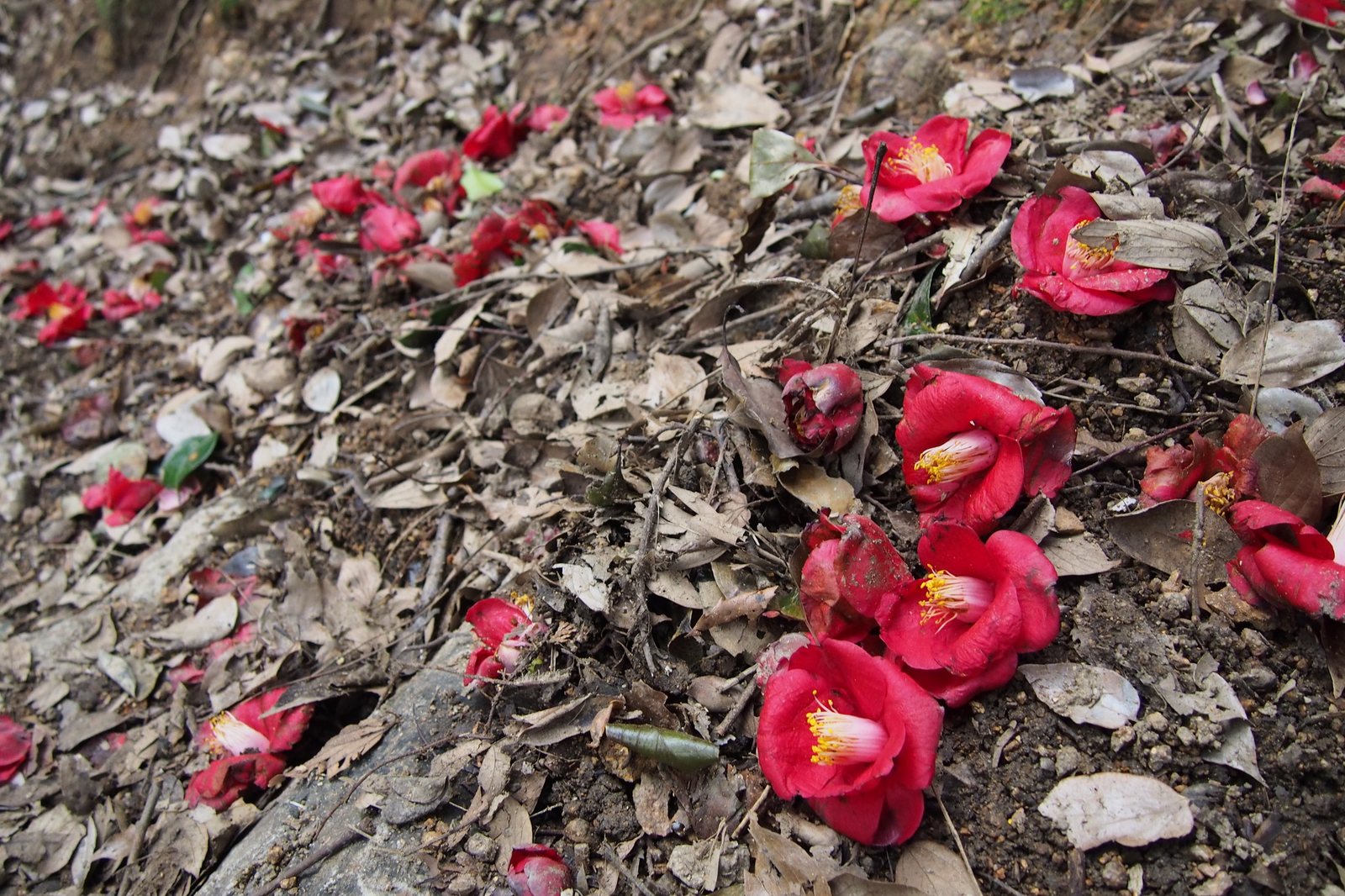
An evergreen shrub grown for its large, fragrant, deep red, peony-form double flowers and glossy leaves. It flowers from late winter into spring and suits sheltered borders with acidic soil; frost can damage the flowers even where the shrub itself is hardy.
At a glance
- Sun
- Partial shade or bright, filtered light; shelter from hot afternoon sun, cold drying winds and early morning sun after frost.
- Water
- Keep the root zone evenly moist but not waterlogged. Water deeply during dry spells, especially while flower buds develop in summer.
- Soil
- Acidic, humus-rich, well-drained soil, ideally pH 5.5-6.5. Use ericaceous potting mix in containers.
- Height
- 6-10 ft (1.8-3 m), potentially taller with age
- Spread
- 6-8 ft (1.8-2.4 m)
- Flowers
- Late winter to mid-spring, depending on climate; large, fragrant, deep red double flowers with a peony-like arrangement of petals.
- Foliage
- Evergreen. Glossy, leathery, dark green leaves with finely toothed edges.
- Growth
- Slow to moderate
- Care needed
- Medium
The year at a glance
- Heat tolerant
- Wildlife
- Low allergen
- Fragrant
| J | F | M | A | M | J | J | A | S | O | N | D | |
|---|---|---|---|---|---|---|---|---|---|---|---|---|
| Flowers | ||||||||||||
| Plant |
Northern hemisphere months. In Australia, shift them by six.
- Difficulty
- Moderate
- Toughness
- Fairly tough
Will it suit your garden?
Pick your zone, country, light and whether you have pets.
Full sun is 6 or more hours of direct sun a day, part shade 3 to 6 hours, shade under 3.
How it grows
Planting day
1.6 ft (0.5 m)
After 1 year
2.6 ft (0.79 m)
After 2 years
4 ft (1.1 m)
After 3 years
5 ft (1.4 m)
After 5 years
6 ft (2 m)
About 7 years to full size.
From a typical nursery size, at an average rate for this kind of plant. A rule of thumb, not a forecast.
Good to know
- Cats and dogs
- Safe
- Growth rate
- Slow
Care
Jobs through the year
- WaterMar–May, Sep–Nov, every 7 days
- Water established shrubs if the root zone is drying; use rainwater on alkaline-water sites and check young plants more often.
- WaterJun–Aug, every 7 days
- Water established shrubs deeply during dry spells to support bud formation; check more often in heat.
- WaterJan–Feb, Dec, every 21 days
- Water established shrubs only if soil is dry and unfrozen; avoid waterlogging.
- FeedApr–May
- Apply one light feed for acid-loving plants after flowering, following the label.
- PruneApr–May
- Prune only as needed immediately after flowering, removing damaged or wayward growth.
- MulchOct
- Apply 5–8 cm of leaf mould or composted bark, leaving the stem base clear.
- DeadheadFeb–Apr, every 7 days
- Collect fallen and blighted flowers promptly to reduce petal-blight carry-over.
- ProtectJan–Mar, Nov–Dec
- Shelter from drying winds and use fleece over small plants during severe frost; unsuitable unprotected in zone 6.
- Plant with the top of the root ball level with, or slightly above, the surrounding soil; do not bury the stem base.
- Water deeply during dry weather, checking container plants more often.
- Apply 2-3 in (5-8 cm) of leaf mould or composted bark, keeping it clear of the stems.
- Feed lightly with a camellia or acid-loving plant fertiliser after flowering, following the label rate; avoid late-season feeding.
- Where tap water is alkaline, use collected rainwater when practical, especially for containers.
Pruning. Prune immediately after flowering, removing dead or damaged wood and shortening wayward shoots just above a leaf or side branch. Avoid routine summer or autumn pruning, which removes developing flower buds.
Through the year
- Late winter
- Enjoy the first flowers; protect container plants and open blooms from severe frost where practical.
- Spring
- Collect fallen flowers promptly to reduce the carry-over of camellia petal blight.
- Late spring
- After flowering, prune lightly if needed and apply a modest feed.
- Summer
- Water during dry spells as next season's flower buds develop; inspect leaf undersides for scale insects.
- Autumn
- Plant in mild regions while the soil is still warm, and renew mulch without covering the stem base.
- Winter
- Keep containers draining freely and shelter their roots from prolonged freezing.
In the garden
- Use as a flowering evergreen focal point in a sheltered, partly shaded border.
- Combine with rhododendrons, pieris and ferns in an acidic woodland garden.
- Grow in a large container of ericaceous mix beside a sheltered terrace, where the flowers and fragrance are easy to enjoy.
- Plant as an informal evergreen screen, allowing enough room to avoid frequent clipping.
Garden styles it suits: Woodland, Japanese, Traditional, Romantic rose garden, Sensory garden and Winter interest.
Plant it with: Japanese pieris, Rhododendrons, Japanese painted fern, Hellebores, Japanese forest grass and Snowdrops.
Wildlife: The dense evergreen growth offers shelter for small birds. Its densely double flowers provide less accessible pollen and nectar than single-flowered camellias.
Problems to watch for
- Camellia petal blight: flowers develop spreading brown patches and rot. Remove affected and fallen flowers promptly, and replace contaminated surface mulch beneath the shrub.
- Scale insects: check leaf undersides for fixed bumps or white deposits, often accompanied by yellowing or sooty mould. Prune heavily infested shoots and use a horticultural oil labelled for camellias, following temperature restrictions.
- Yellow leaves with green veins: alkaline soil or water can cause iron deficiency. Check soil pH and drainage; use an appropriate chelated iron treatment and consider a container with ericaceous mix if the soil is chalky.
- Bud drop or poor flowering: drought during summer bud formation, waterlogging and abrupt temperature changes are common causes. Maintain steady moisture, improve drainage and choose a sheltered site.
Safety
Camellia japonica is not known to be toxic to cats, dogs, horses or people. No part is recognised as poisonous, though it is not grown as food and eating plant material may cause mild stomach upset.
Easily confused with
Sasanqua camellia (Camellia sasanqua)
Usually flowers in autumn to early winter and has smaller leaves and generally smaller flowers. Its petals commonly fall separately, whereas Japanese camellia flowers often drop more or less whole.
Reticulata camellia (Camellia reticulata)
Typically has larger, more prominently net-veined leaves and a more open habit, often with very large flowers. Hybrids can blur these differences, so a reliable label is useful.
The name
Camellia honours the Jesuit botanist Georg Joseph Kamel, and japonica means 'of Japan'.
Propagation. Propagate by semi-ripe cuttings in summer with gentle bottom heat, or by air layering. Named cultivars can also be grafted; seedlings will not reliably match 'Kramer's Supreme'.
Checked against open data
- Accepted botanical name
- Camellia japonica
- In the US and Canada
- Introduced in the lower 48 states.
- Native range
- China North-Central, China Southeast, Japan, Korea, Nansei-shoto and Taiwan.
- Measured
- Average height 560 cm.
Sources: GBIF (CC BY 4.0), USDA PLANTS and Trefle (CC BY 4.0). The care and design notes are LandscapeGPT's own.
See it in your own yard.
Upload a photo of your yard and see it redesigned with plants that suit your climate, each checked against your zone.