Kumquat
Citrus japonica. Family Rutaceae. Tree.
Also called Cumquat, Fortunella japonica.
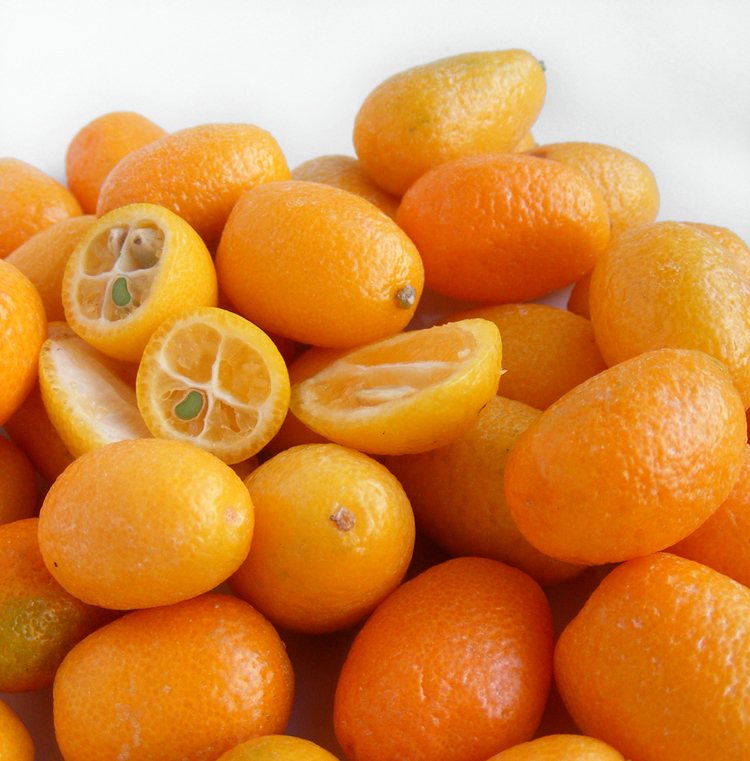
Kumquat is a small evergreen citrus grown for fragrant white flowers and small orange fruits with sweet, edible peel and tart flesh. It makes a useful patio or courtyard tree, but in colder parts of the United States, Canada and the United Kingdom it needs a container and bright, frost-free winter shelter.
At a glance
- Sun
- Full sun; a warm, sheltered position gives the best flowering and fruit ripening.
- Water
- Water deeply when the upper soil begins to dry, then allow excess water to drain. Containers need regular checks in summer and much less water in cool winter conditions.
- Soil
- Fertile, well-drained, slightly acidic soil. For containers, use a free-draining citrus potting mix and a pot with drainage holes.
- Height
- 8-15 ft (2.4-4.6 m); usually smaller in containers
- Spread
- 6-10 ft (1.8-3 m)
- Flowers
- Small, fragrant white flowers, mainly in summer; additional flushes may occur in warm climates.
- Foliage
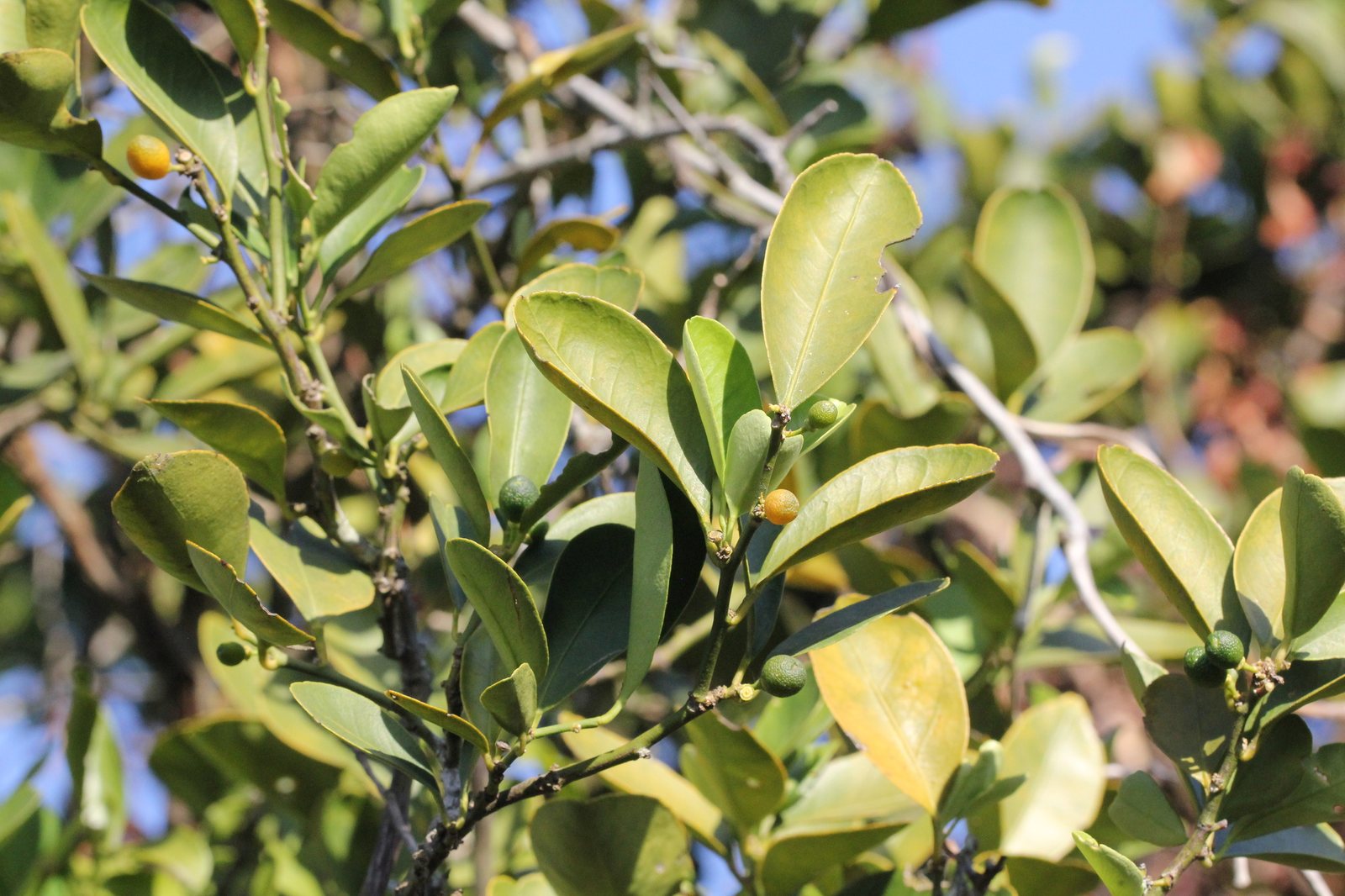
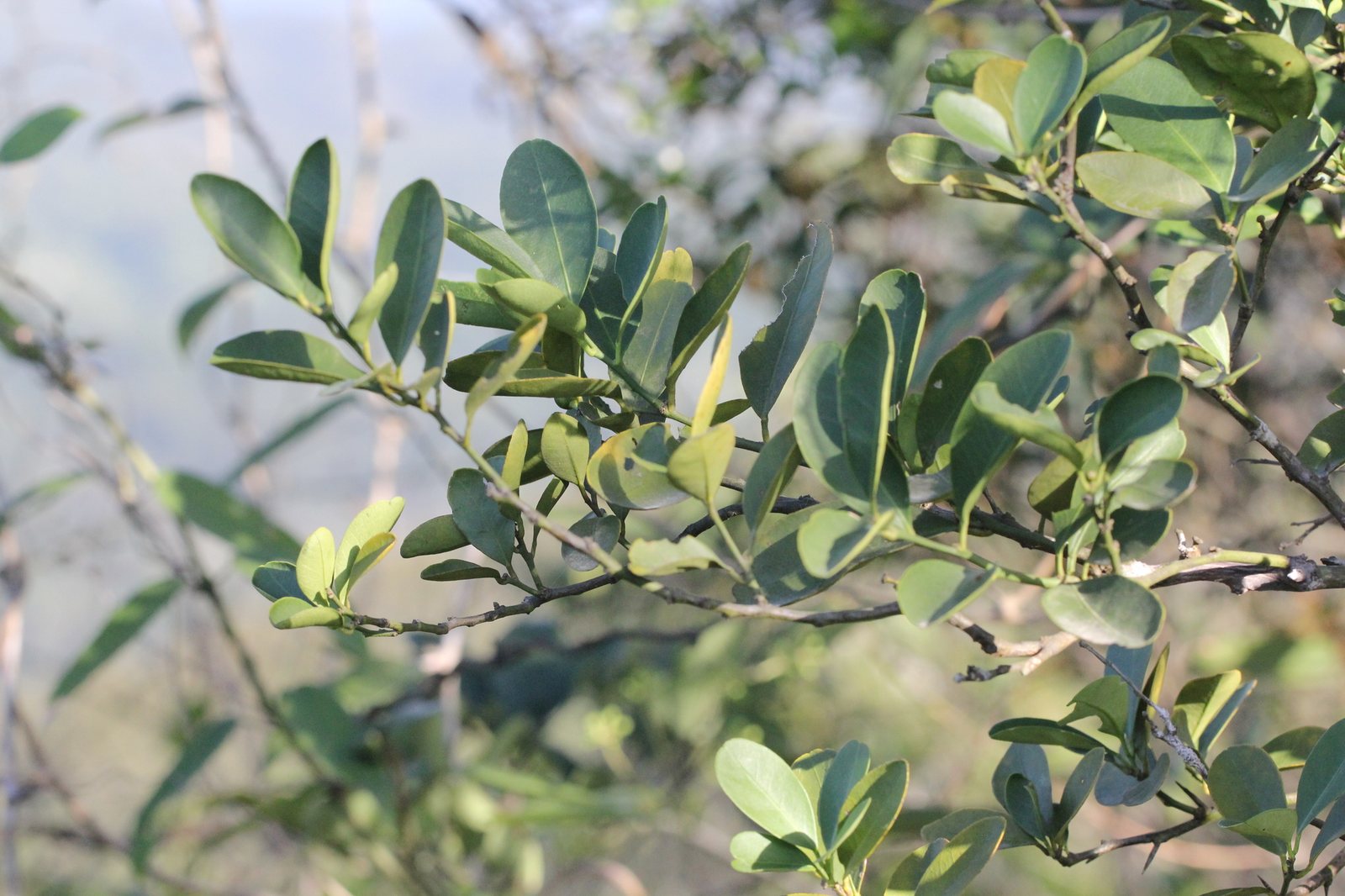
- Evergreen. Small, glossy, dark green leaves on densely branched shoots; some plants have thorns.
- Growth
- Slow to moderate
- Care needed
- Medium
The year at a glance
- Pollinators
- Heat tolerant
- Low allergen
- Fragrant
- Edible
| J | F | M | A | M | J | J | A | S | O | N | D | |
|---|---|---|---|---|---|---|---|---|---|---|---|---|
| Flowers | ||||||||||||
| Fruit | ||||||||||||
| Plant |
Northern hemisphere months. In Australia, shift them by six.
- Difficulty
- Moderate
- Toughness
- Fairly tough
Will it suit your garden?
Pick your zone, country, light and whether you have pets.
Full sun is 6 or more hours of direct sun a day, part shade 3 to 6 hours, shade under 3.
How it grows
Planting day
7 ft (2 m)
After 1 year
7 ft (2.1 m)
After 2 years
7 ft (2.1 m)
After 3 years
7 ft (2.2 m)
After 5 years
8 ft (2.3 m)
About 26 years to full size.
From a typical nursery size, at an average rate for this kind of plant. A rule of thumb, not a forecast.
Good to know
- Cats and dogs
- Mildly toxic: may upset a stomach
- Growth rate
- Slow
Care
Jobs through the year
- WaterMar–May, Sep–Oct, every 7 days
- In zones 6–7 grow in a container; water when the upper compost starts drying and empty saucers.
- WaterJun–Aug, every 2 days
- Check container moisture and water thoroughly when the surface dries; check daily during hot weather.
- WaterJan–Feb, Nov–Dec, every 14 days
- Check cool sheltered plants and water sparingly, never letting the root ball dry completely.
- FeedMar–Aug, every 14 days
- Use citrus fertiliser during active growth, following the product rate and interval.
- PruneMar–Apr
- After harvest, lightly remove dead, crossing or crowded shoots before strong growth; remove graft suckers whenever seen.
- ProtectJan–Apr, Oct–Dec
- Overwinter containers in bright, cool, frost-free shelter; this tree is not ground-hardy in zones 6–7.
- ProtectMay–Jun
- After frost risk passes, gradually acclimatise sheltered plants to outdoor sun.
- HarvestJan–Apr, Nov–Dec, every 7 days
- Snip fully orange fruit when the peel tastes sweet; fruit will not ripen further after picking.
- Water the root zone thoroughly without leaving the pot standing in water.
- Apply citrus fertiliser at the label rate during active spring and summer growth; do not feed a dormant plant.
- Mulch outdoor trees, keeping mulch clear of the trunk and graft union.
- Move container plants into bright, cool, frost-free shelter before autumn frosts; avoid hot, dry rooms.
- Remove shoots arising below the graft union.
Pruning. Prune lightly after harvesting and before the main spring growth, removing dead, crossing or crowded shoots. Keep shaping modest because heavy pruning removes future flowering wood.
Harvest
Pick firm, fully orange kumquats when the peel tastes sweet and the flesh is juicy; snip them off with secateurs, as they will not ripen further after picking. Harvest is usually winter into spring in the US, UK and Canada, where cold-climate plants need frost-free shelter, and autumn through winter, sometimes into spring, in Australia.
Through the year
- Spring
- Begin feeding as new growth starts; repot only when roots have filled the container.
- Late spring
- After frost risk has passed, gradually acclimatise sheltered plants to outdoor sun.
- Summer
- Check container moisture frequently and inspect new growth for scale insects, aphids and leafminer damage.
- Autumn
- Stop feeding as growth slows and arrange bright, frost-free shelter where winters are cold.
- Winter
- Keep sheltered plants cool and bright, watering sparingly without letting the root ball dry completely.
- Winter to spring
- Harvest fully coloured fruit when it tastes ripe; exact timing varies with cultivar and climate.
In the garden
- Grow in a large container beside a sunny patio or courtyard seating area, where the flowers' scent can be appreciated.
- Use matching potted trees to frame a doorway, moving them under cover for winter where necessary.
- Plant as a compact evergreen specimen in a sheltered edible garden.
- Combine with low herbs or seasonal flowers around the outer edge of a sunny border, leaving the trunk base clear.
Garden styles it suits: Modern courtyard, Mediterranean, Potager (kitchen garden), Edible landscape, Small-space and Winter interest.
Plant it with: Chives, Nasturtiums and French marigolds.
Wildlife: The flowers attract bees and other pollinating insects. Kumquats are generally self-fertile, so one tree can fruit, although insects help move pollen.
Problems to watch for
- Scale insects and sooty mould: inspect stems and leaf undersides; remove small infestations by hand and use a labelled horticultural oil if needed.
- Spider mites indoors: look for fine webbing and stippled leaves; rinse foliage regularly and use a labelled treatment if the infestation persists.
- Citrus leafminer: larvae tunnel through young leaves; avoid excessive nitrogen and unnecessary pruning that encourages repeated soft growth, and retain healthy older foliage.
- Root rot and yellowing from poor drainage: keep drainage holes clear, empty saucers and allow the upper growing medium to dry slightly between waterings.
Safety
Ripe fruit, including the peel, is edible and is not known to be toxic to people. Citrus oils and other compounds in the leaves, stems and peel can cause digestive upset in cats, dogs and horses if eaten; skin irritation is also possible. Concentrated citrus oils pose a greater risk than incidental contact with the tree.
Easily confused with
Calamondin (Citrus × microcarpa)
Usually has round, miniature orange-like fruit with very sour juice; kumquat fruit is often oval and is typically eaten whole for its sweet peel.
Mandarin (Citrus reticulata)
Has larger, often flattened fruit with loose peel that separates readily into segments; kumquats have much smaller fruit with peel closely attached to the flesh.
Limequat (Citrus × floridana)
This lime–kumquat hybrid usually ripens yellow rather than orange and has a sharper, lime-like flavour; fruit colour alone is unreliable before full ripeness.
The name
Kumquat comes from a Cantonese name meaning 'golden orange', while japonica means 'Japanese', although the plant originated in China.
Propagation. Usually grafted or budded onto a suitable citrus rootstock to control size and improve performance in local soil conditions. Seed-grown plants may differ from the parent and take many years to fruit; cuttings can be difficult to establish.
Checked against open data
- Accepted botanical name
- Citrus japonica
- Native range
- China Southeast and Hainan.
- Measured
- Average height 500 cm.
Sources: GBIF (CC BY 4.0) and Trefle (CC BY 4.0). The care and design notes are LandscapeGPT's own.
See it in your own yard.
Upload a photo of your yard and see it redesigned with plants that suit your climate, each checked against your zone.