Lacebark elm
Ulmus parvifolia. Family Ulmaceae. Tree.
Also called Chinese elm.
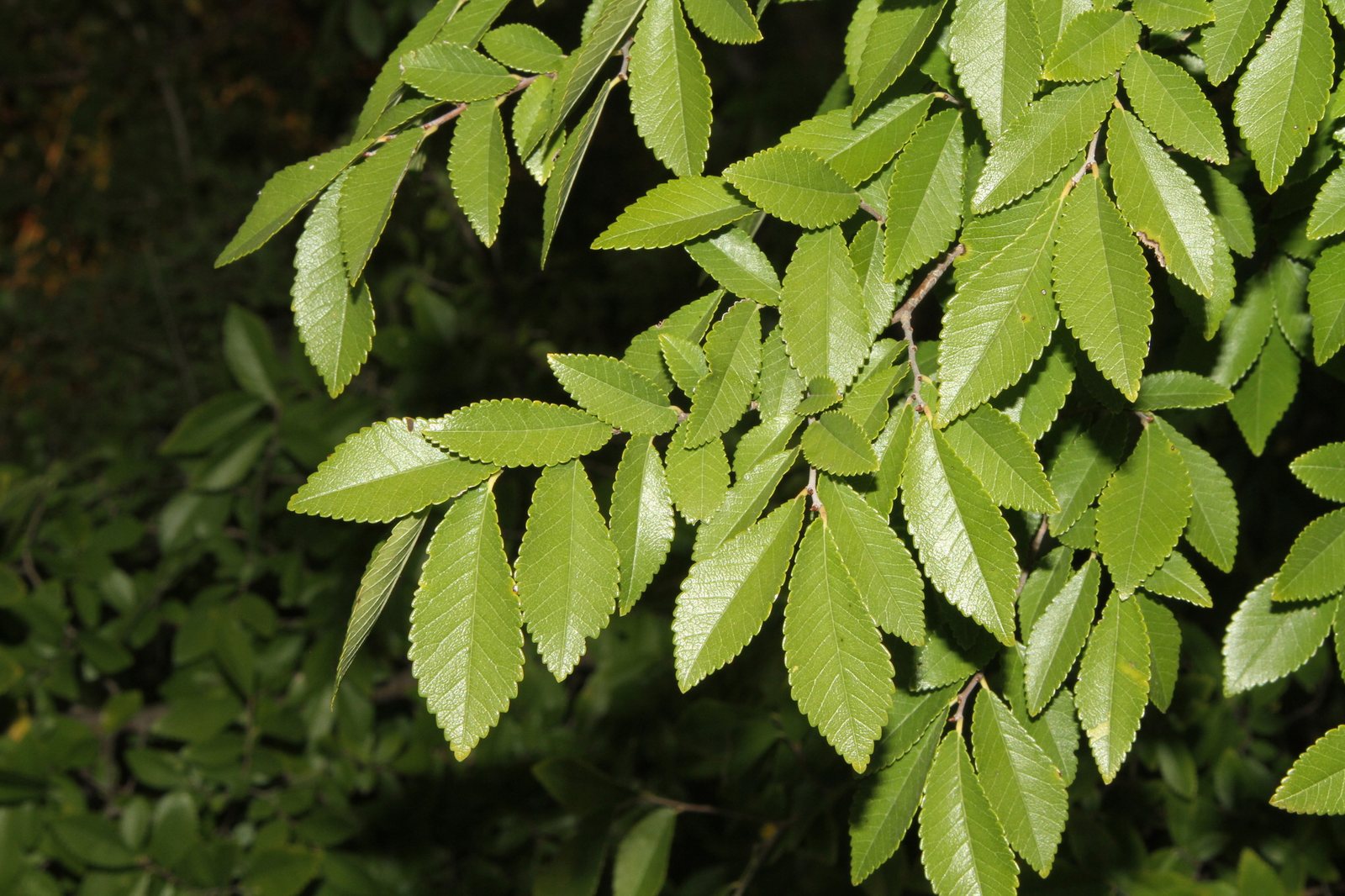
Lacebark elm is a medium to large shade tree grown for its arching crown, small leaves and peeling bark, which reveals patches of grey, cream, orange and brown. It tolerates urban conditions and established drought, and has strong resistance, though not immunity, to Dutch elm disease. Allow room for its mature crown and roots; it is not a small-garden tree.
At a glance
- Sun
- Full sun; tolerates light partial shade.
- Water
- Water regularly while establishing; moderately drought-tolerant once established, but benefits from deep watering during prolonged dry weather.
- Soil
- Adaptable to clay, loam or sand and acidic to alkaline soil, provided drainage is reasonable; avoid permanently waterlogged ground.
- Height
- 40-60 ft (12-18 m)
- Spread
- 35-50 ft (10.5-15 m)
- Flowers
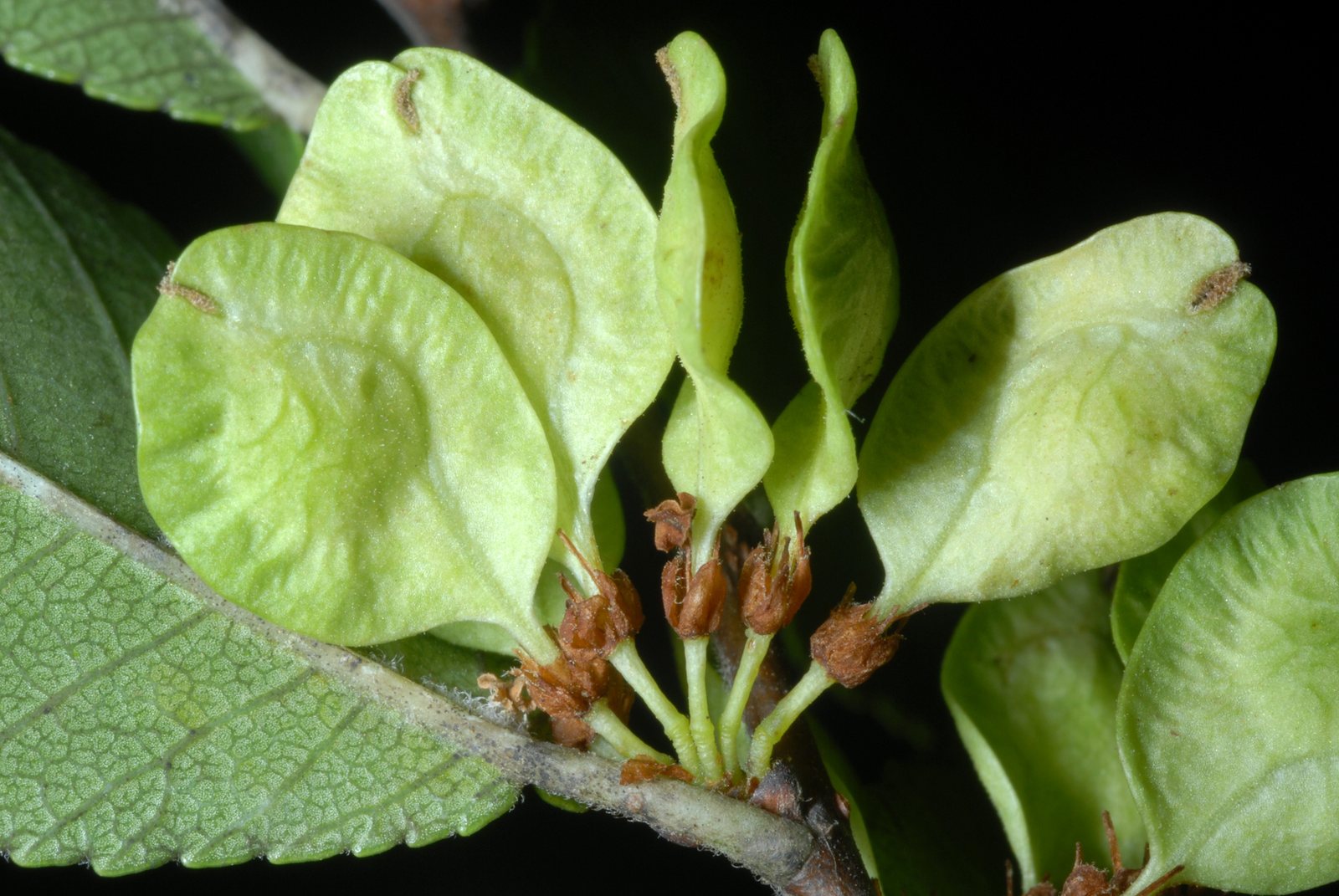
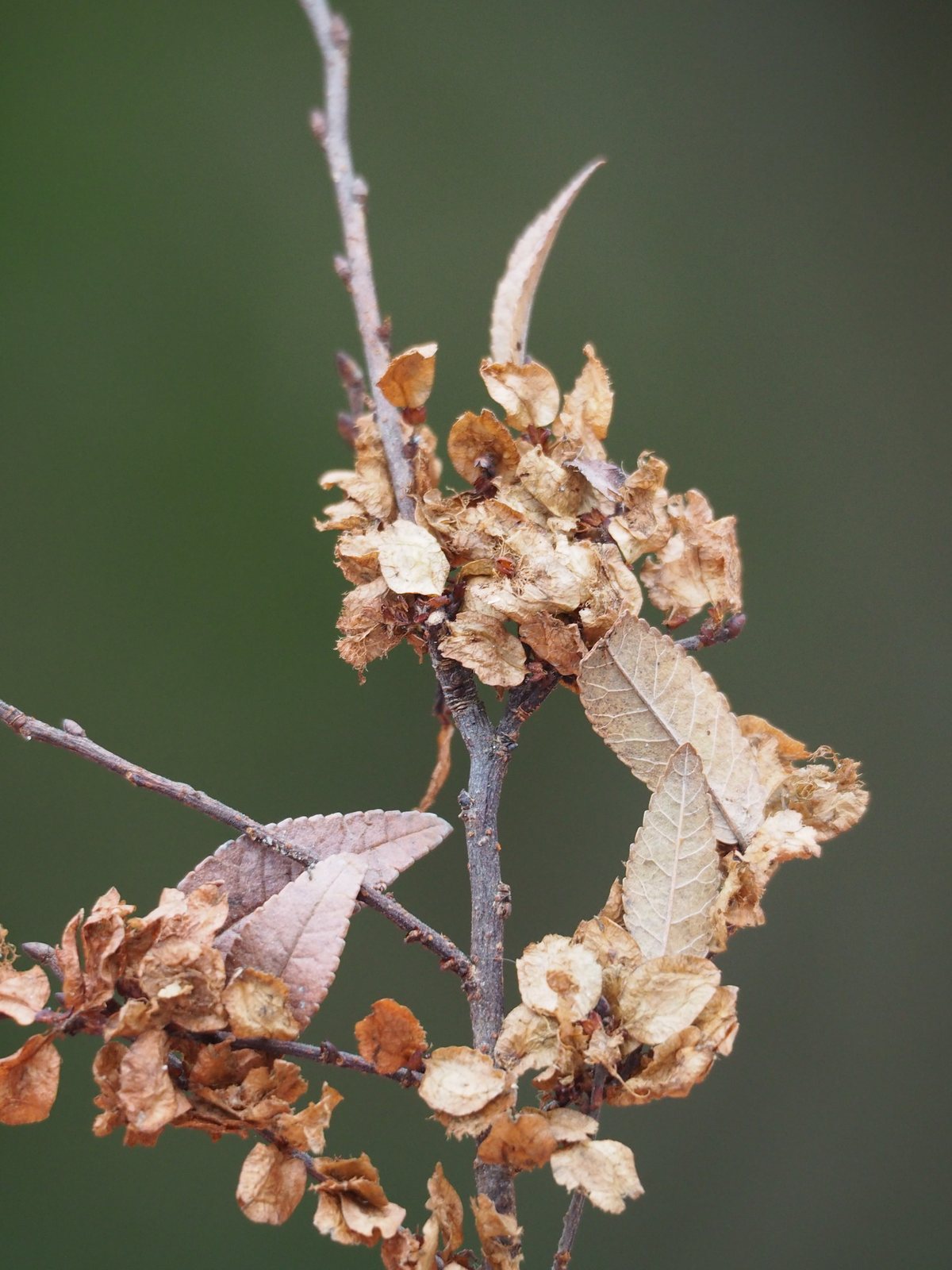
- Late summer to early autumn; tiny, inconspicuous greenish flowers followed by flat, winged seeds.
- Foliage
- Small, glossy, dark green leaves with toothed edges; autumn colour ranges from yellow to reddish purple but can be muted. Deciduous in colder climates, sometimes semi-evergreen in mild ones.
- Growth
- Moderate to fast, especially when young.
- Care needed
- Medium
The year at a glance
- Drought tolerant
- Heat tolerant
- Disease resistant
- Wildlife
| J | F | M | A | M | J | J | A | S | O | N | D | |
|---|---|---|---|---|---|---|---|---|---|---|---|---|
| Flowers | ||||||||||||
| Fruit | ||||||||||||
| Plant |
Northern hemisphere months. In Australia, shift them by six.
- Difficulty
- Moderate
- Toughness
- Very tough
Will it suit your garden?
Pick your zone, country, light and whether you have pets.
Full sun is 6 or more hours of direct sun a day, part shade 3 to 6 hours, shade under 3.
How it grows
Planting day
7 ft (2 m)
After 1 year
9 ft (2.8 m)
After 2 years
12 ft (3.6 m)
After 3 years
15 ft (4.4 m)
After 5 years
20 ft (6.1 m)
About 16 years to full size.
From a typical nursery size, at an average rate for this kind of plant. A rule of thumb, not a forecast.
Good to know
- Cats and dogs
- Safe
- Invasive in
- the US and Australia
- In the garden
- Spreads vigorously: plan to contain it.
- Growth rate
- Fast
Care
Jobs through the year
- WaterApr–May, Sep–Oct, every 21 days
- Water established trees only during prolonged dry spells; young trees need more frequent watering.
- WaterJun–Aug, every 14 days
- Deep-water established trees in drought, letting upper soil dry between waterings.
- MulchMar–Apr
- Maintain 5–8 cm of organic mulch over roots, keeping the trunk clear.
- PruneJan–Feb
- Train young trees during the locally permitted dormant elm-pruning window; avoid topping.
- Water deeply through the first two growing seasons, allowing the upper soil to begin drying between waterings.
- Spread mulch 2-3 in (5-8 cm) deep over the root area, keeping it clear of the trunk.
- Do not fertilise routinely; feed only if soil testing or poor growth indicates a deficiency.
- Stake only if the root ball is unstable, and remove ties and stakes once roots hold it firmly, usually within a year.
- Remove unwanted seedlings while small, especially near drains, paving and natural areas.
Pruning. Train young trees during the locally recommended dormant-season elm-pruning window, selecting well-spaced main branches and removing competing leaders before they become large. Avoid topping and unnecessary large cuts; follow local restrictions intended to limit Dutch elm disease.
Through the year
- Autumn
- Plant while soil is workable and moisture is reliable; in very cold regions, wait until spring.
- Winter
- Inspect branch structure and arrange formative pruning during the locally permitted elm-pruning period.
- Spring
- Refresh mulch, check staking ties and pull seedlings before their roots become established.
- Early summer
- Inspect leaves for beetle feeding and branches for scale insects; identify the pest before treating.
- Summer
- Deep-water young trees during dry spells; water established trees if drought is prolonged.
- Late autumn
- Clear leaves from drains and paving, and check for new seedlings beneath the crown.
In the garden
- Use as a broad-canopied shade tree over a large lawn or generous seating area.
- Position where the mottled trunk can be seen in winter, with low planting rather than dense shrubs around it.
- Plant in spacious urban gardens where tolerance of heat, soil compaction and air pollution is useful.
- Combine with woodland groundcovers beneath the outer canopy for a layered, lightly shaded garden.
Garden styles it suits: Urban city garden, Modern, Traditional, Japanese, Woodland and Winter interest.
Plant it with: Liriope, Epimedium, Autumn fern, Japanese forest grass, Hellebores and Daffodils.
Wildlife: Winged seeds provide food for some birds and small mammals, and the crown offers shelter and nesting sites. It is wind-pollinated and is not a significant nectar plant.
Problems to watch for
- Elm leaf beetles can skeletonise leaves: monitor in spring and summer, support tree health with appropriate watering, and seek locally approved treatment if defoliation is repeated or severe.
- Scale insects can cause honeydew, sooty mould and weak growth: confirm the species and time any approved treatment to its vulnerable crawler stage.
- Root decline in waterlogged soil causes yellowing and dieback: correct drainage where practical and avoid frequent, shallow irrigation.
- Narrow forks and competing stems can split as the crown enlarges: use early formative pruning and have large or damaged branches assessed by a qualified arborist.
Safety
Not known to be toxic to people, cats, dogs or horses. No part is recognised as a significant poisoning hazard, but the leaves, bark and seeds should not be treated as food or livestock feed.
Where it spreads. Can self-seed aggressively in warm climates. It is recognised as an environmental weed in parts of Queensland and New South Wales, Australia, and as invasive in parts of the southeastern United States. Check local guidance before planting near bushland, waterways or other natural areas.
Easily confused with
Siberian elm (Ulmus pumila)
Siberian elm usually has rough, furrowed mature bark rather than colourful exfoliating patches, and flowers and sets seed in spring rather than late summer and autumn.
Japanese zelkova (Zelkova serrata)
Zelkova generally has larger, more sharply toothed leaves and small, unwinged fruits; lacebark elm produces flat, winged seeds.
The name
Ulmus is the Latin name for elm, parvifolia means small-leaved, and lacebark refers to the patchwork pattern exposed as the bark flakes away.
Propagation. Grow the species from fresh seed, which may germinate soon after sowing. Named cultivars must be propagated vegetatively, usually by cuttings, budding or grafting, to retain their characteristics.
Checked against open data
- Accepted botanical name
- Ulmus parvifolia
- In the US and Canada
- Introduced in Canada and the lower 48 states.
- Native range
- China North-Central, China South-Central, China Southeast, Japan, Korea, Nansei-shoto, Taiwan and Vietnam.
- Measured
- Soil pH 4.8 to 7. Average height 1200 cm.
Sources: GBIF (CC BY 4.0), USDA PLANTS and Trefle (CC BY 4.0). The care and design notes are LandscapeGPT's own.
See it in your own yard.
Upload a photo of your yard and see it redesigned with plants that suit your climate, each checked against your zone.