Lanceleaf coreopsis
Coreopsis lanceolata. Family Asteraceae. Perennial.
Also called Lance-leaved coreopsis, Lanceleaf tickseed, Sand coreopsis.
Coreopsis lanceolata is a clump-forming, often short-lived perennial native to North America, grown for its golden-yellow, daisy-like flowers. It suits sunny borders and meadow plantings with freely draining soil, tolerates drought once established, and can seed freely.
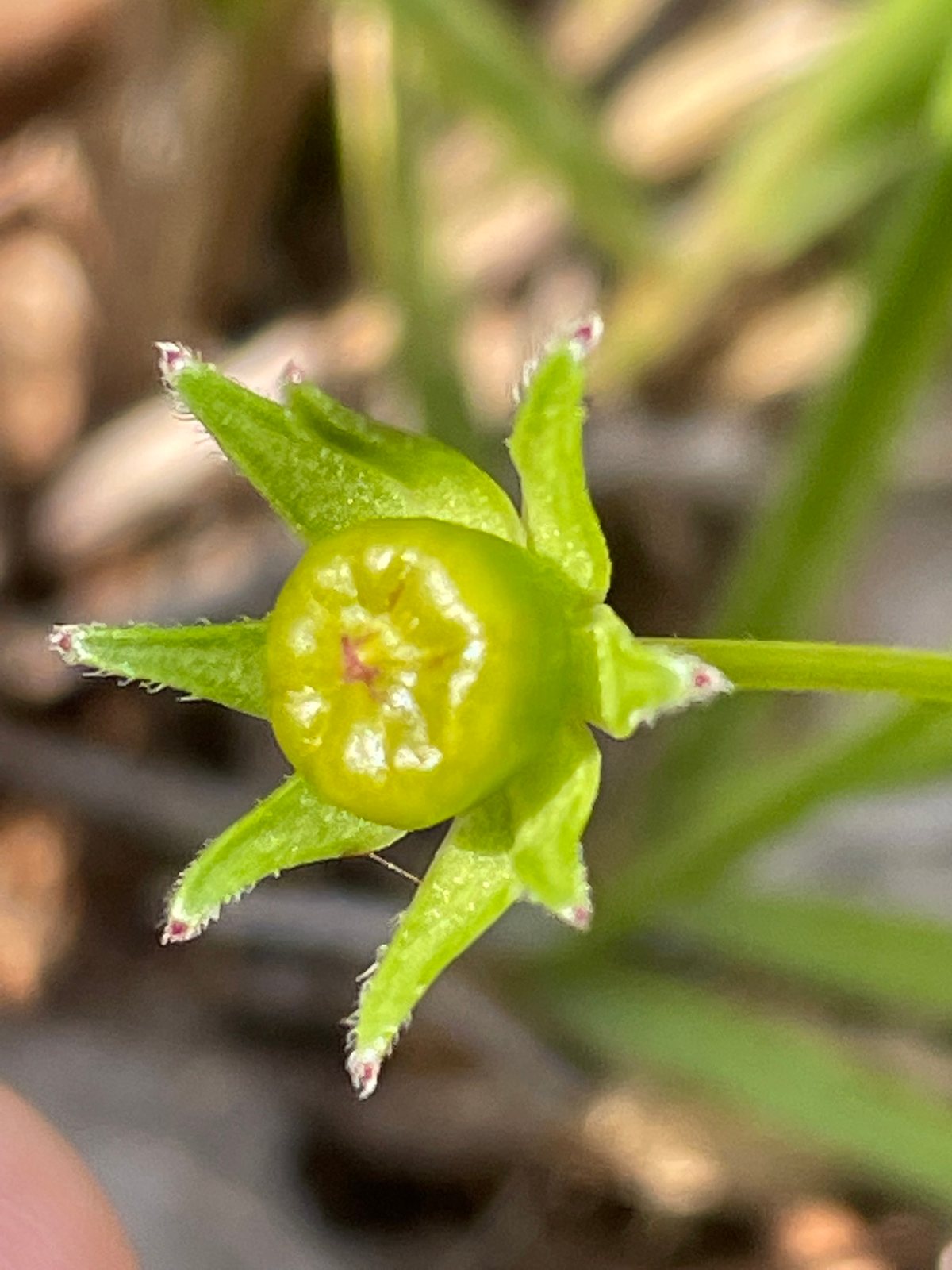
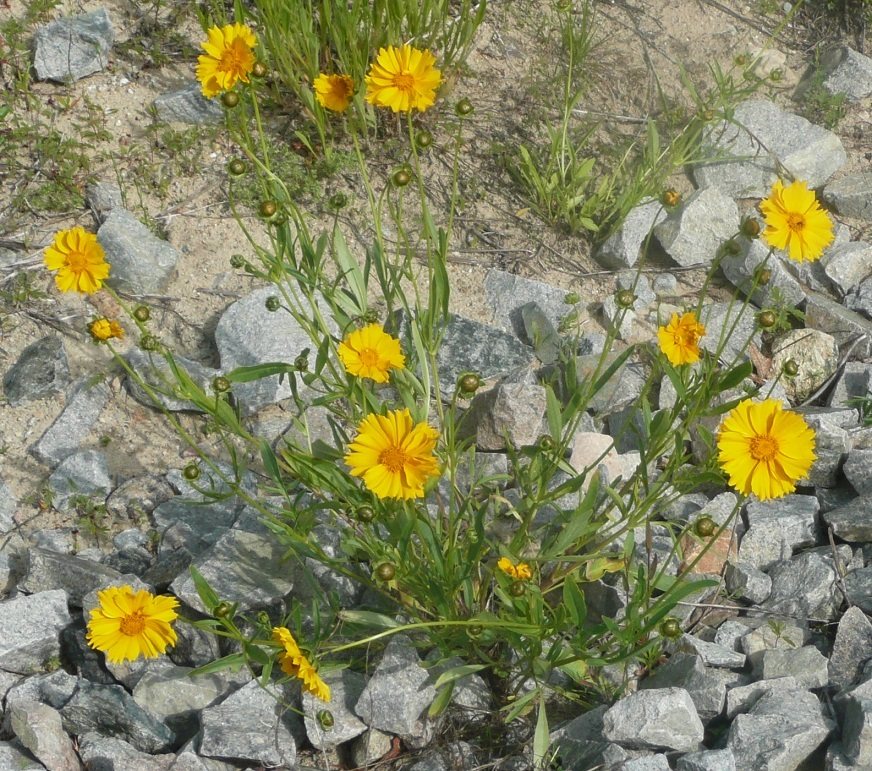
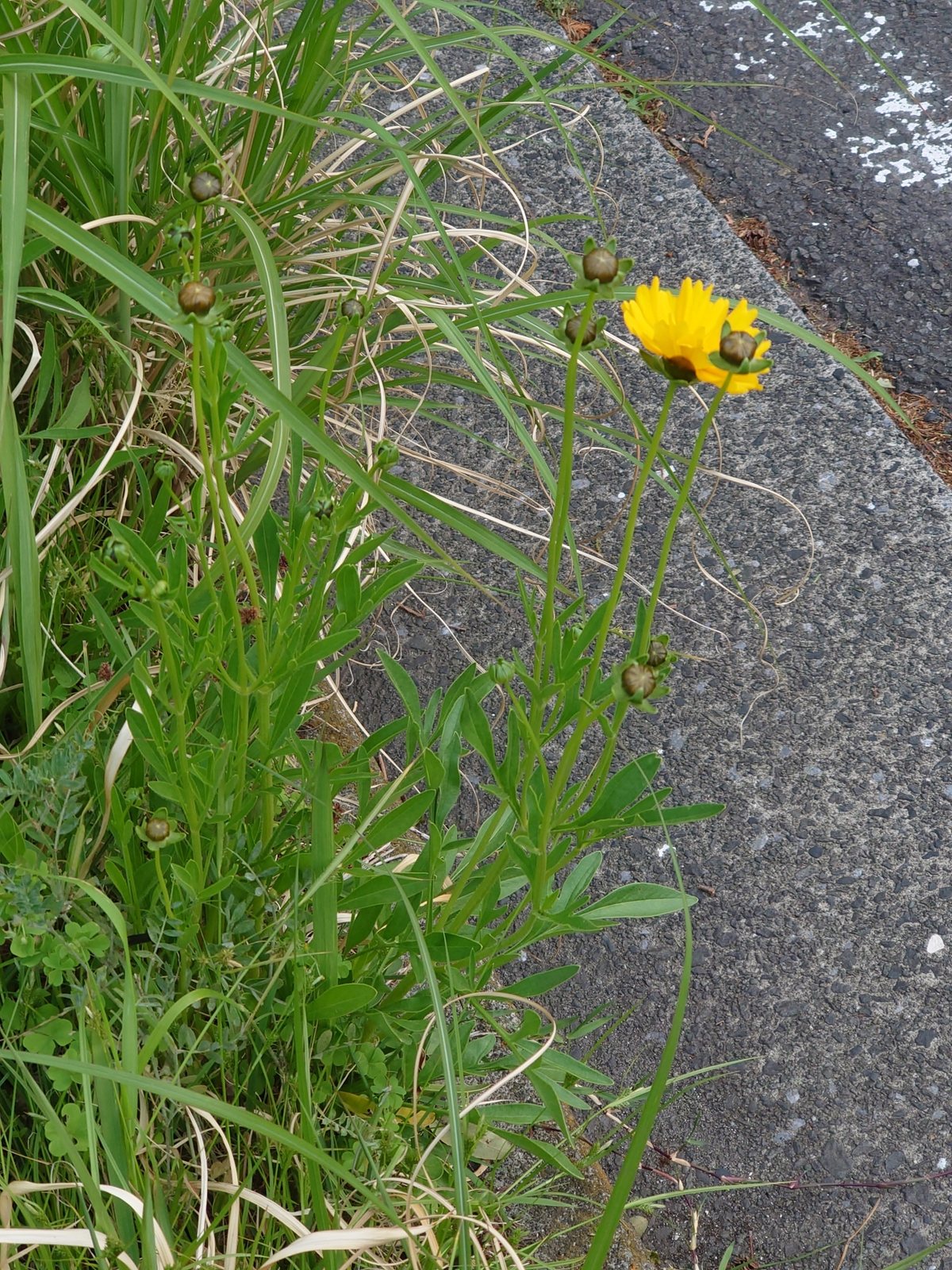
At a glance
- Sun
- Full sun; tolerates light shade but flowers less and may lean.
- Water
- Water regularly while establishing; afterwards, water during prolonged dry spells. Avoid persistently wet soil.
- Soil
- Well-drained sandy, gravelly or loamy soil; tolerates poor soil and a range of pH levels. Rich, heavily fertilised soil encourages floppy growth.
- Height
- 1-2 ft (0.3-0.6 m)
- Spread
- 1-1.5 ft (0.3-0.45 m)
- Flowers
- Golden-yellow flowers from late spring into summer; removing spent flowers can extend flowering.
- Foliage
- Green, narrow, lance-shaped leaves, mostly near the base; some leaves have small side lobes.
- Growth
- Moderate to fast; seed-grown plants may flower in their first year.
- Care needed
- Low
The year at a glance
- Pollinators
- Deer resistant
- Drought tolerant
- Cold hardy
- Heat tolerant
- Wildlife
- Low allergen
| J | F | M | A | M | J | J | A | S | O | N | D | |
|---|---|---|---|---|---|---|---|---|---|---|---|---|
| Flowers | ||||||||||||
| Fruit | ||||||||||||
| Plant |
Northern hemisphere months. In Australia, shift them by six.
- Difficulty
- Easy
- Toughness
- Very tough
Will it suit your garden?
Pick your zone, country, light and whether you have pets.
Full sun is 6 or more hours of direct sun a day, part shade 3 to 6 hours, shade under 3.
How it grows
Planting day
1 ft (0.3 m)
After 1 year
1.2 ft (0.36 m)
After 2 years
1.4 ft (0.42 m)
After 3 years
1.5 ft (0.45 m)
full size
About 2 years to full size.
From a typical nursery size, at an average rate for this kind of plant. A rule of thumb, not a forecast.
Good to know
- Cats and dogs
- Safe
- Native to
- the US and Canada
- Invasive in
- Australia
- In the garden
- Spreads vigorously: plan to contain it.
- Growth rate
- Fast
Care
Jobs through the year
- WaterApr–May, Sep–Oct, every 14 days
- Water established clumps only if soil is dry; water new plants more often through their first season.
- WaterJun–Aug, every 14 days
- Water established clumps deeply during prolonged drought; skip when soil is moist.
- PruneFeb–Mar
- Cut dead stems back above the basal leaves without damaging the crown.
- DivideMar–Apr
- Divide crowded or declining clumps every two to three years.
- DeadheadMay–Aug, every 7 days
- Remove faded flowers for repeat bloom; leave a few late seed heads for birds only where spreading is acceptable.
- ProtectJan–Feb, Oct–Dec
- Keep wet leaves and thick mulch away from crowns to prevent winter rot.
- Water newly planted clumps whenever the root zone begins to dry during their first growing season.
- Avoid routine feeding; use only a little compost if growth is weak on very poor soil.
- Keep crowns clear of thick organic mulch, especially where winters are wet.
- Divide crowded or declining clumps in spring every two to three years.
- Remove unwanted seedlings early, particularly near natural areas.
Pruning. Remove faded flower heads throughout flowering to encourage more blooms and limit seeding. In late winter or early spring, cut dead stems back to just above the basal leaves without cutting into the crown.
Through the year
- Late winter
- Remove dead stems before fresh growth develops, preserving any green basal leaves.
- Spring
- Plant or divide clumps in a sunny, well-drained position and water them in.
- Late spring
- Check establishing plants during dry weather and remove competing weeds.
- Summer
- Deadhead regularly for repeat flowering and to reduce self-seeding.
- Autumn
- Remove unwanted seedlings; leave a few seed heads for birds only where spreading is acceptable.
- Winter
- Keep fallen leaves and wet mulch from accumulating over the crowns.
In the garden
- Plant in repeated groups near the front or middle of a sunny border for early-summer yellow colour.
- Combine with purple-flowered salvias and catmint for contrasting flower colours and similar drainage needs.
- Mix with little bluestem and other locally appropriate grasses in a meadow-style planting within its native range.
- Use in gravel gardens or on sunny banks where drainage is sharp and irrigation is limited.
Garden styles it suits: Cottage garden, Native meadow, Pollinator garden, New perennial (prairie), Dry gravel garden and Low-maintenance.
Plant it with: Little bluestem, Butterfly weed, Purple coneflower, Catmint, Meadow sage and Yarrow.
Wildlife: Flowers provide pollen and nectar for bees, butterflies and other insects. Finches and other seed-eating birds may take ripe seeds.
Problems to watch for
- Crown or root rot in wet soil: improve drainage or move plants to a raised, freely draining site; discard badly rotted clumps.
- Powdery mildew: provide full sun and space for air circulation, and remove badly affected foliage.
- Slugs and snails on young growth: check plants after dark, remove pests and use wildlife-conscious controls where needed.
- Floppy stems and reduced flowering: avoid rich feeding and move shaded plants into full sun.
Safety
Not known to be toxic to cats, dogs, horses or people. No part is recognised as seriously poisonous, but it is not a food plant and eating it may cause digestive upset.
Where it spreads. Self-seeds readily and can spread beyond garden beds. It is an environmental weed in parts of Australia, including Queensland, New South Wales and Victoria. Japan lists it as an invasive alien species and restricts its cultivation and movement; check local rules before planting.
Easily confused with
Large-flowered coreopsis (Coreopsis grandiflora)
Its upper leaves are usually divided into narrow segments, whereas lanceleaf coreopsis has mostly simple, lance-shaped leaves concentrated near the base. Garden hybrids can be difficult to distinguish.
Threadleaf coreopsis (Coreopsis verticillata)
Has finely divided, threadlike leaves and a bushier outline rather than broad, lance-shaped basal leaves.
Plains coreopsis (Coreopsis tinctoria)
An annual with finely divided foliage and usually yellow flowers marked with reddish-brown near a dark central disc.
The name
Coreopsis comes from Greek words meaning 'bug-like', referring to the seed's appearance, while lanceolata describes the lance-shaped leaves.
Propagation. Sow seed in spring, lightly covering it, or divide established clumps in spring. Seedlings from named cultivars may differ from the parent plant.
Checked against open data
- Accepted botanical name
- Coreopsis lanceolata
- In the US and Canada
- Native in Canada and the lower 48 states. Introduced in Hawaii and Pacific Basin.
- Native range
- Alabama, Arkansas, Florida, Georgia, Illinois, Indiana, Kansas, Kentucky, Louisiana, Maryland, Michigan and Minnesota.
- Measured
- Average height 14 cm.
Sources: GBIF (CC BY 4.0), USDA PLANTS and Trefle (CC BY 4.0). The care and design notes are LandscapeGPT's own.
See it in your own yard.
Upload a photo of your yard and see it redesigned with plants that suit your climate, each checked against your zone.