Lantana
Lantana camara. Family Verbenaceae. Shrub.
Also called Common lantana, Shrub verbena.
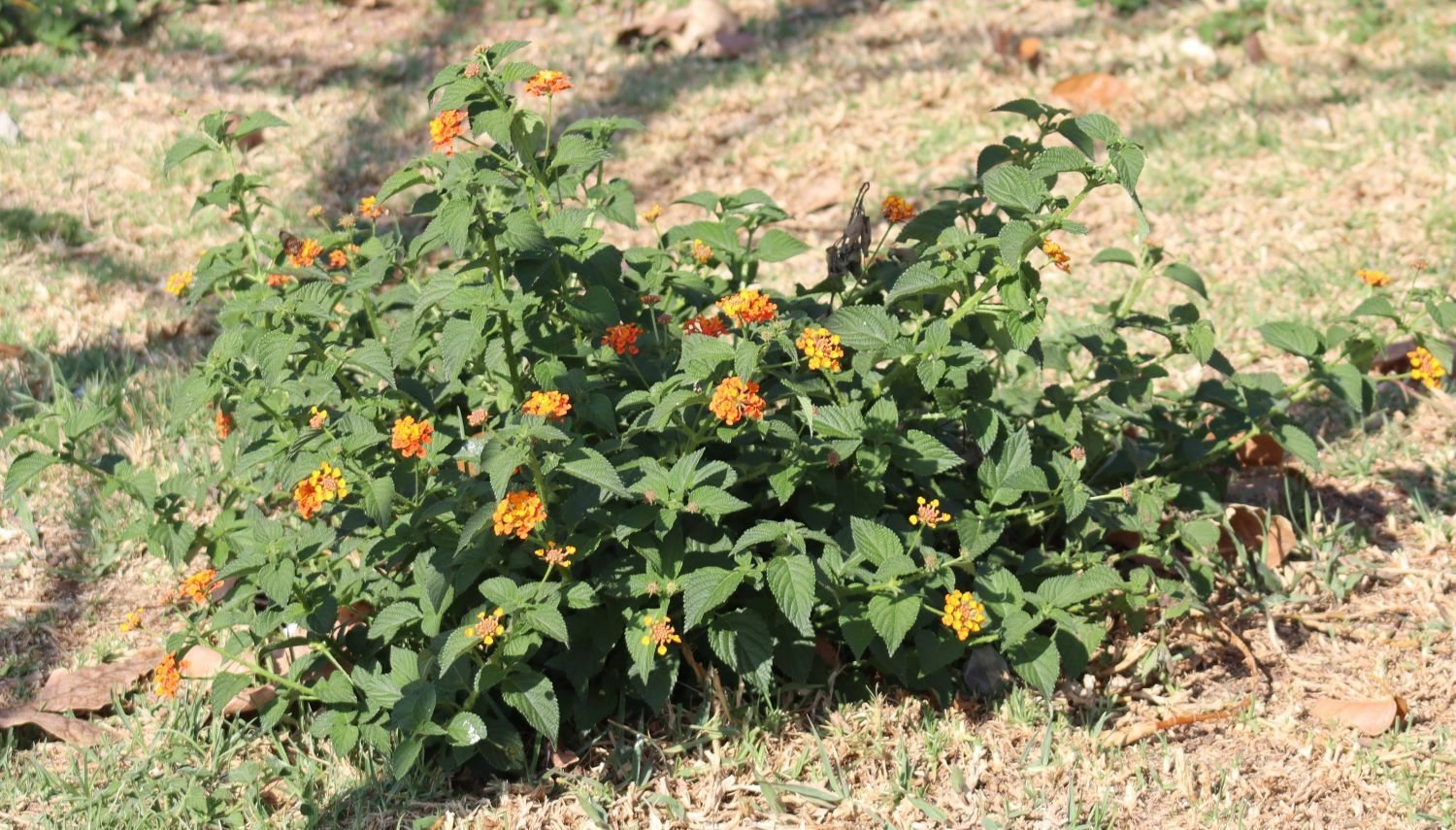
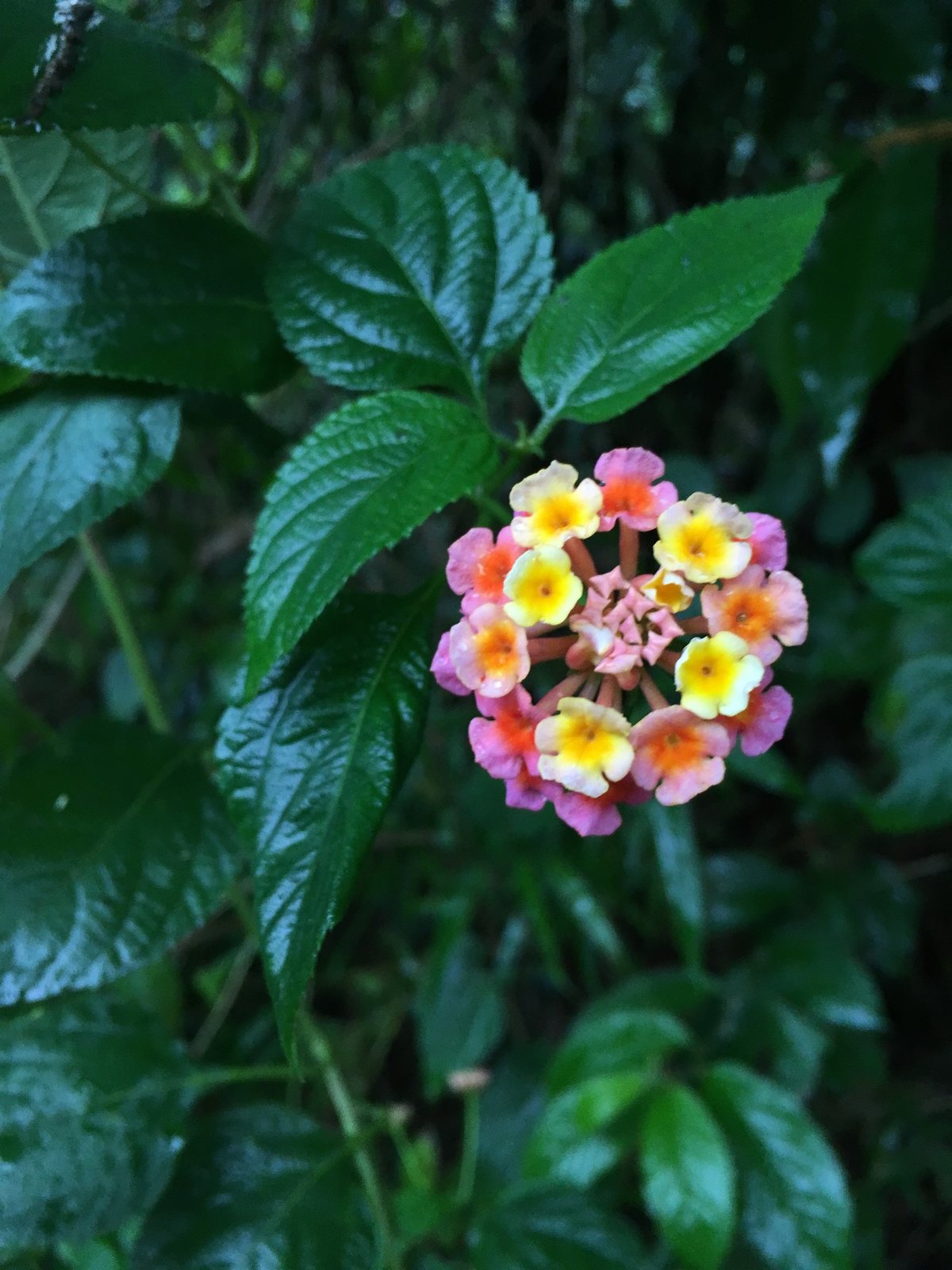
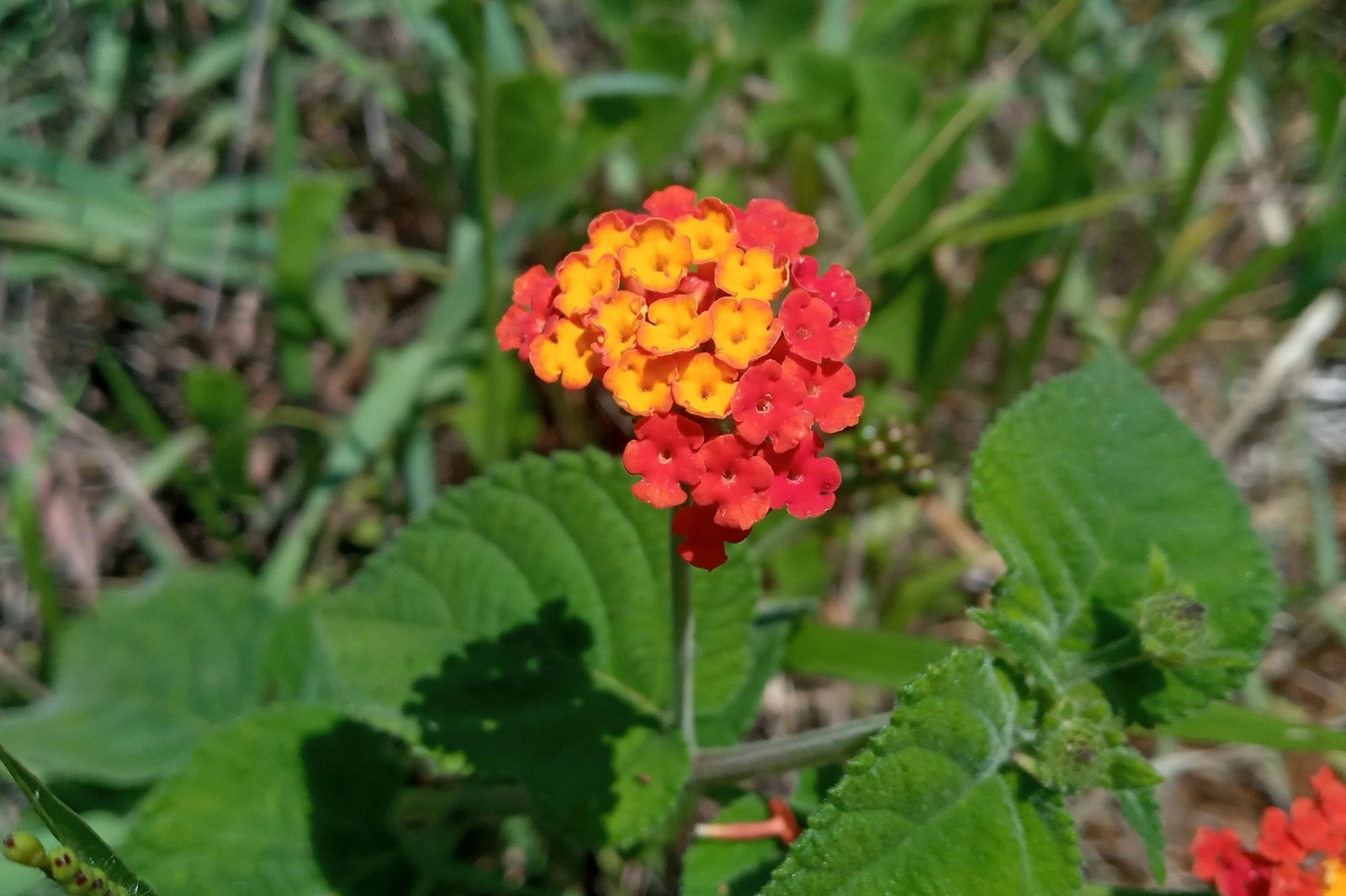
Lantana is a frost-tender shrub grown for rounded clusters of small flowers that often change colour as they age. It flowers for months in sunny, warm gardens and attracts butterflies; in colder climates it is grown as an annual or overwintered indoors. It is toxic if eaten and seriously invasive in several warm regions, so check local restrictions before planting.
At a glance
- Sun
- Full sun; flowering is reduced in partial shade.
- Water
- Water regularly during establishment, then allow the soil to dry between deep waterings. Established plants tolerate drought; containers need more frequent watering.
- Soil
- Well-drained sandy, loamy or gritty soil. Tolerates relatively poor soil but struggles in waterlogged ground.
- Height
- 3-6 ft (0.9-1.8 m), sometimes taller in frost-free climates; compact cultivars are smaller.
- Spread
- 3-6 ft (0.9-1.8 m), potentially wider where stems root into the ground.
- Flowers
- Late spring to autumn frost, potentially year-round in frost-free climates; yellow, orange, red, pink, white or mixed-colour clusters.
- Foliage
- Evergreen. Opposite, rough-textured green leaves with toothed edges and a strong smell when crushed; stems may be prickly.
- Growth
- Fast in warm weather.
- Care needed
- Medium
The year at a glance
- Pollinators
- Deer resistant
- Drought tolerant
- Heat tolerant
- Wildlife
- Low allergen
| J | F | M | A | M | J | J | A | S | O | N | D | |
|---|---|---|---|---|---|---|---|---|---|---|---|---|
| Flowers | ||||||||||||
| Fruit | ||||||||||||
| Plant |
Northern hemisphere months. In Australia, shift them by six.
- Difficulty
- Moderate
- Toughness
- Fairly tough
Will it suit your garden?
Pick your zone, country, light and whether you have pets.
Full sun is 6 or more hours of direct sun a day, part shade 3 to 6 hours, shade under 3.
How it grows
Planting day
1.6 ft (0.5 m)
After 1 year
2.5 ft (0.76 m)
After 2 years
3 ft (1 m)
After 3 years
4 ft (1.3 m)
After 5 years
4 ft (1.4 m)
full size
About 3 years to full size.
From a typical nursery size, at an average rate for this kind of plant. A rule of thumb, not a forecast.
Good to know
- Cats and dogs
- Toxic
- Invasive in
- the US and Australia
- In the garden
- Spreads vigorously: plan to contain it.
- Growth rate
- Fast
Care
Jobs through the year
- WaterMay, Sep–Oct, every 14 days
- For established ground plants, water only if soil has dried; water new plants and pots more often.
- WaterJun–Aug, every 7 days
- Water established ground plants deeply if dry, letting the surface dry between waterings.
- WaterJan–Apr, Nov–Dec, every 21 days
- Check frost-free overwintering pots; water sparingly only to prevent complete root-ball drying.
- PruneMay
- After frost risk passes and growth starts, remove dead wood and shorten leafy stems; wear gloves.
- MulchMay
- Apply a light mulch, leaving the woody crown clear.
- DeadheadJun–Oct, every 7 days
- Remove fading clusters and developing poisonous berries; this does not eliminate invasive risk.
- ProtectFeb–Mar
- Check local invasive-plant restrictions before buying or planting.
- ProtectSep–Oct
- Before frost, lift or move pots into bright frost-free shelter, or discard plants grown as annuals.
- Plant after frost danger has passed, once the soil has warmed.
- Water at soil level and let the surface dry before watering again; never leave pots standing in water.
- Feed sparingly; excess nitrogen encourages leaves rather than flowers.
- Apply a light mulch, keeping it clear of the woody crown.
- Remove developing berries and unwanted seedlings where cultivation is permitted; this does not eliminate its invasive risk.
- Before frost, move container plants to a bright, frost-free place and reduce watering.
Pruning. In spring, after frost risk has passed and new growth shows which stems are alive, remove dead wood and shorten remaining stems to shape the plant. Lightly trim overlong shoots during the growing season, wearing gloves to avoid prickles and skin irritation.
Through the year
- Late winter
- Check local invasive-plant restrictions before buying plants or planning new planting.
- Spring
- Prune established plants after frost risk has passed; wait for new growth before removing apparently dead stems.
- Late spring
- Plant outdoors after the last frost and water regularly while roots establish.
- Summer
- Water containers as needed, check for whiteflies and mites, and remove developing berries.
- Early autumn
- Where propagation is legal, take cuttings from healthy, non-flowering shoots.
- Autumn
- Move pots under frost-free cover before the first frost, or remove plants grown as annuals without spreading berries.
- Winter
- Keep overwintering plants bright and frost-free, watering only enough to prevent the root ball drying out completely.
In the garden
- Use compact cultivars in sunny patio containers for long-lasting colour, where cultivation is permitted.
- Place in hot-coloured borders with salvias and coreopsis for contrasting flower shapes.
- Combine with gaura and ornamental grasses to soften the shrub's dense outline.
- Use in dry, sunny mixed borders once established, but choose a non-invasive alternative in regions where lantana escapes.
Garden styles it suits: Hot border, Mediterranean, Tropical, Modern courtyard, Pollinator garden and Desert / xeriscape.
Plant it with: Salvia, Coreopsis, Gaura, Pentas, Rosemary and Lavender.
Wildlife: Flowers supply nectar for butterflies, bees and other insects. Birds eat the berries and disperse the seeds, helping the plant escape into natural habitats.
Problems to watch for
- Whiteflies: inspect leaf undersides and treat affected plants with insecticidal soap labelled for the purpose, avoiding open flowers and visiting insects.
- Spider mites: look for stippled leaves and fine webbing in hot, dry conditions; rinse leaf undersides and use an appropriate insecticidal soap if needed.
- Root rot: yellowing and collapse in wet soil require better drainage and less frequent watering; discard badly rotted plants.
- Poor flowering: move plants into full sun, avoid nitrogen-rich feed and allow recently trimmed plants time to form new flower buds.
Safety
Toxic to cats, dogs, horses and people if eaten. Leaves, stems and berries are unsafe to ingest, with unripe berries a particular concern for children. Poisoning can cause vomiting and diarrhoea; substantial ingestion, especially by grazing animals, can cause serious liver damage and photosensitisation and may be fatal. Sap and foliage can irritate skin. Seek medical or veterinary advice after ingestion.
Where it spreads. A major invasive shrub in tropical and subtropical Australia, particularly Queensland, New South Wales, the Northern Territory and Western Australia; it is a Weed of National Significance and sale or cultivation is restricted in many jurisdictions. It is also invasive in Florida and Hawaii, and widely invasive in South Africa, India, Sri Lanka and many Pacific islands.
Easily confused with
Trailing lantana (Lantana montevidensis)
Usually has a low, trailing habit, smaller leaves and lilac-purple flowers with pale centres, rather than the upright growth and frequently mixed-colour flower clusters of common lantana.
Egyptian starcluster (Pentas lanceolata)
Has clearly star-shaped, five-pointed flowers and softer, generally narrower leaves; lantana flowers are small tubes with rounded lobes, and its leaves feel rough.
The name
Lantana comes from an old Latin name for the wayfaring tree, a viburnum with superficially similar flower clusters.
Propagation. Where legal and environmentally appropriate, root softwood or semi-ripe cuttings in a warm, bright place out of direct sun. Seed-grown plants vary and may not resemble the parent. Do not propagate or distribute it in restricted regions.
Checked against open data
- Accepted botanical name
- Lantana camara
- In the US and Canada
- Native in Navassa Island, Puerto Rico and US Virgin Islands. Introduced in Hawaii, the lower 48 states and Pacific Basin.
- Native range
- Aruba, Bahamas, Belize, Brazil North, Brazil West-Central, Cayman Is., Colombia, Costa Rica, Cuba, Dominican Republic, Ecuador and El Salvador.
- Measured
- Average height 147 cm.
Sources: GBIF (CC BY 4.0), USDA PLANTS and Trefle (CC BY 4.0). The care and design notes are LandscapeGPT's own.
See it in your own yard.
Upload a photo of your yard and see it redesigned with plants that suit your climate, each checked against your zone.