Large fothergilla
Fothergilla major. Family Hamamelidaceae. Shrub.
Also called Mountain witch alder, Large witch alder.
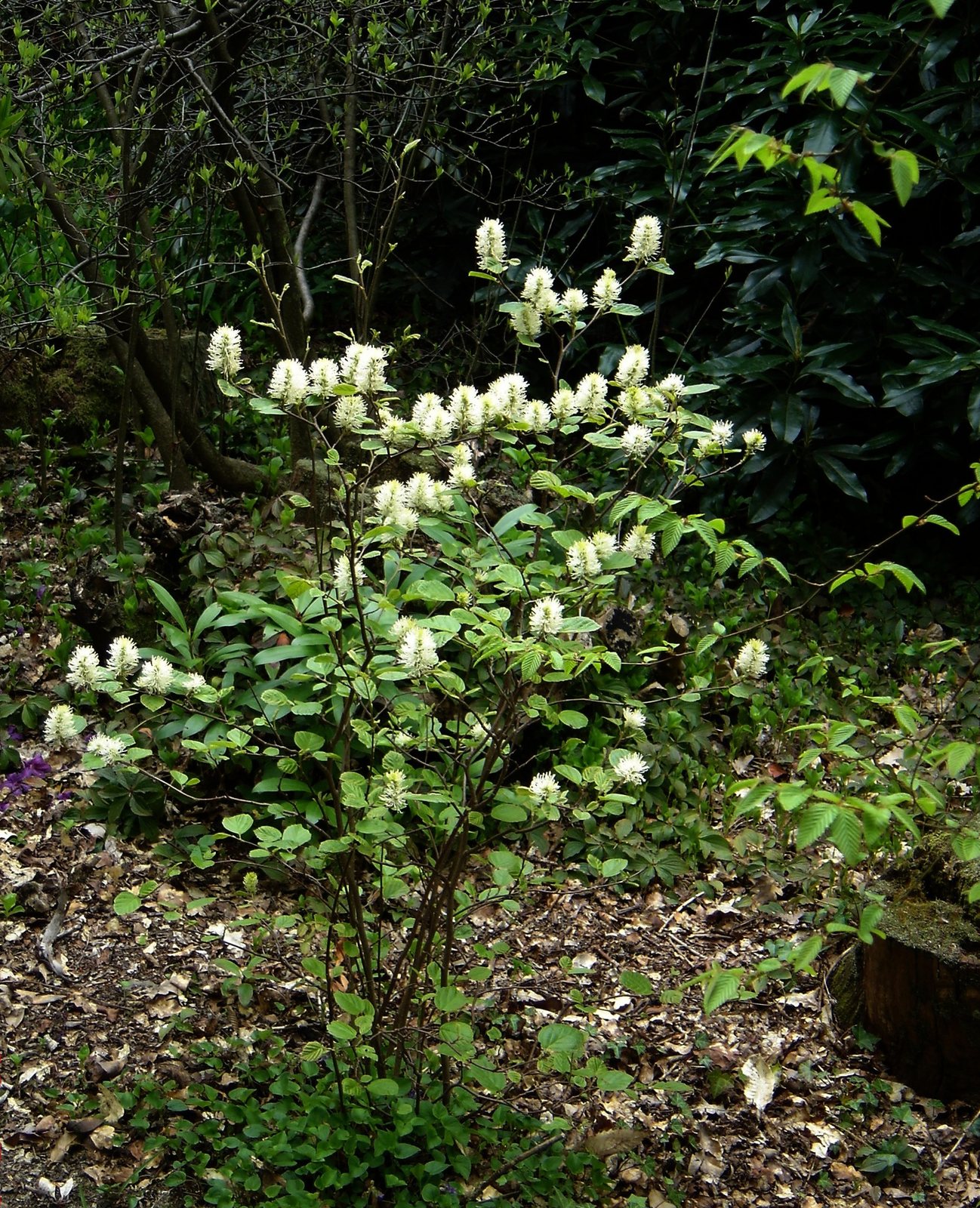
Large fothergilla is a deciduous shrub native to the southeastern United States, grown for fragrant white spring flowers and yellow, orange and red autumn foliage. Its upright, rounded shape suits woodland edges and mixed borders where the soil stays moist but drains freely.
At a glance
- Sun
- Full sun to partial shade; flowering and autumn colour are usually strongest with good sun, but afternoon shade helps in hot climates.
- Water
- Keep evenly moist, especially during establishment and dry summers; avoid waterlogged soil.
- Soil
- Acidic, humus-rich, well-drained soil; tolerates clay if drainage is good. Poorly suited to chalky or alkaline ground.
- Height
- 6-10 ft (1.8-3 m)
- Spread
- 5-9 ft (1.5-2.7 m)
- Flowers
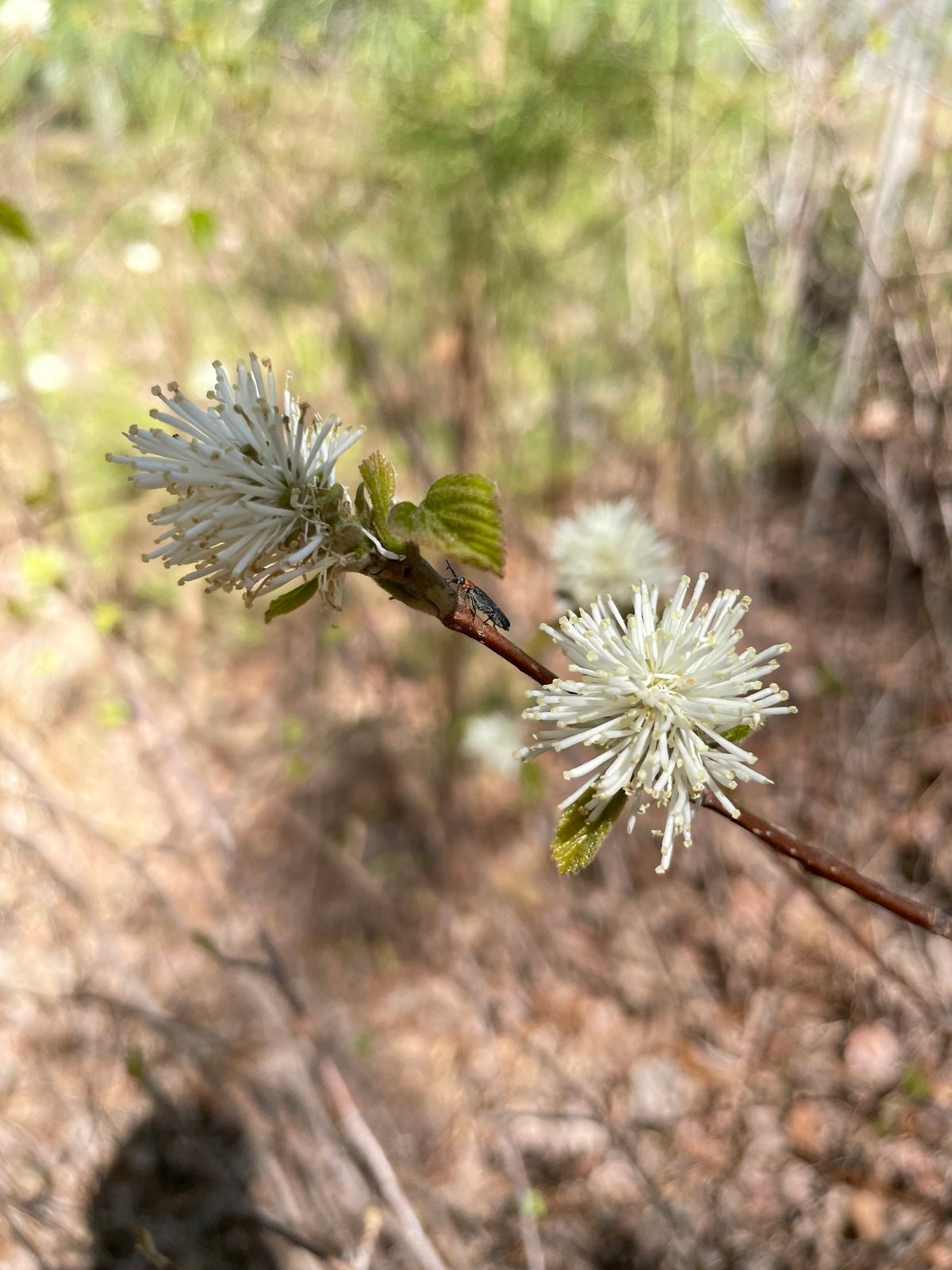
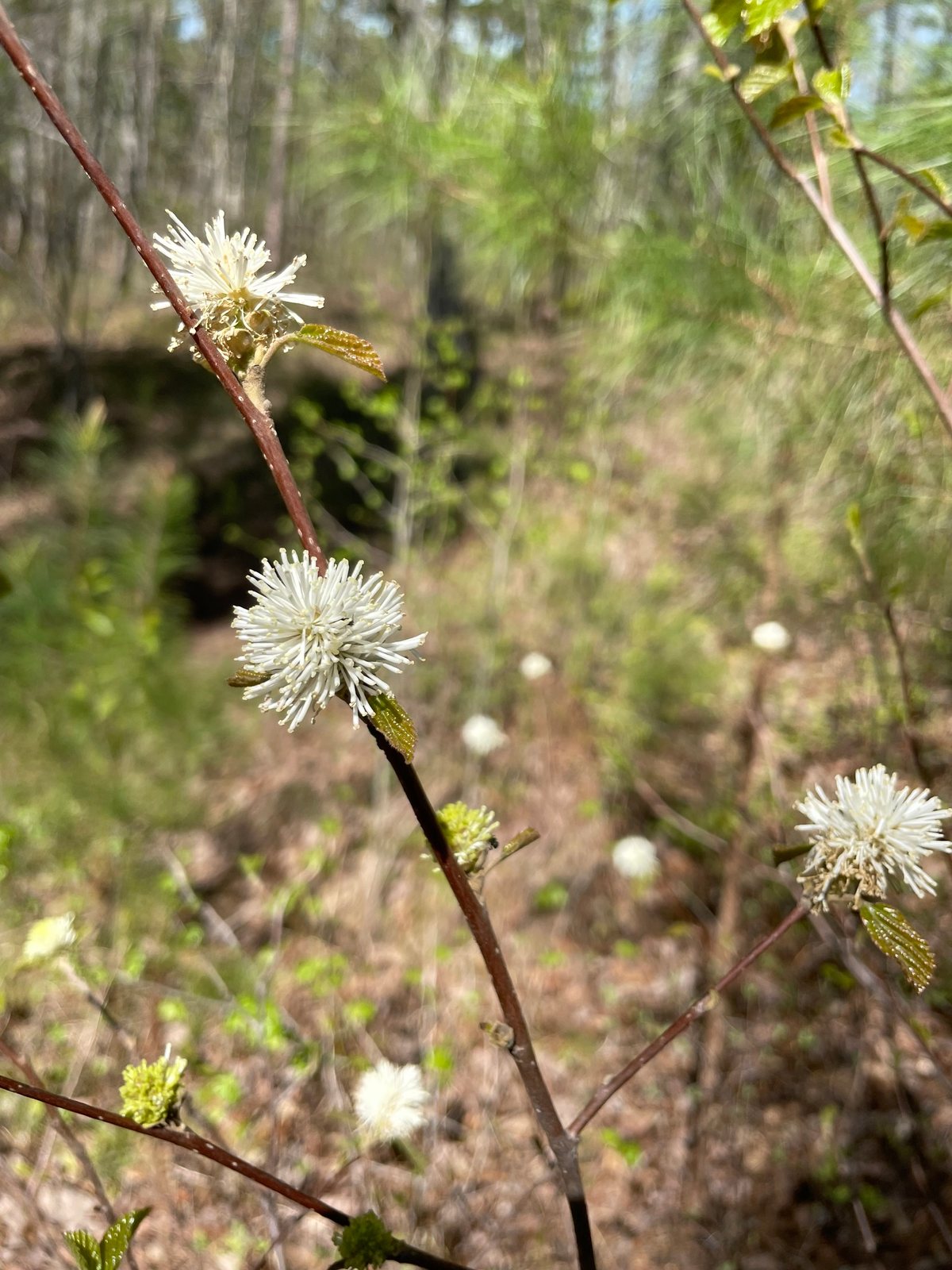
- Mid- to late spring; fragrant white bottlebrush-like flowers appear before or as the leaves open.
- Foliage
- Broad, toothed, dark green to blue-green leaves, often with paler undersides; turns yellow, orange, scarlet and purple in autumn.
- Growth
- Slow
- Care needed
- Low
The year at a glance
- Pollinators
- Deer resistant
- Cold hardy
- Wildlife
- Low allergen
- Fragrant
| J | F | M | A | M | J | J | A | S | O | N | D | |
|---|---|---|---|---|---|---|---|---|---|---|---|---|
| Flowers | ||||||||||||
| Plant |
Northern hemisphere months. In Australia, shift them by six.
- Difficulty
- Easy
- Toughness
- Fairly tough
Will it suit your garden?
Pick your zone, country, light and whether you have pets.
Full sun is 6 or more hours of direct sun a day, part shade 3 to 6 hours, shade under 3.
How it grows
Planting day
1.6 ft (0.5 m)
After 1 year
2.4 ft (0.74 m)
After 2 years
3 ft (0.98 m)
After 3 years
4 ft (1.2 m)
After 5 years
6 ft (1.7 m)
About 8 years to full size.
From a typical nursery size, at an average rate for this kind of plant. A rule of thumb, not a forecast.
Good to know
- Cats and dogs
- Safe
- Growth rate
- Slow
Care
Jobs through the year
- WaterApr–May, Sep–Oct, every 14 days
- Water established shrubs deeply if rainfall is insufficient; keep young plants evenly moist.
- WaterJun–Aug, every 7 days
- During dry weather, soak established roots before the soil dries completely; young plants need closer checks.
- MulchMar–Apr
- Apply 5–8 cm of leaf mould or composted bark, keeping stems clear.
- FeedApr
- Feed lightly with acid-loving shrub fertilizer only if growth is weak or soil is poor.
- PruneMay–Jun
- Immediately after flowering, remove damaged or misplaced branches and unwanted suckers; do not shear.
- Water deeply during dry spells for the first two growing seasons, and during prolonged drought thereafter.
- Apply 2-3 in (5-8 cm) of leaf mould or composted bark each spring, keeping it clear of the stems.
- Check soil pH before planting; choose another site or plant if the ground is strongly alkaline.
- Feed lightly in spring with a fertiliser for acid-loving shrubs only if growth is weak or the soil is poor.
- Remove unwanted suckers at ground level if you want to keep a single, defined clump.
Pruning. Little pruning is needed. Immediately after flowering, remove dead or damaged wood and any awkwardly placed branches; avoid routine shearing, which spoils its natural shape.
Through the year
- Spring
- Plant when the soil is workable, water thoroughly and mulch.
- Mid-spring
- Check new leaves for yellowing that may indicate alkaline soil or poor drainage.
- Late spring
- After flowering, prune only where needed to remove damaged or misplaced branches.
- Summer
- Water during dry spells before the root zone dries out completely.
- Autumn
- Plant in mild regions while the soil is moist and still warm.
- Winter
- Check that mulch is clear of the stems and that water is not pooling around the roots.
In the garden
- Plant at a woodland edge with rhododendrons and ferns for spring flowers and contrasting leaf textures.
- Use as an autumn-colour focal point in a mixed shrub border, allowing room for its mature width.
- Group several shrubs in a larger garden to create a loose, flowering screen.
- Combine with evergreen shrubs so its white flowers and autumn leaves stand out against a dark backdrop.
Garden styles it suits: Woodland, Autumn colour, Sensory garden, Pollinator garden, English country and Low-maintenance.
Plant it with: Rhododendrons, Azaleas, Japanese pieris, Oakleaf hydrangea, Christmas fern and Foamflower.
Wildlife: The fragrant spring flowers provide pollen and nectar for bees and other insects. Mature shrubs also offer shelter for small birds.
Problems to watch for
- Yellow leaves with green veins: alkaline soil can cause iron chlorosis; test the soil and address the pH rather than repeatedly feeding.
- Leaf scorch or premature leaf drop: water deeply during drought and maintain mulch; provide afternoon shade in hot sites.
- Root decline in wet ground: improve drainage or move the shrub to a better-drained site; do not leave roots standing in water.
- Sparse flowering: deep shade or pruning after flower buds have formed can reduce bloom; give more light and prune only just after flowering.
Safety
Not known to be toxic to people, cats, dogs or horses. No part is recognised as a significant poisoning hazard, but it is not an edible plant.
Easily confused with
Dwarf fothergilla (Fothergilla gardenii)
Usually stays around 2-3 ft (0.6-0.9 m) tall, with smaller leaves and a lower, spreading habit. Young plants can be difficult to distinguish, and named garden selections may be hybrids.
Witch hazel (Hamamelis species)
Has similarly broad, toothed leaves, but its flowers have narrow, ribbon-like petals rather than fothergilla's dense white clusters of stamens.
The name
Fothergilla honours the English physician and plantsman John Fothergill, while major means larger, distinguishing it from its smaller relative.
Propagation. Take softwood cuttings in early summer, using rooting hormone and a humid propagator; rooting can be slow. Rooted suckers can sometimes be separated during dormancy. Seed propagation is slow and requires dormancy-breaking treatment.
Checked against open data
- Accepted botanical name
- Fothergilla latifolia Fothergilla major is an older name for Fothergilla latifolia.
- Native range
- Alabama, Arkansas, Georgia, North Carolina, South Carolina and Tennessee.
Sources: GBIF (CC BY 4.0) and Trefle (CC BY 4.0). The care and design notes are LandscapeGPT's own.
See it in your own yard.
Upload a photo of your yard and see it redesigned with plants that suit your climate, each checked against your zone.