Late tulip
Tulipa tarda. Family Liliaceae. Bulb.
Also called Tarda tulip.
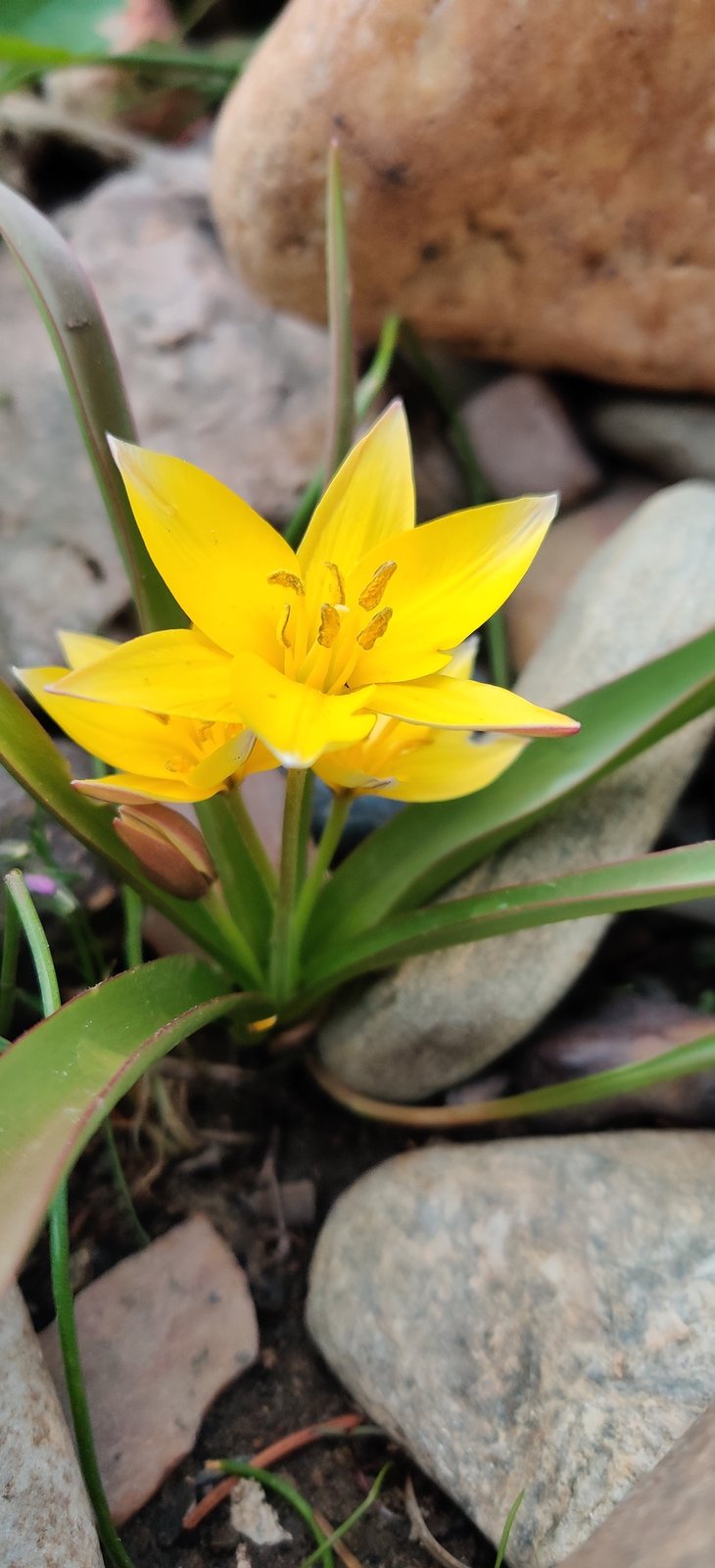
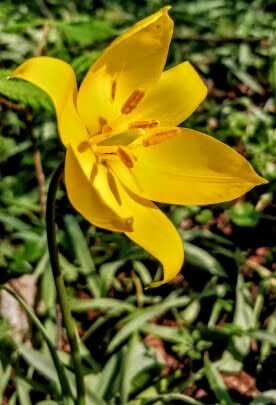
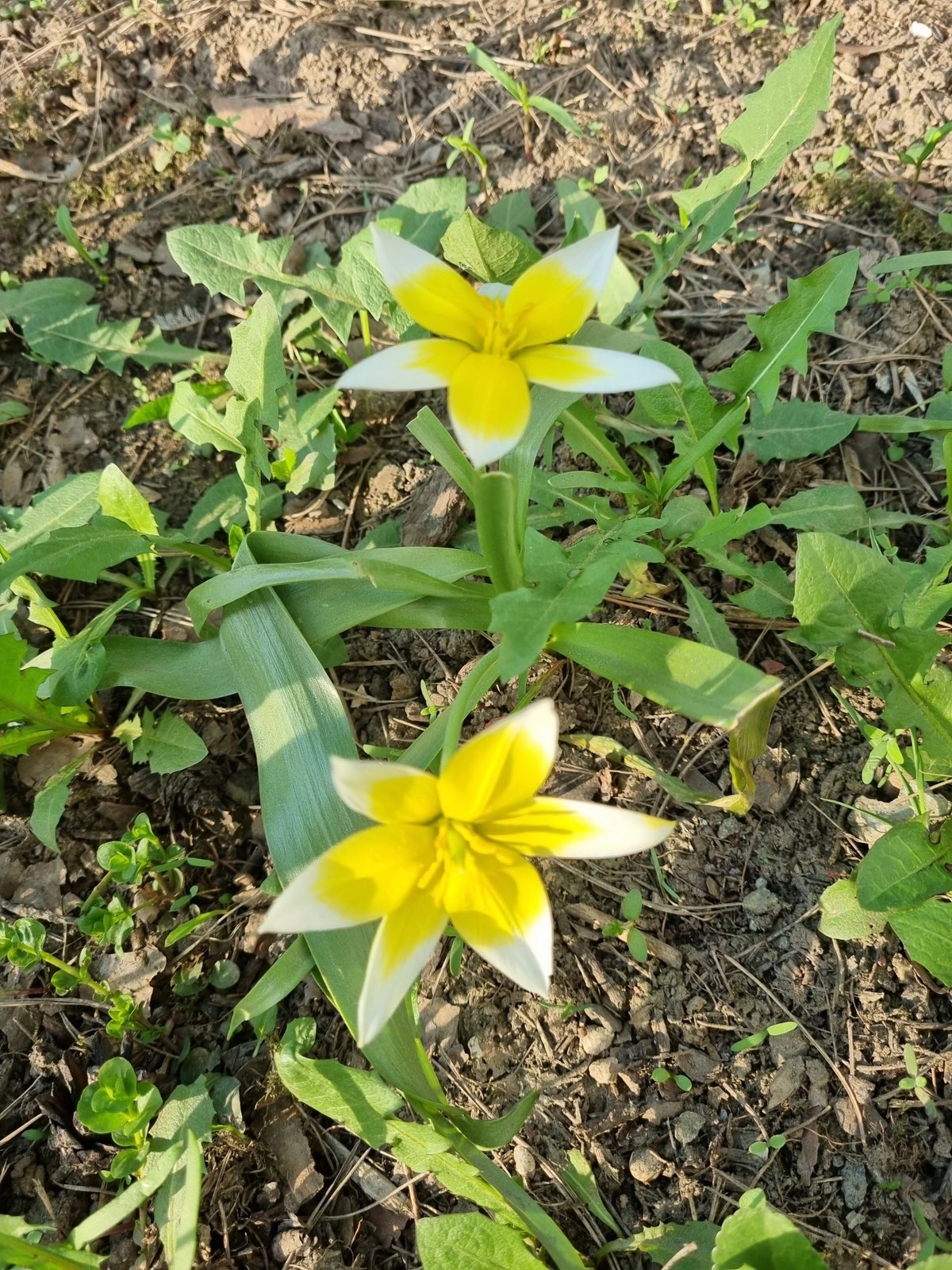
Late tulip is a small, perennial species tulip with clusters of yellow, white-tipped flowers that open into stars in sunshine. Gardeners grow it in rock gardens, gravel beds and border edges, where it can gradually form clumps. It returns most reliably where winters are cold and the soil drains freely, especially during summer dormancy.
At a glance
- Sun
- Full sun; flowers open best in direct sunshine.
- Water
- Moderate moisture during spring growth; little water once the foliage dies back. Avoid persistently wet soil, especially in summer.
- Soil
- Well-drained sandy, gritty or stony soil, preferably neutral to alkaline. Heavy clay needs improved drainage or a raised bed.
- Height
- 0.3-0.5 ft (0.1-0.15 m)
- Spread
- 0.3-0.5 ft (0.1-0.15 m) per clump, widening gradually through offsets and seedlings
- Flowers
- Early to mid-spring, depending on climate; bright yellow flowers with white tips, usually several on each stem.
- Foliage
- Narrow, glossy green leaves in a low basal cluster; foliage yellows and disappears after flowering.
- Growth
- Moderate during spring growth; clumps expand slowly.
- Care needed
- Low
The year at a glance
- Pollinators
- Cold hardy
- Low allergen
| J | F | M | A | M | J | J | A | S | O | N | D | |
|---|---|---|---|---|---|---|---|---|---|---|---|---|
| Flowers | ||||||||||||
| Plant |
Northern hemisphere months. In Australia, shift them by six.
- Difficulty
- Easy
- Toughness
- Very tough
Will it suit your garden?
Pick your zone, country, light and whether you have pets.
Full sun is 6 or more hours of direct sun a day, part shade 3 to 6 hours, shade under 3.
How it grows
Planting day
0.4 ft (0.13 m)
full size
About 1 years to full size.
From a typical nursery size, at an average rate for this kind of plant. A rule of thumb, not a forecast.
Good to know
- Cats and dogs
- Toxic
- Growth rate
- Slow
Care
Jobs through the year
- WaterFeb–Mar, every 14 days
- Water established bulbs only if soil dries during active growth.
- WaterApr–May, every 7 days
- Water only during dry spells while leaves are green; stop as they yellow.
- WaterSep–Nov, every 14 days
- Water new plantings in, then supplement only if autumn rooting soil becomes dry.
- FeedFeb–Mar
- On poor soil only, apply a light bulb feed as shoots emerge.
- MulchFeb–Mar
- Apply a thin gravel mulch around shoots to maintain a free-draining surface.
- DeadheadApr–May
- Remove faded heads only if seedlings are unwanted.
- PruneMay–Jun
- Gently remove dead foliage only after it has completely yellowed.
- DivideJun–Jul
- Divide only crowded clumps after foliage dies; replant promptly in well-drained soil.
- ProtectSep–Nov
- Protect new bulbs with secure mesh or bulb cages where rodents are troublesome.
- Plant bulbs in autumn about 4 in (10 cm) deep and 3-4 in (8-10 cm) apart.
- Water during active growth if the soil becomes dry, then reduce watering as the leaves yellow.
- On poor soil, apply a light dressing of bulb fertiliser as shoots emerge; avoid heavy feeding.
- Use a thin gravel mulch around the shoots to keep the surface free-draining.
- Lift and separate crowded clumps after the leaves have died back, then replant promptly in a dry, well-drained position.
Pruning. Remove faded flower heads if you do not want seedlings, but leave the leaves until they have turned completely yellow. Remove dead foliage gently; do not tie or braid it.
Through the year
- Autumn
- Plant bulbs in a sunny, freely drained position.
- Late winter
- Check emerging shoots for slug damage and protect them where needed.
- Spring
- Water during dry spells and give a light bulb feed if the soil is poor.
- Late spring
- Remove spent flowers unless you want seed, and leave foliage to yellow naturally.
- Summer
- Keep dormant bulbs relatively dry; divide overcrowded clumps once the foliage has died.
In the garden
- Plant in small groups among rocks or gravel, where the low flowers can be seen clearly.
- Use along sunny path edges with other miniature spring bulbs.
- Grow in shallow containers or alpine troughs with excellent drainage.
- Thread through low, drought-tolerant perennials that fill the space after the tulip foliage disappears.
Garden styles it suits: Alpine rock garden, Dry gravel garden, Cottage garden, Low-maintenance, Small-space and Pollinator garden.
Plant it with: Grape hyacinths, Reticulated irises, Crocuses, Creeping thyme, Rock cress and Candytuft.
Wildlife: Open flowers offer pollen to visiting bees. Bulbs and shoots may be eaten by rodents and browsing mammals.
Problems to watch for
- Bulb rot in wet soil: improve drainage, use raised beds or containers, and discard soft or mouldy bulbs.
- Tulip fire: distorted shoots and spotted, collapsing leaves or flowers can indicate fungal infection; remove affected plants and debris, and avoid replanting tulips in that spot for several years.
- Slugs and snails: protect emerging leaves and flowers with hand-picking or locally approved controls.
- Rodents digging up or eating bulbs: protect new plantings with securely fitted wire mesh or bulb cages.
Safety
Toxic to cats, dogs, horses and people if eaten. All parts contain irritant compounds, with the highest concentrations in the bulbs; ingestion can cause drooling, vomiting, diarrhoea and, in larger amounts, serious illness. Bulb handling can also cause skin irritation, so wear gloves if you are sensitive.
Easily confused with
Turkestan tulip (Tulipa turkestanica)
Usually carries more, smaller flowers on taller, branching stems. Its flowers are mainly white with yellow centres, while late tulip has broad yellow areas ending in distinct white tips.
The name
The species name tarda means 'late' in Latin, referring to its flowering time relative to some other small species tulips, not to late-flowering garden tulips.
Propagation. Separate offsets after the foliage dies back and replant them. Alternatively, sow ripe seed in a freely drained pot and leave outdoors for natural winter chilling; seedlings take several years to flower and need protection from excessive wet.
Checked against open data
- Accepted botanical name
- Tulipa urumiensis Tulipa tarda is an older name for Tulipa urumiensis.
Sources: GBIF (CC BY 4.0). The care and design notes are LandscapeGPT's own.
See it in your own yard.
Upload a photo of your yard and see it redesigned with plants that suit your climate, each checked against your zone.