Laurustinus
Viburnum tinus. Family Viburnaceae. Shrub.
Also called Laurustine, Laurustinus viburnum.
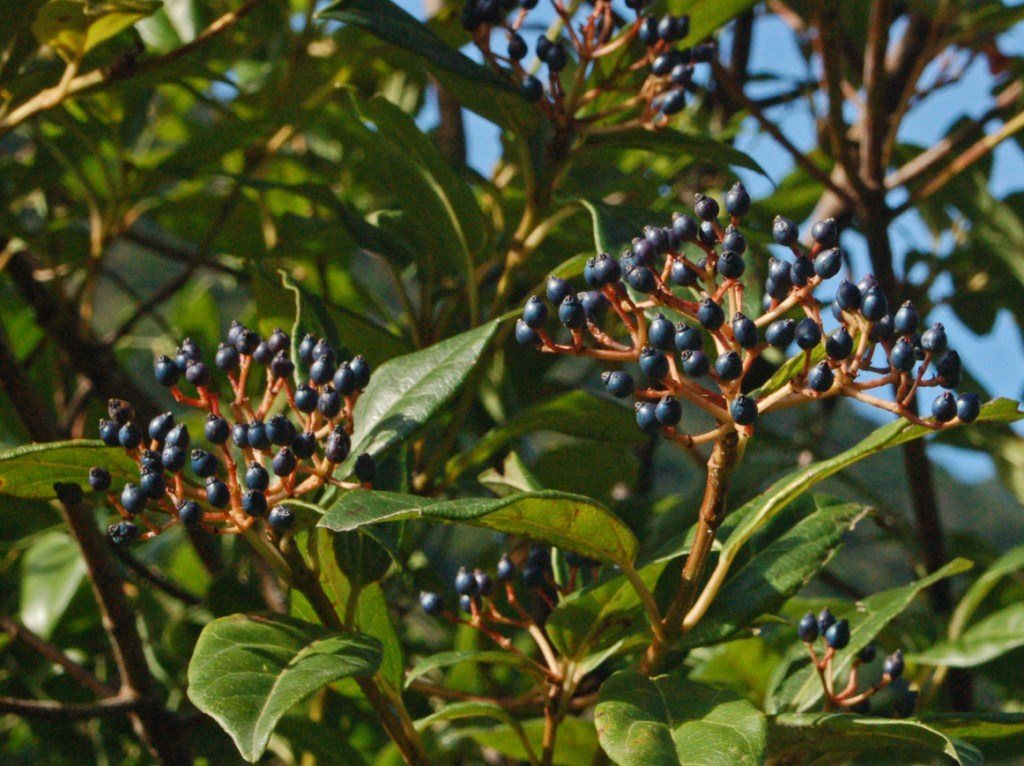
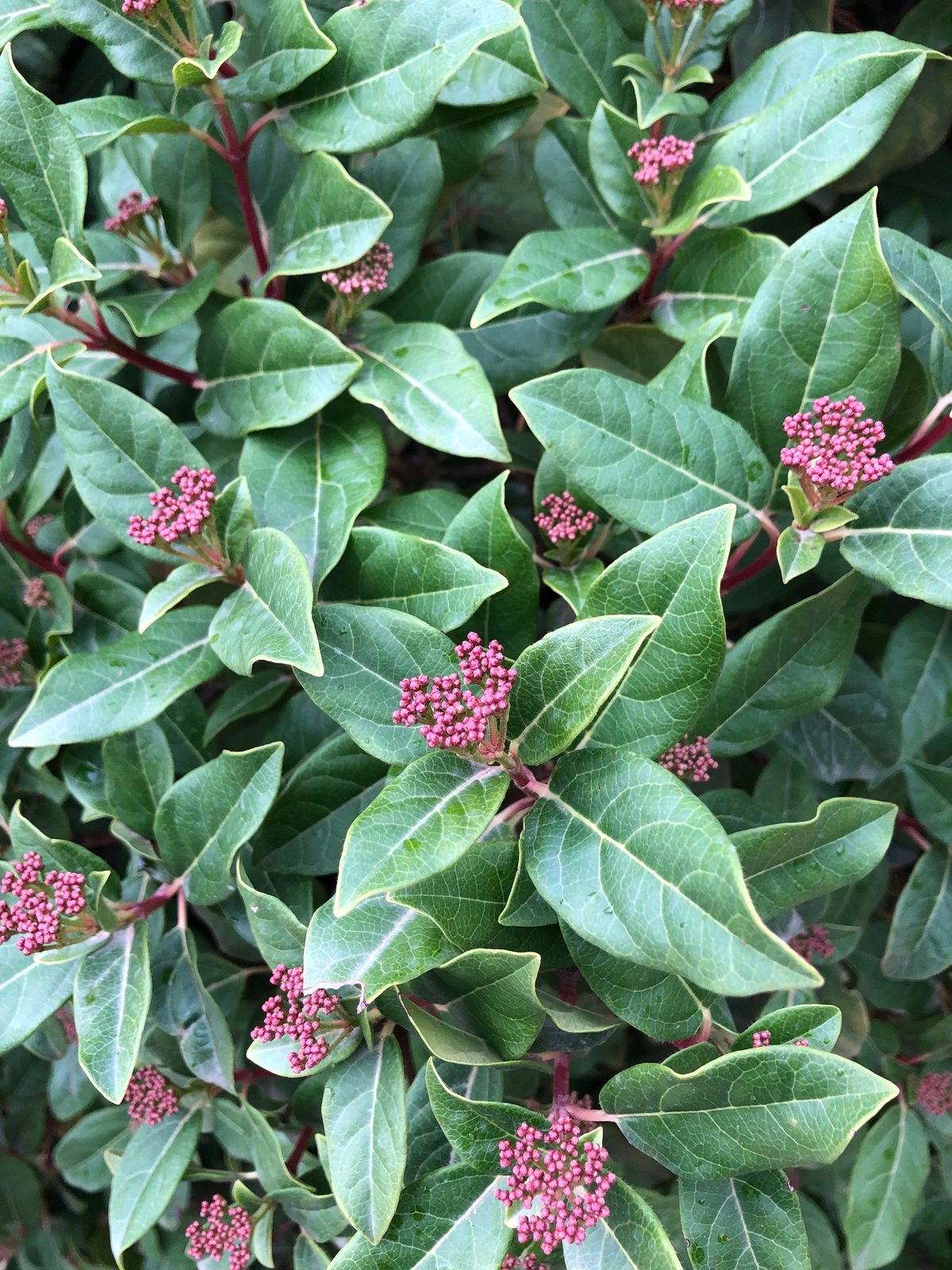
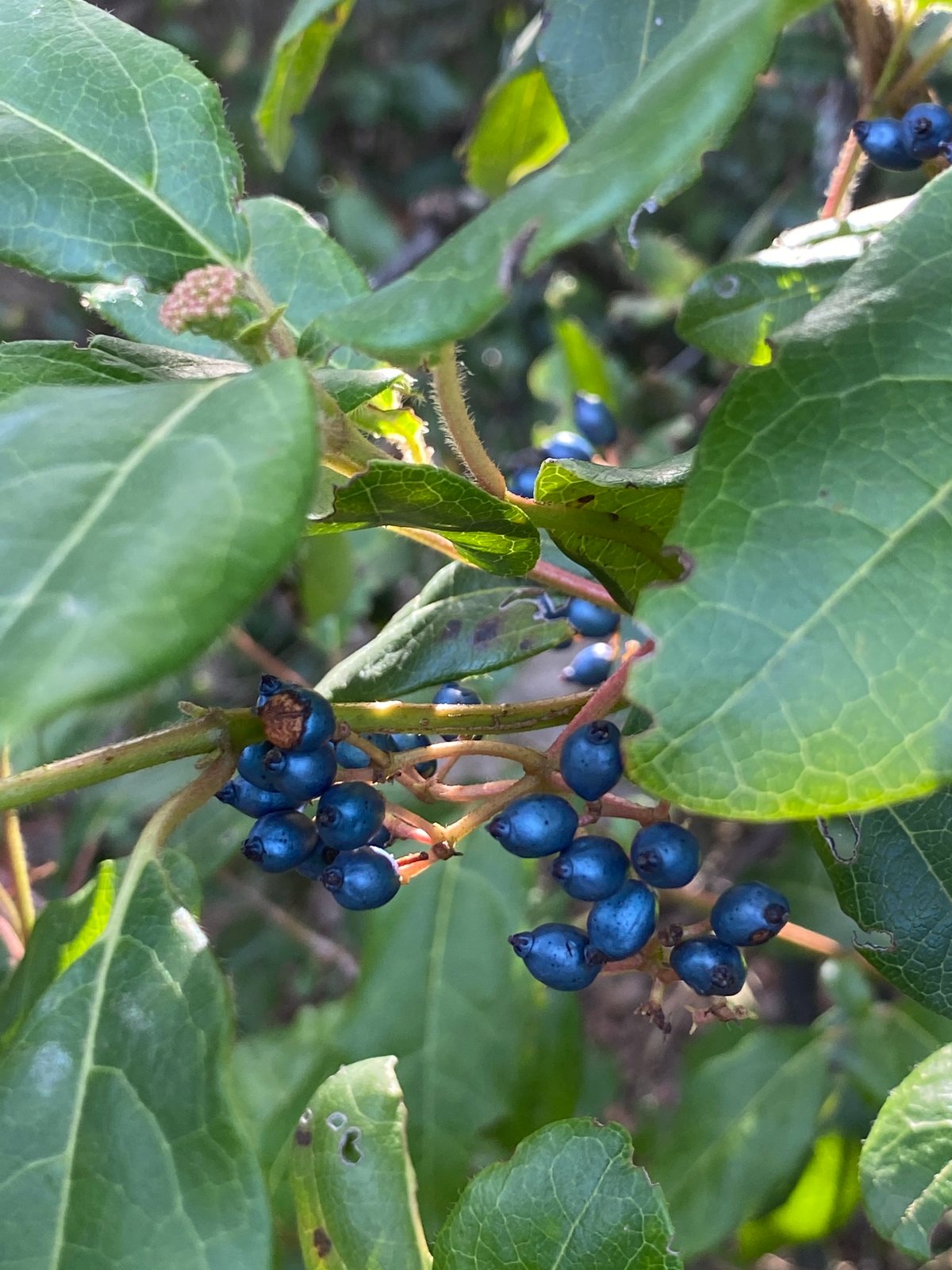
Laurustinus is a dense evergreen shrub grown for its dark foliage, pink flower buds and clusters of small white flowers from winter into spring. It makes a useful hedge or background shrub in mild climates, with metallic blue-black fruits often following the flowers.
At a glance
- Sun
- Full sun to partial shade; tolerates deeper shade but flowers less freely.
- Water
- Water regularly while establishing. Established shrubs tolerate some drought, but benefit from deep watering during prolonged dry spells.
- Soil
- Well-drained soil, including clay that does not remain waterlogged; tolerates acidic, neutral and alkaline conditions.
- Height
- 8-12 ft (2.4-3.7 m)
- Spread
- 8-12 ft (2.4-3.7 m)
- Flowers
- Pink buds open to white flower clusters from late autumn or winter into spring; timing varies with climate.
- Foliage
- Leathery, oval, dark green leaves held in opposite pairs, forming a dense evergreen canopy.
- Growth
- Moderate
- Care needed
- Low
The year at a glance
- Pollinators
- Drought tolerant
- Heat tolerant
- Wildlife
- Low allergen
| J | F | M | A | M | J | J | A | S | O | N | D | |
|---|---|---|---|---|---|---|---|---|---|---|---|---|
| Flowers | ||||||||||||
| Fruit | ||||||||||||
| Plant |
Northern hemisphere months. In Australia, shift them by six.
- Difficulty
- Hard
- Toughness
- Needs looking after
Will it suit your garden?
Pick your zone, country, light and whether you have pets.
Full sun is 6 or more hours of direct sun a day, part shade 3 to 6 hours, shade under 3.
How it grows
Planting day
1.6 ft (0.5 m)
After 1 year
3 ft (1 m)
After 2 years
5 ft (1.5 m)
After 3 years
7 ft (2 m)
After 5 years
10 ft (3.1 m)
full size
About 5 years to full size.
From a typical nursery size, at an average rate for this kind of plant. A rule of thumb, not a forecast.
Good to know
- Cats and dogs
- Mildly toxic: may upset a stomach
- Invasive in
- Australia
- Growth rate
- Moderate
Care
Jobs through the year
- WaterApr–May, Sep–Oct, every 14 days
- For established sheltered ground-grown plants, water only in dry spells; new plants need more regular watering.
- WaterJun–Aug, every 14 days
- Deeply soak established ground-grown shrubs during prolonged drought; containers need much more frequent checks.
- MulchApr
- Top-dress with compost and maintain 5–8 cm of mulch without covering stems.
- FeedApr
- Use a general-purpose feed only if growth is weak or soil is poor.
- PruneApr–May
- Prune lightly just after flowering; retain flowered branches where fruit is wanted and avoid later clipping.
- ProtectApr–Jun, every 7 days
- Inspect young leaves for viburnum beetle larvae and aphids; hand-remove small infestations.
- ProtectJan–Mar, Oct–Dec
- Not reliably hardy in zones 6–7: overwinter in a protected container or frost-free shelter; fleece alone cannot ensure survival.
- Water deeply during the first growing season, allowing the soil surface to dry slightly between waterings.
- Apply 2-3 in (5-8 cm) of organic mulch over the root area, keeping it clear of the stems.
- In spring, add compost; use a general-purpose fertiliser only if growth is weak or the soil is poor.
- Choose a sheltered position away from cold, drying winds near the colder end of its range.
- During prolonged summer drought, soak the root area rather than watering lightly each day.
Pruning. Prune just after flowering, shortening overlong shoots and removing dead or damaged wood. Trim hedges at the same time; later clipping removes developing flower buds, while pruning flowered shoots reduces the fruit display.
Through the year
- Spring
- After flowering, prune lightly to shape and remove frost-damaged shoots once new growth shows what is alive.
- Spring
- Refresh mulch and add compost around established shrubs.
- Late spring
- Check leaves for beetle larvae and aphids; remove small infestations before damage spreads.
- Summer
- Water new plants during dry weather and give established shrubs a deep soak during prolonged drought.
- Late summer
- Take semi-ripe cuttings from healthy, non-flowering shoots.
- Autumn
- Plant in mild areas while the soil is warm; in colder locations, wait until spring.
- Winter
- Protect container roots during hard freezes and avoid pruning off the developing flowers.
In the garden
- Use as an evergreen boundary hedge where winter flowers are more important than a tightly clipped outline.
- Plant behind hellebores, cyclamen and spring bulbs to provide a dark, permanent backdrop.
- Place near a path or entrance where the winter buds and flowers can be seen closely.
- Combine with rosemary and other Mediterranean shrubs in a sheltered, well-drained border.
- Use as a loose screen around a seating area, allowing enough room for its mature width.
Garden styles it suits: Mediterranean, Winter interest, Woodland, Traditional, Coastal and Low-maintenance.
Plant it with: Hellebores, Hardy cyclamen, Snowdrops, Bergenias, Mexican orange blossom and Rosemary.
Wildlife: Flowers provide pollen and nectar for insects active during mild winter and early spring weather. Birds eat the fruits and use dense shrubs for shelter and nesting.
Problems to watch for
- Viburnum beetle can skeletonise leaves, particularly in the UK. Inspect in spring, hand-pick larvae on small shrubs and remove heavily infested shoots carrying eggs during winter.
- Aphids can distort soft new growth. Wash them off with water and encourage ladybirds and other predators; use insecticidal soap only where necessary.
- Leaf spots are more likely in damp, crowded conditions. Remove fallen infected leaves, improve air circulation and water at soil level.
- Waterlogged soil can cause root rot and dieback. Improve drainage or replant in a better-drained position rather than continuing to water a declining shrub.
Safety
Not generally considered toxic to cats, dogs or horses. The fruits are not food for people or pets; eating them may cause stomach upset, particularly in quantity. Serious poisoning is not generally associated with this shrub.
Where it spreads. Naturalised and regarded as an environmental weed in parts of southern Australia, including Victoria and South Australia, where birds spread its seeds into bushland. Check local weed guidance before planting near native vegetation.
Easily confused with
Sweet viburnum (Viburnum odoratissimum)
Usually has larger, glossier leaves and more open, often pyramidal clusters of fragrant white flowers in spring rather than the compact winter flower heads of laurustinus.
Leatherleaf viburnum (Viburnum rhytidophyllum)
Has much longer, strongly wrinkled leaves with densely hairy undersides, and broad creamy flower clusters in spring.
Cherry laurel (Prunus laurocerasus)
Has alternate rather than opposite leaves, usually with finely toothed margins, and upright spikes of white flowers rather than rounded clusters.
The name
Laurustinus combines the Latin laurus, meaning laurel, with tinus, an ancient name for this shrub, referring to its laurel-like evergreen leaves.
Propagation. Take semi-ripe cuttings in summer to early autumn and root them in a free-draining medium under humid conditions. Seed is possible but germination can be slow and uneven; seedlings may differ from named cultivars.
Checked against open data
- Accepted botanical name
- Viburnum tinus
- In the US and Canada
- Introduced in the lower 48 states.
- Native range
- Albania, Algeria, Baleares, Corse, Cyprus, East Aegean Is., France, Greece, Italy, Lebanon-Syria, Libya and Morocco.
- Measured
- Soil pH 5.5 to 6.5. Average height 240 cm.
Sources: GBIF (CC BY 4.0), USDA PLANTS and Trefle (CC BY 4.0). The care and design notes are LandscapeGPT's own.
See it in your own yard.
Upload a photo of your yard and see it redesigned with plants that suit your climate, each checked against your zone.