Lavender Twist redbud
Cercis canadensis 'Covey'. Family Fabaceae. Tree.
Also called Cercis canadensis 'Covey', Weeping eastern redbud, Lavender Twist eastern redbud.
Lavender Twist is a small, deciduous eastern redbud with strongly weeping branches and pinkish-purple flowers on bare wood in spring. Gardeners grow it for its cascading shape, heart-shaped leaves and compact size; its eventual height depends partly on how the young trunk is trained.
At a glance
- Sun
- Full sun to partial shade; afternoon shade helps in hot, dry climates. A sunny, sheltered position encourages flowering in cooler regions.
- Water
- Moderate; keep the root area evenly moist while establishing, then water deeply during prolonged dry spells. Avoid waterlogged soil.
- Soil
- Well-drained loam, clay or sandy soil with some organic matter; tolerates mildly acidic to alkaline conditions.
- Height
- 5-10 ft (1.5-3 m), depending on training
- Spread
- 6-10 ft (1.8-3 m)
- Flowers
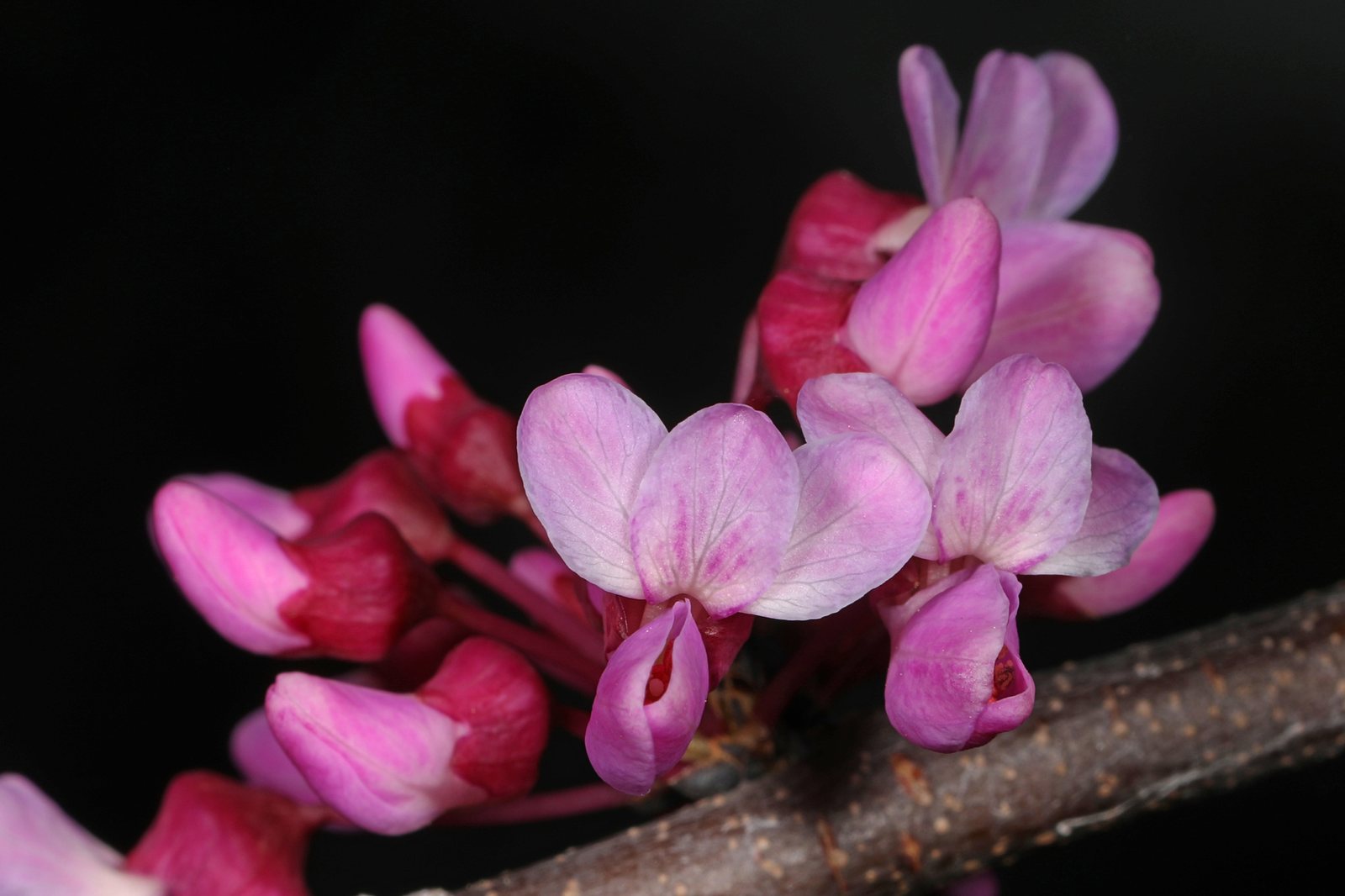
- Early to mid-spring; small lavender-pink to rosy-purple flowers cluster along bare branches before the leaves emerge.
- Foliage
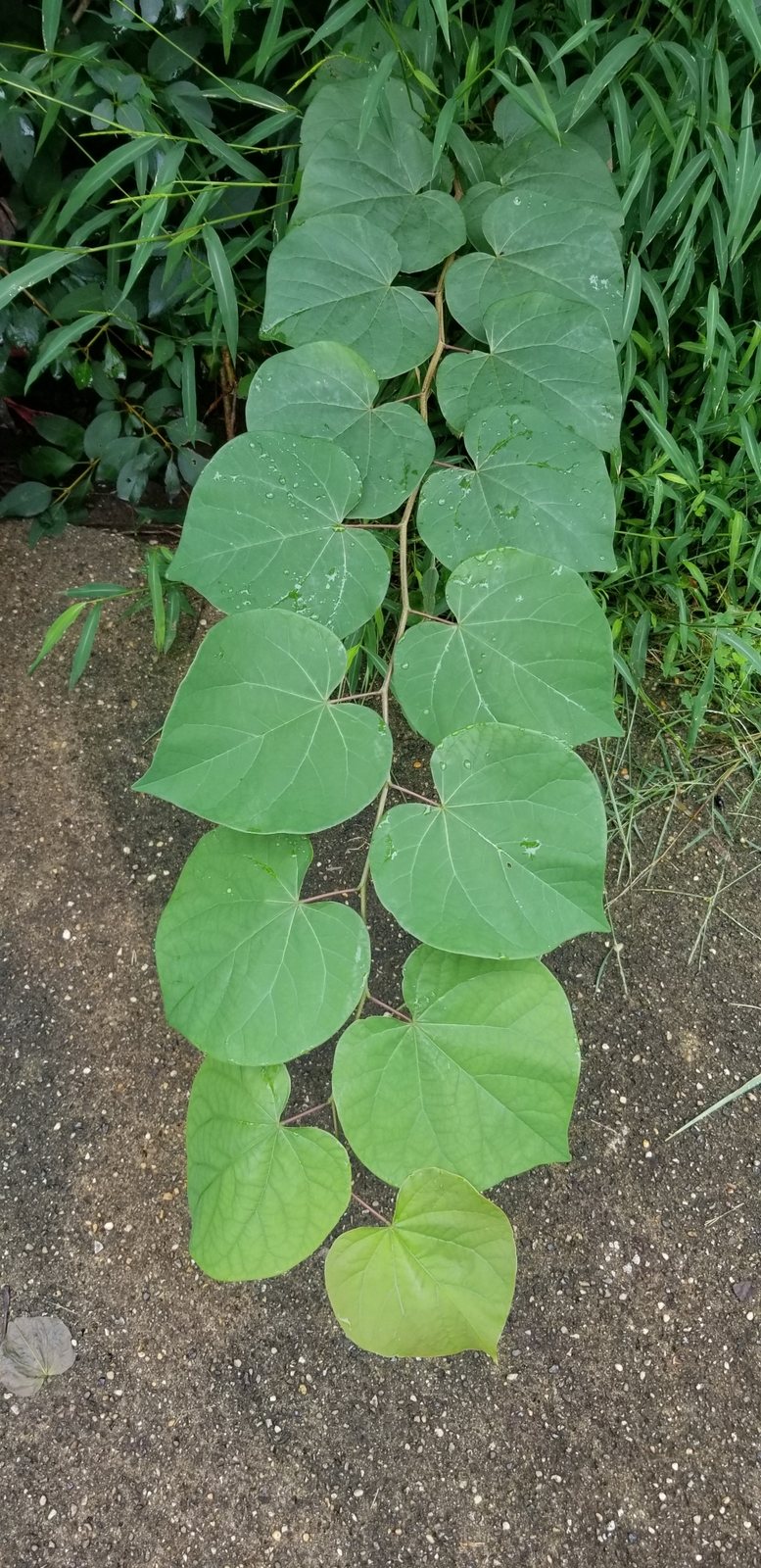
- Heart-shaped green leaves, often bronze-tinted when young, turning yellow in autumn.
- Growth
- Slow to moderate
- Care needed
- Medium
The year at a glance
- Pollinators
- Cold hardy
- Heat tolerant
- Wildlife
- Low allergen
| J | F | M | A | M | J | J | A | S | O | N | D | |
|---|---|---|---|---|---|---|---|---|---|---|---|---|
| Flowers | ||||||||||||
| Fruit | ||||||||||||
| Plant |
Northern hemisphere months. In Australia, shift them by six.
- Difficulty
- Moderate
- Toughness
- Fairly tough
Will it suit your garden?
Pick your zone, country, light and whether you have pets.
Full sun is 6 or more hours of direct sun a day, part shade 3 to 6 hours, shade under 3.
How it grows
Planting day
7 ft (2 m)
After 1 year
7 ft (2 m)
After 2 years
7 ft (2 m)
After 3 years
7 ft (2 m)
After 5 years
7 ft (2 m)
About 26 years to full size.
From a typical nursery size, at an average rate for this kind of plant. A rule of thumb, not a forecast.
Good to know
- Cats and dogs
- Safe
- Native to
- the US and Canada
- Growth rate
- Slow
Care
Jobs through the year
- WaterApr–May, Sep–Oct, every 14 days
- Water established trees deeply only in prolonged dry weather; water young trees whenever the root zone begins to dry.
- WaterJun–Aug, every 10 days
- Water established trees deeply during prolonged dry spells; young trees need more frequent watering.
- MulchMar–Apr
- Refresh organic mulch to 5–8 cm deep without covering the trunk or graft.
- PruneApr–May
- After flowering, lightly remove damaged or crossing branches, trailing obstructions and shoots below the graft.
- ProtectJan–Feb, Nov–Dec
- Where rabbits browse, guard young trunks and check that guards and training ties do not constrict growth.
- Plant with the root flare at soil level and any graft union above the soil; choose the site carefully because established redbuds dislike being moved.
- Water deeply through the first two growing seasons whenever the soil begins to dry.
- Apply 2-3 in (5-8 cm) of organic mulch over the root area, keeping it clear of the trunk.
- If more height is wanted, tie a young upright leader loosely to a sturdy stake and check ties regularly; untrained growth tends to cascade.
- Remove shoots arising below the graft, and avoid routine feeding unless growth or a soil test indicates a deficiency.
Pruning. Prune lightly just after flowering to remove dead, damaged or crossing branches and shorten shoots that trail onto paths. Preserve the cascading framework and avoid heavy cuts into older wood.
Through the year
- Early spring
- Check winter damage and loosen or replace any tight training ties.
- Spring
- Refresh mulch, keeping the root flare and trunk uncovered.
- Late spring
- After flowering, make any light shaping cuts and remove shoots below the graft.
- Summer
- Water deeply during dry spells, especially while the tree is establishing.
- Autumn
- Plant container-grown trees while the soil is workable and moist; in very cold regions, wait until spring.
- Winter
- Check supports and protect young trunks from rabbits or other browsing animals where needed.
In the garden
- Use as a specimen in a small lawn or front garden, leaving room for the branches to spread.
- Place beside a patio or courtyard where its spring flowers and winter branching can be seen closely.
- Underplant with spring bulbs and low perennials that do not hide the cascading framework.
- Set at a woodland edge with light shade and a darker evergreen background to show off the flowers.
Garden styles it suits: Small-space, Cottage garden, Woodland, Romantic rose garden, Modern courtyard and Winter interest.
Plant it with: Snowdrops, Daffodils, Hellebores, Epimedium, Siberian bugloss and Japanese forest grass.
Wildlife: Spring flowers provide pollen and nectar for bees. Birds may eat the seeds, and the branching offers shelter, although this compact cultivar provides less habitat than a full-sized eastern redbud.
Problems to watch for
- Canker and branch dieback: prune affected branches back to healthy wood in dry weather, disinfect tools between cuts and reduce drought stress.
- Verticillium wilt: sudden wilting or branch death needs diagnosis; there is no reliable cure, and badly affected trees should be removed rather than replaced with another susceptible tree.
- Leaf spots: usually cosmetic; collect fallen leaves and avoid wetting foliage unnecessarily. Fungicide is rarely needed in a home garden.
- Scorch and drought stress: brown leaf edges or early leaf drop call for deep watering, mulch and, in hot climates, protection from harsh afternoon sun.
Safety
Not known to be toxic to cats, dogs, horses or people. No part is generally recognised as seriously poisonous, though eating large amounts of unfamiliar plant material can cause digestive upset.
Easily confused with
Eastern redbud (Cercis canadensis)
The ordinary species forms a much larger, upright, spreading tree rather than a compact tree with strongly cascading branches.
Ruby Falls redbud (Cercis canadensis 'Ruby Falls')
Also weeping, but its leaves emerge deep burgundy-purple rather than becoming the green foliage typical of Lavender Twist.
Weeping katsura (Cercidiphyllum japonicum 'Pendulum')
Has opposite or nearly opposite leaves with finely toothed edges and lacks the conspicuous pink pea-like flowers on bare branches.
The name
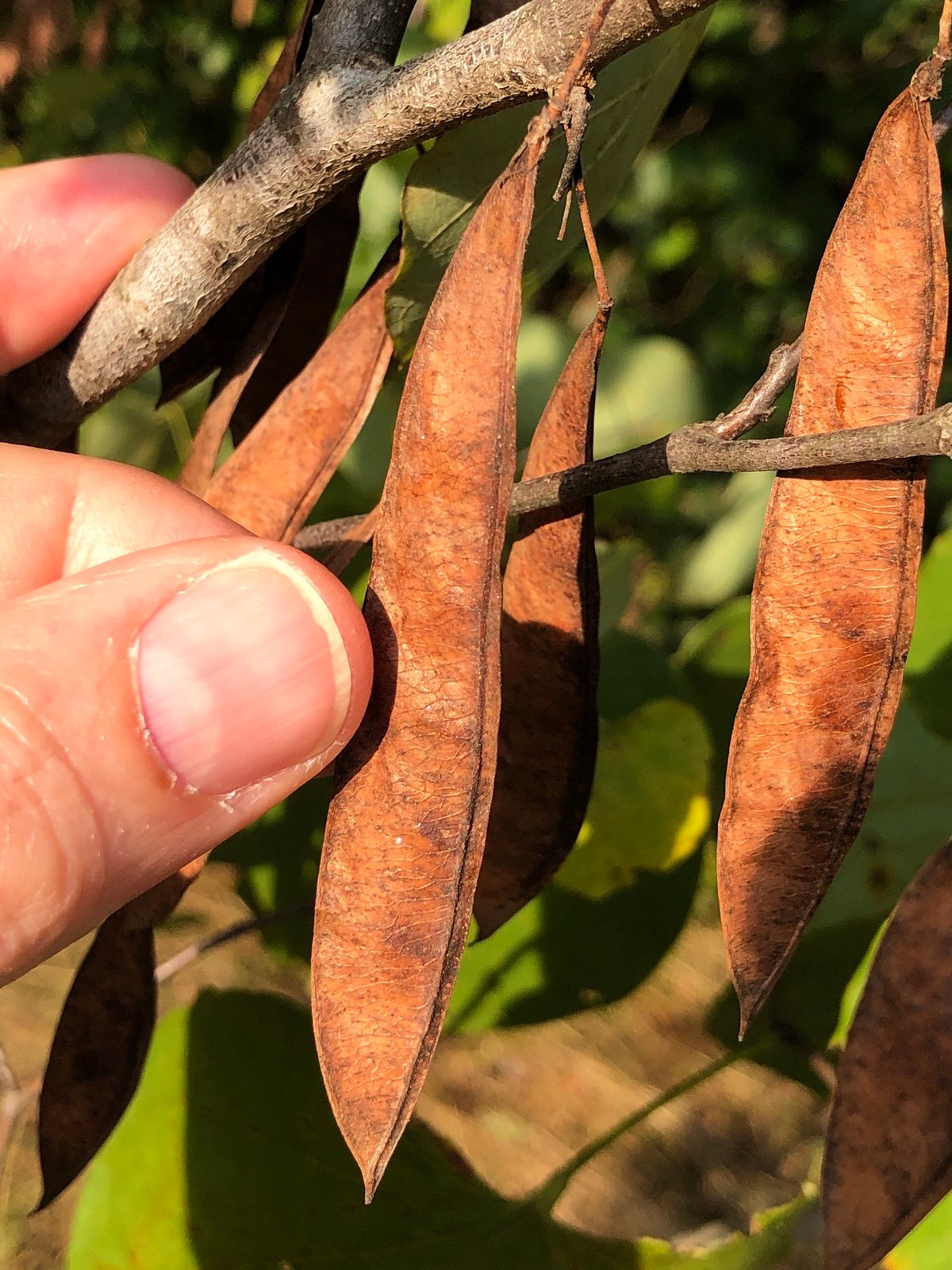
Cercis comes from the Greek name for a weaver's shuttle, referring to the seed pod's shape, while canadensis means 'of Canada' and Lavender Twist describes the flower colour and contorted, weeping growth.
Propagation. Usually propagated by specialist budding or grafting onto eastern redbud rootstock. Seedlings do not reliably retain the weeping habit or other cultivar traits.
Checked against open data
- Accepted botanical name
- Cercis canadensis
- In the US and Canada
- Native in Canada and the lower 48 states.
- Native range
- Alabama, Arkansas, Connecticut, Delaware, District of Columbia, Florida, Georgia, Illinois, Indiana, Iowa, Kansas and Kentucky.
- Measured
- Soil pH 5 to 7.9. Average height 535 cm.
Sources: GBIF (CC BY 4.0), USDA PLANTS and Trefle (CC BY 4.0). The care and design notes are LandscapeGPT's own.
See it in your own yard.
Upload a photo of your yard and see it redesigned with plants that suit your climate, each checked against your zone.