Leek
Allium ampeloprasum. Family Amaryllidaceae. Annual.
Also called Garden leek, Allium porrum, Allium ampeloprasum Leek Group.
Leek is a biennial vegetable grown as an annual for its mild, onion-flavoured white stems and tender leaf bases. Its upright, blue-green leaves suit kitchen gardens and edible borders, and winter-hardy varieties can provide harvests through cold weather where the soil remains workable.
At a glance
- Sun
- Full sun; tolerates light shade with slower growth.
- Water
- Keep evenly moist, especially after transplanting and while stems are thickening; avoid waterlogged soil.
- Soil
- Deep, fertile, moisture-retentive but well-drained soil, ideally pH 6.0-7.5.
- Height
- 1.5-3 ft (0.45-0.9 m) in leaf; flowering stems can reach 4-5 ft (1.2-1.5 m)
- Spread
- 0.5-1 ft (0.15-0.3 m)
- Flowers
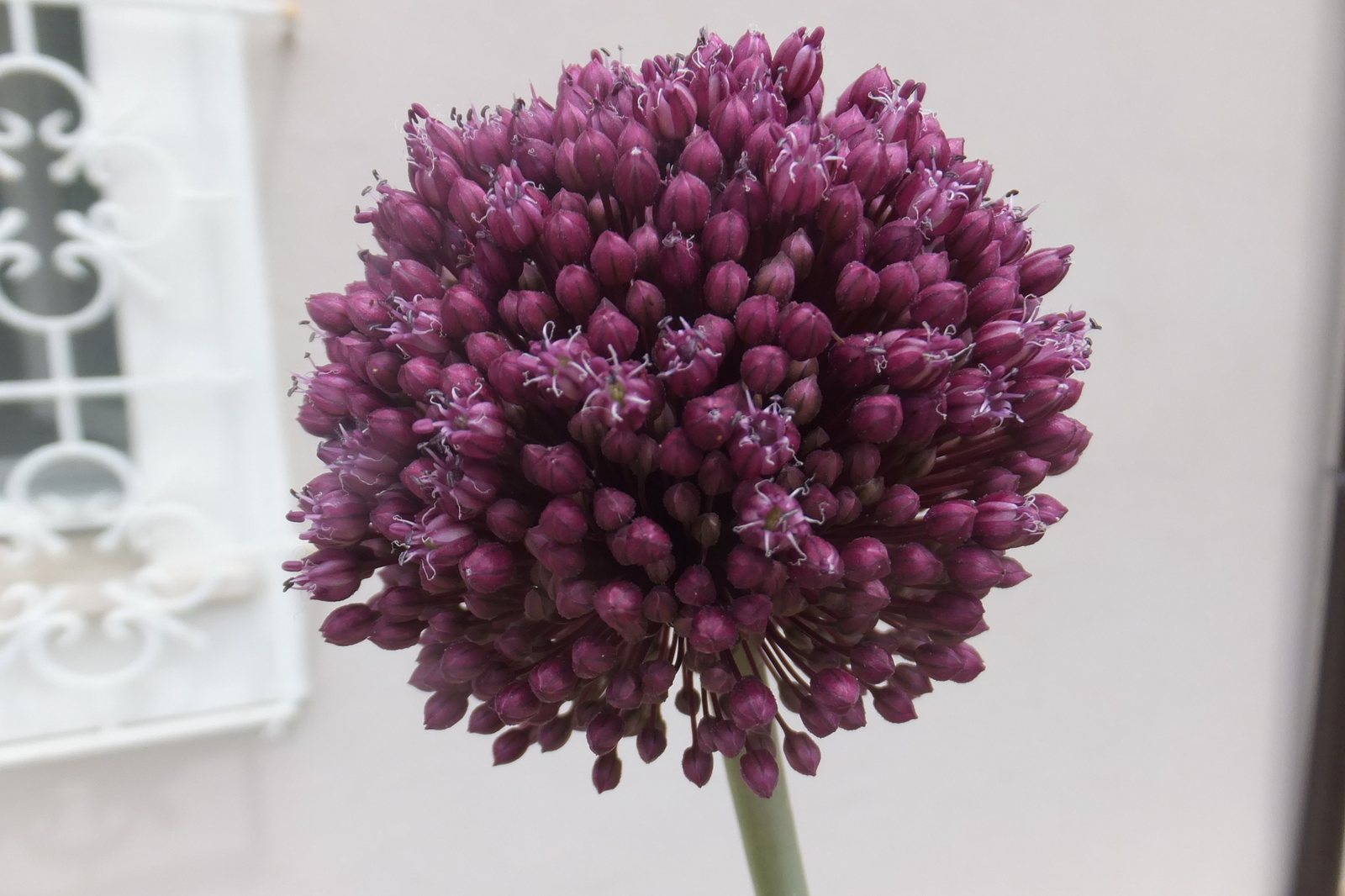
- Rounded heads of white to pale pink flowers in late spring or summer of the second year, if left unharvested.
- Foliage
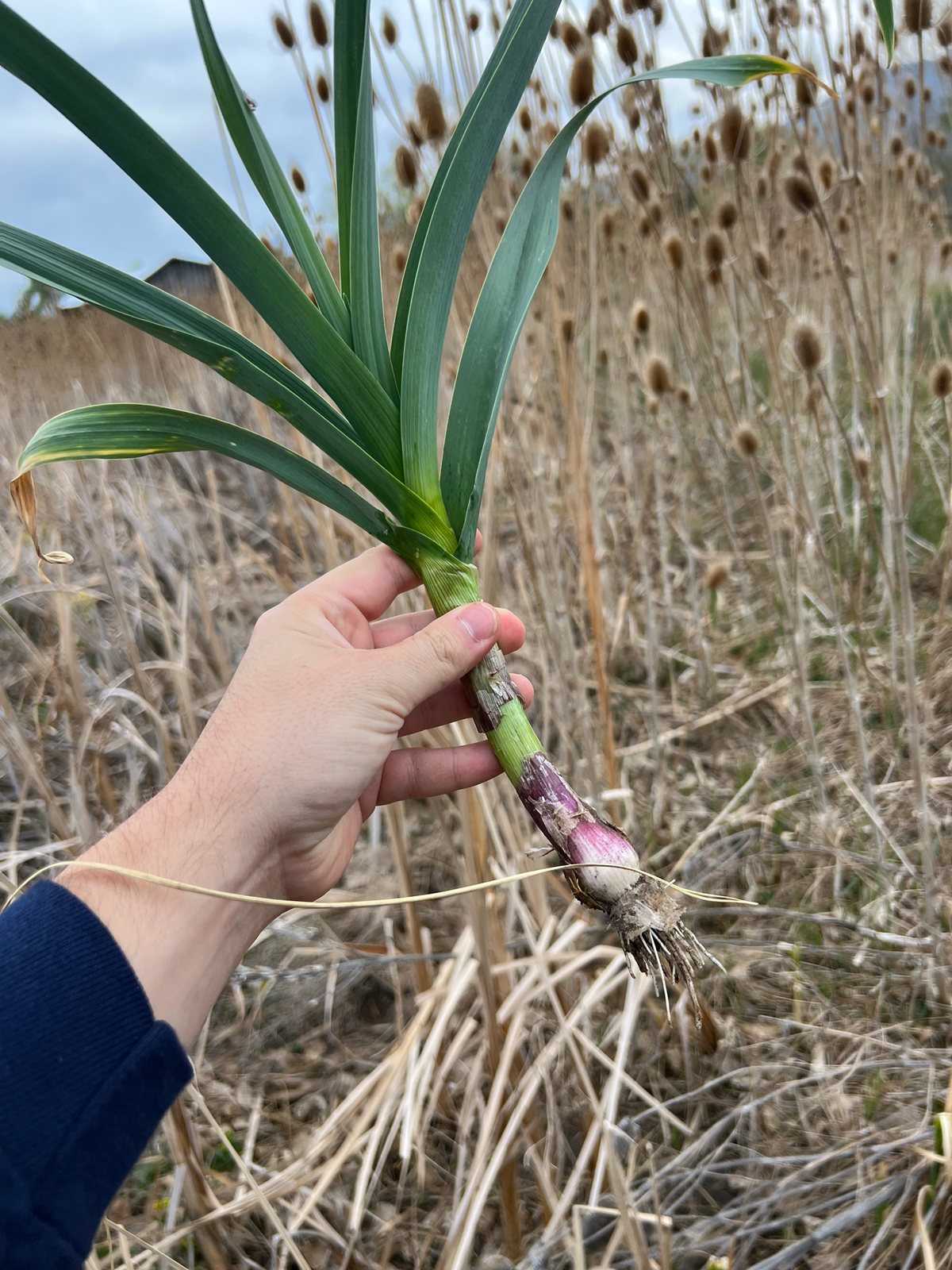
- Long, flat, overlapping green to blue-green leaves form a thick, pale false stem rather than a rounded bulb.
- Growth
- Moderate; usually takes about 4-7 months from sowing to harvest, depending on variety and conditions.
- Care needed
- Medium
The year at a glance
- Pollinators
- Low allergen
- Edible
| J | F | M | A | M | J | J | A | S | O | N | D | |
|---|---|---|---|---|---|---|---|---|---|---|---|---|
| Flowers | ||||||||||||
| Fruit | ||||||||||||
| Plant |
Northern hemisphere months. In Australia, shift them by six.
- Difficulty
- Moderate
- Toughness
- Fairly tough
Will it suit your garden?
Pick your zone, country, light and whether you have pets.
Full sun is 6 or more hours of direct sun a day, part shade 3 to 6 hours, shade under 3.
How it grows
Planting day
0.5 ft (0.15 m)
After 1 year
2.2 ft (0.68 m)
full size
Full size in one season.
From a typical nursery size, at an average rate for this kind of plant. A rule of thumb, not a forecast.
Good to know
- Cats and dogs
- Toxic
- Growth rate
- Moderate
Care
Jobs through the year
- WaterMar–May, Sep–Oct, every 7 days
- Water established crops if rainfall is insufficient; check seedlings and fresh transplants more often.
- WaterJun–Aug, every 7 days
- Soak deeply in dry weather to keep roots evenly moist while shanks thicken.
- FeedMar–Apr
- Work well-rotted compost into the bed before planting.
- FeedMay–Jul
- Apply nitrogen-rich vegetable feed once transplants establish, following the label.
- MulchJun–Aug
- Mulch between plants and gradually earth up shanks, keeping soil out of leaf joints.
- ProtectMar–Oct
- Use insect mesh during local leek moth and allium leaf-miner flight periods.
- PruneMay–Jul
- Cut out any flower stalks promptly unless deliberately saving seed.
- HarvestJan–Feb, Aug–Dec, every 7 days
- Lift usable shanks as needed with a fork; leave only winter-hardy varieties through winter.
- ProtectJan–Feb, Nov–Dec
- Mulch winter crops against frozen ground; lift before severe cold where necessary.
- Space transplants 6-8 in (15-20 cm) apart, with room between rows for weeding and earthing up.
- Water deeply during dry spells so the root zone stays moist.
- Work compost into the bed before planting; feed with a nitrogen-rich vegetable fertiliser once plants are established.
- Draw soil gradually around the stems to blanch them, keeping soil out of the leaf joints.
- Mulch between plants to conserve moisture and suppress weeds; keep mulch away from the central leaves.
Pruning. No routine pruning is needed. Remove badly damaged leaves and cut out flower stalks promptly unless saving seed; flowering makes the central stem tough.
Harvest
Harvest whole leeks when the white and pale-green shanks are about 1 inch (2.5 cm) thick, usually 3–5 months after transplanting; smaller leeks can be picked earlier. Loosen the soil with a garden fork and lift gently rather than pulling, then trim the roots and tough leaf tops. Harvest from late summer into winter according to variety and planting time;
Through the year
- Late winter
- In cool climates, sow seed under cover for a long growing season.
- Spring
- Prepare the bed with compost and transplant sturdy seedlings once the soil is workable.
- Early summer
- Keep young plants weed-free, water during dry weather and begin feeding once established.
- Summer
- Earth up stems gradually and inspect leaves for rust and insect damage.
- Autumn
- Harvest as stems reach a useful thickness; in mild-winter regions, plant locally suitable varieties for a cool-season crop.
- Winter
- Lift winter-hardy varieties as needed where the ground is not frozen; harvest before severe cold in colder regions.
In the garden
- Plant in straight rows in a potager for strong vertical lines among rounded lettuces and cabbages.
- Use small groups in edible borders for their blue-green, strap-like foliage.
- Grow in deep raised beds where fertile soil and easy access simplify harvesting.
- Leave a few plants to flower at the back of a kitchen garden for rounded flower heads visited by insects.
Garden styles it suits: Potager (kitchen garden), Edible landscape, Homestead, Cottage garden, Formal and Family-friendly.
Plant it with: Carrots, Lettuce, Beetroot, Swiss chard, Cabbage and Calendula.
Wildlife: Flowers attract bees and other pollinating insects if plants are allowed to bloom in their second year.
Problems to watch for
- Leek moth: caterpillars tunnel into leaves and stems. Cover crops with insect mesh before egg-laying and remove infested material.
- Allium leaf miner: larvae mine leaves and damage stems. Use insect mesh during local adult flight periods and remove crop debris.
- Leek rust: orange pustules develop on leaves. Space plants for airflow, avoid excessive nitrogen and remove heavily affected foliage.
- Allium white rot: leaves yellow and the base develops white fungal growth, sometimes with black resting bodies. Remove affected plants and do not move contaminated soil; avoid growing alliums in that ground because the fungus can persist for many years.
Safety
All parts, raw or cooked, are toxic to cats, dogs and horses and can damage red blood cells, causing potentially serious anaemia. Leeks are edible for people and are not known to be toxic in normal food quantities, although allergies and digestive upset can occur.
Easily confused with
Elephant garlic (Allium ampeloprasum Elephant Garlic Group)
Has similarly broad, flat leaves but develops a large underground bulb divided into cloves; ordinary leeks form an elongated false stem without a large cloved bulb.
Welsh onion (Allium fistulosum)
Has hollow, tubular leaves rather than the flat, folded leaves of a leek and commonly forms clumps.
Garlic (Allium sativum)
Usually has narrower flat leaves and produces a distinct bulb of cloves with a strong garlic smell.
The name
The epithet ampeloprasum comes from Greek words meaning 'vineyard leek', while 'leek' comes from the Old English leac, a name used for onion-like plants.
Propagation. Usually grown from seed, started under cover or sown into a prepared seedbed and transplanted. For seed saving, retain healthy plants through their second year; different leek varieties can cross-pollinate.
Checked against open data
- Accepted botanical name
- Allium ampeloprasum
- In the US and Canada
- Introduced in the lower 48 states.
- Native range
- Albania, Algeria, Baleares, Bulgaria, Cyprus, East Aegean Is., Egypt, Ethiopia, France, Greece, Iran and Iraq.
- Measured
- Average height 74 cm.
Sources: GBIF (CC BY 4.0), USDA PLANTS and Trefle (CC BY 4.0). The care and design notes are LandscapeGPT's own.
See it in your own yard.
Upload a photo of your yard and see it redesigned with plants that suit your climate, each checked against your zone.