Lemon basil
Ocimum × africanum. Family Lamiaceae. Annual.
Also called Thai lemon basil, Lao basil.
Lemon basil is a tender, aromatic herb grown as an annual for its lemon-scented leaves, used in salads, soups, curries and teas. It grows quickly in warm weather and suits sunny herb beds and containers, but cold, wet conditions soon check its growth.
At a glance
- Sun
- Full sun; light afternoon shade can help in very hot climates.
- Water
- Keep the root zone evenly moist but not waterlogged. Containers may need daily watering in hot weather.
- Soil
- Fertile, well-drained soil enriched with compost; use free-draining potting mix in containers.
- Height
- 1-2 ft (0.3-0.6 m)
- Spread
- 1-1.5 ft (0.3-0.45 m)
- Flowers
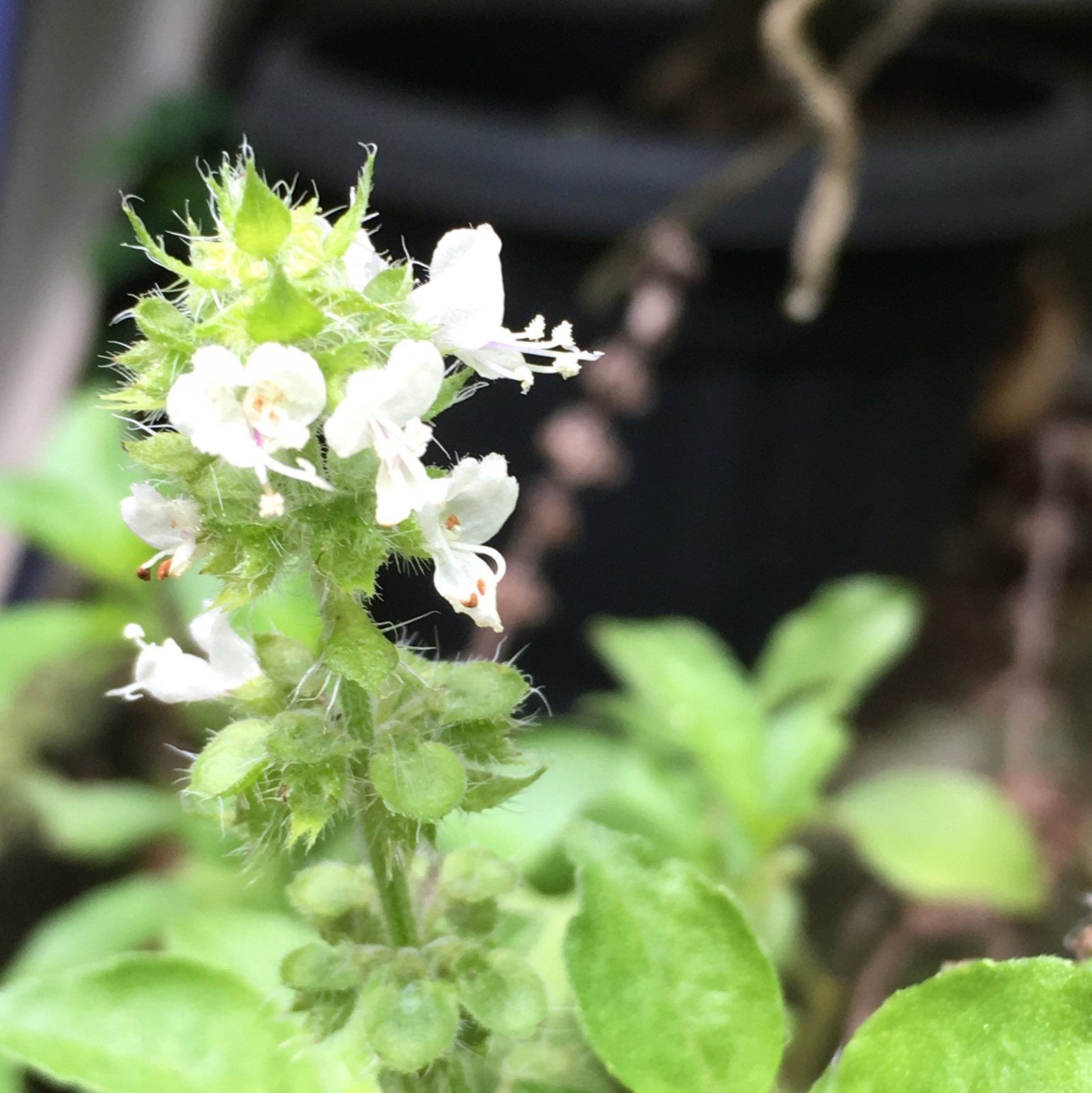
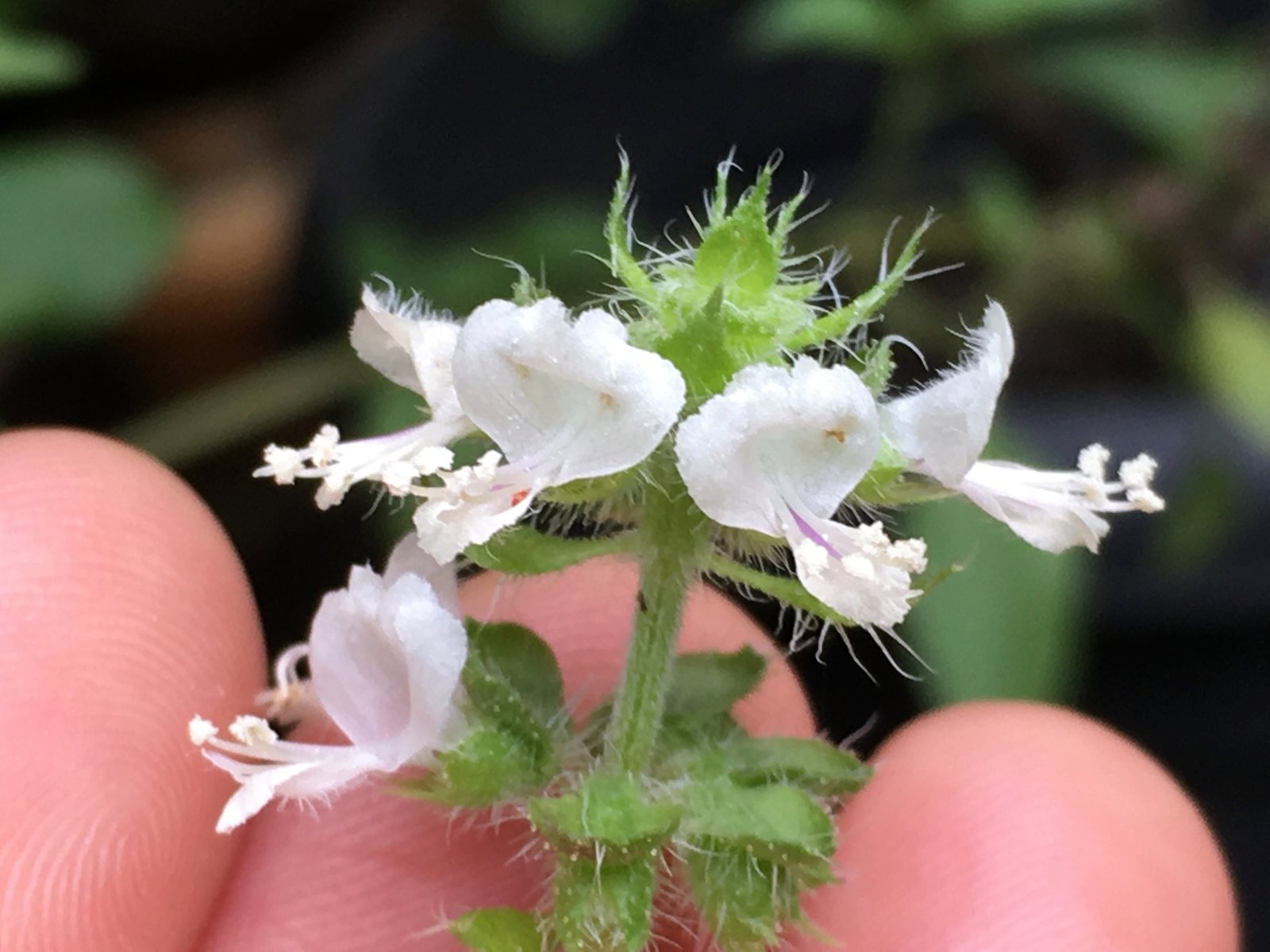
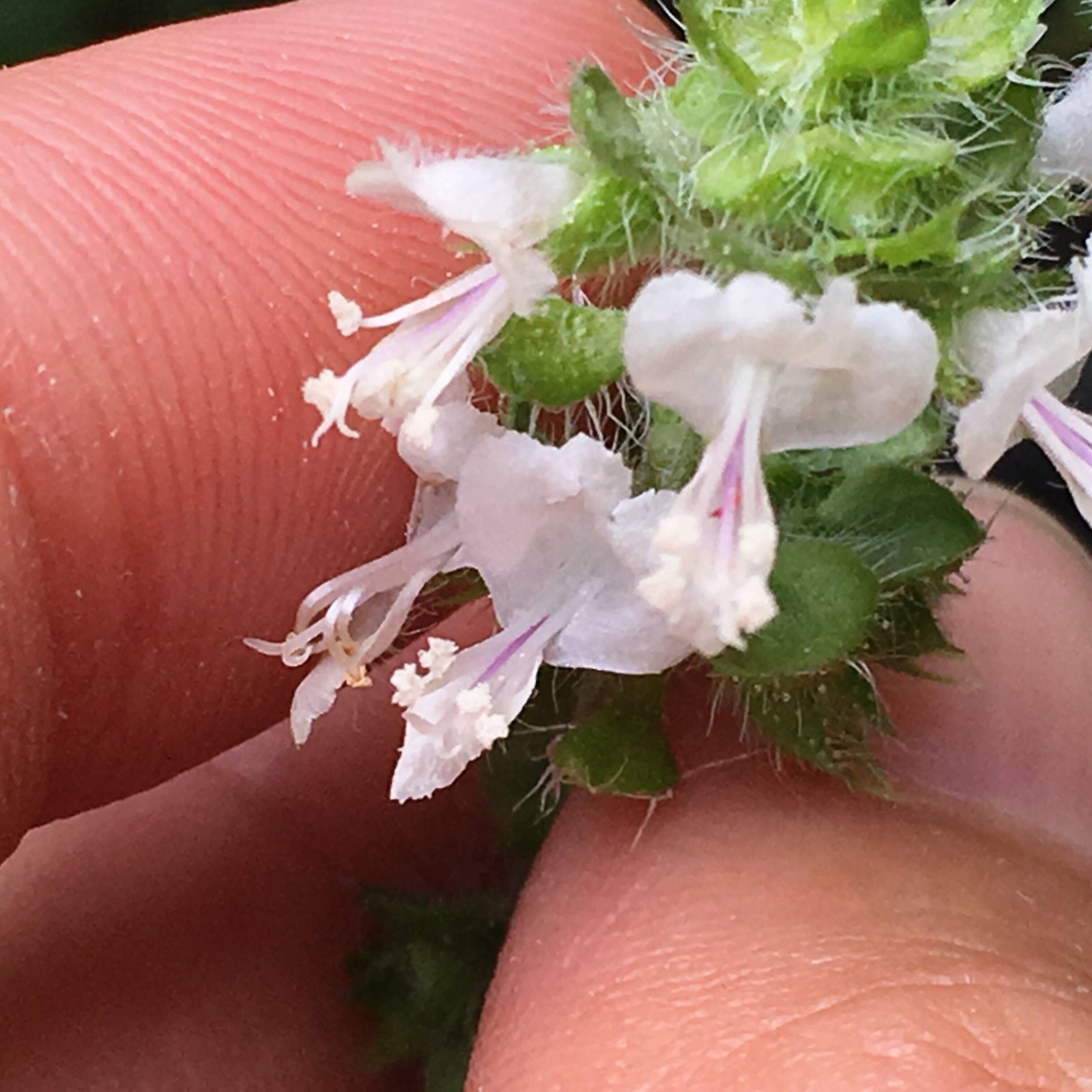
- Small white flowers in slender spikes from summer into autumn if shoots are not regularly harvested.
- Foliage
- Soft green, opposite, oval to lance-shaped leaves with lightly toothed edges and a distinct lemon scent when rubbed.
- Growth
- Fast in warm weather.
- Care needed
- Low
The year at a glance
- Pollinators
- Heat tolerant
- Low allergen
- Fragrant
- Edible
| J | F | M | A | M | J | J | A | S | O | N | D | |
|---|---|---|---|---|---|---|---|---|---|---|---|---|
| Flowers | ||||||||||||
| Fruit | ||||||||||||
| Plant |
Northern hemisphere months. In Australia, shift them by six.
- Difficulty
- Easy
- Toughness
- Needs looking after
Will it suit your garden?
Pick your zone, country, light and whether you have pets.
Full sun is 6 or more hours of direct sun a day, part shade 3 to 6 hours, shade under 3.
How it grows
Planting day
0.5 ft (0.15 m)
After 1 year
1.5 ft (0.45 m)
full size
Full size in one season.
From a typical nursery size, at an average rate for this kind of plant. A rule of thumb, not a forecast.
Good to know
- Cats and dogs
- Safe
- Growth rate
- Fast
Care
Jobs through the year
- WaterMay–Jun, Sep, every 7 days
- Water established plants when the surface dries; check young plants more frequently.
- WaterJul–Aug, every 3 days
- Check soil and water at ground level as needed to maintain even moisture.
- MulchJun
- Apply a thin organic mulch after soil warms, keeping stems clear.
- PruneJun
- Pinch tips above a leaf pair once plants have several pairs of leaves.
- DeadheadJul–Sep, every 7 days
- Remove emerging flower spikes for leaf production, or leave a few for bees.
- ProtectMay–Jun
- Plant only after frost and when nights exceed 10°C; protect seedlings from slugs.
- HarvestJun–Oct, every 7 days
- Pick tender tips, taking at most one-third at once; gather remaining leaves before frost.
- Plant out after frost danger has passed and nights are consistently above 10°C (50°F).
- Space plants 1-1.5 ft (0.3-0.45 m) apart to allow airflow.
- Water at soil level when the surface begins to dry; do not leave pots standing in water.
- Feed container plants lightly with a balanced liquid fertiliser every four weeks during active growth.
- Apply a thin organic mulch once the soil is warm, keeping it clear of the stems.
Pruning. Pinch out shoot tips once plants have several pairs of leaves, cutting just above a leaf pair to encourage branching. Remove flower spikes as they appear if leaf production is your priority.
Harvest
Pick leaves or tender shoot tips once the plant is well established and has several pairs of healthy leaves. Harvest before flowering for tender growth, taking no more than about one-third of the plant at a time; use fresh or freeze surplus leaves.
Through the year
- Early spring
- Sow seeds indoors in warmth, ideally around 21-24°C (70-75°F), with bright light after germination.
- Late spring
- Harden plants off gradually and plant outside after frost danger has passed and nights are warm.
- Early summer
- Pinch growing tips to encourage a bushy shape and begin light harvesting.
- Summer
- Water regularly, feed container plants lightly and remove unwanted flower spikes.
- Late summer
- Leave a few flower spikes for bees or seed collection if you do not need all the leaves.
- Autumn
- Harvest remaining usable leaves before cold nights; remove plants killed by frost.
In the garden
- Place in pots beside a sunny kitchen door for easy picking and scented foliage.
- Use as a low, regularly clipped edging around vegetable or herb beds.
- Mix with parsley, chives and compact marigolds in informal edible planting.
- Allow a few plants to flower among summer vegetables to provide small-scale pollinator forage.
Garden styles it suits: Potager (kitchen garden), Herb parterre, Edible landscape, Sensory garden, Cottage garden and Small-space.
Plant it with: Tomatoes, Peppers, Parsley, Chives, French marigolds and Lettuce.
Wildlife: Flowers attract bees and other small pollinating insects. Regularly removing flower spikes reduces this food source.
Problems to watch for
- Slugs and snails can strip young plants: inspect after dark, remove pests and protect seedlings with suitable barriers or labelled iron-phosphate bait.
- Aphids cluster on tender tips: wash them off with water and check new growth regularly.
- Basil downy mildew causes yellow patches and grey-purple growth beneath leaves: remove affected plants, avoid wetting foliage and improve spacing and airflow.
- Cold or waterlogged soil causes stalled growth, yellowing and root decay: delay planting until warm and improve drainage.
Safety
Not known to be toxic to people, cats, dogs or horses in ordinary culinary quantities. Leaves and tender shoots are edible; large amounts may cause digestive upset in pets. Concentrated essential oil is not equivalent to the fresh herb and should not be given to pets.
Easily confused with
Sweet basil (Ocimum basilicum)
Typical sweet basil has broader, often cupped leaves and a sweet clove-like scent rather than a clear lemon scent; leaf form varies between cultivars.
Hoary basil (Ocimum americanum)
Often has more noticeably hairy stems and leaves, but it can also smell lemony. It is a parent of lemon basil, and the two are difficult to separate confidently by scent or garden appearance alone.
Lemon balm (Melissa officinalis)
Has broader, wrinkled, scallop-edged leaves and forms a hardy perennial clump, unlike the tender, more slender-leaved lemon basil.
The name
The common name refers to the leaves' lemon scent, while the × in Ocimum × africanum marks its hybrid origin.
Propagation. Sow seed in warmth, covering lightly, or root non-flowering stem cuttings in moist potting mix. Saved seed may vary, particularly where other basils flower nearby.
Checked against open data
- Accepted botanical name
- Ocimum africanum
Sources: GBIF (CC BY 4.0). The care and design notes are LandscapeGPT's own.
See it in your own yard.
Upload a photo of your yard and see it redesigned with plants that suit your climate, each checked against your zone.